Marion Wilson And Donovan Corey Parks



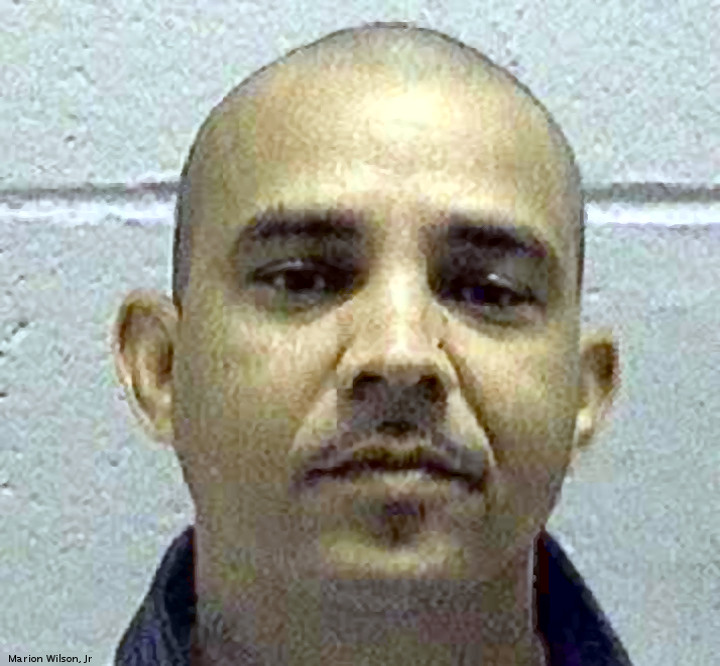
The state of Georgia is planning to execute Marion Wilson Jr. He was convicted of the murder of Donovan Corey Parks on March 28, 1996. Mr. Wilson’s co-defendant, Robert Earl Butts was executed May 4, 2018. If you want more details, read the information below. The first account of the murder is a Press Release from the GA Attorney General.
“The evidence at trial showed that on the night of March 28, 1996, the victim, Donovan Corey Parks, entered a local Wal-Mart to purchase cat food, leaving his 1992 Acura Vigor parked in the fire lane directly in front of the store. Witnesses observed Wilson and Robert Earl Butts standing behind Parks in one of the store’s checkout lines and, shortly thereafter, speaking with Parks beside his automobile. A witness overheard Butts ask Parks for a ride, and several witnesses observed Wilson and Butts entering Parks’s automobile, Butts in the front passenger seat and Wilson in the back seat. Minutes later, Parks’s body was discovered lying face down on a residential street. Nearby residents testified to hearing a loud noise they had assumed to be a backfiring engine and to seeing the headlights of a vehicle driving from the scene.”
“On the night of the murder, law enforcement officers took inventory of the vehicles in the Wal-Mart parking lot. Butts’s automobile was among the vehicles remaining in the lot overnight. Based upon the statements of witnesses at the Wal-Mart, Wilson was arrested. A search of Wilson’s residence yielded a sawed-off shotgun loaded with the type of ammunition used to kill Parks, three notebooks of handwritten gang “creeds,” secret alphabets, symbols, and lexicons, and a photo of a young man displaying a gang hand sign.”
“Wilson gave several statements to law enforcement officers and rode in an automobile with officers indicating stops he and Butts had made in the victim’s automobile after the murder. According to Wilson’s statements, Butts had pulled out a sawed-off shotgun, had ordered Parks to drive to and then stop on Felton Drive, had ordered Parks to exit the automobile and lie on the ground, and had shot Parks once in the back of the head. Wilson and Butts then drove the victim’s automobile to Gray where they stopped to purchase gasoline. Wilson, who was wearing gloves, was observed by witnesses and videotaped by a security camera inside the service station.”
“Wilson and Butts then drove to Atlanta where they contacted Wilson’s cousin in an unsuccessful effort to locate a “chop shop” for disposal of the victim’s automobile. Wilson and Butts purchased two gasoline cans at a convenience store in Atlanta and drove to Macon where the victim’s automobile was set on fire. Butts then called his uncle and arranged a ride back to the Milledgeville Wal-Mart where Butts and Wilson retrieved Butts’s automobile.”
“Wilson’s wholehearted commitment to antisocial and violent conduct from the age of 12 on not only serves as a heavy weight on the aggravating side of the scale, it also renders essentially worthless some of the newly proffered mitigating circumstance evidence. …For example, a number of Wilson’s teachers signed affidavits, carefully crafted by his present counsel, claiming that Wilson was “a sweet, sweet boy with so much potential,” a “very likeable child,” who was “creative and intelligent,” and had a “tender and good side.” One even said that Wilson “loved being hugged.” A sweet, sensitive, tender, and hug-seeking youth does not commit arson, kill a helpless dog, respond to a son’s plea to quit harassing his elderly mother with a threat “to blow . . . that old bitch’s head off,” shoot a migrant worker just because he “wanted to see what it felt like to shoot someone,” assault a youth detention official, shoot another man in the head and just casually walk off—all before he was old enough to vote. Without provocation Wilson shot a human being when he was fifteen, shot a second one when he was sixteen, and robbed and shot to death a third one when he was nineteen. …”
Same violent crime — one set to die while the other waits presents another view of the murder. It was published April 27, 2018, in The Atlanta Journal-Constitution, by Rhonda Cook.
“Gang members Robert Earl Butts and Marion “Murdock” Wilson were together when they asked an off-duty correctional officer for a ride outside a Milledgeville Walmart the evening of March 28, 1996. They were together when, 16 minutes later, Butts shot Donovan Corey Parks with a sawed-off shotgun then left the 25-year-old lying face-down on a Milledgeville road. Together they doused Parks’ 1992 Acura Vigor with gasoline and set it on fire behind a Macon Huddle House. Just hours later, the pair applied for landscaping jobs. …”
“Donovan Parks, like his father, became a prison guard after graduating high school. But the younger Parks had plans, his father said. Instead of making corrections his career, he wanted to attend college. The night that he was killed, Parks, a Jehovah’s Witness, had just come home from Bible study at the Milledgeville Kingdom Hall, across the street from the house he shared with his recently-widowed father. Parks was still wearing his tie and checkered grey suit when he left for a quick trip to Walmart for cat food. According to then-District Attorney Fred Bright, Butts and Wilson also had gone to the Walmart, “shopping for somebody to kill.” Prosecutors said the two 18-year-olds were looking to make an impression on other members of their gang, FOLK Nation.”
“At 9:50 p.m., Parks handed a Walmart cashier $7.93 for four cans of cat food, tropical fish food, soap and cocoa butter. Behind him, Butts waited to pay for a 20-cent pack of Wrigley’s chewing gum. Butts worked with Parks at a local Burger King and he asked for a ride for him and Wilson. A single-barrel sawed-off shotgun hidden in the sleeve of his Colorado Rockies jacket, Butts got in the front passenger seat. Wilson climbed in the back after Parks cleared out a spot for him to sit. Minutes later, on street dotted with pre-fabricated houses, Wilson grabbed Parks’ necktie, cinching it so tightly it later had to be cut off. Butts ordered Parks out of the car and shot him in the back of the head, leaving the officer face-down in his own blood and brain matter. …”
“Moments after Parks was shot, his father, came up on a body in the road but didn’t recognize his son because of the damage done by the large buckshot. The father called the Baldwin County Sheriff’s Office to report that someone had been hit by a car. Putnam County Sheriff Howard Sills, who was the chief deputy in Baldwin County at the time, was able to identify the dead man only by matching the initials in the dead man’s class ring to the roster of seniors at Baldwin High School in 1990; there was only one person with the initials DCP.”
“Wilson was arrested four days later at the courthouse when he came to an appointment related to a DUI conviction. Butts was hiding in his grandmother’s bedroom closet when authorities came for him. Detectives found the shotgun under Wilson’s mattress. Wilson’s girlfriend said she saw Butts hand him the weapon.”
“Talking to investigators Wilson blamed Butts for everything. He said he had nothing to prove because he was “chief enforcer” with the local FOLK Nation gang. “I’m as high (in the gang) as I can be. I ain’t got to go no higher. I ain’t got to do nothing to go no higher.” …”
“Butts, meanwhile, denied everything at first but then decided to testify at his trial and to lay it all on Wilson. Butts testified that it was Wilson’s idea to steal a car and it was Wilson who “snatched him out” of the car and took him to the back and shot him. “I was scared…” Butts testified. “I was really upset. And I was feeling, you know, kind of sick at the stomach.”
Mr. Wilson was convicted of the crime, and sentenced to death. There appears to be little doubt that he is guilty. In the appeals, attorneys made the traditional claim of ineffective counsel. “A federal judge granted Marion Wilson Jr. the right to appeal part of his case, in which Wilson will be able to argue that his trial attorneys didn’t properly investigate whether they could build a defense around evidence that Wilson’s early life influenced how he acted. … In Wilson’s federal case, Wilson claimed prosecutors switched their stories to claim that both Wilson and Butts had pulled the trigger. (U.S. District Judge Marc ) Treadwell rejected those and most other arguments. … The court ruling suggests that Wilson was born to a drug-using mother who neglected him, was abandoned by his father, and was physically abused. The family moved frequently, and Wilson saw one of his mother’s boyfriend hold a gun to her head. … Wilson committed his first serious felony at age 12 when he set a duplex apartment on fire in Glynn County while the neighbors were home. At 15, he saw a passing Mexican migrant and told friends he was going to rob the man and “wanted to see what it felt like to shoot somebody,” witnesses said. After the shooting, he attacked a worker at a regional youth development center. A day after he shot a dog for no reason, he was charged with possession of crack cocaine with intent to distribute. A month after that, he shot a man three times. … In a recording played during sentencing, Wilson admitted he was the “chief enforcer” of the Milledgeville FOLKS gang. … In January 1996, Wilson wrote from prison to another gang member: “You know it’s all about that Money, Mackin, Murder, and that should be our main priority; We should be making more money … and murdering all that oppose our nation, but only when necessary.”
During appeals, attorney’s sought “DNA testing on a necktie that was introduced as evidence during their client’s trial in the murder case of Parks … The court also pointed out that there was evidence and eyewitness testimony that Wilson had on gloves on the night of the murder. A videotape showed he was wearing gloves on the night of the crimes. “Accordingly, the lack of his DNA or the presence of Butts’s DNA on the tie would not acquit defendant (Wilson),” the court ruled.”
One appeal led to a bit of esoteric legal geekery. “Should the court look to the state Superior Court judge’s lengthy order, which gives detailed reasons as to how certain findings and decisions were reached? Or should the court look only at the state Supreme Court’s one-word decision — “Denied” — when it declined to hear an appeal of the Superior Court judge’s ruling. … This is an important distinction because federal courts can step in to correct a state court conviction when there is a finding the state court decision upholding that conviction misapplied clearly established U.S. Supreme court law or was based on an unreasonable determination of the facts. In death cases, if the 11th Circuit only has to rely on the state Supreme Court’s one-word decision declining to hear an appeal of the lower-court judge’s opinion, then the federal appeals court can come up with its own reasons as to why the death sentence should continue to be upheld. The court could not offer such speculation, however, if it must look at the detailed ruling by the lower-court judge. Instead, the appeals court would only review the reasonableness and adequacy of the state court judge’s ruling.” … The 11th Circuit, in a decision written by Judge Bill Pryor, ruled that his court only had to look at a terse, summary opinion by the Georgia Supreme Court when it declines to hear an appeal of a lengthy and detailed ruling by a state Superior Court judge.”
The execution is scheduled for June 20, 2019, for a crime committed March 28, 1996. Historic photographs are from The Library of Congress. UPDATE Marion Wilson has ordered his final meal one medium thin-crust pizza with everything, 20 buffalo wings, one pint of butter pecan ice cream, some apple pie and grape juice. UPDATE Marion Wilson Jr. died at 9:52 pm, June 20, 2019.




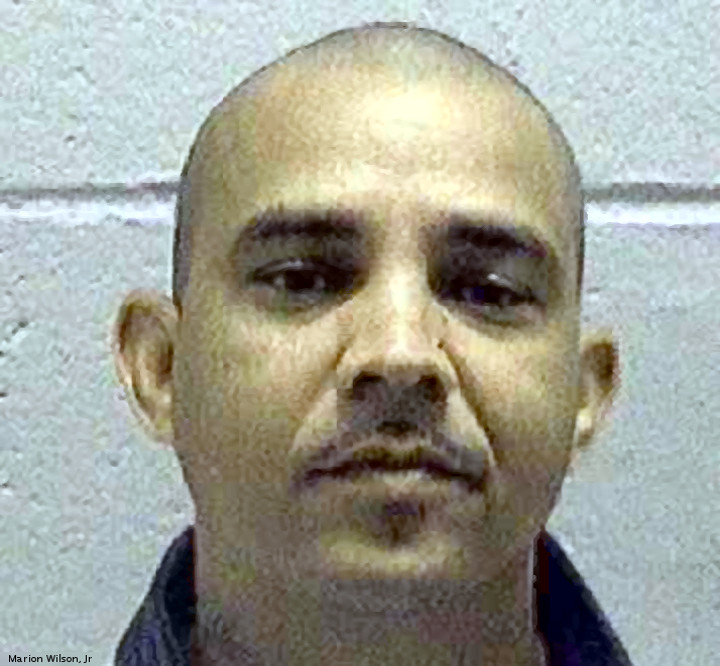
Scotty Morrow, Barbara Ann Young, And Tonya Woods





The state of Georgia is planning to execute Scotty Garnell Morrow on May 2. He was convicted of the murder of Barbara Ann Young And Tonya Woods. If you want more details, continue to read. Pictures today are from The Library of Congress.
“Barbara Ann Young began dating Scotty Morrow in June 1994 and she broke up with him in December 1994 because of his abusive behavior. At 9:52 a.m. on December 29, 1994, Morrow telephoned Ms. Young at her home, but she told him that she wanted him to leave her alone. After hanging up, Morrow drove to Ms. Young’s home and entered without permission. Ms. Young was in the kitchen with two of her friends, Tonya Woods and LaToya Horne. Two of Ms. Young’s children, five-year-old Christopher and eight-month-old Devonte, were also present. There was an argument in the kitchen and Ms. Woods told Morrow to leave because Ms. Young did not want to have anything to do with him anymore. Morrow yelled, “Shut your mouth, bitch!” and pulled a nine-millimeter pistol from his waistband. He shot Ms. Woods in the abdomen and Ms. Horne in the arm. The bullet that struck Ms. Woods severed her spinal cord, paralyzing her from the waist down.”
“Ms. Young fled down the hallway and into her bedroom. Morrow caught her in the bedroom and beat her on the head and face. She managed to flee back to the hallway where Morrow grabbed her by the hair and shot her point-blank in the head, killing her. From his hiding place in a nearby bedroom, Christopher saw Morrow kill his mother. Morrow returned to the kitchen. Testimony as to clicking noises and the fact that a live cartridge was found on the kitchen floor indicate that he either reloaded his pistol or cleared a jam. He then placed the muzzle of the pistol an inch from Ms. Woods’ chin and killed her with a shot to the head. The medical examiner opined that, although she was paralyzed, Ms. Woods had not lost much blood at that time and was probably still conscious when the fatal shot was fired. Morrow also shot Ms. Horne two more times, in the face and the arm, and fled after cutting the telephone line.”
“Despite her injuries, which included a shattered palate, permanent deafness in one ear, and nerve damage in an arm, Ms. Horne managed to get to her feet and run to a neighbor’s house. She and Christopher told the responding police officers that Morrow was the shooter. Morrow confessed after his arrest and the murder weapon was found hidden in his backyard. At trial, Morrow admitted that he shot the victims because he “wanted [Ms. Woods] to shut up.””
“The crimes occurred on December 29, 1994. The grand jury indicted Morrow on March 6, 1995, for malice murder (two counts), felony murder (two counts), aggravated assault (six counts), aggravated battery, cruelty to a child, burglary, and possession of a firearm during the commission of a felony. The State filed its notice of intent to seek the death penalty on May 1, 1995. The trial was held June 7-29, 1999. The jury convicted Morrow on all counts on June 26, 1999, and recommended a death sentence on June 29, 1999.”
During appeals, the court appointed defense attorneys, Harold Walker Jr. and William Brownell Jr., were said to be incompetent. The specific charge was that they did not uncover evidence that Mr. Morrow was sexually abused as a child. “Morrow contends that we should vacate his sentence on the grounds that his trial attorneys provided ineffective assistance when they failed to uncover and introduce mitigating evidence from Morrow’s childhood and when they failed to hire an independent crime-scene expert to corroborate Morrow’s account of the murders.”
“… it is now unquestionable that Petitioner Scotty Morrow was sexually abused as a child. Childhood sexual abuse has a profound and debilitating impact on childhood development. … Morrow’s Trial Counsel failed to present evidence of his childhood abuse/trauma, making Morrow a poor witness in his own defense. Moreover, it “is clear that Trial Counsel’s investigation did not include meaningful inquiry into any portion of Petitioner’s formative years.” Based on its conclusive review of this important life experience that was never presented at trial, the Superior Court of Butts County granted the petition for a writ of habeas corpus and vacated Morrow’s death sentence, ruling Morrow was denied effective assistance of counsel at his sentencing hearing. His Trial Counsel did not provide enough mitigating evidence, especially the evidence of the abuse. The habeas court understood that Morrow was a poor witness in his own self-defense; by blunting his emotions, Morrow looked “flat, callous, and stoic,” and thus unsympathetic to the jury. Dr. Buchanan, a psychologist who testified at the trial without knowing anything about Morrow’s abuse history, admitted that knowledge about Morrow’s abuse would have made a difference in the trial. … Petitioner was also the victim of a series of rapes during this time period. Credible evidence exists that Earl Green, . . . sexually assaulted Petitioner in the basement on multiple occasions. During the time frame of these assaults, Petitioner began to wet the bed and display behavioral and adjustment problems. Additional evidence corroborates the assault evidence against Earl Green. We now know that Morrow had problems at school and was chased home by bullies when he was a student. George May, Morrow’s mother’s new partner, also beat him while he was naked.”
Others see things differently. “The Georgia Supreme Court reasonably concluded that trial counsel conducted an adequate investigation. Counsel made inquiries that would have uncovered the new mitigating evidence were it not for the silence of Morrow and his family. On the issue of rape, the Georgia Supreme Court found “that Morrow never reported any such rapes pre-trial to his counsel or to the mental health experts who questioned him about his background, including his sexual history.” … And counsel subjected Morrow to several psychological interviews that extensively probed Morrow’s family and sexual history but turned up no evidence of abuse. … We fail to understand what else counsel could have done to uncover the rape. Morrow and the alleged rapist are the only witnesses to the rape, and Morrow does not contend that he reported the assault, so any further inquiry would have been fruitless without Morrow’s cooperation. And counsel had no reason to doubt Morrow’s honesty.” The appeal did not work.
UPDATE: Scotty Morrow was pronounced dead at 9:38 pm, May 2, 2019. “Scotty Morrow requested a last meal of a hamburger with mayonnaise, two chicken and waffle meals, a pint of butter pecan ice cream, a bag of buttered popcorn, two all-beef franks, and a large lemonade.” Scotty Morrow’s final words: “I love you all. God bless.”





The Butcher




TRIGGER WARNING: This post is a bit gross. Proceed with caution. If you like, you can skip over the text, and enjoy the pictures. These images are from The Library of Congress.
The post before this borrowed text from Gartalker, known to the government as Gary Simmons. PG chatted with him a few times, and we moved on. The last time PG checked in, Gartalker was fighting cancer. That was in 2017. PG decided to take another look. He googled “Gary Simmons Mississippi.”
Gruesome murder, rape case recalled: Gary ‘The Butcher’ Simmons scheduled to be executed June 20 Before we go any further, note that GTBS was executed in 2012. GTBS is a different Gary Simmons.
“Simmons, at the time 33, and his former brother-in-law Timothy Milano, 21, were convicted of the murder of Texas man Jeffrey Wolfe, to whom they owed money for marijuana, and the rape of his girlfriend, Charlene Leaser. After Wolfe was shot dead by Milano, Simmons carved the body into pieces with knives that he had possibly sharpened earlier that day at work, testimony showed. He then dumped the pieces in the bayou near his Moss Point house.”
“The one picture I remember in particular is of the head that was recovered intact, chopped off from about here,” (District Attorney Tony) Lawrence said, gesturing across the middle of his neck. Instead, about 80 percent of Wolfe’s body was recovered, Lawrence estimated. It was the testimony of Charlene Leaser that solved the case, Lawrence said. Simmons had locked her in a large steel box and raped her. The 18-year-old Leaser was wearing only a sock when she was thrown into the box.”
Gary Carl Simmons Jr. Executed June 20, 2012 “Wolfe’s father Paskiel Wolfe reacted emotionally to the execution. “Do you think God is going to forgive you for doing such a good deed? No. You are going to go to Hell. And that is where you are gonna be. And I hope you burn in Hell. When you take your last breath I will be leaving to go and have a cold beer.”
Before Mr. Wolfe had his cold beer, Mr. Simmons had his final meal. “One Pizza Hut medium Super Supreme Deep Dish pizza, double portion, with mushrooms, onions, jalapeno peppers, and pepperoni; pizza, regular portion, with three cheeses, olives, bell pepper, tomato, garlic and Italian sausage; 10 8-oz. packs of Parmesan cheese; 10 8-oz. packs of ranch dressing; one family size bag of Doritos nacho cheese flavor; 8 oz. jalapeno nacho cheese; 4 oz. sliced jalapenos; 2 large strawberry shakes; two 20-oz. cherry Cokes; one super-size order of McDonald’s fries with extra ketchup and mayonnaise; and two pints of strawberry ice cream.”
The Simmons case was similar to a case in Georgia. “On March 28, 1984 a maintenance man employed at (Robert Dale) Conklin’s apartment complex was collecting aluminum cans from the trash dumpster when he discovered dissected human body parts, knives, bloody bed clothes, screwdriver, rope, credit cards, a wallet and miscellaneous papers belonging to George Crooks, all encased in black plastic garbage bags. The body parts were identified as those of attorney George Crooks, who was acquainted with Conklin and had begun a physical relationship with him. When Conklin’s apartment was searched, police found the bed clothing was missing and the mattress appeared to be blood-soaked. The jammed kitchen garbage disposal contained what appeared to be internal organs. When questioned, Conklin stated that he and Crooks were wrestling on the bed when he grabbed a screwdriver and stuck him, then pushed the screwdriver into his ear and wriggled the weapon around. Conklin admitted to dissecting the body and disposing of incriminating evidence in the dumpster. A book describing the dissection of a body was found on the bedroom floor. At the time of the murder, Conklin was on parole for Armed Robbery and Burglary.”
Mr. Conklin had a gourmet last meal. “Filet mignon wrapped with bacon; de-veined shrimp sautéed in garlic butter with lemon; baked potato with butter, sour cream, chives and real bacon bits; corn on the cob; asparagus with hollandaise sauce; French bread with butter; goat cheese; cantaloupe; apple pie; vanilla bean ice cream and iced tea.”





Nevada Death Drugs






Scott Raymond Dozier was convicted of two nasty murders. “In 2005, Dozier was sentenced to 22 years in prison for shooting 26-year-old Jasen Greene, whose body was found in 2002 in a shallow grave outside Phoenix. A witness testified that Dozier used a sledgehammer to break Greene’s limbs so the corpse would fit in a plastic tote that Dozier used to transport meth, equipment and chemicals. Dozier was sentenced to die for robbing, killing and dismembering 22-year-old Jeremiah Miller at a Las Vegas motel in 2002. Miller had come to Nevada to buy ingredients to make meth. His decapitated torso was found in a suitcase in an apartment building trash bin, also missing lower legs and hands. He was identified by tattoos on the shoulders. His head was never found.”
Life in prison did not agree with Mr. Dozier, and he grew weary of the appeals process. “… on October 31 (2016) he sent a handwritten letter to Clark County District Judge Jennifer Togliatti: “I, Scott Raymond Dozier…of sound mind, do hereby request that my death sentence be enacted and I be put to death.” … Last July, Togliatti summoned him to court. By then, it was clear that the state would struggle to find execution drugs and that such problems had been tied to painful, botched executions in other states. “That has not dissuaded you from asking me to sign this warrant?” she asked. “Quite frankly, your honor, all those people ended up dead,” Dozier said, “and that’s my goal here.”
“Just Bang Me Up, Man” was how Mr. Dozier put it in a later interview. A handsome, articulate man, Mr. Dozier is a movie waiting to be made. That interview, and another one here, are full of zesty quotes. “The public is ambivalent and apathetic, and maybe there will be 10 minutes of entertainment on the news. Maybe a few sick people will spend too much time with it on social media.”
There was only one problem. Nevada, like many other states, likes giving death sentences more than carrying them out. “It also creates a dilemma for states that want the harshness of death sentences without the messiness of carrying them out. The legal scholars (and siblings) Jordan Steiker and Carol Steiker have written that states like Nevada are “symbolic,” sentencing many people to death — in 2017, Clark County, which includes Las Vegas, obtained the second-most death sentences of any county in the country — but rarely executing anyone. California, Tennessee, and Pennsylvania together house nearly 1,000 death row prisoners; all told, they have executed just 22 people in the last four decades. … “We don’t kill them in Nevada unless they agree to it,” said Clark County public defender Scott Coffee. “What you’ve got with Dozier is state-assisted suicide.”
“The last execution (in Nevada) had taken place in 2006, years before pharmaceutical companies had tried to stop states from using their drugs to kill prisoners. In September 2016, Nevada corrections department director James Dzurenda sought drugs from 247 different suppliers; none were interested. Dozier’s decision added pressure to the search, and in August of last year, Dzurenda sent a letter to the Association of State Correctional Administrators, asking if other states had extra drugs they might send to Nevada. Dzurenda’s search was evidently unfruitful. Later that month, prison officials announced a solution: They would settle for drugs they could get. That included fentanyl (the opioid known for causing thousands of overdose deaths around the country), diazepam (the anti-anxiety drug better known as Valium), and cisatracurium (a paralytic first discovered on the tips of poisoned arrows in South America).”
“Much is still unknown. Brooke Keast, a department spokeswoman, said in an email the full protocol — which may include the order of the drugs, who will administer them, and who will witness the execution — will be released in the coming weeks, and that the drugs were “suggested” by the state’s Chief Medical Officer John DiMuro.” “Dr. DiMuro said he created the untried execution protocol “based it on procedures common in open-heart surgery.””
“Several medical professionals say there is no obvious explanation for why these drugs were selected. “It doesn’t make much sense; you don’t need Valium if you have fentanyl,” said Susi Vassallo, a NYU professor … Valium “makes you sleepy,” and can kill in large doses, but fentanyl also brings about unconsciousness without pain, and the drug’s deadliness is well-known, having caused thousands of overdose deaths around the country in recent years.”
“The potential problems will come with cisatracurium, which is related to curare, a paralyzing agent first discovered in South America, where indigenous people used it to poison the tips of their hunting arrows. Fentanyl can stop the heart, but it is short acting and will need to be given in a massive ongoing dose, because otherwise the prisoner may wake up. If he does, the cisatracurium will mask his consciousness while also potentially giving him the sensation — unobservable by witnesses — of being unable to breathe. “People who have recovered from it have said that they couldn’t breathe, and they knew they were suffocating,” Vassallo said. “The paralytic is only going to disguise whether the fentanyl is being administered properly.” It is for this reason, she said, that the American College of Veterinarians forbids the use of paralytics when animals are euthanized.”
“The fentanyl and diazepam “may be trying to block the experience of suffocation,” said Joel B. Zivot, an Emory University anesthesiologist … “The fentanyl takes away pain, and the Valium takes away anxiety. Both drugs are limited in their ability to do that, and of course neither is designed to block the pain or anxiety of death. So that’s just a show. This is not actually science, It’s not actually medicine. It is a grotesque impersonation of those things.”
“Mark Heath, a professor of anesthesiology at Columbia University” said “if the fentanyl or the sedative Valium … —“don’t work as planned, or if they are administered incorrectly,” then the prisoner would be awake and conscious during the execution. “It would be an agonizing way to die, but the people witnessing wouldn’t know anything had gone wrong because you wouldn’t be able to move” because of the paralytic drug, he said. …. Joel Zivot said the protocol is the latest in a series of attempts by states to “obtain certain drugs, try them out on prisoners, and see if and how they die.” The states, he said, have “no medical or scientific basis” for selecting the execution drugs. Fordham University law professor Deborah Denno … criticized the states for continuing to adopt experimental drug protocols. The reason for the change in protocols, she said, is “not really for the prisoner. It’s for the people who have to watch it happen. We don’t want to feel squeamish or uncomfortable. We don’t want executions to look like what they really are: killing someone.”
“The Supreme Court ruled in 2014 that some pain does not make an execution cruel and unusual punishment. “While most humans wish to die a painless death, many do not have that good fortune,” Justice Samuel Alito wrote in Glossip v. Gross. “Holding that the Eighth Amendment demands the elimination of essentially all risk of pain would effectively outlaw the death penalty altogether.”
The pending execution became news when “Clark County District Judge Elizabeth Gonzalez ruled in favor of the company that makes midazolam, which sued the state, saying Nevada had illegitimately acquired the product for the execution. It wants the state to return its stock of the drug to the company. Gonzalez granted a temporary restraining order….The drug maker, Alvogen, and the state are scheduled to return to court September 10 for another hearing in the case.”
Chamblee54 has written about the death penalty drug problem several times. (one two three four) Pictures today are from The Library of Congress. The photographer was Jack Delano, working in Greene County, Georgia, in May, 1941. The Marshall Project was a valuable source for this report.



Methods Of Capital Punishment







This chamblee54 feature discusses various methods used to put condemned criminals to death. This report gets a bit gross at times. If you want to skip over the text, you will be excused. Chamblee54 has written about lethal injection problems one, two, three, four, five, six, seven times. In 2007, the New York Times published The Needle and the Damage Done, which discusses these issues in detail. Pictures today are from The Library of Congress. This is a repost.
One of the odder parts of tonight’s scheduled execution is the request of J.W. Ledford to be shot, instead of poisoned. Al Jazeera is one of many to report the story. JW Ledford Jr lawyers want firing squad, not injection “J.W. Ledford, 45, suffers from chronic nerve pain that has been treated with increasing doses of the prescription drug gabapentin for more than a decade, his lawyers said in a federal case filed on Thursday. They cited experts who said long-term exposure to gabapentin alters brain chemistry, making pentobarbital unreliable to render him unconscious and devoid of sensation or feeling. “Accordingly, there is a substantial risk that Mr Ledford will be aware and in agony as the pentobarbital attacks his respiratory system, depriving his brain, heart, and lungs of oxygen as he drowns in his own saliva,” the legal case said. That would violate the prohibition on cruel and unusual punishment in the Eighth Amendment of the US Constitution, Ledford’s lawyers argued.”
Is the firing squad more humane than lethal injection? One is certainly messier than the other. The appearance to the observer is important. People want executions to be neat and tidy, with the executee in minimal pain. This is one reason for chemical agent number two in the three drug lethal cocktail. A paralytic is used, so that people won’t see the soon-to-be-deceased thrashing about as the heart is chemically shut down.
The firing squad is fast. Ammunition does not need to be purchased from a compounding pharmacy. Any pain will be over very quickly. In his book “In his book ‘Elephants on Acid: And Other Bizarre Experiments’, Alex Boese states that in the 1938 execution of John Deering, the prison physician monitoring the inmate’s heartbeat reported that the time between the shots and complete cessation of rhythm was a mere 15 seconds.” The idea is for the marksmen to shoot the prisoner in the heart.
Hanging is another time honored method of execution. If done properly, it is very efficient. Of course this is the government at work, so things do not always go smoothly. Hanging has unfortunate visuals, and is associated with lynching. It is not well thought of today.
“The modern method of judicial hanging is called the long drop. … In the long drop, those planning the execution calculate the drop distance required to break the subject’s neck based on his or her weight, height and build. They typically aim to get the body moving quickly enough after the trap door opens to produce between 1,000 and 1,250 foot-pounds of torque on the neck when the noose jerks tight. This distance can be anywhere from 5 to 9 feet. With the knot of the noose placed at the left side of the subject’s neck, under the jaw, the jolt to the neck at the end of the drop is enough to break or dislocate a neck bone called the axis, which in turn should sever the spinal cord.”
“Unfortunately, history shows that hanging is relatively easy to botch, particularly if the executioners make a mistake in their calculations. A rope that is too long can result in decapitation, whilst one that is too short can cut off breathing and blood flow through the carotid arteries in the neck. In these circumstances loss of consciousness is not always as quick, and the condemned can end up struggling for nearly 30 minutes.”
Hanging is still used in Iran. In Iran, prisoners are usually pulled up by their necks with the use of cranes. “It takes them many minutes to die, it’s a way of torturing them along with the execution,” Amiry-Moghaddam said. “Two years ago, a man had survived 14 minutes of hanging before dying. So hanging is not intended as the standard way of momentary pain. It’s not that they just die, it is a slow strangulation.” Many death penalty advocates approve of the added suffering.
The twentieth century gave us two modern methods of offing the condemned, the gas chamber, and the electric chair. “Lethal gas takes too long; the 1992 lethal-gas execution of Donald Harding in Arizona was so long — 11 minutes — and so grotesque that the attorney general threw up and the warden threatened to quit if he were required to execute someone by gas again. The electric chair often results in horrible odors and burns; in Florida, in the 1990s, at least two inmates heads’ caught fire, and the chair routinely left the body so thoroughly cooked that officials had to let the corpse cool before it could be removed.”
“First used to execute axe-murderer William Kemmler in 1890, a high voltage alternating current is applied to the body of the criminal, typically starting at 2,000 volts and 5 amps with the voltage varying periodically. This causes instant contraction and rigidity of the muscles, leading to a cessation of heart and lung activity.
The practice figured prominently in a dispute between Thomas Edison and George Westinghouse regarding the relative merits of direct vs. alternating current. Edison sought to prove that the latter was too dangerous and so decided to equip the new Electric Chair at America’s ‘Sing Sing’ prison with one of the his competitor’s AC generators. Unfortunately the inexperienced executioners drastically underestimated the amount of electricity required to effectively kill Kemmler. At first they only succeeded in burning him for 17 seconds, at the end of which he was still twitching. It took a second jolt for a further 70 seconds before he was finally pronounced dead. Westinghouse was later heard to comment, “they could have done better with an axe”.”
The Guillotine was popular in France for many years. At first glance, it would seem to be efficient, though messy. Closer examination reveals some problems. “Often the blade didn’t do its job and the victim was only injured. He would then either bleed to death or the blade would have to be cranked up and dropped again. … But even when the blade was quick and efficient, many witnesses said the victim’s head didn’t die instantly. Reports of grimacing, facial twitches, blinking eyes, mouth movements, and even speech from the severed head are numerous.” (A commenter to the linked post disputes this. Rumors that Robespierre was executed face up are probably false.)
“In 1905, Dr. Beaurieux reported on his close examination of Henri Languille’s guillotine execution. While he watched, the blade did its thing and Languille’s head dropped into the basket. Beaurieux had luck on his side when the head landed on its severed neck in an upright position. This allowed him to observe Languille’s face without having to touch the head or set it up right.
“The eyelids and lips of the guillotined man worked in irregularly rhythmic contractions for about five or six seconds” “I called in a strong, sharp voice: “Languille!” I saw the eyelids slowly lift up, without any spasmodic contractions……but with an even movement, quite distinct and normal, such as happens in everyday life, with people awakened or torn from their thoughts.” “Next Languille’s eyes very definitely fixed themselves on mine and the pupils focused themselves.”





Robert Earl Butts And Donovan Corey Parks





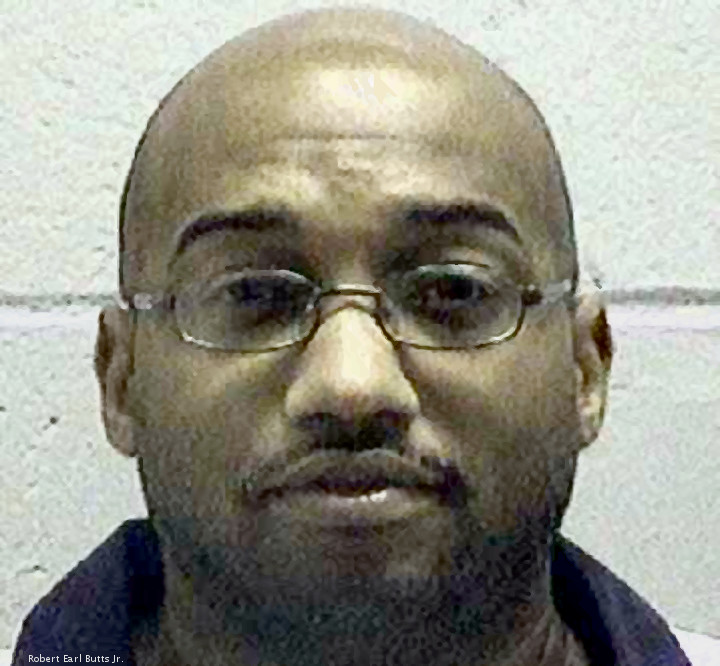
The State of Georgia is planning to execute Robert Earl Butts for the 1996 murder of Donovan Corey Parks. The short version is that Mr. Butts, and accomplice Marion “Mookie” Wilson, asked Mr. Parks for a ride. They shot him, and stole his car. They were convicted, and both Mr. Butts and Mr. Wilson were sentenced to death. The long version of the story is below. The majority of this story is from the Attorney General of Georgia. Material from other sources will be used.
“The evidence adduced at trial showed that on the night of Thursday, March 28, 1996, Butts and Marion Wilson, Jr., drove in Butts’s automobile to a local Wal-Mart store and began searching for a victim. Butts entered the store wearing a coat, under which he likely concealed the murder weapon. A witness observed Butts and Wilson standing behind Donovan Corey Parks in a checkout line. The cashier for that checkout line also remembered Butts being in her line. The store’s receipts showed that Butts purchased a pack of chewing gum immediately after Parks made his purchase of pet supplies. A witness overheard Butts asking Parks for a ride. After Parks moved items in his automobile to make room for Butts and Wilson, Butts sat in the front passenger seat and Wilson sat in the back seat behind Parks. According to a witness to whom Butts confessed, Butts revealed the shotgun a short distance away, and Parks was ordered to stop the automobile. Wilson dragged Parks out of the automobile by his tie and ordered him to lie face down on the pavement. Butts then fired one fatal shot to the back of Parks’s head with the shotgun. Witnesses nearby heard the shot, believing it to be a backfiring vehicle.”
“Outside the store, they asked for a ride and then forced Parks to drive to the side street off Ga. 49. Parks’ father, Freddie Parks, had attended church with his son that day and later found his body in a puddle of blood. “I had no idea it was my own son,” he testified at trial.”
“After murdering Parks, Butts and Wilson drove to a service station in Gray, Georgia, where they refueled Parks’s automobile and where Wilson was filmed by the service station’s security camera. Butts and Wilson then drove to Atlanta in an unsuccessful attempt to exchange Parks’s automobile for money at a “chop shop.” The pair purchased two cans of gasoline, drove to a remote location in Macon, Georgia, and set fire to Parks’s automobile.” (“Parks’ burning 1992 Acura Vigor was later discovered behind a Huddle House in east Macon.”) “They then walked to a nearby public phone, where Butts called his uncle and arranged a ride for himself and Wilson back to the Wal-Mart to retrieve Butts’s automobile.
Investigators had recorded the license plate numbers of the vehicles parked in the Wal-Mart parking lot on the night of the murder, and Butts’s automobile was among them. A shotgun loaded with an uncommon type of ammunition was found under Wilson’s bed during a search, and a witness testified that Butts had given the weapon to Wilson to hold temporarily. Two of Butts’s former jail mates testified that he had admitted to being the triggerman in the murder.
Butts was indicted in the Superior Court of Baldwin County, Georgia for malice murder, felony murder, armed robbery, hijacking a motor vehicle, possession of a firearm during the commission of a crime, and possession of a sawed-off shotgun. Butts was convicted as charged in the indictment and sentenced to death on November 21, 1998.”
During appeals, the traditional claim of ineffective counsel was made. “Butts argues that the trial judge should have recused herself simply because she had previously presided over juvenile proceedings against Butts.” “Trial counsel … made a strategic decision not to question potential jurors about their views on gangs because he intended to focus attention on Butts’s co-perpetrator as a gang member and because he thought drawing premature attention to the issue of gangs would have been counterproductive.”
There seems to be little doubt regarding the guilt of Mr. Butts and Mr. Wilson. “Although the trial judge’s report indicates that the evidence did not “foreclose all doubt” in this case, we note that the evidence supporting the jury’s finding of guilt was very strong. The fact that Butts asked the victim for a ride, even though he had driven his own automobile to the store, shows that he was involved in the motor vehicle hijacking from the beginning. The evidence also suggested that Butts carried the shotgun with him into the store as he sought out a victim. Testimony at trial showed that Butts had worked with the victim previously, suggesting that Butts intended from the beginning to murder the victim in order to ensure the victim’s silence. Several of Butts’s former jail mates testified that he had admitted being the triggerman. Evidence presented during the sentencing phase showed that Butts had a history of criminal conduct. These circumstances all might reasonably have urged the jury to impose a death sentence.”
Lawyers complained about a positive description of the victim. “Here, the incidental characterizations of the victim as a nice and charitable person and as being a person who attended services at a religious establishment were relevant to the facts of the crime. The victim offered a ride to persons pretending to be in need, and the victim was identified, in part, by the semi-formal clothing he was wearing after a religious service. Likewise, the victim’s father’s statement in response to a question by the State about how the victim’s remains were identified was an incidental outgrowth of the relevant fact that the father had, in an extraordinary and tragic turn of events, discovered his own son’s body moments after the murder.”
One novel argument against the execution is based on “evolving standards of decency of the people of Georgia.” A man set for execution next month should be resentenced because he wouldn’t get the death penalty if he were sentenced today, his lawyers argued in a court filing Wednesday. … The murder for which Butts and Wilson were sentenced had a single victim and one aggravating factor, a circumstance that increases the severity of a crime and increases the possible sentence. According to sentencing data obtained and analyzed by Butts’ lawyers, no one has been sentenced to death for a murder with one victim and one aggravating factor in over a decade.”
“According to his case, Butts and the other man were members of the Folks Nation street gang and were being required to commit a violent crime. He got in line behind Parks at a Walmart in Milledgeville, where Parks was buying cat food, and followed him to the parking lot.” “Butts contends that evidence about the Folks gang and gangs in general was irrelevant to the issues in the sentencing phase of his trial and that presentation of the evidence violated his freedom of speech and his freedom of association under the Constitution of the United States. The evidence in question suggested that Butts was involved with the Folks gang and that the gang required acts of violence for promotion within its ranks. We conclude that, because the “violent nature of that gang was relevant to the issues to be decided by the jury during the sentencing phase of [Butts’s] trial,” the contested evidence was not an invitation for the jury to punish Butts based upon his exercise of constitutional rights and, accordingly, that the evidence was admissible.”
Pictures today are from The Library of Congress. UPDATE Robert Earl Butts died at 9:58 pm, May 4, 2018. His last words: “Yeah, I’ve been drinking caffeine all day.”




Carlton Gary
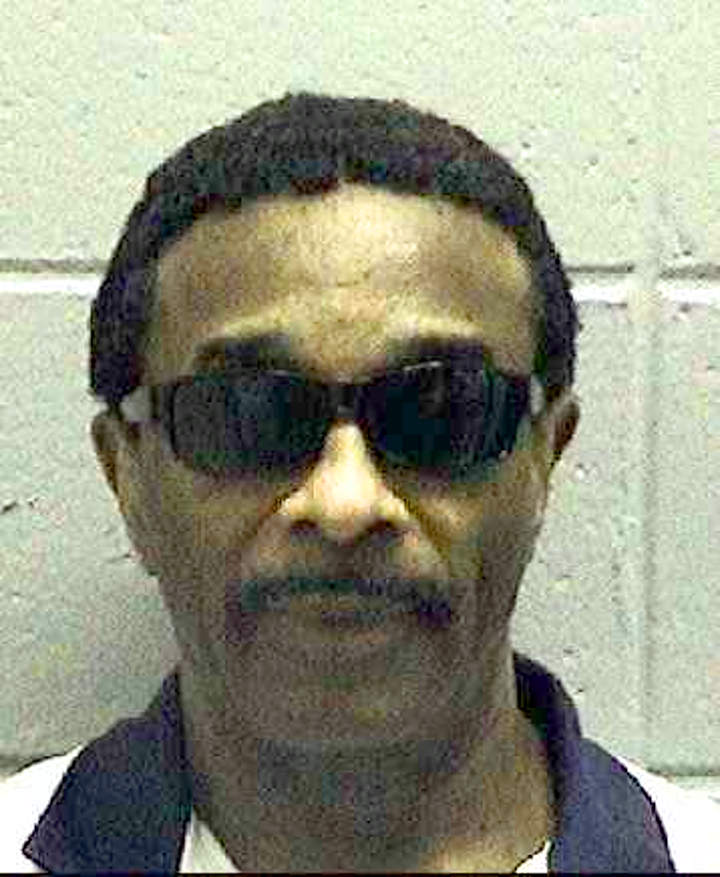


Carlton Gary, GDC ID: 0000418413, is scheduled to be executed Thursday, March 15. He was convicted of the rape, and murder, of Florence Scheible, Martha Thurmond and Kathleen Woodruff. They were killed, along with four other elderly women, in Columbus, GA, in 1977 and 1978. The serial killer became known as the Silk Stocking Strangler. “Gary’s execution was originally set for December 16, 2009. … The Georgia Supreme Court entered an order on December 16, 2009, remanding the case to the trial court to determine whether Gary was entitled to DNA testing.”
Chamblee54 published a report on the case in 2009. This post will be copied below. Before getting to that, we should consider whether there is any new evidence, that indicates that Mr. Gary should be executed. In 2009, the opinion of many was that the evidence against Mr. Gary was far from conclusive. This is not to say that Mr. Gary is innocent of all charges. In fact, DNA evidence links Mr. Gary to a 1975 murder in New York state.
However, it is far from clear that Carlton Gary is the Silk Stocking Strangler. This chart summarizes the problems with evidence against Mr. Gary. In addition, an article in Vanity Fair goes into great detail about the case, as does this story.
The story of the alleged confession is bizarre. “Albany, GA, police arrested Gary on May 3, 1984. Columbus police drove over that day to bring him back. Boren (Columbus Police Chief Ricky Boren, who was a detective … in 1984.) testified that Gary that night offered to take police on a tour of homes he’d burglarized, so Boren and other investigators started driving him around midtown… Gary would talk about other victims’ homes he had been in, Boren said, but he always blamed an accomplice for the homicides. … Boren said police were so fatigued they ended the interview about 3:30 a.m. May 4, 1984, forgetting to drive by the 3783 Steam Mill Road where Janet Cofer, 61, was found dead April 20, 1978. Defense attorney Jack Martin challenged Boren’s account, noting detectives had neither recorded the interview nor taken notes.Boren said investigators feared Gary would stop talking if they used a tape recorder or took notes.”
DNA testing was done for some cases after the 2009 ruling. “Extensive testing was performed during the extraordinary motion for new trial proceedings, which revealed a positive DNA match between Gary and … Jean Dimenstein.” (Mr. Gary was not convicted of Jean Dimenstein’s death.)
“Prosecutors have operated on the theory that one person committed all seven murders, so any evidence that might clear Gary in one case could undermine the claim that he is the “Stocking Strangler” … Gary was convicted of killing Thurmond, Scheible and Woodruff. Authorities say his DNA matched semen evidence from Dimenstein’s rape but not from Thurmond’s.”
Gertrude Miller survived an early assault, and indentified Mr. Gary as her attacker. “a later DNA test on her clothing yielded a profile that did not match him.” Gertrude Miller’s testimony is questioned by others. In the Matha Thurmond case, “police collected semen samples later thought suitable for DNA testing. The G.B.I. crime lab accidentally tainted and destroyed that evidence.”
When Georgia decides to execute someone, they don’t like to give up. Troy Davis, Kelly Gissendaner, and Warren Hill are recent examples. No matter how inconclusive the evidence, no matter how bad it makes the state look, when Georgia wants to execute someone, they usually do it.
Since this is Georgia, race must be considered. Carlton Gary is black. The ladies who died were white. This was a high profile, racially charged case. The authorities were under enormous pressure to solve the case. While not necessarily racist, the authorities did not look good in their handling of the case.
“In February 1978 Columbus Police Chief received a bizarre, frightening letter supposedly from a white racist group of vigilantes called the “Forces of Evil.” The Forces of Evil wrote that if police did not apprehend the Stocking Strangler by “1 June,” they would murder a black woman in retaliation for what were believed to be murders of white women by a black man. That black woman, the letter went on to assert, would be Gail Jackson. She had already been kidnapped and was being held by the group. She would die unless the police caught, in the letter’s terms, the “S-Strangler.”Investigators learned that Gail Jackson was a black woman from nearby Fort Benning. And, chillingly, she was missing. While they were still puzzling over the disappearance of Gail Jackson, the police received a second letter from the supposed Forces of Evil. They demanded a $10,000 ransom for the kidnapped woman’s freedom.
Columbus police took this baffling, frightening letters to the Behavioral Science Unit of the F.B.I. As Jordan wrote in Murder in the Peach States, that unit “came to some startling conclusions. They felt the author, or authors, of the ‘Forces of Evil’ letter was not seven white men, but more likely one black man. The profilers believed he probably already killed Gail Jackson and that the letters were intended to divert attention away from the real killer. The profile predicted him to be an artilleryman or military policeman. An excerpt in the letter which stated, ‘the victims will double’ led profilers to believe that he may already have also killed two other women. … They also believed that he might be the stocking strangler.”Investigators eventually arrested William Hance for the murder of Gail Jackson. He was a black artilleryman at Fort Benning. He confessed to having authored the “Forces of Evil” letter and to have killed two other women in addition to Gail Jackson. However, there were no links between Hance and the Stocking Stranglings.”
UPDATE: Carlton Gary died at 10:33 pm, March 15, 2018. “… he did not accept a final prayer or make a final statement.” Mr. Gary declined a special last meal. He ate the standard prison dinner of a grilled hamburger, a hot dog, white beans, coleslaw and grape beverage.


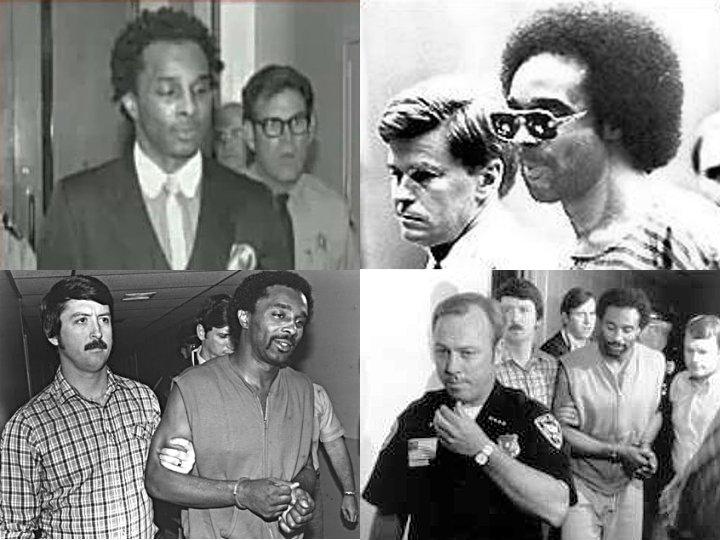

The State of Georgia has set an execution date for Carlton Gary. December 16 is scheduled to be his date with the gurneygoinggone, in Jackson, GA. Mr. Gary is said to be the “Stocking Strangler”, who terrorized Columbus GA in 1977 and 1978. Not everyone agrees with the verdict.
Carlton Gary was born December 15, 1952. (His birthday is the day before the scheduled execution). He met his father once, when he was 12. His mother was poor, and often got relatives to care for her son. As Carlton Gary got older, he became familiar with law enforcement.
In 1970, there was an elderly lady strangled and murdered in upstate New York. Mr. Gary was involved. Later DNA tests indicate that Mr. Gary was the 1975 killer of Marion Fisher in Syracuse NY.
On August 22, 1977, Carlton Gary escaped from Onondaga prison. On September 15, 1977, Mary Willis “Ferne” Jackson was strangled to death with a nylon stocking. Between this date and April 20, 1978, six more women were raped and strangled with stockings. All were elderly white ladies, most of whom lived in the affluent Wyntown neighborhood.
— Ferne Jackson, 60, of 2505 17th St., killed Sept. 15, 1977.
— Jean Dimenstein, 71, of 3927 21st St., killed Sept. 25, 1977.
— Florence Scheible, 89, of 1941 Dimon St., killed Oct. 21, 1977.
— Martha Thurmond, 69, of 2614 Marion St., killed Oct. 25, 1977.
— Kathleen Woodruff, 74, of 1811 Buena Vista Road, killed Dec. 28, 1977.
— Mildred Borom, 78, of 1612 Forest Ave., killed Feb. 12, 1978.
— Janet Cofer, 61, of 3783 Steam Mill Road, killed April 20, 1978.
During this time, Carlton Gary was busy robbing restaurants. He was caught, and sent to prison in South Carolina. He escaped in 1984. At this time, the police in Columbus were working on a lead in the Stocking Strangler case.
“Police in Columbus hoped against hope that a lead they were developing in the long, dragged-out case of the Stocking Strangler would pan out. A .22 Luger handgun had been stolen from a Wynnton house at the time of the murders. An anonymous caller called the owner of the gun and said, “The police have the gun you had stolen from you.”
That gun owner reported the call to the Columbus police. At first they were baffled. They did not have that gun but could police in another area have it? Detectives put out a nationwide teletype asking if anyone had it. No other police department did. Two Kalamazoo, Michigan clerks went painstakingly through their records and found that the weapon had been registered at their shop in 1981. Detectives tracked the gun down to its current owner who said he had purchased it in Phenix City, Alabama from Jim Gary. The police interviewed Jim Gary who said he had gotten it from his nephew, Carlton Gary.
Detectives then discovered that Gary had recently escaped from the South Carolina prison where he was serving time as “Michael David.” That made their job especially urgent. If Gary was the Stocking Strangler, elderly women were in terrible danger.
Fingerprints of Carlton Gary were matched to prints found in the home of victim Kathleen Gary. Then Columbus police were contacted by investigators from Phenix City who were looking for suspected robbers and cocaine runners, one of whom was known as Michael David…
On the early morning of May 3, 1984, acting on a tip, a S.W.A.T. team went to a Holiday Inn in Albany, Georgia. Carlton Gary was in a room with a woman. When that woman came out of that room to go to an ice machine, S.W.A.T. members asked her to come to a room for questioning. She agreed to cooperate with authorities and told them that Gary had a gun on the nightstand.
Trying to decoy him into opening the door, she went back to it and knocked but ran away before he answered it. Gary opened the door, saw the police, and tried to shut it but officers kept it open with their shoulders. Then the team swarmed into the room and captured him…
True to his pattern, Gary confessed to having been at the homes of the Wynnton area victims but denied raping or murdering them. His accomplice, Malvin Alamichael Crittendon had done that. “I did the burglaries,” Gary explained, “and Michael killed the old ladies.”Crittendon existed and was located by the police. He denied taking part in the Stocking Stranglings and police could find no evidence to connect him to them.”
In August 1986, Carlton Gary went to trial. The state would not give the defense any money to hire investigators or expert witnesses. The star witness for the state was Gertrude Miller, who had been attacked, in similar fashion to the other victims, but survived. Mrs. Miller identified Carlton Gary as the attacker. On August 26, 1986, Carlton Gary was convicted of the murder of Florence Scheible, Martha Thurmond, and Kathleen Woodruff. He was sentenced to death the next day.
In a death penalty case, there are a lot of reviews. This is especially true for a high profile case like this. Evidence has come up which indicates Carlton Gary is not the stocking strangler.
DNA testing was not used during the trial. After the trial, the body fluids from the crime scenes were destroyed as a bio hazard. (This evidently was not done in Syracuse). It is not possible to compare DNA from Mr. Gary to what was found at the crime scene.
The following quote is from a Vanity Fair article about the case: “Even though DNA-testing techniques had not been invented at the time of the stranglings, investigators did possess an older method for testing semen that could be very effective: secretor typing. Most people, about four-fifths of the population, are “secretors,” meaning that in their saliva, semen, and other fluids they secrete chemical markers that give away their blood group. A “group-O secretor” would be someone from the common O blood group whose semen contained a relatively large amount of the relevant marker.
The tests carried out on semen collected from the murder scenes of Ferne Jackson, Florence Scheible, and Martha Thurmond indicated that the stocking strangler was a “non-secretor,” whose body fluids contained only tiny traces of the group-O marker. As for Carlton Gary, the police took a saliva sample from him after his arrest. It revealed that, together with some 40 percent of the population, he was an O secretor.”
The star witness, Gertrude Miller, seems to have a few flaws as well. She had identified several other men as being her attacker, some of whom looked nothing like Mr. Gary. The trial was in 1986, when the murders had been committed in 1977-78. A commenter in a Columbus internet forum named “former Wyntown resident” says: ” I personally knew one of the “witnesses” well and she is a Hystrionic Personality Disorder who interjected herself in this appalling travesty of justice solely for the attention. She obviously presented well enough in court but I knew beyond a doubt she lied- she concocted the story of an encounter years after it allegedly took place.”
The last victim, Janet Cofer, had a bite mark on her breast. A impression was taken of this mark, and a model of the teeth marks produced. The teeth in that model do not match Carlton Gary. (“Gary was not convicted of the April 20, 1978, strangling of 61-year-old Columbus school teacher Janet Cofer, from whose left breast the impression of an apparent bite mark was made. Prosecutors used evidence from that case during Gary’s 1986 trial “solely to show similar mode, method and motivation,” U.S. District Court Judge Clay Land writes in his order Thursday granting funds for further examination of the bite cast. Prosecutors have operated on the theory that one person committed all seven murders, so any evidence that might clear Gary in one case could undermine the claim that he is the “Stocking Strangler” … Gary’s attorneys first sought the bite-mark mold in 2003, but no one knew where it was. It was not used as evidence in the 1986 trial, and Gary’s defense attorneys weren’t told about it then. Prosecutors later claimed it was irrelevant because Gary had dental work after the murders. Last month, Muscogee County Coroner James Dunnavant discovered the mold stashed back in an old file cabinet in an office storage room. For years Dunnavant’s predecessor, Coroner Don Kilgore, had kept the mold in his desk drawer, occasionally showing it off. But no one knew what happened to it after Kilgore died in 2000.”)
The fingerprints were not photographed “in situ”, or in the original location. They had been lifted and transferred to file cards. There is no tape of the interrogation. The detective, Mike Sellers, wrote the only record of the interrogation at his kitchen table at 4:30 am, after interviewing Mr. Gary. The tape of the discussion was destroyed.
A British journalist named David Rose came to Georgia to write about the death penalty, and got caught up in the case. He wrote a book, The Big Eddy Club, about the case.
Unless something happens to stop the process, Carlton Gary will die on Wednesday. While he is no choir boy, there is doubt that he is the stocking strangler.
Update The Georgia Supreme Court issued a stay of execution on Wednesday, helpfully before the 7pm deadline. The Supremes voted 5-2 to order Muscogee County Judge to hold a hearing to consider DNA tests.
PG was under the impression that the fluid samples from the crime scene had been destroyed. Other evidence in this case has been said to be destroyed or lost, only to turn up later. (i.e., the mold made from the teeth marks).
PG has too much free time these days, and was going to go to Jackson to witness the scene outside the prison. He went to the 11 alive weather radar to check the weather, and saw a headline announcing the stay of execution. Pictures today are from The Library of Congress.







Sin



The post below went up seven years ago. It deals with a publicity stunt from the Catholic church, an updated seven deadly sins. The statute of limitations may have run out on this message. The traditional “seven deadly sins” were anger, greed, sloth, pride, lust, envy, and gluttony.
The site linked above has a page, the seven deadly sins of Mohandas Karamachand Gandhi. The subcontinental fashion icon lists Wealth without Work, Pleasure without Conscience, Science without Humanity, Knowledge without Character, Politics without Principle, Commerce without Morality, and Worship without Sacrifice.
After 1,500 years the Vatican has brought the seven deadly sins up to date by adding seven new ones for the age of globalization. The list, published yesterday in L’Osservatore Romano, the Vatican newspaper, came as the Pope deplored the “decreasing sense of sin” in today’s “secularized world” and the falling numbers of Roman Catholics going to confession. The new deadly sins include polluting, genetic engineering, being obscenely rich, drug dealing, abortion, pedophilia and causing social injustice. HT to Fox News .( aka the eighth deadly sin.)
One reaction is to wonder, what language was used for the list? Phrases like “obscenely rich” and “causing social injustice” can mean different things, and one wonders about the nuance behind the original expression. Now, Just about all of these “sins” can merit comments. Maybe the Catholic church is thinking of moving its headquarters to hell.
polluting We can talk about something where all have sinned, or who should throw the first stone. If you ride in a car, wear synthetic fibers, through away anything, use a less than perfect sewer system (or a functioning one on a rainy day with overflows), then you have polluted.
genetic engineering Here again, there are semantics galore. Much of the food we eat is tweaked by genetic breeding. This is something Euros get twitchy about, that doesn’t concern most Americans.
being obscenely rich This is one to wonder what the original Italian said. Compared to much of the world, a 900sf house is a palace. However, compared to many of the neighbors, it is lower middle class. Perhaps the emphasis should be on greed, selfishness, and how you gain this wealth. The tenth commandment says something about coveting. It is the forgotten commandment.
drug dealing Is there a distinction between legal and illegal drugs here? If you go by the damage that substances cause, then this rule will speak to bartenders and the clerk who sells cigarettes. Not to mention the media outlets who advertise cigarettes and beer, the legislators who condone these substances while prosecuting potheads, and a whole host of others. The legally based war on drugs is a disaster in this country. Do we really need to drag the Catholic church into it?
abortion. If Mary had gotten an abortion, would Christians worship a vacuum cleaner? Seriously, the Catholic Corporation has flogged this donkey, to great profit, for years. If you don’t want abortions, promote contraception and adoption. Catholics should find another gimmick.
pedophilia When you up pedophile in the dictionary, you see a picture of a Catholic priest.
causing social injustice Can we have a better translation of this?

This bonus repost is also from early march 2008. BHO was winning the race for the Democratic Presidential nomination, and the skeletons were coming out of the closet. As the struggle went on, BHO threw Jeremiah Wright under the bus, and got elected.
YouTube is an impediment to work. I was going to write some clever words to go with these pictures, but I looked at some videos first. All I wanted was the embed gibberish so I could show them to you, but YouTube has more videos. The only way to get rid of temptation is to give into it.
I am glad I got to see the videos of Jeremiah Wright. Friday I was hearing the tapes of him on the radio, and it was most discouraging. When I saw the video, I realized that he was just a loudmouth.
I worked for 6 years with a professional Jesus Worshiper. He was selfish, hateful, vulgar and loud. He frequently directed this anger at me. He used Jesus to hurt me, often over trivial matters. His voice sounded a lot like Mr. Wright’s.
Once, this Professional Jesus Worshiper shouted me down, and humiliated me, in the name of Jesus. When he was through, he picked up the telephone and told his friend ” I never felt better in my life”. People like that, and Jeremiah Wright, bring shame to Jesus.
One thing I learned while working with the Professional Jesus Worshiper was the importance of the audience. These hatemongers do not just talk to themselves. They need an audience. These audiences enable these poison spewers. To pray with a loudmouth who shames Jesus is morally equivalent to buying whiskey for an alcoholic. Barack Obama is that audience. Pictures today are from “The Special Collections and Archives, Georgia State University Library”.




When You Agree With Justice Thomas




SCOTUS sent the death penalty case of Keith Tharpe back to the lower courts today. This is the Pontius Pilate approach, which might not save Mr. Tharpe from eventual execution. Here is the opinion, and the dissent by Justice Clarence Thomas.
Chamblee 54 has written about this case twice before. Keith Tharpe And Jaquelin Freeman is about the case itself. The short version is that Mr. Tharpe allegedly murdered his sister in law, and raped his estranged wife, after kidnapping both. There is little doubt that Mr. Tharpe is guilty. A jury sentenced him to death, after deliberating for two hours.
The Juror Who Said The N-Word is about the ‘extraordinary circumstances’ of this case. Seven years after the crime, a lawyer interviewed a juror, Barney Gattie. The gentleman said some rude things about black people. This post has a verbatim rendering, and some more information that is salient to the case. “Gattie’s remarkable affidavit—which he never retracted— presents a strong factual basis for the argument that Tharpe’s race affected Gattie’s vote for a death verdict.”
The dissent tells a different story. “More than seven years after his trial, Tharpe’s lawyers interviewed one of his jurors, Barney Gattie. The resulting affidavit stated that Gattie knew Freeman, and that her family was “what [he] would call a nice black family.” The affidavit continued that, in Gattie’s view, “there are two types of black people: 1. Black folks and 2. Niggers.” Tharpe “wasn’t in the ‘good’ black folks category,” according to the affidavit, and if Freeman had been “the type Tharpe is, then picking between life and death for Tharpe wouldn’t have mattered so much.” But because Freeman and her family were “good black folks,” the affidavit continued, Gattie thought Tharpe “should get the electric chair for what he did.” Gattie’s affidavit went on to explain that “after studying the Bible,” he had “wondered if black people even have souls.” The affidavit also noted that some of the other jurors “wanted blacks to know they weren’t going to get away with killing each other.”
A couple of days later, the State obtained another affidavit from Gattie. In that second affidavit, Gattie stated that he “did not vote to impose the death penalty because [Tharpe] was a black man,” but instead because the evidence presented at trial justified it and because Tharpe showed no remorse. The affidavit explained that Gattie had consumed “seven or more beers” on the afternoon he signed the first affidavit. Although he had signed it, he “never swore to [it] nor was [he] ever asked if [the] statement was true and accurate.” He also attested that many of the statements in the first affidavit “were taken out of context and simply not accurate.” And he felt that the lawyers who took it “were deceiving and misrepresented what they stood for.” “which he never retracted.”
“A state postconviction court presided over Gattie’s deposition. Gattie again testified that, although he signed the affidavit, he did not swear to its contents. Gattie also testified that when he signed the affidavit he had consumed “maybe a 12 pack, [and] a few drinks of whiskey, over the period of the day.” Tharpe’s lawyers did not question Gattie about the contents of his first affidavit at the deposition. They instead spent much of the deposition asking Gattie unrelated questions about race, which the state court ruled irrelevant—like whether he was familiar with Uncle Tom’s Cabin or whether his granddaughter would play with a black doll. The lawyers’ failure to address the contents of Gattie’s first affidavit troubled the state court. Just before it permitted Gattie to leave, the court advised Tharpe’s lawyers that it might “totally discount” Gattie’s first affidavit, and it again invited them to ask Gattie questions about its contents. Tharpe’s lawyers declined the opportunity.
The state court also heard deposition testimony from ten of Tharpe’s other jurors and received an affidavit from the eleventh. None of the jurors, two of whom were black, corroborated the statements in Gattie’s first affidavit about how some of the jurors had considered race. The ten jurors who testified all said that race played no role in the jury’s deliberations. The eleventh juror did not mention any consideration of race either.”
Justice Thomas goes full Scalia in this closing paragraph. “Today’s decision can be explained only by the “unusual fact” of Gattie’s first affidavit. The Court must be disturbed by the racist rhetoric in that affidavit, and must want to do something about it. But the Court’s decision is no profile in moral courage. By remanding this case to the Court of Appeals for a useless do-over, the Court is not doing Tharpe any favors. And its unusual disposition of his case callously delays justice for Jaquelin Freeman, the black woman who was brutally murdered by Tharpe 27 years ago. Because this Court should not be in the business of ceremonial handwringing, I respectfully dissent.”
There is a lot of legalese in this document, which makes IANAL heads hurt. One wonders if the second affidavit qualifies as a retraction. Maybe SCOTUS felt the need to virtue signal on racism. There is also a lot of talk about whether the statements by Mr. Gattie should be allowed to influence the appeals process. Pena-Rodriguez is cited, along with many other cases. This is what lawyers do.
The majority opinion, as well as most press reports on today’s ruling, does not mention Mr. Gattie’s intoxication during the first affidavit. Indeed, since Mr. Gattie never read this affidavit, nor swore to it, there is no telling how accurate it is. We don’t know what questions attorneys were asking the elderly drunk. Did the lawyers lead him on, and put words in his mouth? The ethics of interviewing an intoxicated man, to try to save your client from execution, are questionable.
One might also ask what this says about the death penalty process. The state bends over backwards to give the illusion of fairness, and due process. An attorney goes out, interviewing jurors seven years after the trial, trying to find dirt. Getting a criminal off on a technicality is a regrettable consequence of our judicial system. Maybe in this case justice would have been served with a life sentence, without fishing trip juror interviews.
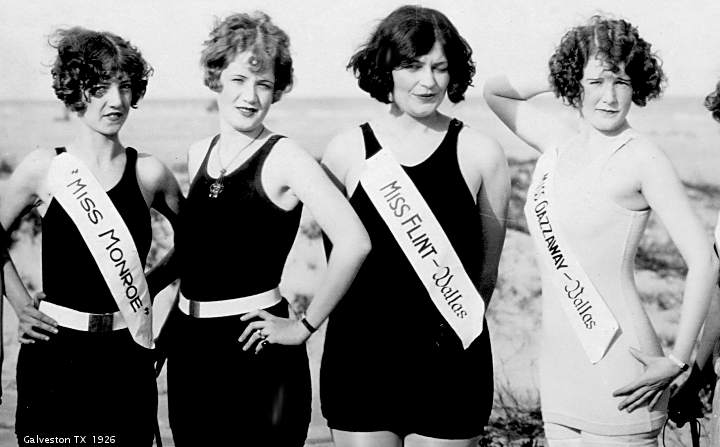
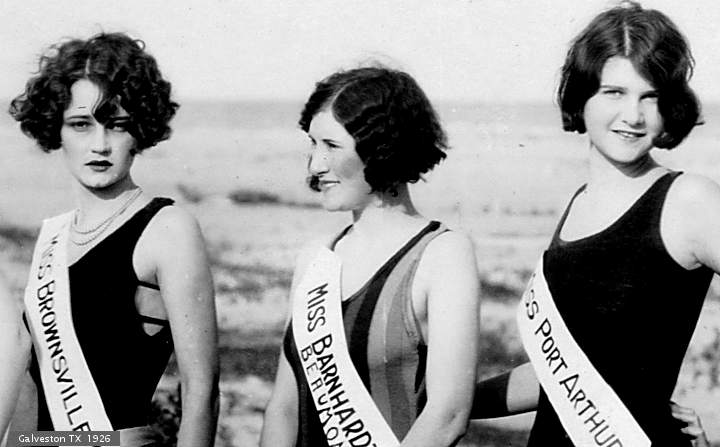
Pictures are from The Library of Congress. These details are from picture #06666, documenting “First Internation[al] Pageant of Pulchritude & Seventh Annual Bathing Girl Review at Galveston, Texas.” It was taken in 1926.




The Juror Who Said The N-Word







Keith Tharpe is scheduled to die Tuesday night. There is little doubt that he is guilty. The only thing to worry about are some *intemperate* comments by a juror, Barnie Gattie.
“The crime occurred on September 25, 1990. Tharpe was arrested the same day. He was tried on January 2 through January 10, 1991.” Mr. Gattie was interviewed by attorneys in 1998.
Mr. Gattie was interviewed by attorneys during the appeals process. He made some comments that featured the *n word*. (This word will be spelled out when quoting court documents. If you don’t like this, you are encouraged to skip over the text, and look at the pictures.) The corporate media has responded with sensational headlines, like A Black Man Convicted By a Racist Juror Is About to Be Executed. You should never neglect an opportunity to call Georgia racist.
When looking at these articles, PG noted different versions of what Mr. Gattie said. He tried to find a copy of the original statement. It was on page fifteen of this court document.
“At the May 28, 1998 state habeas evidentiary hearing, Tharpe tendered affidavits from several jurors, including Barney Gattie. In his affidavit, Gattie stated: “I . . . knew the girl who was killed, Mrs. Freeman. Her husband and his family have lived in Jones [C]ounty a long time. The Freemans are what I would call a nice Black family. In my experience I have observed that there are two types of black people. 1. Black folks and 2. Niggers. For example, some of them who hang around our little store act up and carry on. I tell them, “nigger, you better straighten up or get out of here fast.” My wife tells me I am going to be shot by one of them one day if I don’t quit saying that. I am an upfront, plainspoken man, though. Like I said, the Freemans were nice black folks. If they had been the type Tharpe is, then picking between life or death for Tharpe wouldn’t have mattered so much. My feeling is, what would be the difference. As it was, because I knew the victim and her husband’s family and knew them all to be good black folks, I felt Tharpe, who wasn’t in the “good” black folks category in my book, should get the electric chair for what he did. Some of the jurors voted for death because they felt that Tharpe should be an example to other blacks who kill blacks, but that wasn’t my reason. The others wanted blacks to know they weren’t going to get away with killing each other. After studying the Bible, I have wondered if black people even have souls. Integration started in Genesis. I think they were wrong. For example, look at O.J. Simpson. That white woman wouldn’t have been killed if she hadn’t have married that black man.”
Subsequently, the state habeas court allowed the parties to depose eleven of the juror who stilled lived in Georgia. The depositions were taken over a two day period (October 1 and 2, 1998) in the presence of the court. At his deposition, Gattie testified that he consumed alcohol every weekend. He stated that he had been drinking alcohol on the Saturday he first spoke with representatives from the Georgia Resource Center. When they returned on Memorial Day with the affidavit for him to sign, he had again been drinking. He testified that he had consumed a twelve pack of beer and a few drinks of whiskey before signing the affidavit. Gattie stated he was not told what the affidavit was going to be used for, he did not read the affidavit, and when the affidavit was read to him, he did not pay attention. He complained that the affidavit was “taken all out of proportion,” or taken “[o]ut of context” and “was misconstrued.” (According to the Georgia Resource Center representatives who interviewed him, they informed Gattie who they were and the reason for their visit, and Gattie did not appear alcohol impaired.)
Gattie testified that he is not “against integration” or “against blacks.” He claimed to think African Americans “are hardworking people” and no more violent than other groups of individuals. Gattie stated that he used the term “nigger,” but not as a racial slur. Instead, he used it describe both white and black people who are “no good,” who do not work, or who commit crimes. Gattie also testified that race was not an issue at deliberations and he never used the term “nigger” during deliberations. In addition to Gattie, the other ten jurors who were deposed testified that Tharpe’s race was not discussed during deliberations, race played no part in their deliberations, no one used racial slurs during deliberations, and racial animus or bias was not a part of the deliberations. Tharpe tendered an affidavit from Tracy Simmons, the only juror who was not deposed, and he did not allege that race played any part in their deliberations or that anyone expressed racial animus or bias during deliberations. Respondent also submitted an affidavit from Gattie in which he stated he did not vote to impose the death penalty because of Tharpe’s race. Instead, he stated he voted for a death sentence because of “the evidence presented” and Tharpe’s lack of “remorse.” In this affidavit, Gattie again distanced himself from the statements shown in the affidavit he signed for Tharpe’s state habeas counsel. He claimed “parts of what he said [were] left out of the statement and other parts were written out of context.”
One thing not mentioned by the corporate media was the fact that Mr. Gattie was drunk when he made the statement. Why would the attorney’s continue with the interview if they knew Mr. Gattie was intoxicated? Did the attorneys lead on Mr. Gattie, and put words in his mouth? How was the affadavit presented to Mr. Gattie for his approval? Mr. Gattie later claimed he “… didn’t pay much attention when the affidavit was read to him. He said many of his statements “were taken out of context and simply not accurate.” He signed the defense affidavit because he “just wanted to get rid of them.” Were these attorneys looking for the truth, or trying to get a drunken old man to say something inappropriate, so they could get Mr. Tharpe’s sentence commuted?
There is no way to know what went on in the jury room twenty six years ago. The guilt of Mr. Tharpe was evident. Some would say the murder was not heinous enough to justify the death penalty. The jury was ten white people, and two black people. Murderpedia has details on the selection of the jury. As in most death penalty cases, there is talk about jury selection during the appeals. There was no way to know, when selecting Barney Gattie, that he would drunkenly use the n-word while talking to an attorney, seven years after the trial.
Pictures today are from The Library of Congress. Many of the photographs were taken in North Platte, Nebraska. John Vachon took the pictures in October, 1938. UPDATE SCOTUS issued a ruling on the case January 8, 2018, with a dissent from Justice Clarence Thomas.





Keith Tharpe And Jaquelin Freeman



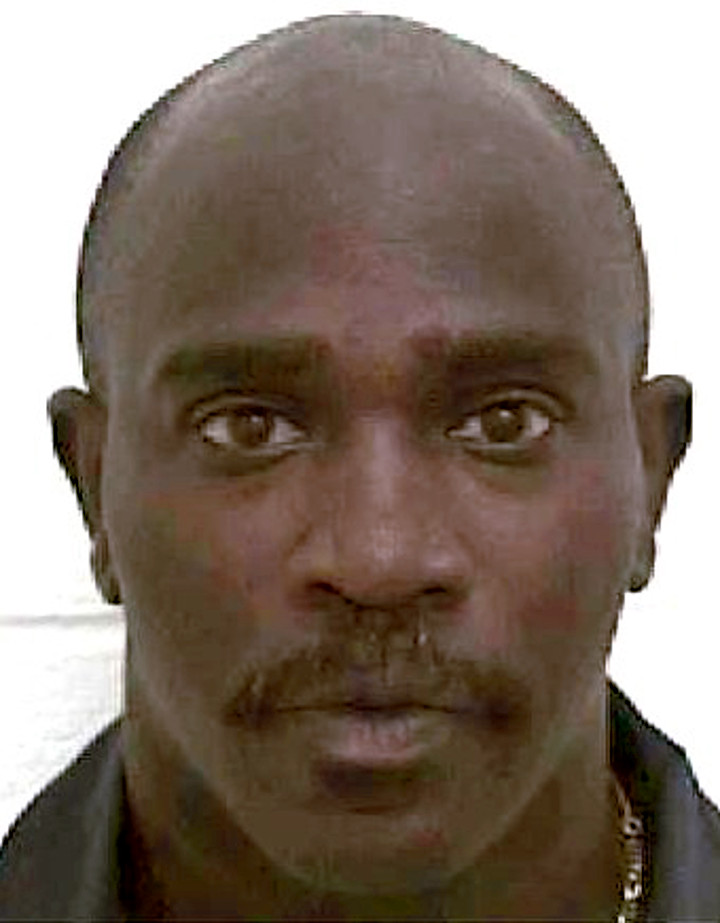
.
Keith Leroy Tharpe, GDC ID: 0000173325, is currently scheduled to be executed on September 26, 2017 at 7:00 p.m. for the 1990 murder of his sister-in-law Jaquelin Freeman. There is little doubt regarding his guilt. The only controversy involves some statements by a juror. This is the short version of the story. If you want more details, see below. .
Murderpedia has the story of the slaying.”Tharpe’s wife, Migrisus Tharpe, left him on August 28, 1990 and moved in with her mother. Following various threats of violence made by the defendant to and about his wife and her family, a peace warrant was taken out against him, and the defendant was ordered not to have any contact with his wife or her family. Notwithstanding this order, Tharpe called his wife on September 24, 1990 and argued with her, saying if she wanted to “play dirty,” he would show her “what dirty was.” .
On the morning of the 25th, his wife and her sister-in-law met Tharpe as they drove to work. He used his vehicle to block theirs and force them to stop. He got out of his vehicle, armed with a shotgun and apparently under the influence of drugs, and ordered them out of their vehicle. After telling the sister-in-law he was going to “f— you up,” he took her to the rear of his vehicle, where he shot her. He rolled her into a ditch, reloaded, and shot her again, killing her. Tharpe then drove away with his wife. After unsuccessfully trying to rent a motel room, Tharpe parked by the side of the road and raped his wife. Afterward, he drove to Macon, where his wife was to obtain money from her credit union. Instead she called the police.” .
At the trial, Mr. Tharpe was found guilty, and sentenced to death. “The jury found the following statutory aggravating circumstances: 1. The offense of murder was committed while the offender was engaged in the commission of another capital felony, to wit: kidnapping with bodily injury of Jaquelin Freeman. 2. The offense of murder was committed while the offender was engaged in the commission of another capital felony, to wit: kidnapping with bodily injury of Migrisus Tharpe. 3. The offense of murder was outrageously or wantonly vile, horrible, or inhuman in that it involved an aggravated battery to the victim.” .
Eight years after the trial, one of the jurors was interviewed. He later claimed he was intoxicated during this interview. The juror, Barney Gattie, is now deceased. Here is the story. .
“Mr. Gattie expressed his feelings about the case in general. He stated that there are two kinds of black people in the world — “regular black folks” and “niggers.” Mr. Gattie noted that he understood that some people do not like the word “nigger” but that is just what they are, and he “tells it like he sees it.” According to Mr. Gattie, if the victim in Mr. Tharpe’s case had just been one of the niggers, he would not have cared about her death. But as it was, the victim was a woman from what Mr. Gattie considered to be one of the “good black families” in Gray [a city in Jones County]. He explained that her husband was an EMT. Mr. Gattie stated that that sort of thing really made a difference to him when he was deciding whether to vote for a death sentence. … But as soon as prosecutors saw Gattie’s sworn statement, they rushed to his home and got him to sign a counter-affidavit two days after he signed the first one. The new affidavit sought to nullify what he told Tharpe’s investigators. Gattie, who now swore he wasn’t a bigot, claimed he had been drinking beer and whiskey when he spoke to the defense, and didn’t pay much attention when the affidavit was read to him. He said many of his statements “were taken out of context and simply not accurate.” He signed the defense affidavit because he “just wanted to get rid of them.”” .
Pictures today are from The Library of Congress. Russell Lee took the pictures in September 1937. Many were located in Williams County, North Dakota. UPDATE Mr. Tharpe has requested his Last Meal. “Tharpe requested a last meal of three spicy chicken breasts, roast beef sandwich with sauce, fish sandwich, tater logs, onion rings, apple pie, and a vanilla milkshake.” UPDATE SCOTUS stays execution of Georgia death row inmate amid claims of racial bias. UPDATE SCOTUS issued a ruling on the case January 8, 2018, with a dissent from Justice Clarence Thomas. UPDATE Keith Tharpe died of natural causes January 26, 2020.






Methods Of Capital Punishment
This chamblee54 feature discusses various methods used to put condemned criminals to death. This report gets a bit gross at times. If you want to skip over the text, you will be excused. Chamblee54 has written about lethal injection problems one, two, three, four, five, six, seven times. In 2007, the New York Times published The Needle and the Damage Done, which discusses many of these issues in great detail. Pictures today are from The Library of Congress.
One of the odder parts of tonight’s scheduled execution is the request of J.W. Ledford to be shot, instead of poisoned. Al Jazeera is one of many to report the story. JW Ledford Jr lawyers want firing squad, not injection “J.W. Ledford, 45, suffers from chronic nerve pain that has been treated with increasing doses of the prescription drug gabapentin for more than a decade, his lawyers said in a federal case filed on Thursday. They cited experts who said long-term exposure to gabapentin alters brain chemistry, making pentobarbital unreliable to render him unconscious and devoid of sensation or feeling. “Accordingly, there is a substantial risk that Mr Ledford will be aware and in agony as the pentobarbital attacks his respiratory system, depriving his brain, heart, and lungs of oxygen as he drowns in his own saliva,” the legal case said. That would violate the prohibition on cruel and unusual punishment in the Eighth Amendment of the US Constitution, Ledford’s lawyers argued.”
Is the firing squad more humane than lethal injection? One is certainly messier than the other. The appearance to the observer is important. People want executions to be neat and tidy, with the executee in minimal pain. This is one reason for chemical agent number two in the three drug lethal cocktail. A paralytic is used, so that people won’t see the soon-to-be-deceased thrashing about as the heart is chemically shut down.
The firing squad is fast. Ammunition does not need to be purchased from a compounding pharmacy. Any pain will be over very quickly. In his book “In his book ‘Elephants on Acid: And Other Bizarre Experiments’, Alex Boese states that in the 1938 execution of John Deering, the prison physician monitoring the inmate’s heartbeat reported that the time between the shots and complete cessation of rhythm was a mere 15 seconds.” The idea is for the marksmen to shoot the prisoner in the heart.
Hanging is another time honored method of execution. If done properly, it is very efficient. Of course this is the government at work, so things do not always go smoothly. Hanging has unfortunate visuals, and is associated with lynching. It is not well thought of today.
“The modern method of judicial hanging is called the long drop. … In the long drop, those planning the execution calculate the drop distance required to break the subject’s neck based on his or her weight, height and build. They typically aim to get the body moving quickly enough after the trap door opens to produce between 1,000 and 1,250 foot-pounds of torque on the neck when the noose jerks tight. This distance can be anywhere from 5 to 9 feet. With the knot of the noose placed at the left side of the subject’s neck, under the jaw, the jolt to the neck at the end of the drop is enough to break or dislocate a neck bone called the axis, which in turn should sever the spinal cord.”
“Unfortunately, history shows that hanging is relatively easy to botch, particularly if the executioners make a mistake in their calculations. A rope that is too long can result in decapitation, whilst one that is too short can cut off breathing and blood flow through the carotid arteries in the neck. In these circumstances loss of consciousness is not always as quick, and the condemned can end up struggling for nearly 30 minutes.”
Hanging is still used in Iran. In Iran, prisoners are usually pulled up by their necks with the use of cranes. “It takes them many minutes to die, it’s a way of torturing them along with the execution,” Amiry-Moghaddam said. “Two years ago, a man had survived 14 minutes of hanging before dying. So hanging is not intended as the standard way of momentary pain. It’s not that they just die, it is a slow strangulation.” Many death penalty advocates approve of the added suffering.
The twentieth century gave us two modern methods of offing the condemned, the gas chamber, and the electric chair. “Lethal gas takes too long; the 1992 lethal-gas execution of Donald Harding in Arizona was so long — 11 minutes — and so grotesque that the attorney general threw up and the warden threatened to quit if he were required to execute someone by gas again. The electric chair often results in horrible odors and burns; in Florida, in the 1990s, at least two inmates heads’ caught fire, and the chair routinely left the body so thoroughly cooked that officials had to let the corpse cool before it could be removed.”
“First used to execute axe-murderer William Kemmler in 1890, a high voltage alternating current is applied to the body of the criminal, typically starting at 2,000 volts and 5 amps with the voltage varying periodically. This causes instant contraction and rigidity of the muscles, leading to a cessation of heart and lung activity.
The practice figured prominently in a dispute between Thomas Edison and George Westinghouse regarding the relative merits of direct vs. alternating current. Edison sought to prove that the latter was too dangerous and so decided to equip the new Electric Chair at America’s ‘Sing Sing’ prison with one of the his competitor’s AC generators. Unfortunately the inexperienced executioners drastically underestimated the amount of electricity required to effectively kill Kemmler. At first they only succeeded in burning him for 17 seconds, at the end of which he was still twitching. It took a second jolt for a further 70 seconds before he was finally pronounced dead. Westinghouse was later heard to comment, “they could have done better with an axe”.”
The Guillotine was popular in France for many years. At first glance, it would seem to be efficient, though messy. Closer examination reveals some problems. “Often the blade didn’t do its job and the victim was only injured. He would then either bleed to death or the blade would have to be cranked up and dropped again. … But even when the blade was quick and efficient, many witnesses said the victim’s head didn’t die instantly. Reports of grimacing, facial twitches, blinking eyes, mouth movements, and even speech from the severed head are numerous.” (A commenter to the linked post disputes this. Rumors that Robespierre was executed face up are probably false.)
“In 1905, Dr. Beaurieux reported on his close examination of Henri Languille’s guillotine execution. While he watched, the blade did its thing and Languille’s head dropped into the basket. Beaurieux had luck on his side when the head landed on its severed neck in an upright position. This allowed him to observe Languille’s face without having to touch the head or set it up right.
“The eyelids and lips of the guillotined man worked in irregularly rhythmic contractions for about five or six seconds” “I called in a strong, sharp voice: “Languille!” I saw the eyelids slowly lift up, without any spasmodic contractions……but with an even movement, quite distinct and normal, such as happens in everyday life, with people awakened or torn from their thoughts.” “Next Languille’s eyes very definitely fixed themselves on mine and the pupils focused themselves.”
 Chamblee54
leave a comment