Believe Nothing You Hear


“Believe nothing you hear, and only one-half that you see.” These are words always true. Moving lips tell lies, and wiggling fingers type nonsense. This is the case no matter which medium you work in.
Mankind started with “stories” told from one person to another. Then we started to write down these tales. After a few millennia, some Germans invented a device to print “stuff.” Next, people turned these thoughts into digital scratches, and spread them on a computer. Today, we are moving on to artificial intelligence, to transmit the genuine stupidity of the ages.
@itsgivingkyle “A cautionary tale about trusting AI: I recently heard a quote from a Tiktok “Believe nothing you hear, and half of what you see” and wanted to investigate its origin. · From a Google search, I found that the quote is commonly referenced from Edgar Allen Poe’s short story “The System of Dr. Tarr and Prof. Fether” · I asked @AnthropicAI’s Claude model to give me a synopsis. The story is about an unnamed narrator visiting a mental asylum after hearing about a new rehabilitation process called “the soothing cure” · Eventually the narrator would find out that the guests at the dinner were actually the patients, who had locked up the staff. I asked Claude “where in the story does the quote come up?” · It said, “The quote “Believe nothing you hear and only half of what you see” is not actually used in Poe’s story … · Confused, I copy and pasted the passage used from @QuoteResearch and said “Is this not in the story”? · “Claude swiftly replies: “I deeply apologize for my significant error in my previous responses. You are absolutely correct, and I was mistaken. The quote is indeed in the story … by Edgar Allan Poe. · Ironically, the same “proverb” I was looking up applies directly to this story. It’s common to think that computers don’t make mistakes – but AI is not exactly a computer, and makes mistakes from time to time. · So I leave you with this message: do not believe anything you hear, and only half of what you read.”
I have not read the full text of TSODTAPF. A rule of quotations is that you should only comment on texts that you have read. However, with the questionable help of wikipedia, I can offer a summary. A young man is traveling in France. There are rumors of a new way to treat the mentally ill. …
“I had heard, at Paris, that the institution of Monsieur Maillard was managed upon what is vulgarly termed the “system of soothing” — that all punishments were avoided — that even confinement was seldom resorted to — that the patients, while secretly watched, were left much apparent liberty, and that most of them were permitted to roam about the house and grounds in the ordinary apparel of persons in right mind.” Soon, the young man meets M. Maillard. He does not like what he hears.
“And you have now changed all this—and you think for the better?” · “Decidedly. The system had its disadvantages, and even its dangers. It is now, happily, exploded throughout all the Maisons de Santé of France.” · “I am very much surprised,” I said, “at what you tell me; for I made sure that, at this moment, no other method of treatment for mania existed in any portion of the country.”
“You are young yet, my friend,” replied my host, “but the time will arrive when you will learn to judge for yourself of what is going on in the world, without trusting to the gossip of others. Believe nothing you hear, and only one-half that you see. Now about our Maisons de Santé, it is clear that some ignoramus has misled you. After dinner, however, when you have sufficiently recovered from the fatigue of your ride, I will be happy to take you over the house, and introduce to you a system which, in my opinion, and in that of every one who has witnessed its operation, is incomparably the most effectual as yet devised.”
It is possible that the “system of soothing” was working well, and M. Malliard was a bad actor who elbowed his way into a position of authority. Or maybe TSODTAPF is just a story from the overcooked imagination of Eddie Poe. M. Malliard is another talking bird saying nevermore.
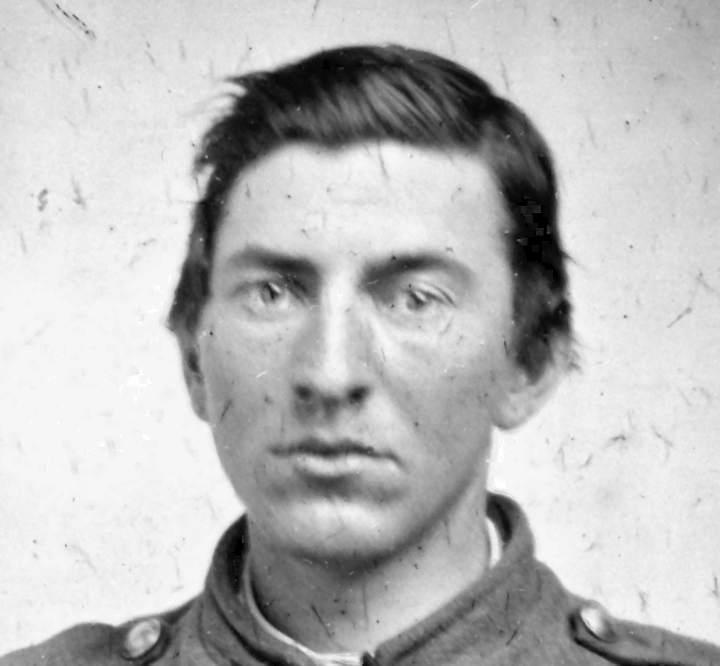
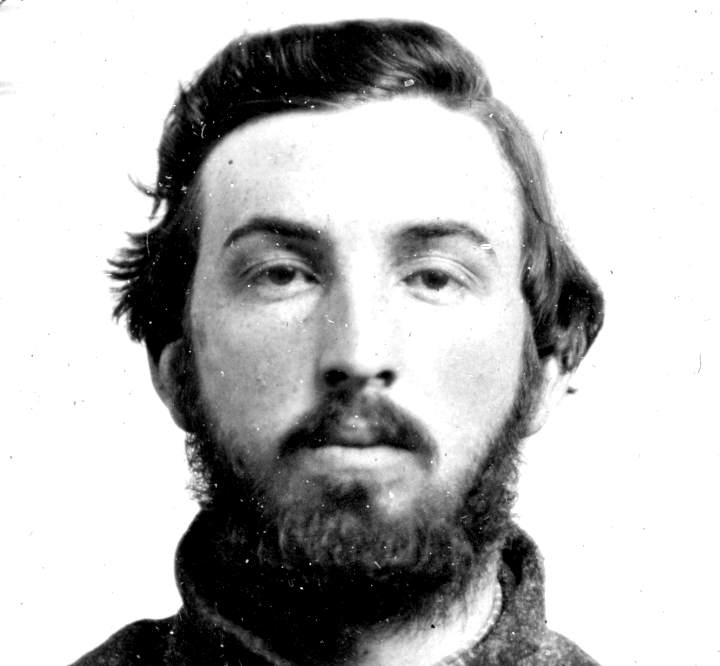
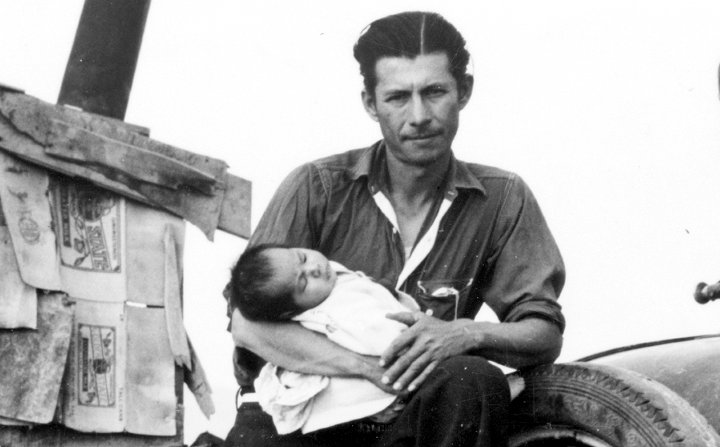
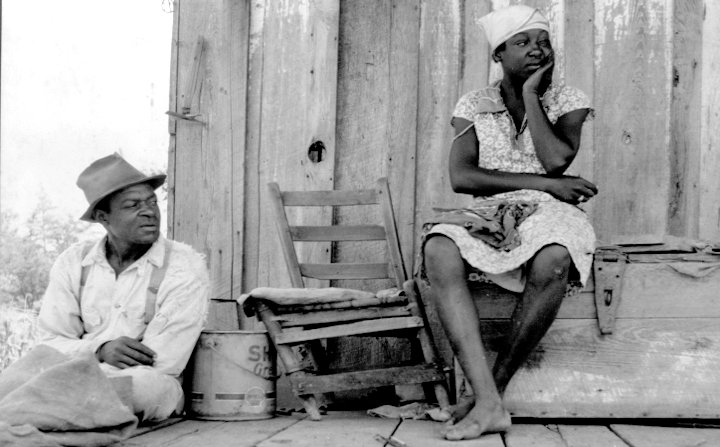
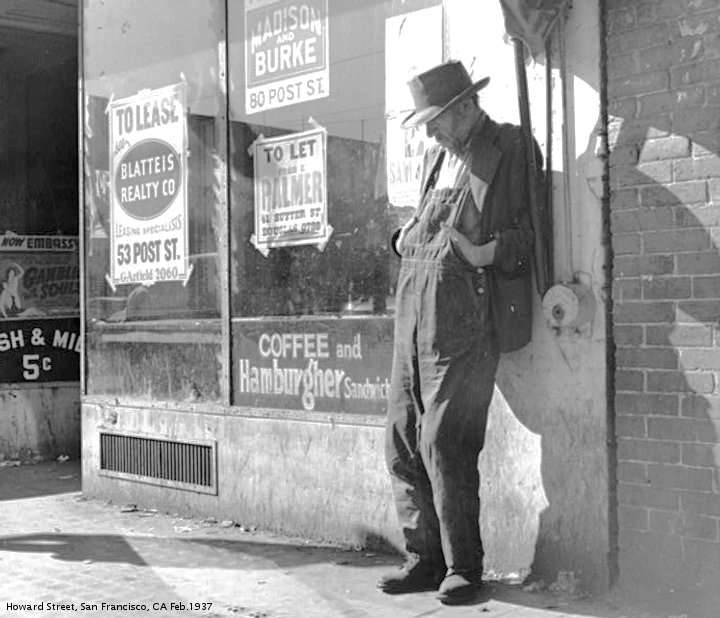
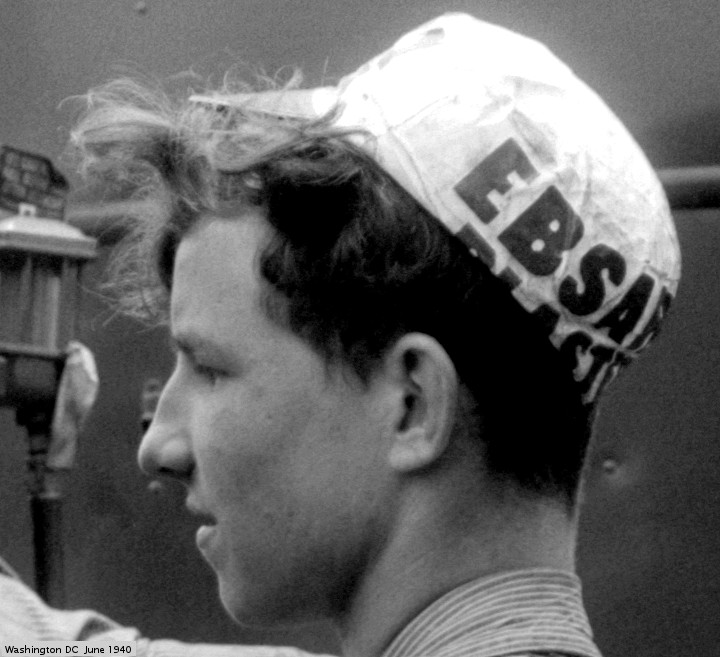
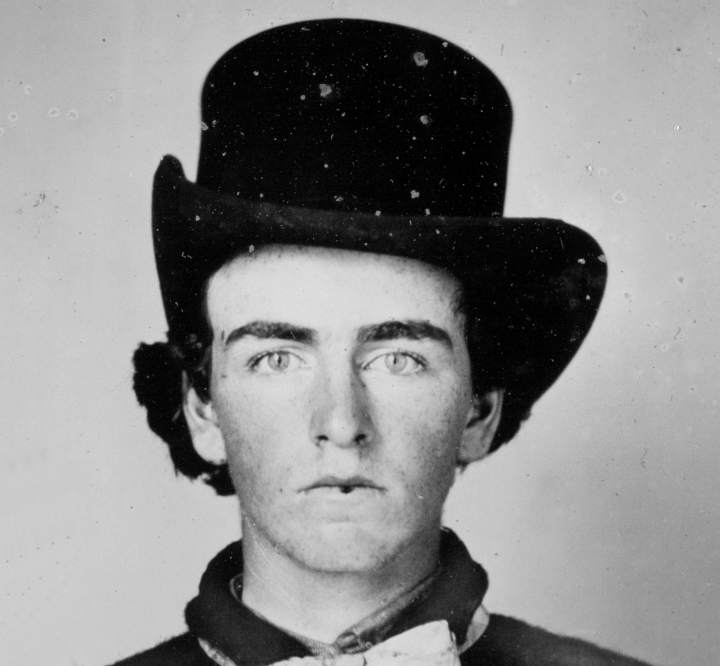
Google … another institution with fading integrity … has some curious replies. A video that purports to show Barry Obama talking has this text superimposed: “Believe nothing you hear and only one half that you see” With the massive influx of AI and Deep Fakes, the above quote by Edgar Allan Poe is no longer valid. Crazy, isn’t it? The above video was created using argil.ai. Pictures today are from The Library of Congress. We can be reasonably sure that these pictures are genuine.


Seven Brilliant Quotes Addendum

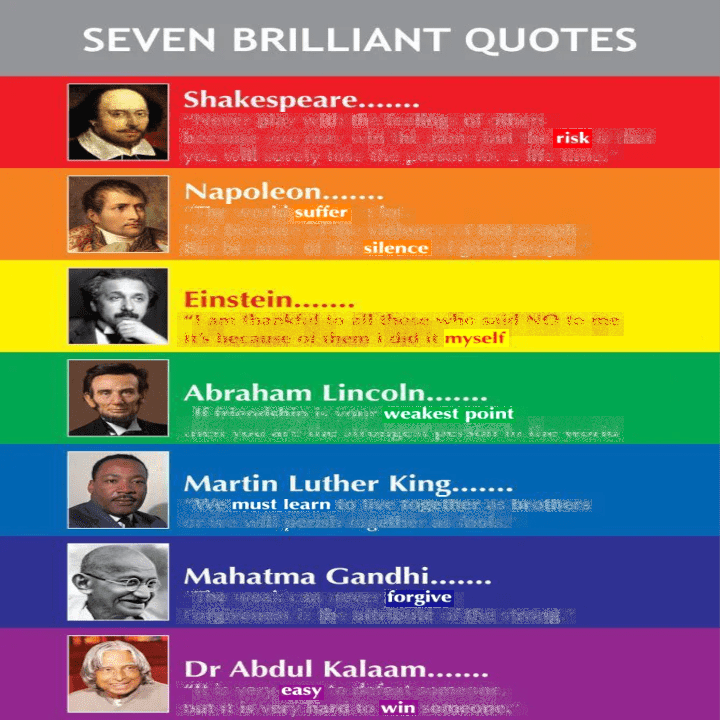
Seven Brilliant Quotes was in my September archives, waiting to be reposted. 7BQ was originally posted in 2013, a simpler time. It was a personal milestone in the nasty business of quote debunking.
Facebook was suffering the revenge of the BrainyQuote. Tasteful bits of commodity wisdom, illustrated by pictures of splendid sunsets, were the rage. So, so many of them were not worth the pixels they populated. While it is not anyone’s fault to be posthumously misquoted, all seven quotees are men. 7BQ, the post, was an opportunity to attack seven cookie monsters in one sitting.
No good deed goes unpunished. A paragraph in 2013 says: “This type of research can be frustrating. Being inspired by beautiful words can give you strength and purpose. It can also make you feel foolish, when the lovely words are revealed to be lies. Being a cynic gets lonely. Children of all ages don’t like to be told that there is no Santa Claus.”
The next quote in the 2013 post was from Dr. Martin Luther King Jr. It is one of two quotes than can be verified. There is a record of most things Dr. King said in public. Letter from a Birmingham Jail is a google search away. There is no need to make anything up.
Dr. King gave a speech at Western Michigan University on December 18, 1963. The second section of the speech is “Call for action.” “The world in which we live is geographically one. Now we are challenged to make it one in terms of brotherhood. Now through our ethical and moral commitment, we must make of it a brotherhood. We must all learn to live together as brothers or we will perish together as fools. This is the great challenge of the hour. This is true of individuals. It is true of nations. No individual can live alone. No nation can live alone.”
7BQ was a meme. In the spirit of making lemonade out of lemons, one thing to do is reduce this graphic nuisance to a haiku. risk suffer silence · myself weakest point must learn · forgive easy win
In addition to Dr. King, the other verified quote was from Mohandas Karamchand Gandhi. Certainly Dr. King knew about “must learn,” while MK Gandhi was familiar with forgiveness. As for the fakes …
Open Source Shakespeare shows that risk does not appear in anything “Shakespeare” wrote. Likewise, “Napoleon” did not suffer silence, or whatever the French version of that is. Clumsy translations are a another problem with quote mongering.
There is little doubt that “Einstein” thought about “myself.” Abraham Lincoln fought a war over the “weakest point.” As for Dr. Avul Pakir Jainulabdeen Abdul Kalam … “Indian scientist and engineer; 11th President of India” … who knows what he said? The quote used is not on his wikiquotes page.


Google Gotcha


The fbf posted this quote: “The world is full of magic things, patiently waiting for our senses to grow sharper.” — W.B. Yeats. I was looking for something, in the public domain, to use in a graphic poem. I googled the quote, and one of the results was @QuoteResearch, aka Quote Investigator®.
Eden Phillpotts crafted the sentence. It is on page 19 of A shadow passes, a book of prose celebrating nature. “In the marshes the buckbean has lifted its feathery mist of flower spikes above the bed of trefoil leaves. The fimbriated flowers are a miracle of workmanship and every blossom exhibits an exquisite disorder of ragged petals finer than lace. But one needs a lens to judge of their beauty: it lies hidden from the power of our eyes, and menyanthes must have bloomed and passed a million times before there came any to perceive and salute her loveliness. The universe is full of magical things patiently waiting for our wits to grow sharper.”
“God is in the details” is often attributed to minimalist German architect Mies van der Rohe, who probably co-opted the phrase from the German proverb ““Der liebe Gott steckt im detail”, which translates as “God is in the detail”. What this phrase neglects to mention is that many of these details are boring, even to an architect. That is certainly the case with Eden Phillpotts.
So the fbf was mistaken. My first impulse has been to play google gotcha, and immediately paste the contrarian evidence. This does get tiresome after a while. People like to find inspiration and entertainment where they can. The internet pedant can just find other ways to amuse himself.
Final confirmation comes from @BrainyQuote. Pictures are from The Library of Congress.


Never Doubt


“Never doubt that a small group of thoughtful, committed citizens can change the world; indeed, it’s the only thing that ever has.” This chestnut appeared in an email, promoting an event. I heard a podcast last year, about another Margaret Mead story. Readers of this blog know where this is going.
@anthroreviewed “Did Margaret Mead really say that thing about broken femurs and civilization that is (once again) making the rounds online? Also, are healed femurs a marker of civilization? No. And no. As explore in the second half of this episode… “ A blog post, That Margaret Mead quote, goes into more detail about both stories.
“It’s interesting the quotes that are attributed to Margaret Mead – another is “Never doubt that a small group of people can change the world – indeed, it is the only thing that ever has.” … Both are things she could have said, given her personality, but neither is fully attributed – the first instance of the story above is in Dr. Ira Byock’s 2012 book on palliative care, and the above quote only attributed to her, four years after her death, by the author of a fairly hippie-ish book on paths to world peace.”
“This quote (about the femur) has been going around Facebook since mid-March, probably encouraged by this Twitter thread, this FB post, and this article in Forbes, none of which are by archaeologists/anthropologists.”
When the bs detector started dinging, results are just a few clicks away. Highlight the suspicious quote. Right click, choose “Search Google for …,” and wait 0.51 seconds. When one of the results is a story at Quote Investigator®, you have a winner.
When people get caught peddling bogus quotes, they often say that even if the attribution is false, the words are true. What about the featured quote today? It sounds good, and is great for promoting attendance at an event. But is it the truth?
Look at the 9/11 attacks. They did change the world. While it is true that nineteen men pulled off the caper, they had a lot of help. Somebody financed the operation. Other people built the airliners, and the airports where they took off. Somebody dug an oil well, pumped the crude oil, shipped the crude oil to a refinery, and produced the explosive jet fuel that propelled the attacks. In fact, it was the profits from pumping that oil that financed the attacks. “A small group of thoughtful, committed citizens” flew a plane, that someone else built, into the World Trade Center. They were not “the only thing that ever has.” This is a repost. Pictures today are from The Library of Congress.


Did Ben Franklin Say “Question Authority”?
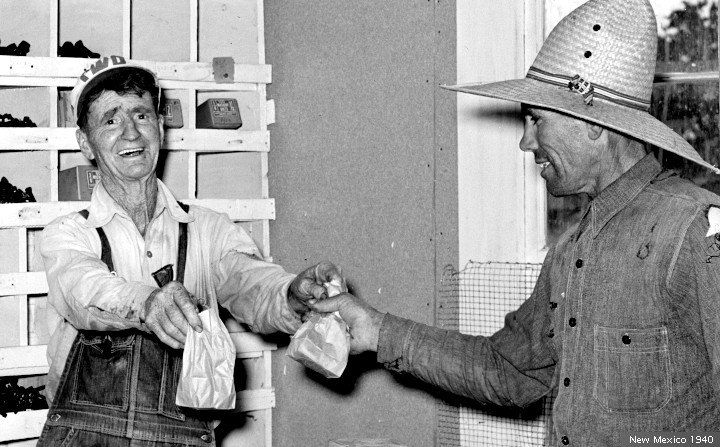

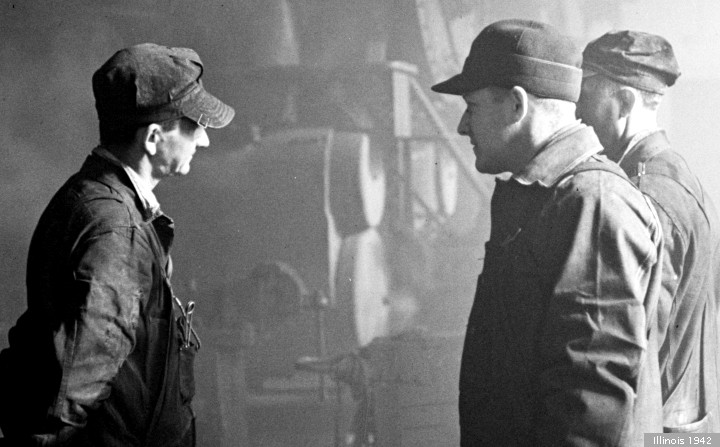

“It is the first responsibility of every citizen to question authority.” Benjamin Franklin This nugget appeared on facebook recently, and the bs detector was buzzing. I never heard the phrase “Question Authority” before 1981. QA sounds awfully modern for 18th Century America.
I quickly googled the phrase, and found indications that it was in not found in the Franklin Papers at Yale University. A search of the Mr. Franklin’s wikiquote did not turn up QA.
Unfortunately, I chose to include a link to Snopes in my facebook reply. The meme-poster saw Snopes, and said that was not a valid source. We went back and forth on the issue. I did say that Snopes was questionable, but had other sources that fueled my skepticism.
A google search credits Timothy Leary with saying “Think for yourself and question authority.” … “Timothy Leary’s track on Sound Bites from the Counter Culture (1989.)” 1989 is a few years after I saw my first QA bumper sticker. Maybe Mr. Leary heard someone else say QA, and claimed it for himself. Timmy Leary was an authority that required enhanced interrogation.
A Christian oriented forum says that Mr. Leary got QA from Ben Franklin. At any rate, QA is counter-culture phrasing, of the type that Ben Franklin probably did not use. According to Google n-gram, QA does not appear in print before 1885. 1976 and 1987 saw QA spiking, with QA usage peaking in 2005.
Let’s examine the concept of questioning authority. In this case, the authority was a facebook meme. When I presented Snopes as a dissenting authority, it was rejected. When I presented Wikiquotes as an authority/source, I was satisfied, and my facebook opponent dismissive. I should note that in my initial facebook reply, I said that it was unlikely that Mr. Franklin said QA. We cannot claim to have heard every conversation Ben Franklin had, or if he said something similar.
Did Mr. Franklin question authority? Lets take a look at a famous quote: “They who can give up essential liberty to obtain a little temporary safety deserve neither liberty nor safety.” “The words appear originally in a 1755 letter that Franklin is presumed to have written on behalf of the Pennsylvania Assembly to the colonial governor during the French and Indian War. … the Assembly wished to tax the lands of the Penn family … to raise money for defense against French and Indian attacks. … In other words, the “essential liberty” to which Franklin referred was thus not what we would think of today as civil liberties but, rather, the right of self-governance of a legislature in the interests of collective security.” The “essential liberty” Mr. Franklin referred to was the ability of the government to tax citizens. It’s all about the Benjamins.
One type of questionable authority invoving Mr. Franklin was slavery. Benjamin Franklin owned slaves. Pennsylvania tax records of 1769 and 1774 show “1 Negro” as being in his possesion. “Franklin owned slaves from as early as 1735 until 1781. The Franklin household had six slaves; Peter, his wife Jemima and their son Othello, George, John and King.”
Mr. Franklin ran advertising for the slave trade in his publications. “To be SOLD A very likely breeding Negroe Woman, and a Boy about two years old. The woman is fit for any Business Either in Town or Country. Enquire of William Bafdon, over against the Coffee House in Front Street.” … “Advertisement for an enslaved woman and an enslaved child from Benjamin Franklin’s Pennsylvania Gazette (December 9-16, 1736).”
Mr. Franklin later changed his tune. “In 1787 Franklin became the President of the Philadelphia Society for the Relief of Free Negroes Unlawfully Held in Bondage, often referred as the Abolition Society. … The Abolition Society was the first in America and served as inspiration for the formation of abolitionist societies in other colonies. The group focused not only in abolishing slavery but also in education, moral instruction and employment. In a letter dated November 9th, 1789, Franklin wrote wholeheartedly against the institution of slavery. He argued that slaves have long been treated as brute animals beneath the standard of human species. Franklin asked for resources and donations to help freed slaves adjust to society by giving them education, moral instruction and suitable employment. … On February 3rd, 1790, less than three months before his death, Franklin petitioned Congress to provide the means to bring slavery to an end. When the petition was introduced to the House and the Senate it was immediately rejected by pro-slavery congressmen mostly from the southern states.” Pictures today are from The Library of Congress. This is a repost.


Indifferent Truth-Seeker Act


A bit of dialog turned up in a 2018 facebook thread. “Arnold” “Luther I am genuinely curious about how it is you support white supremacist world views consistently, yet have always hung out in alternative spaces. Have you written about this?” Luther “Questioning the validity of a facebook post is not supporting a white supremacist world view.” “Stephen” “It absolutely is when you’ll accept no standard of evidence presented in support of the claim. No one here is fooled by your indifferent truth-seeker act.” This is not your daddy’s white supremacy.
On January 19, 2018, Wussy published Is the Owner of Popular Atlanta Drag Bar a Racist? A disgruntled employee shared a 2015 facebook screen shot. Palmer Marsh, the owner of Burkhart’s Pub, said “Obviously Vladimir Putin thinks that Barack Obama is a stupid (magic word). He just might be right.” The Atlanta queer community went into a pearl clutching frenzy.
I noticed that the screen shot did not have a date or time. I mentioned this detail, and was richly rewarded for my efforts. This is the “indifferent truth-seeker act” that supports “white supremacist world views.” Examine. Your. Whiteness. was one of the kinder suggestions.
This was six years ago, and seems quaint today. In the last six years, we have shut down the country over a virus, and had a racial reckoning. After electing a senile criminal to be President, we supported a gruesome war in Ukraine, and facilitated a genocide in Gaza. The national debt has gone from $20t to $33t. It is tough to believe we were once so concerned about a drunken old man saying a six letter word on facebook. Pictures today are The Library of Congress.

Cynic


“A cynic is a man who knows the price of everything, and the value of nothing.” ― Oscar Wilde. This quote is one of Oscar’s greatest hits. If you think about it for a minute, it is not totally accurate. You are not supposed to think. Quoting Oscar Fingal O’Flahertie Wills Wilde is about sounding clever, not making sense. Did he really create that definition of a cynic? This is a repost.
Oscar Wilde is a quote magnet. This is more than something you put on your refrigerator. When people hear something clever, odds are good that Oscar will get the blame. As Dorothy Parker wrote: “If, with the literate, I am, Impelled to try an epigram, I never seek to take the credit; We all assume that Oscar said it. [Life Magazine, June 2, 1927]”
Wikiquote says this line is from Act III of Lady Windermere’s Fan. It was spoken by Lord Darlington. Did the play write intend for the line to be taken seriously, or was he making the character look foolish by saying it? With Oscar Wilde, it could be both of these things at the same time.
Principle Four, of the four principles of quotations, reads “Only quote from works that you have read.” In the case of Lady Windemere’s Fan, this would mean a youtube video of the play. There is a posh BBC production available. You don’t have to watch the cell phone recording of high school players.
Lady Windemere’s Fan is a production where upper class Brits say clever things in glorious costumes. Nobody ever goes to the bathroom, or looks less than perfect. Lady Windemere’s six month old child is neither seen, nor heard. Lady Windemere finds out her husband, Lord Windemere, is having an affair with a Mrs. Erlynne. The Lord proceeds to invite the floozy to Lady Windemere’s birthday party.
After the party, the men go to their club, then to Lord Darlington’s room. There are five men in the conversation, beginning with Lord Windemere. Lord Darlington has just told Lady Windemere that he loves her, and wants her to run off with him. Lady Windemere said no. Lord Augustus is a suitor of Mrs. Erlynne, and is begging her to marry him. Cecil Graham, and Mr. Dumby, wear their splendid costumes with conviction.
The scene starts with the men saying clever things, most of them insulting to someone. Lord Augustus, or Tuppy, is the butt of many jokes. Before long, we get this exchange:
Dumby. I don’t think we are bad. I think we are all good, except Tuppy.
Lord Darlington. No, we are all in the gutter, but some of us are looking at the stars.
Dumby. We are all in the gutter, but some of us are looking at the stars? Upon my word, you are very romantic to-night, Darlington.
Cecil Graham. Too romantic! You must be in love. Who is the girl?
Lord Darlington. The woman I love is not free, or thinks she isn’t. [Glances instinctively at Lord Windermere while he speaks.]
A few minutes later, we hear another famous Oscarism.
Lord Darlington. What cynics you fellows are!
Cecil Graham. What is a cynic? [Sitting on the back of the sofa.]
Lord Darlington. A man who knows the price of everything and the value of nothing.
Cecil Graham. And a sentimentalist, my dear Darlington, is a man who sees an absurd value in everything, and doesn’t know the market price of any single thing.
Pictures today are from The Library of Congress.




A Real Jefferson Quote



“Honesty is the first chapter in the book of wisdom” Thomas Jefferson. So says an unsightly graphic on /r/QuotesPorn. As the reader(s) of this blog know, I am fond of debunking quotes. Quotes about “honesty” are particularly appealing to those who enjoy quotation pedantry.
The quote is real. Mr. Jefferson wrote a letter to Nathaniel Macon on January 12, 1819. This was a reply to a letter Mr. Macon sent January 4, 1819. The exchange is included in The papers of Thomas Jefferson Retirement series, published by Princeton University Press in 2004. The Library of Congress has a photograph of the Jefferson letter.
The letter to Mr. Macon began with a delightful quote. “Dear Sir The problem you had wished to propose to me was one which I could not have solved; for I know nothing of the facts. I read no newspaper now but Ritchie’s, and in that chiefly the advertisements, for they contain the only truths to be relied on in a newspaper.”
Sally’s babydaddy was a man of many words. In 1784, he wrote Notes on the State of Virginia. “Deep rooted prejudices entertained by the whites; ten thousand recollections, by the blacks, of the injuries they have sustained; new provocations; the real distinctions which nature has made; and many other circumstances, will divide us into parties, and produce convulsions which will probably never end but in the extermination of the one or the other race.” … The circumstance of superior beauty, is thought worthy attention in the propagation of our horses, dogs, and other domestic animals; why not in that of man? Besides those of colour, figure, and hair, there are other physical distinctions proving a difference of race. They have less hair on the face and body. They secrete less by the kidnies, and more by the glands of the skin, which gives them a very strong and disagreeable odour. This greater degree of transpiration renders them more tolerant of heat, and less so of cold, than the whites. . . . They seem to require less sleep. A black, after hard labour through the day, will be induced by the slightest amusements to sit up till midnight, or later, though knowing he must be out with the first dawn of the morning.” Pictures today are from The Library of Congress.


Seven Brilliant Quotes





There is a little graphic floating around, Seven Brilliant Quotes. Some find these sayings to be inspirational. PG smells a rat. Here are the seven quotes:
William Shakespeare – Never play with the feelings of others because you may win the game but the risk is that you will surely lose the person for a life time.
Napoleon Bonaparte – The world suffers a lot. Not because of the violence of bad people, but because of the silence of good people.
Albert Einstein – I am thankful to all those who said NO to me. Its because of them I did it myself.
Abraham Lincoln – If friendship is your weakest point then you are the strongest person in the world.
Martin Luther King Jr. – We must learn to live together as brothers or we will perish together as fools.
Mahatma Gandhi – The weak can never forgive. Forgiveness is the attribute of the strong.
Abdul Kalaam – It is very easy to defeat someone, but it is very hard to win someone.
If nothing else, research into the veracity of these quotes should provide some amusing text to go between the pictures. When you go looking in the land of google, there is no telling what you will find. During this expedition, the first page rule will be in effect. Only results on the first google page will be considered. The NB quote has 1.7 million results, which is too much work.
Lets begin with Willie the shake. Did he really say “Never play with the feelings of others because you may win the game but the risk is that you will surely lose the person for a life time.”? Or, as they say in the Yahoo village, Does anyone know where this Shakespeare quote comes from?
hugeshantz Does anyone know where this Shakespeare quote comes from? I’ve seen this quote all over the internet, always attributed to Shakespeare, but I can’t find a legitimate source of where it comes from (i.e. a specific sonnet, play, speech, etc.): “Never play….” Can anyone help me out here?
Dude the Obscure This is 20th/21st century psychobabble. Shakespeare never wrote anything remotely resembling that. Please never trust any of these idiotic “internet quote sites.” They are all, all, all crap. I can’t believe that any intelligent person could think for a minute that this was written by Shakespeare. Really. Get some critical-thinking skills, child.
The next quote is by Napoleon Bonaparte, not Napoleon Dynamite. “The world suffers a lot. Not because of the violence of bad people, but because of the silence of good people.”
Before we consider the veracity of this quote, lets consider two things. NB did not speak english, so there is likely to be translation confusion. Second, the wars NB started caused widepread suffering. Little of this suffering was caused by the silence of good people.
The sources on page one do little except show the quote, usually with the credit going to NB. No one shows when or where he said it, or in what context. Brainyquotes doea not show it on the NB pages.
Number three is from Albert Einstein.” I am thankful to all those who said NO to me. Its because of them I did it myself.” According to Shelly Winters, Marilyn Monroe did not say no to Dr. Einstein. Google has a doozy of a forum, Misquoting Einstein?.
Jimmy Snyder says the quote has been attributed to Dorothy Parker, Yogi Berra, William Shakespeare, The Bible, Benjamin Franklin, and Groucho Marx. This is a clue that the quote is bogus.
zoobyshoe’s I just found this an another wiki page discussing the quote page: “I am thankful …” This is being attributed to Einstein on the Internet, but it appears to come from Wayne W. Dyer’s book You’ll See It When You Believe It, page 54, according to Google Books. Dyer does not attribute it to Einstein, but mentions Einstein in the same paragraph. “In my office I have two framed posters. One is a picture of Albert Einstein, beneath which are the words “Great spirits have always encountered violent opposition from mediocre minds.” The other poster is made up solely of words: “I am grateful to all those people who said no. It is because of them I did it myself.” Great thoughts!”
Ryan_m_b’s “Never believe quotes you read on the internet” – Winston Churchill zoobyshoe’s His actual words were: “The internet has nothing to offer, but blood, tears, toil, and misquotes.”
It should not be surprising that Winston Churchill finds his way into this discussion. He has a taste for the spotlight, even 47 years after his demise. He is an example of how truthiness is sometimes all you need. His most famous speech was a radio address during a bad part of World War Two. The speech was read by an actor. England was inspired, and went on to win the war. Why should anyone worry if an actor gave his speech for him?
This is enough fun for one day. There will be a part two soon, and it will probably be full of number two. Pictures today are from The Library of Congress.



Welcome to part two of the Chamblee54 due diligence report on the Seven Brilliant Quotes. In part one, we checked out the first three. At no time was a source for the quote found. All three are suspect, with “misunderstanding” indicated in the Albert Einstein quote. It is amazing how quickly accepted these sayings are by the inspiration hungry public.
Getting back to business, did Abraham Lincoln say “If friendship is your weakest point then you are the strongest person in the world.” There are lots of links to this quote, in a variety of fonts and colors. Some have spectacular photography in the background. However, none of these links has a source for this quote, or any indication of the context.
Wikiquotes has 43,444 words about Abraham Lincoln. PG copied these words, and did a search for the word “friendship”. The quote from the poster was not found. The meme is missing. This wikiquotes test has been very useful for checking out quotes. It is not authoritative, but is a good place to start.
This type of research can be frustrating. Being inspired by beautiful words can give you strength and purpose. It can also make you feel foolish, when the lovely words are revealed to be lies. Being a cynic gets lonely. Children of all ages don’t like to be told that there is no Santa Claus.
The good news is that number five is for real. Martin Luther King gave a speech at Western Michigan University in 1963. There is a probably his standard speech, given many times. The second section of the speech is “Call for action.”
“The world in which we live is geographically one. Now we are challenged to make it one in terms of brotherhood. Now through our ethical and moral commitment, we must make of it a brotherhood. We must all learn to live together as brothers or we will perish together as fools. This is the great challenge of the hour. This is true of individuals. It is true of nations. No individual can live alone. No nation can live alone.”
“I can never be what I ought to be until you are what you ought to be. You can never be what you ought to be until I am what I ought to be. This is the interrelated structure of reality. [W]e’re challenged after working in the realm of ideas, to move out into the arena of social action and to work passionately and unrelentingly to make racial justice a reality.”
“[W]e must never substitute a doctrine of Black supremacy for white supremacy. For the doctrine of Black supremacy is as dangerous as white supremacy. God is not interested merely in the freedom of black men and brown men and yellow men but God is interested in the freedom of the whole human race, the creation of a society where all men will live together as brothers.”
PG has written about the problem of quoting Mohandas Gandhi before. Supposedly he said “I love your Christ, but I dislike your Christianity.” PG thinks this is a fabrication.
The quote on the poster is “The weak can never forgive. Forgiveness is the attribute of the strong.” Wikiquotes has a link to Collected Works of Mahatma Gandhi Online. The next stop is page 302 of this section. Mr. Gandhi gave an “Interview to the press” in Karachi, on March 26, 1931. A freedom fighter named Bhagat Singh had been executed by the British three days earlier.
Do you not think it impolitic to forgive a government which has been guilty of a thousand murders?
I do not know a single instance where forgiveness has been found so wanting as to be impolitic.
But no country has ever shown such forgiveness as India is showing to Britain?
That does not affect my reply. What is true of individuals is true of nations. One cannot forgive too much. The weak can never forgive. Forgiveness is the attribute of the strong.
The bottom line is from Dr. Abdul Kalam. (The name is misspelled on the poster.) The phrase is “It is very easy to defeat someone, but it is very hard to win someone.” Many viewers have no idea who this person is. Once again, Wikiquotes comes to the rescue. “Dr. Avul Pakir Jainulabdeen Abdul Kalam (born 15 October 1931) Indian scientist and engineer; 11th President of India; generally referred to as Dr. A.P.J. Abdul Kalam.” The quotes are from Wings of Fire: An Autobiography of APJ Abdul Kalam.
A search for the word “defeat” did not show results. A search for “win” shows a few, but not the poster child. The phrase on the poster is also credited to John Keats. There is also the story of the student who argues with an atheist professor, and ultimately wins. The student is sometimes said to be Albert Einstein. In this version, Argumnent : What, Who is GOD?, the coda is “This seems to be a true story, and the student was none other than APJ Abdul Kalam, the former President of India “.
The research for part one consisted of entering the quote into a search engine. It was not until the Lincoln investigation that the method of copying wikiquote, and searching for a key word, was discovered. Out of a sense of fairness, the first three quotes will be investigated using this method.
For William Shakespeare, the search word was risk. There were no results. For Napoleon Bonaparte, the search word was violence. There was one result. “There is no such thing as an absolute despotism; it is only relative. A man cannot wholly free himself from obligation to his fellows, and not the one on the poster. For Albert Einstein, the search word was thankful. There were no results.
So, there are seven quotes in the motivational poster. Only two of the seven have a apparent source. Pictures today are from The Library of Congress. This is a repost. This version is edited, out of concern for the attention span of the audience.






L’Idiotie Quotadine



Peter Berg told a story on the Joe Rogan Experience. A newspaper printed an obituary, saying Alfred Nobel had died. (It was Ludvig Nobel, Alfred’s brother, who died.) Alfred Nobel had accumulated a fortune by inventing dynamite. The obituary called him a “merchant of death.” Mr. Nobel decided he wanted to be known for something else, and established the Nobel prize. Alfred Nobel died December 10, 1896, eight years after Ludvig died.
I was in skeptic mode, and decided to talk to Mr. Google. A story came up. It had a photograph of the headline … in English … in a newspaper called L’Idiotie Quotadine (Quotadine Idiocy.) History.com has another take. “The newspaper incident is often cited as the driving force behind Nobel’s philanthropy, but historians have yet to find an original copy of the “Merchant of Death” obituary.”
A google search for Quotadine led me to Kathy “Kathy Loves Physics” Joseph. She has an article, and two videos, (one two) about the Nobel urban legend. Apparently, the word quotadine, with that spelling, does not exist in either french or english.
The short version: The term “Merchants of Death” was coined in 1932, 43 years after the death of Ludwig Nobel. “The term seems to have been coined by an author of an article written in 1932 about a real character named Basil Zaharoff who was known for his ruthlessness, selling munitions to anyone who had enough money. In fact, Zaharoff was even known to encourage conflict and then sell arms to both sides! This article was poetically titled, “Zaharoff, Merchant of Death”
In later years, a pair of biographies (Fant Halasz) applied the MOD tag to Mr. Nobel, along with the festive origin story. The truth seems to be a bit more romantic. Mr. Nobel befriended a lady named Bertha Von Suttner, who seems to be a be a bit of a character. As time moved on, Mrs. Von Suttner became involved in a peace movement, and recruited Mr. Nobel to the cause. “In 1905, Bertha von Suttner was awarded the 4th Nobel Peace prize.”
Peter Berg is the JRE guest who told this tale. Mr. Berg is promoting a tv show, Painkiller, about the Oxycontin tragedy. At least some of what he is saying about opioids is the truth. It is a shame he needs to embellish that tale with Quotadine Idiocy. Pictures today are from The Library of Congress.

Never Doubt
“Never doubt that a small group of thoughtful, committed citizens can change the world; indeed, it’s the only thing that ever has.” This chestnut appeared in an email, promoting an event. PG heard a podcast last year, about another Margaret Mead story. Readers of this blog know where this is going.
@anthroreviewed “Did Margaret Mead really say that thing about broken femurs and civilization that is (once again) making the rounds online? Also, are healed femurs a marker of civilization? No. And no. As explore in the second half of this episode… “ A blog post, That Margaret Mead quote, goes into more detail about both stories.
“It’s interesting the quotes that are attributed to Margaret Mead – another is “Never doubt that a small group of people can change the world – indeed, it is the only thing that ever has.” … Both are things she could have said, given her personality, but neither is fully attributed – the first instance of the story above is in Dr. Ira Byock’s 2012 book on palliative care, and the above quote only attributed to her, four years after her death, by the author of a fairly hippie-ish book on paths to world peace.”
“This quote (about the femur) has been going around Facebook since mid-March, probably encouraged by this Twitter thread, this FB post, and this article in Forbes, none of which are by archaeologists/anthropologists.”
When the bs detector started dinging, results are just a few clicks away. Highlight the suspicious quote. Right click, choose “Search Google for …,” and wait 0.51 seconds. When one of the results is a story at Quote Investigator®, you have a winner.
When people get caught peddling bogus quotes, they often say that even if the attribution is false, the words are true. What about the featured quote today? It sounds good, and is great for promoting attendance at an event. But is it the truth?
Look at the 9/11 attacks. They did change the world. While it is true that nineteen men pulled off the caper, they had a lot of help. Somebody financed the operation. Other people built the airliners, and the airports where they took off. Somebody dug an oil well, pumped the crude oil, shipped the crude oil to a refinery, and produced the explosive jet fuel that propelled the attacks. In fact, it was the profits from pumping that oil that financed the attacks. “A small group of thoughtful, committed citizens” flew a plane, that someone else built, into the World Trade Center. They were not “the only thing that ever has.” Pictures today are from The Library of Congress. This is a repost.
Winston Churchill Said What


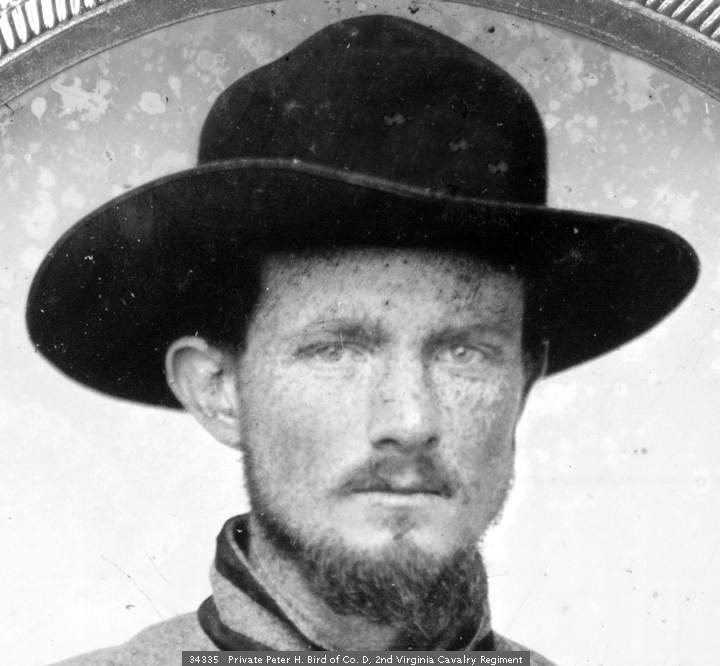

Another ghastly meme has surfaced on facebook. It has a large fuchsia quote mark for illustration. There is a quote from a famous man. The left side has a quote mark. The right side has a question mark, but no quote mark. The margins are much larger on the top, and left side, than on the right side, and the bottom. That this visual atrocity supports funding for the arts is a cruel irony.
Perhaps instead of the arts, the government funding should go for fact checking. The quote is generally considered to be bogus. For the record, here is the quote. “When Winston Churchill was asked to cut arts funding in favour of the war effort, he simply replied, “then what are we fighting for?” The quote is not in the Churchill archive, which is either fifteen million documents, or fifteen million words. The authorities use the figures interchangeably.
The Telegraph has an article debunking the meme. It has a splendid sentence: “But that anecdote does not so easily play into the screeching rhetoric of today’s 140-character political ding-dongs.” There are also some lovely quotes from Mr. Churchill.
 In 1937, Mr. Churchill spoke before the Peel Commission It was discussing “partitioning British mandated Palestine into Arab and Jewish states.” At the time, Mr. Churchill was a minor figure in British politics, disgraced by his blundering in the Great War. The quote: “I do not agree that the dog in a manger has the final right to the manger even though he may have lain there for a very long time. I do not admit that right. I do not admit for instance, that a great wrong has been done to the Red Indians of America or the black people of Australia. I do not admit that a wrong has been done to these people by the fact that a stronger race, a higher-grade race, a more worldly wise race to put it that way, has come in and taken their place.”
Winston Churchill is quite the quote magnet. This is somehow fitting for a man whose most famous speech was read, on the radio, by an actor. There is a page on the internet devoted to times when he was falsely accused of saying something inspiring.
One of these stories is notable. “The only traditions of the Royal Navy are rum, sodomy and the lash… Churchill’s assistant, Anthony Montague-Browne said that although Churchill had not uttered these words, he wished he had.” This is a repost, with pictures from The Library of Congress.
UPDATE: Sir Anthony Montague-Browne KCMG CBE DFC appears to have been a piece of work. He is acknowledged to be the illegitimate father of The Most Reverend Justin Welby Archbishop of Canterbury. The Most Reverend Justin Welby Archbishop of Canterbury. Sir Montague Brown was the private secretary of Winston Churchill from 1953 until Churchill’s death in 1965. “As well as his duties as a chief of staff, Montague-Browne lunched and dined with Churchill and provided an opponent for his favourite card game, rubicon. He also accompanied Churchill on his trips abroad.” While it is possible that Monatague-Brown did ask Churchill about the quote, there is no solid documentation. It is also possible that Churchill was in decline, or drunk, and could not remember something he said in 1911.
“Montague-Browne confirmed this to Richard Langworth, one of the most respected Churchill biographers. In his great book about Churchill quotations and misquotes, Churchill by Himself: The Definitive Collection of Quotations, Richard Langworth says that Montague-Browne personally told him that he had asked Churchill about the quote. According to Montague-Browne, Churchill responded: “I never said it. I wish I had.” Langworth notes that “rum, sodomy and the lash” is similar to “rum, bum and bacca” — a catchphrase from an old saying about the, er, pastimes of British sailors, dating back to the 1800s.”



 Chamblee54
leave a comment