The Fox Sisters


It is Halloween Sunday. A storm is fixin’ to hit New York. The Falcons are playing the Philadelphia Eagles, with Mike Vick at quarterback. Number seven was the most exciting athlete in recent memory. He went to prison for dog fighting.
The story today is borrowed from Backstory. The same story is told, in greater detail, at The Memory Palace. Both of these fine podcasts enjoy receiving contributions from grateful listeners.
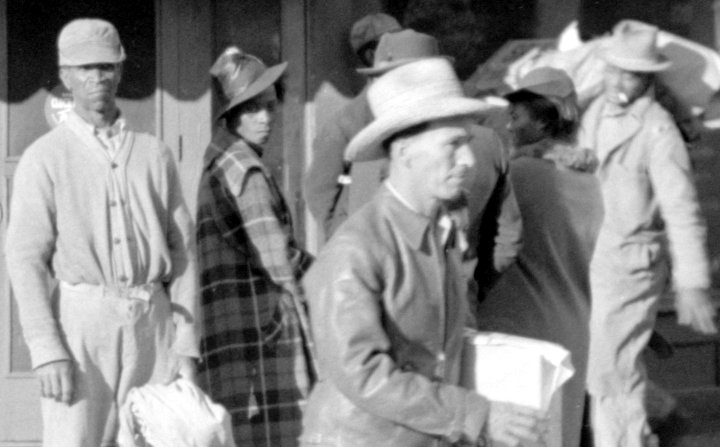
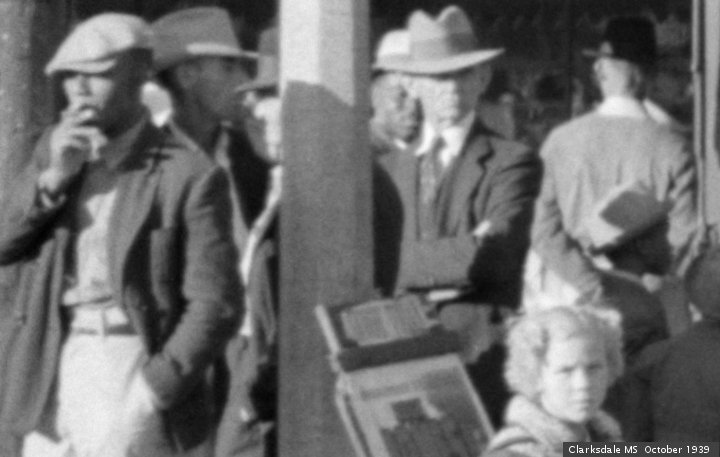
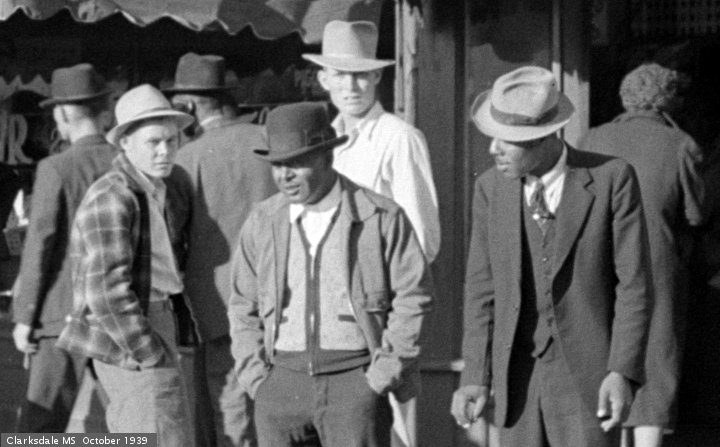
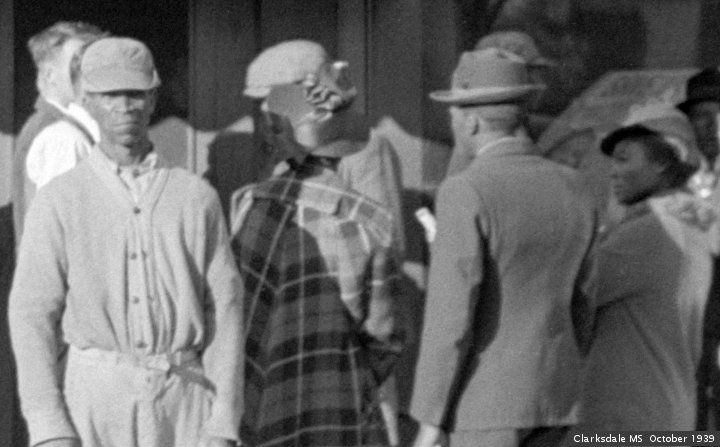
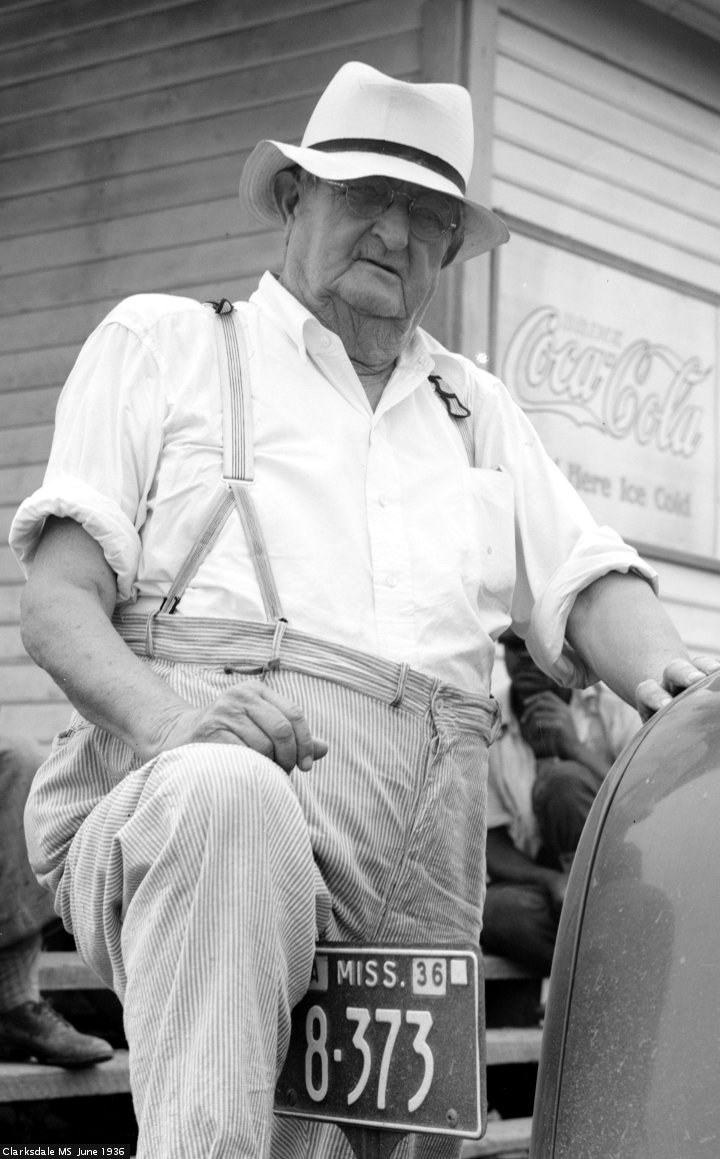
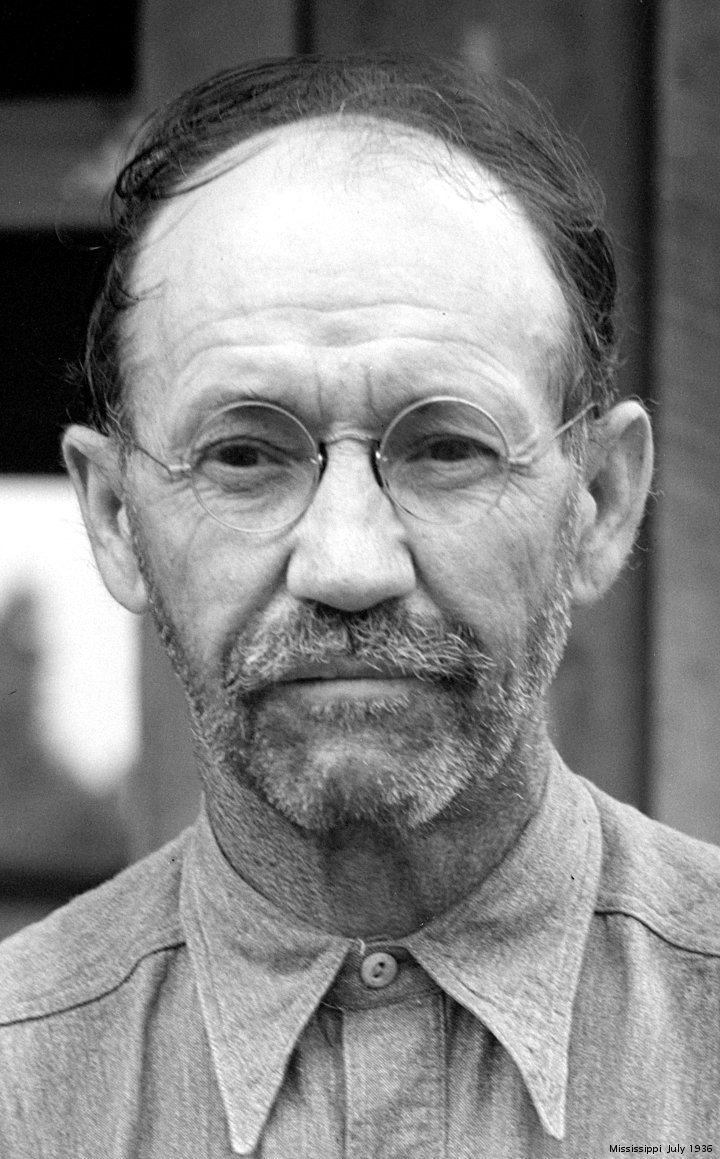
The pictures are from The Library of Congress. Some of these pictures are from Clarksdale MS. This is where Robert Johnson is said to have sold his soul to the devil. The pictures were taken in 1936, two years before the death of Mr. Johnson.
People said the house was haunted and that was even before the two girls started talking to the dead. Kate Fox was 11, her sister Margaret was 14 when they moved into a little house in a nothing village 40 miles east of Rochester, New York, the little house that all their neighbors knew as the one where the traveling salesman had been invited in years before and was never heard from again. Never heard from, that is, until one night in March of 1848, when their parents first heard the sounds. Some nights it would sound like knocking. Other nights like furniture moving and it always seemed to come from the girls’ bedroom but they’d open the door and their daughters would be fast asleep. They never suspected that their daughters could be tricking them. They were just young girls, but they were tricking them. What started with a little tap tapping on the wall and tip-toeing back into bed with giggles muffled by pillows got more sophisticated as the nights went on and on the night of March 31st, the Fox sisters revealed the latest in their growing repertoire of ghost-simulating techniques, the one that would place the two girls at the center of a cultural and religious revolution.
They called their mother into the room. Margaret snapped her fingers once—snap–and they heard a tap in response. She snapped twice—snap snap—and then tapped twice—knock knock. The next night all of their neighbor squeezed into the girls’ candlelit room. They explained that one tap meant yes, two taps meant no and then they started asking questions and in the morning, the audience left convinced that they had spent the night in the presence of a dead man and two girls with incredible powers.
Mr. and Mrs. Fox wanted to protect their daughters and they sent them to live with their responsible older sister, Leah, but they soon found that the ghosts followed the girls and Leah found an opportunity. Soon, she had booked her little sisters in a 400-seat theater in Rochester. By 1850, they were the toast of New York City. People would wait in lines for hours to ask the sisters for words of their dead loved ones on the other side.
William Cullen Bryant caught their act. James Fenimore Cooper. George Ripley, though we don’t know whether he believed it or not. The newspaperman, Horace Greeley, introduced them to New York nightlife and in the pages of his paper, introduced them to the world. Soon people were holding séances like we hold dinner parties but even as spiritualism was sweeping the nation, it was leaving the sisters who started it behind.
On October 21st, 1888, a 54-year-old Margaret Fox sat on the stage at the New York Academy of Music in front of two thousand paying customers and showed them all how she spoke to the dead. She told them about how 40 years before back in that little house in the nothing town after a few nights of knocking and tip-toeing back to bed, she and her little sister realized that they could both crack their toes and no one could see them doing it and that when they did, people actually believed they were hearing from dead people, because sounds are hard to place in space and because you’ll believe pretty much anything if you really want to believe it. She revealed all of that but not everything.
She didn’t tell them about how she and her little sister started to unravel not long after Horace Greeley introduced them to the world and to worldly things like power and wealth and wine. She didn’t tell them about how her sister began to believe that maybe there was something to it all, even as they both struggled under the growing weight of their shared secret and she certainly didn’t tell them about the night she tested her own believed after scurvy had taken the life of a Polar explorer who had taken her heart and how she broke down and tried to contact him, tried to do for real what she had spent the last nine years pretending to do. She didn’t say how she called out to him and how he didn’t call back and how she sat in the dark knowing that he never would.
Kate and Margaret Fox weren’t forgotten, but at the times of their deaths, they weren’t remembered fondly. Each died poor, neither living to see 60. The people who still clung to spiritualism were glad to see them go and people who never believed, they were, too.
Now, there is a postscript here that really can’t be resisted and you can do with what you will. They tore that little house down in 1904. Inside one of the walls near the girls’ room they found the skeleton of a man believed to be a traveling salesman who appeared to have been murdered a few years before the Fox family moved in. It’s true.


Something G-d Intended To Happen




In truckdriver code, ten twenty four means you don’t have any more stops to make. It is time to return to the base. What that means to a slack blogger, sitting in an outdoor office with nothing to say, is a good question. Maybe you just need to narrow your focus a bit.
There is a story in the first part of Zen and the Art of Motorcycle Maintenance. A writing teacher is trying to get a class to write, and he asks them to write about the coins in their pocket. This got no response, so he asked them to write about a penny. This got nowhere, so he asked them to write about the letters on the head side of the penny. This is what got the class into action. (This is close to the story in the book, but not an exact copy.)
There is no penny handy at the moment, but there is a nickel. Once, PG was in the kitchen of the Sea Haven Hostel, in Seattle WA. A gentleman, whose primary language was not english, asked PG “do you have a nig ga, a five cent piece?” PG did not have the requested coin, but he did tell the gentleman to be very, very careful how he said those two syllables.
The nickel is fatter than the other coins, and has a smooth edge. On the head side, there is a man with a ponytail, who we are led to believe is Thomas Jefferson. The third POTUS enjoys a good reputation in history, which would be rather surprising to some of the other “Founding Fathers”.
Arguably, Mr. Jefferson is not an FF. While he did transcribe the Declaration of Independence, he was in Europe during the Constitutional Convention. This is about the time when Mr. Jefferson first hooked up with Sally Hemings.
On the left side of the coin is the phrase IN G-D WE TRUST. It is in all caps, and the G word is spelled out. The ponytail man is looking at these words. The mouth is beside the space between G-D and WE. His nose is pointing at WE. (How typical of government to have it’s nose in the middle of WE.) The eye looks at the first T of trust.
On the wig side is the word LIBERTY, a five pointed star, 1998, and a capital D. The four digits are the date the coin was produced, and the D means it was coined in Denver. The star is in the middle, parallel to where the ear is covered by hair. The middle on the left side is the upper right serif of W. Perhaps the third POTUS is looking down his nose at W.
Having the innertubes on your writing machine is both a blessing and a curse. In the last few paragraphs, the browser corrected the spelling of Hemings, and confirmed the whereabouts of Mr. Jefferson during the Constitutional Convention. The down side is the loss of concentration. Facebook is a constant temptation. Today’s sensation is a Repub with the curious name of Mourdock.
The gentleman was pandering to the Repub obsession with abortion. The lips were moving, which is never a good sign for Republicansduring an election. “The only exception I have to have an abortion is in that case of the life of the mother,I struggled with it myself for a long time, but I came to realize that life is that gift from God and I think even when life begins in that horrible situation of rape that it is something God intended to happen.”
The sun is moving into a place where the light bouncing off the background is making the screen tough to see. Perhaps the work should go inside. Before it does, there should be a review of the Zen Motorcycle book. Don’t waste your money October 6, 2012 RichP I’ve been wanting to read this for years. I’m both a MC rider and a “child” of the 60’s and early 70’s. A harder reading bunch of crap I’ve never seen. Either write a true MC manual or true “this is my philosophy” book.
PG actually had his eyes on every word in “Zen” at some time in the early nineties. The story of the book is fairly easy to follow. When Mr. Pirsig starts to talk about Aristotle, Plato, and quality, it becomes incomprehensible. Maybe someday another try will be made. There is a library full of books that are more fun to read.
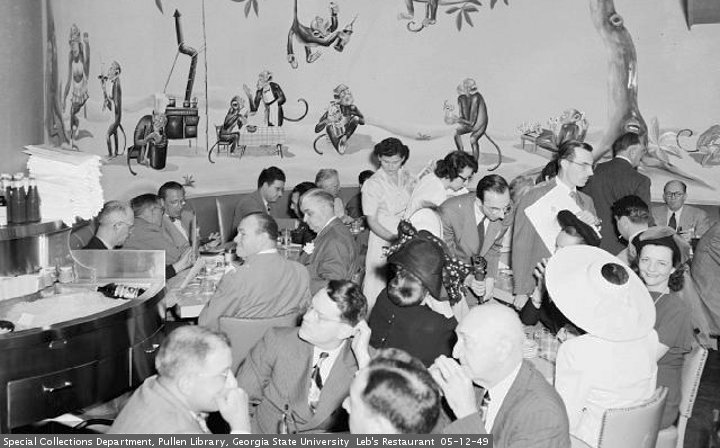
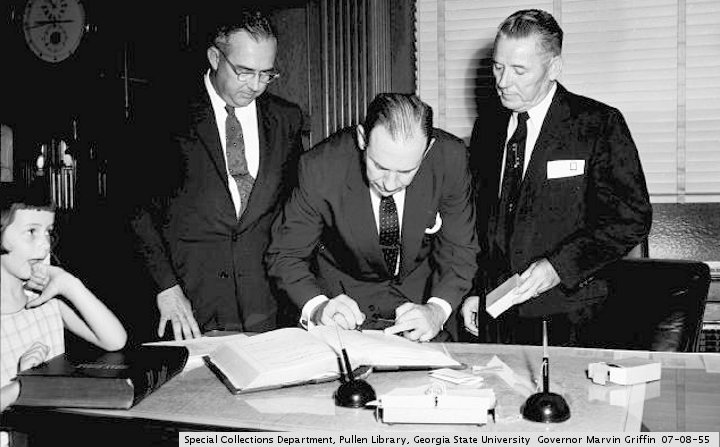
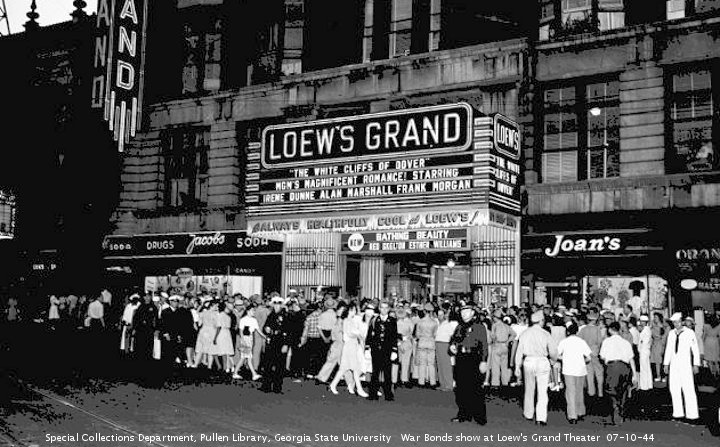
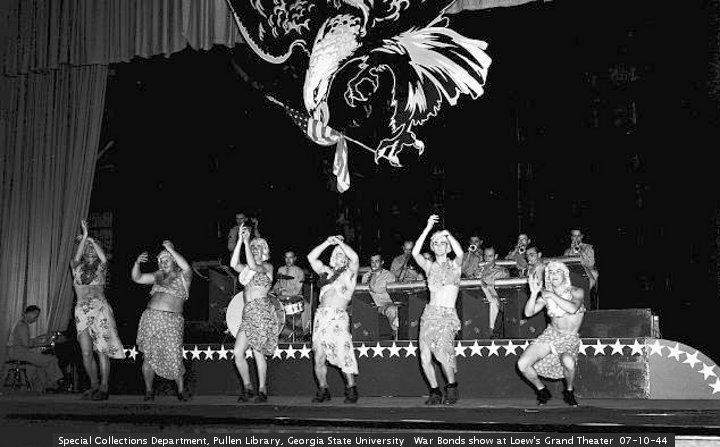
Pictures are from “The Special Collections and Archives,Georgia State University Library”.
This was written like Gertrude Stein.


Migrant Mother


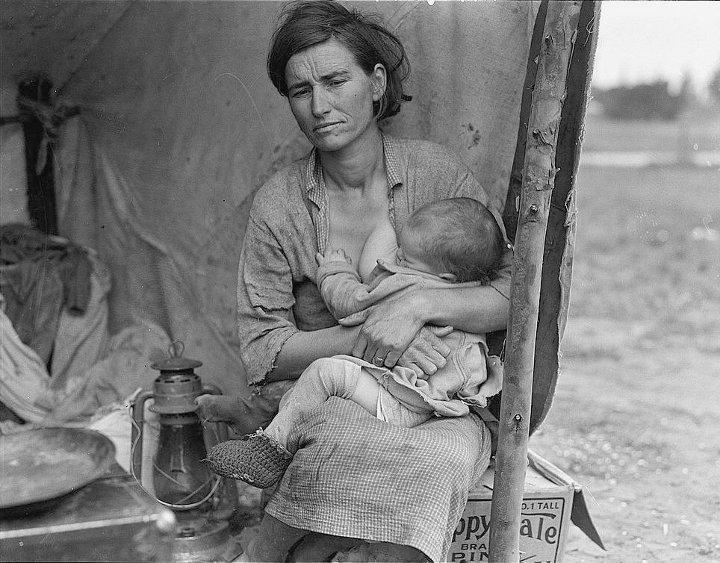


It is perhaps the most famous photograph from the depression. . The semi official title is Migrant Mother. The Library of Congress says “Destitute pea pickers in California. Mother of seven children. Age thirty-two. Nipomo, California.” The exact date is unknown, and was either February or March of 1936. The photographer was Dorothea Lange (pronounced dore-THEE-ah lang). The model was Florence Owens Thompson .
Ms. Lange was born Dorothea Margaretta Nutzhorn May 26, 1895 in Hoboken, N.J. When she was seven she had polio, and when she was twelve her father left. Both events affected her deeply. (Lange is her mother’s maiden name, chosen for use after the father left.) She became a photographer, and had a successful studio in San Francisco. By 1936 she was with her second husband, her sons were in boarding school, and she went to work for the Farm Security Administration.
The Farm Security Administration hired a number of photographers to document the lives of Americans between 1934 and 1944. (During part of this time, it was connected to the Office of War Information, and the Resettlement Administration.) Since they were working for the government, the photographers were not entitled to copyright protection. The majority of these pictures are in the public domain, including the famous pictures of Florence Thompson.
This feature started with a google search for the correct way to pronounce Dorothea Lange. (Readers of this blog have seen the fondness for Library of Congress historic pictures. Ms. Lange is one of their stars.) This search led to a teacher’s guide from Yale University. This guide is about Dorothea Lange and the Migrant Mother. It tells the story as well as PG could. Bless his pea picking heart.
The day that Dorothea Lange photographed what would become her most famous photograph, Migrant Mother, has been retold by Lange in numerous sources. She was on her way home from a trip documenting the living and working conditions of the migrants to California. She followed their schedules, getting up at sunup and working until sundown, which made for long, sixteen-hour days. She was tired, and she was ready to see her family.
With about seven hours of driving left ahead of her, she passed a homemade sign that said Pea Pickers’ Camp. She knew that a late frost had ruined the pea crop, and was concerned about the people who might be at the camp. It nagged at her to turn around, to go back and visit the camp, another opportunity to document. About 15 minutes (20 miles) later, Lange did turn around.
Right away she saw the woman who would be the subject of Migrant Mother. Some sources say she took 5 shots, but she really took 6; in any case each shot focuses in on the woman a little more, and the final shot is the one that would become the “timeless and universal symbol of suffering in the face of adversity “ (The Library of Congress only has five of the shots.)
Early the morning after she got home, instead of spending time with her family Lange rushed to develop the photographs and submit them to the FSA and The San Francisco News. She thought that these photographs could help bring attention to the plight of these American migrant farmers. She was right; the story was printed in newspapers around the country, and the federal government immediately sent 20,000 pounds of food…. (The Thompson family had left for Watsonville by the time the food arrived)
The Dust Bowl refugees were of European descent, and were migrating to California because they were displaced from their farmland by drought. Florence Owens Thompson, though from Oklahoma, was a full-blooded Native American, and her family had been displaced from tribal lands by the U.S. government. (By 1930, Native Americans had lost more than 80% of their lands this way).
The day Lange photographed Thompson, she and her family were driving towards Watsonville, hoping to pick lettuce in the Pajaro Valley. The timing chain on their car broke just outside Nipomo, and so they pulled into the pea -pickers camp to fix it. While fixing the chain, the radiator was punctured; Thompson’s two boys (and likely her male companion) (Wikipedia says it was husband Jim Hill) brought the radiator into town to be fixed. While they were gone, Lange arrived…
The choices Lange made in terms of shooting the scene are very telling in light of our discussion about documentary photography. Most strikingly, the woman’s teenaged daughter is purposefully excluded from the photograph. She appears in the first two photographs of the series, but Lange thought that including her would cause the viewer to speculate about how old the mother was when she began having children (Curtis p. 55). At the time, the ideal family contained no more than three children; this woman’s family of seven could have detracted from the matter at hand, and maybe caused people to feel less sympathetic towards her (Curtis p. 52).
In the third shot, all you see is the mother nursing her youngest child. Migrant Mother is often referred to as Migrant Madonna… Lange thought that her subject looked too anxious and uncomfortable with the camera, as Lange seemed to have triggered in her what she called “that self-protective thing” (Curtis p. 57). So, despite being uncomfortable with how unpredictable children were to photograph, to calm the mother she added one of the children back into the frame for the fourth shot. She had the child rest her chin on her mother’s shoulder, which, though somewhat unnatural, served the purpose of anchoring the child still. She was also asked to remove her hat, which would have obscured her facial features. This resulted in a good photograph. Lange “thought she could do better.”
The fifth shot was the same, but from a different angle, which illuminates an empty pie tin, heavily symbolic of the hunger the family was facing. It also highlighted a warm and loving relationship between mother and child, as the child is leaning lovingly on the mother’s shoulder, which is comforting to the child.
For the sixth and final shot, (the one which became famous) Lange brought another child in, but she had both children face away from the camera, so that her shot would not be jeopardized by their unpredictability, and they would serve as a loving frame for the mother. Lange asked the mother to bring her right hand up to her face, and that resulted in exactly what Lange wanted and knew was there (Curtis p. 65). It softened her anxiety about the camera into a mother’s concern for the welfare of her family. The mother was worried about letting her sleeping child slip, so in the original sixth shot you could see her thumb grasped around the pole for support. In her excitement Lange did not see it. She eventually altered the original photonegative because she “did not want a small detail to mar the accomplishment (of overcoming her subject’s defensiveness) (Curtis p. 67).”
In this feature, the second image from the session is missing. The pictures in this feature are as follows. 1- The famous picture, cropped. 2- The first shot from the session. 3- A detail from the first shot. 4- The Migrant Madonna. 5- Child on the shoulder. 6- Child on the shoulder #2. 7. The full length famous picture. 8- A portrait of Dorothea Lange. 9- Another photograph by Ms. Lange, taken on the California-Arizona border in the summer of 1936. 10- The information from the famous picture. 11- The famous picture with the thumb included. This is a repost.
Repost Notes This was on a list of posts that could be repeated. Of course, there are usually improvements to be made. Youtube was searched, and some videos were found. One of them mispronounces Dorothea. A search for the correct pronounciation of that first name was how this post got started in 2010.
Looking at the pictures reveals a glitch in the famous picture. If you look in the part of her hair, you will see a gray stripe. This is a bit of damage to the negative, and is common to old photographs. Ordinarily, PG would paste over a spot like that, but this is a sacred photograph.
The files of the LOC were consulted, and a 115mg original was downloaded. The grey stripe was still in the part, which is where it will stay. The original has the thumb, which was taken out of the famous prints. It is included in this post, along with the information typed into the side.
A look at some of the other pictures taken that day show a grey spot in the part. Maybe it wasn’t a photo glitch. Raising seven children can give any woman a few gray hairs.
Another question is about Florence Thompson, the “Migrant Mother”. It was noted that she was a Native American. PG has decided that the expression “Native American” is the invention of European Import Americans, and is only marginally less offensive than Indian. There are hundreds of tribes in the Americas. A person is a member of a tribal nation. What tribe was Florence Thompson?
Mr. Google points us to this answer. “Thompson, a “full-blooded” Cherokee, was born Florence Leona Christie on September 1, 1903, on the Cherokee Nation in Oklahoma. Her father, Jackson Christie, was an ex-convict who had abandoned the family before her birth. Her mother,Mary Jane Cobb, married Charles Akman, a Choctaw, in 1905, with whom she raised Thompson near Tahlequah OK”
Pictures are from The Library of Congress.





Duane Allman And The Coricidin Bottle
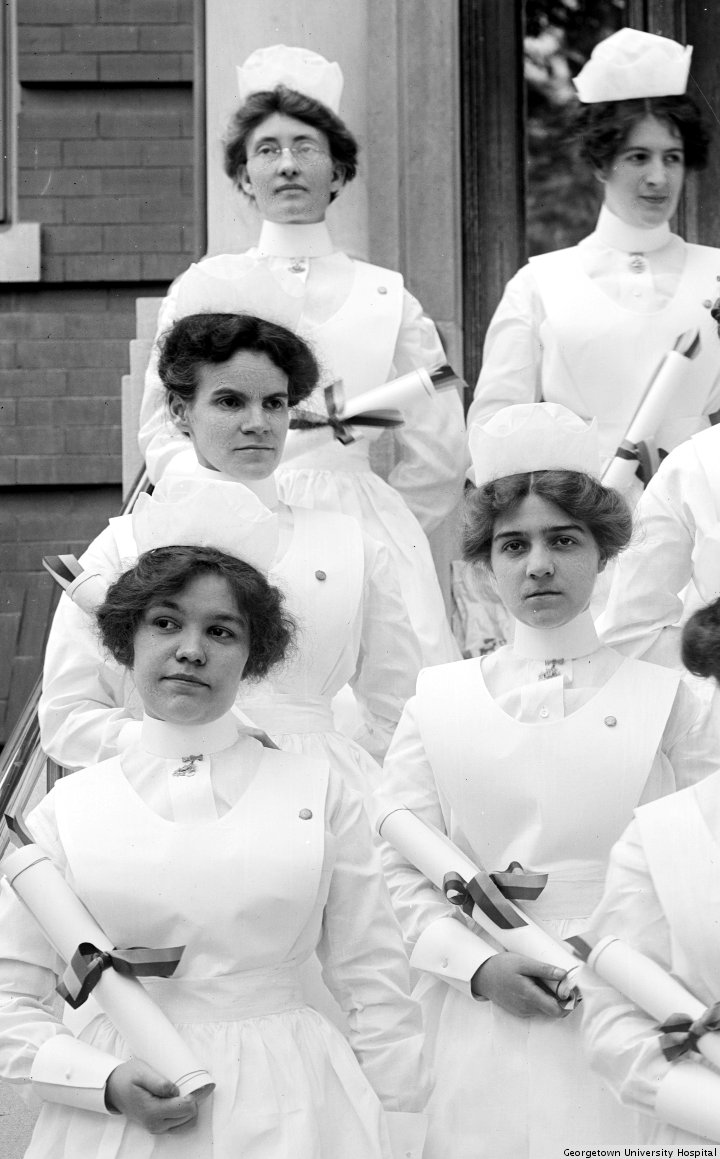
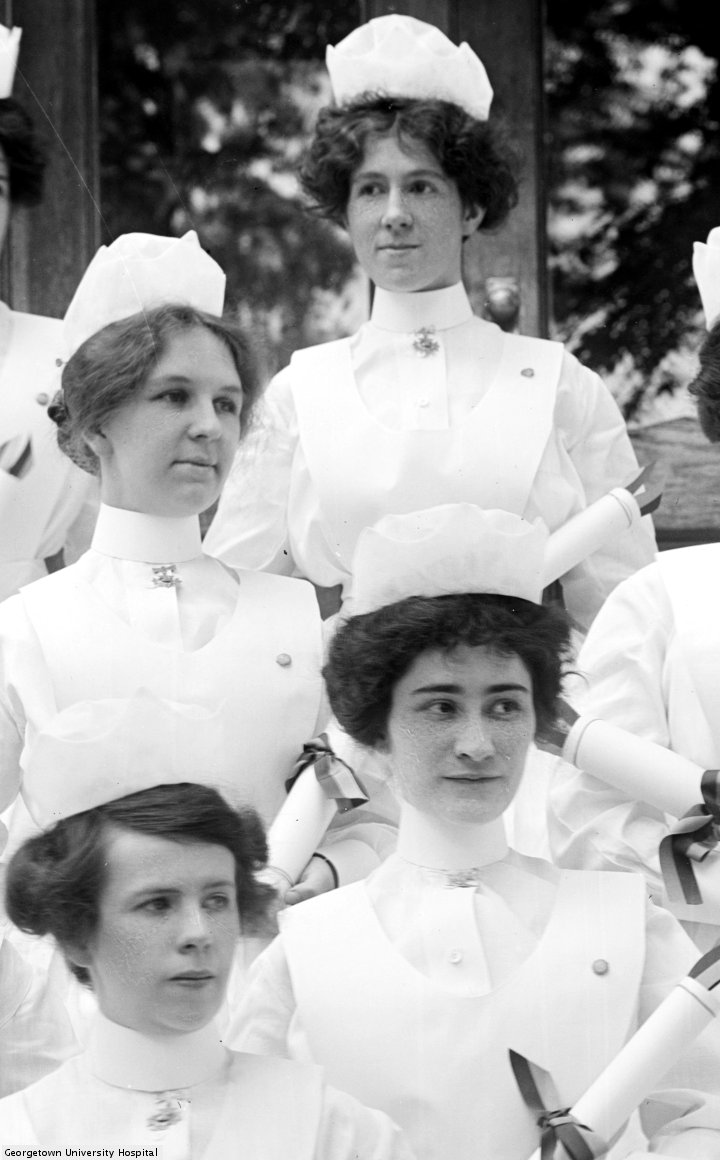


Gregg Allman appeared on Live Talks LA, selling a book, My Cross to Bear. Yes, he was coherent. Mr.Allman says something about going through rehab seventeen times. No one argues disputes that he has had an interesting life.
The chat has a few parts left out. Dicky Betts and Cher are not mentioned. The title of “strangest dude I ever met” goes to Jai Johanny “Jaimoe” Johanson, aka the black guy in the group. Gregg says he used to listen to stuff by Roland Kirk.
The story of Duane Allman learning to play slide guitar is good. Duane was sick. Gregg came to see his brother, who was playing the guitar in a new way. It seems the doctor had given him some pills called Coricidin. You take the pills out of the glass bottle, soak the label off, and you have a guitar slider.
When PG was a kid, his uncle was a representative for the company that sold Coriciden. There were boxes of samples in the house, which all came in the glass bottle. PG had not heard that name for forty eight years. The spell check suggestion is Coincidence.
Not everyone at amazon was impressed by the book. “the book was so damged the binding and jacket were ripped that a did not read the book and will not buy an more nick malick.”
The visual multitasking element for this chat was pictures from The Library of Congress. There are two group shots, broken down into smaller images. One is a graduating class of a nursing school at Georgetown University. The photographer lists the date as between 1905 and 1945.
The other image is a line of people waiting to vote. The well dressed citizens are in Clarenden VA. The date is November 4, 1924. Several carry signs for the democratic presidential candidate, John W. Davis. He was nominated on the 103rd ballot of the democratic convention, and lost to Calvin Coolidge.


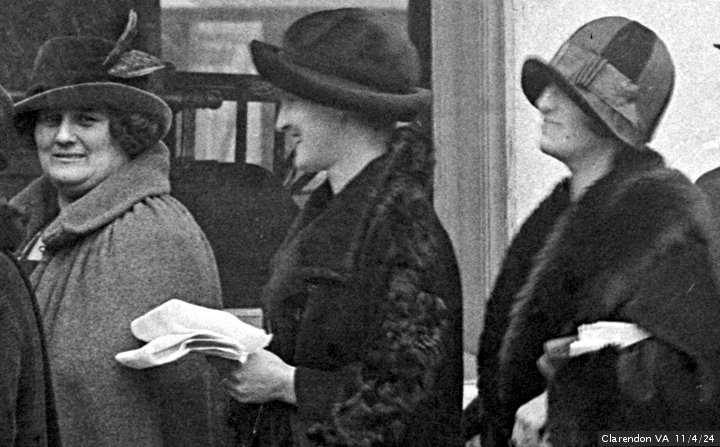


O Sun Of Real Peace
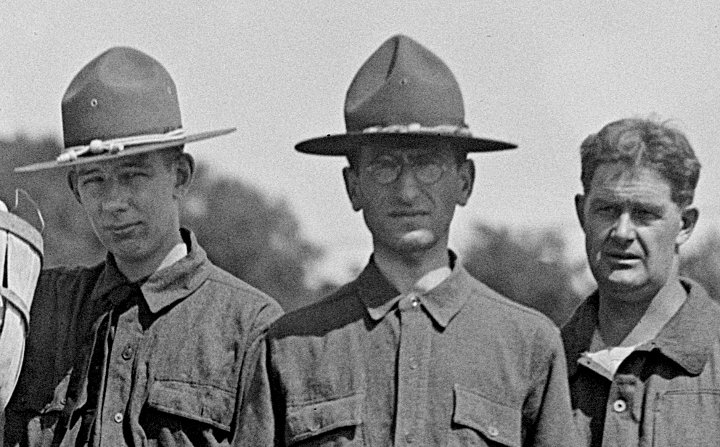



PG was threatening to listen to a radio interview with Richard Nixon. Tricky Dick was promoting a book, Real Peace. Supposedly, the 107 page tome was self published, then issued as a trade book. It deals with issues of world peace in the nuclear age.
At the eighteen minute mark, Mr. Nixon said something. In Real Peace, the phrases in my opinion, of course, and I believe do not appear. “Its obvious when you state something that you believe it.”
Oh, if only. When a politician’s lips are moving, then whatever comes out of the mouth is suspect. POTUS 37 was a bit closer to the truth later… “every politician should be somewhat of a poet.”
The thrust of the book is to maintain the strength of your armed forces, so that the bad guys will think twice before doing something stupid. The interview was conducted January 20, 1984. At the time, the number one enemy of the United States was the Soviet Union. Both superpowers had nuclear weapons, and neither was foolish enough to use them. In a few years, the Soviet Union would collapse.
“No sane national leader is going to make a decision, I’m going to declare war to gain this territory or gain this advantage.” In 1984, two bloody conflicts were being fought in Central Asia. Both were provoked, to some degree, by the United States. The after effects of these conflicts would have an impact on the USA. These two wars were the Soviet Invasion of Afghanistan, and the Iran-Iraq war. This is not the only time the sanity of Saddam Hussein has been questioned.
While trying to find more information about Mr. Nixon’s book, PG found a link to a poem by Walt Whitman, O Sun of Real Peace. Mr. Whitman was a nurse during the War Between the States, and saw men suffer. Should every poet be somewhat of a politician?
O SUN of real peace! O hastening light!
O free and extatic! O what I here, preparing, warble for!
O the sun of the world will ascend, dazzling, and take his height—
and you too, O my Ideal, will surely ascend!
O so amazing and broad—up there resplendent, darting and burning!
O vision prophetic, stagger’d with weight of light! with pouring glories!
O lips of my soul, already becoming powerless!
O ample and grand Presidentiads! Now the war, the war is over!
New history! new heroes! I project you!
Visions of poets! only you really last! sweep on! sweep on!
O heights too swift and dizzy yet!
O purged and luminous! you threaten me more than I can stand!
(I must not venture—the ground under my feet menaces me—it will not support me:
O future too immense,)—O present, I return, while yet I may, to you.
Pictures today are from The Library of Congress. This is written like H. P. Lovecraft.

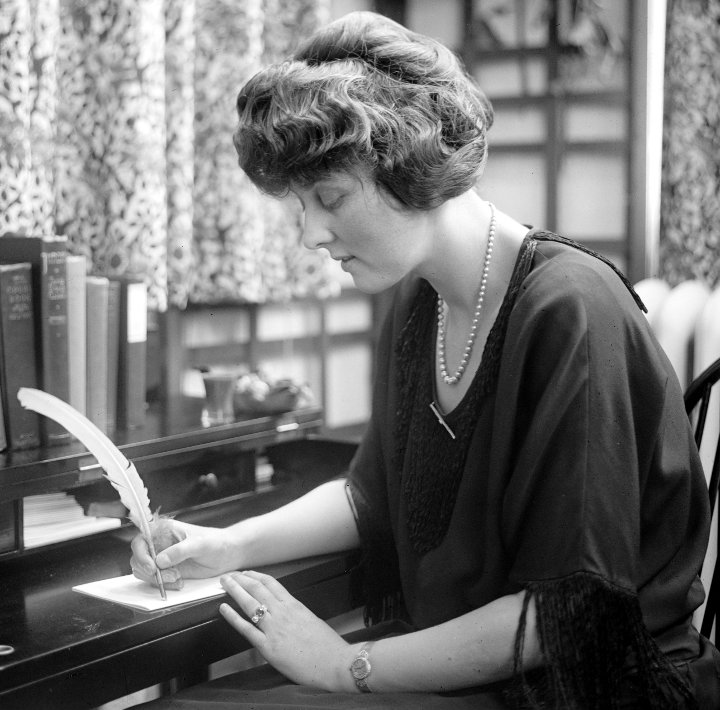


Whimsical Nostalgic And Down Home

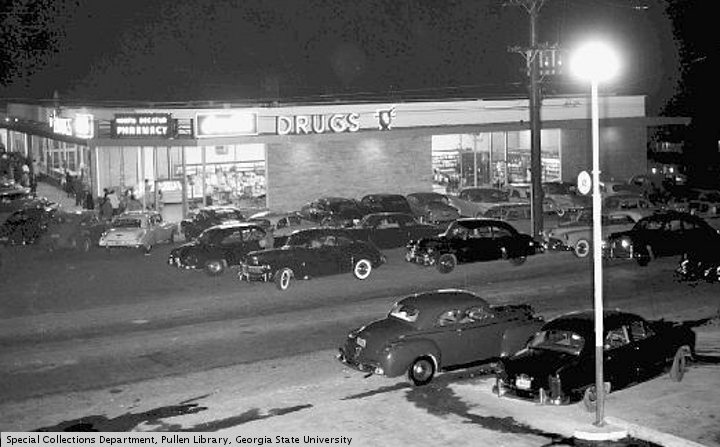





PG was spending a slack morning. He was editing pictures from the GSU Library. This occupies the fingers and the eyes, which leaves the ears looking for amusement. To satisfy the aural urges, an author interview from Wired For Books was imported. Meanwhile, the brain wonders when the next dose of coffee would arrive.
Wired For Books is a treasure of the digital age. Don Swaim had a radio show for the CBS network. He would interview authors selling a new book. The interview tapes were empeethreed, and put on a website facilitated by Ohio University. PG began at the top of the list, and is working his way through the alphabet. He made it to the M section.
In the interview with Toni Morrison, Mr. Swaim mentioned having a chat with Garrison Keillor. It seems as though Mr. Keillor was not fun to interview. The reflex action for PG was to download the files.
PG has never been on the bus for Garrison Keillor. His formula is a bit too NPR precious for PG. Maybe Mr. Keillor secretly agrees, but continues to do it for the money. “Keillor also talks about his writing. He writes about his radio program mainly as a way to defend himself. Many reporters have described his show, A Prairie Home Companion, as down-home, whimsical and nostalgic, all adjectives that Keillor would never use to describe his own program. He wanted to write what it really was about.”
The radio show was interrupted to write the first four paragraphs of this post. The remaining thirteen minutes did not have many good quotes. Mr. Keillor talked about his Minnesotality, or maybe that is Minestrone. Like people from the rest of the world, Minnesotites come to Georgia.
The next show at Wired for Books is a repeat of the Richard Nixon interview. For those of a certain age, it is a visit to another age. Mr. Nixon has the deep rolling voice, and can drag you under his spell, until you wake up and realize that everything he says is a lie.
While looking for the link to the interview above, a conversation between Mr. Nixon, John D. Ehrlichman, and H. R. Haldeman came up. The tape was made May 13, 1971.
NIXON: … CBS … glorifying homosexuality.
EHRLICHMAN: A panel show?
H. R. HALDEMAN: No, it’s a regular show. It’s on every week. It’s usually just done in the guy’s home. It’s usually just that guy, who’s a hard hat.
NIXON: That’s right; he’s a hard hat.
EHRLICHMAN: He always looks like a slob.
NIXON: Looks like Jackie Gleason.
HALDEMAN: He has this hippie son-in-law, and usually the general trend is to downgrade him and upgrade the son-in-law–make the square hard hat out to be bad. But a few weeks ago, they had one in which the guy, the son-in-law, wrote a letter to you, President Nixon, to raise hell about something. And the guy said, “You will not write that letter from my home!” Then said, “I’m going to write President Nixon,” took off all those sloppy clothes, shaved, and went to his desk and got ready to write his letter to President Nixon. And apparently it was a good episode.
EHRLICHMAN: What’s it called?
NIXON: “Archie’s Guys.” Archie is sitting here with his hippie son-in-law, married to the screwball daughter. The son-in-law apparently goes both ways. This guy. He’s obviously queer–wears an ascot–but not offensively so. Very clever. Uses nice language. Shows pictures of his parents. And so Arch goes down to the bar. Sees his best friend, who used to play professional football. Virile, strong, this and that. Then the fairy comes into the bar. I don’t mind the homosexuality. I understand it. Nevertheless, goddamn, I don’t think you glorify it on public television, homosexuality, even more than you glorify whores. We all know we have weaknesses. But, goddammit, what do you think that does to kids? You know what happened to the Greeks! Homosexuality destroyed them. Sure, Aristotle was a homo. We all know that. So was Socrates.
EHRLICHMAN: But he never had the influence television had.
NIXON: You know what happened to the Romans? The last six Roman emperors were fags. Neither in a public way. You know what happened to the popes? They were layin’ the nuns; that’s been goin’ on for years, centuries. But the Catholic Church went to hell three or four centuries ago. It was homosexual, and it had to be cleaned out. That’s what’s happened to Britain. It happened earlier to France. Let’s look at the strong societies. The Russians. Goddamn, they root ’em out. They don’t let ’em around at all. I don’t know what they do with them. Look at this country. You think the Russians allow dope? Homosexuality, dope, immorality, are the enemies of strong societies. That’s why the Communists and left-wingers are clinging to one another. They’re trying to destroy us. I know Moynihan will disagree with this, Mitchell will, and Garment will. But, goddamn, we have to stand up to this.
EHRLICHMAN: It’s fatal liberality.
NIXON: Huh?
EHRLICHMAN: It’s fatal liberality. And with its use on television, it has such leverage.
NIXON: You know what’s happened [in northern California]?
EHRLICHMAN: San Francisco has just gone clear over.
NIXON: But it’s not just the ratty part of town. The upper class in San Francisco is that way. The Bohemian Grove, which I attend from time to time–it is the most faggy goddamned thing you could ever imagine, with that San Francisco crowd. I can’t shake hands with anybody from San Francisco. … Decorators. They got to do something. But we don’t have to glorify it. You know one of the reasons fashions have made women look so terrible is because the goddamned designers hate women. Designers taking it out on the women. Now they’re trying to get some more sexy things coming on again.
EHRLICHMAN: Hot pants.
NIXON: Jesus Christ.
Pictures are from “The Special Collections and Archives,Georgia State University Library”.






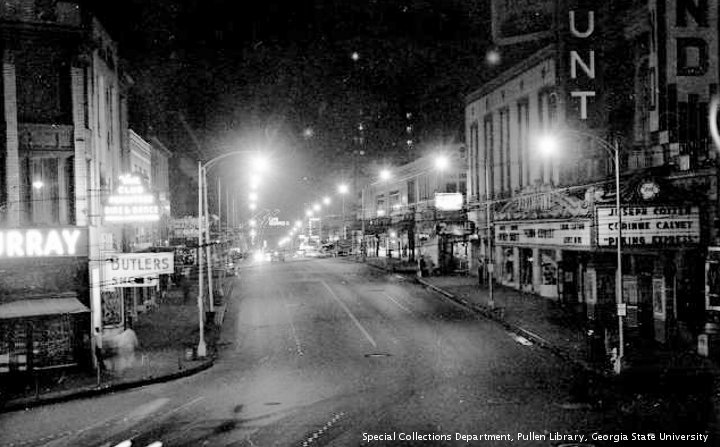
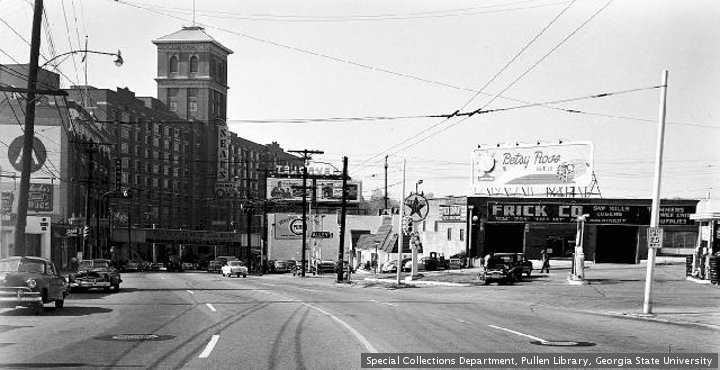
10/11/12


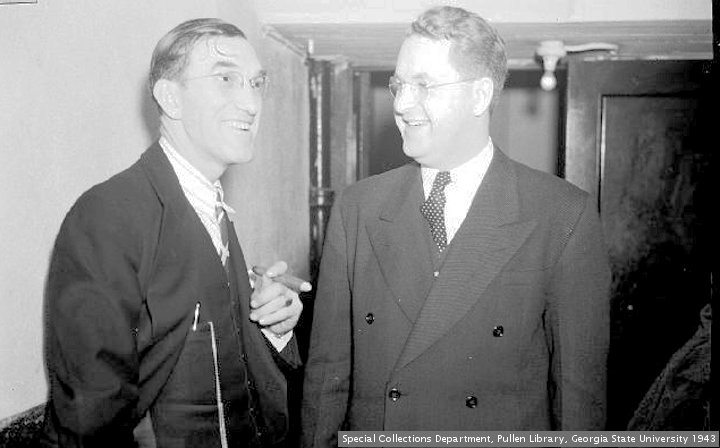
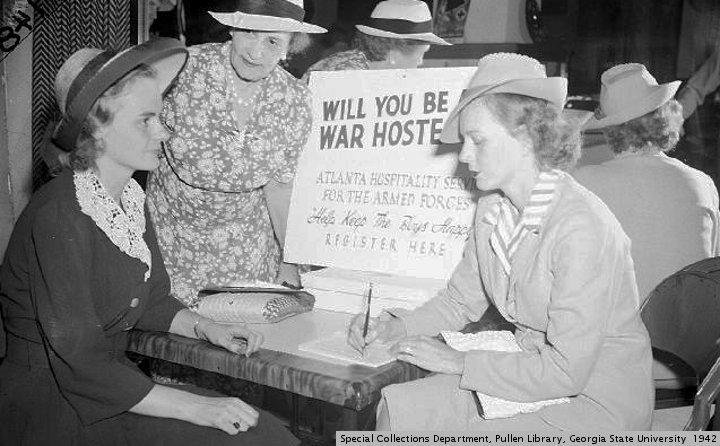




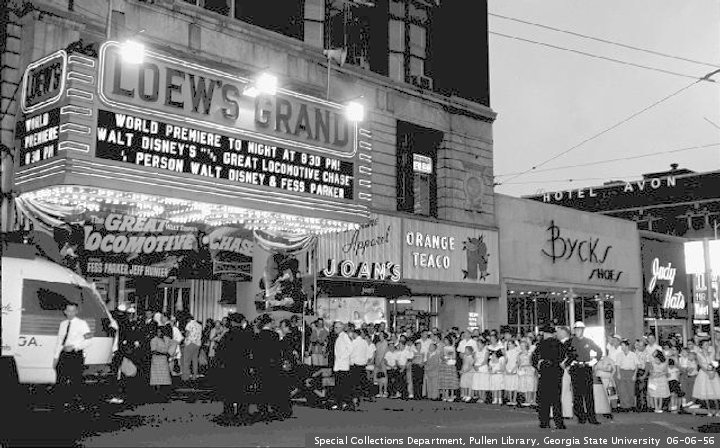

Today is October 11, 2012. In the six digit shorthand for dates, this is 10/11/12. If you enter this into google with the slash marks, it will read it as 10 divided by 11, with the result divided by 12. The answer for this is 0.07575757, with the fives and sevens dancing off to the horizon. If you multiply 10x11x12, the correct answer is 1320.
There is a pleasing symnetry to 10-11-12. It happens every year for twelve years at the start of the century, between January 2, 2003 and December 13, 2014. If you really want to party, remember to set your clocks to buzz at 7:08:09 p.m. If you woke up at that time this morning, you get bonus points. If you want to celebrate again, there is 8:09 10-11-12.
USA Today reports that today is a big day for lottery tickets and wedding chapels. (More google results show this AP feature is appearing in a number of publications.) “It basically happens in the early years of a new century,” says Geoff Chester, public affairs officer at the U.S. Naval Observatory. “Really, this is just a numerological curiosity,People find it amusing. But there is no cosmic significance. It’s an artifact of the calendar and time system that we use.”
Geoff Chester probably does not know Philadelphia writer Peter Mucha. With the miracle of copy paste, Mr. Mucha makes the job of a slack blogger much easier.
“As numbers freaks know, however, such sequences are fairly common, especially in the first decade or so of a century. Include repeat sequences (1-1-01), descending ones (3-2-01), consider the order preferred in Europe (20-01-2001, or Jan. 20, 2001), and include palindromes (10-1-01, 10-2-01, 10-02-2001, etc.) among the so-called patterns, and, why, more than a dozen possibilities popped up in just the century’s first year. … Ever since 12-11-10, descending sequences have disappeared, and next year, the repeats will vanish, too, since there’s no 13th month. 12-13-14 will put an end to ascending strings as well – unless you count by odds or evens and like the likes of 5:07:09 on 11-13-15 – a Friday the 13th, by the way. No matter. People will still see patterns, just as they did on 9-9-99. … Every year, March 14 or 3-14 is Pi Day, since the circumference/diameter constant is 3.14159 etc. So, expect extra hoopla in 2015 (when adding seconds after the date makes for a Pi Second accurate to 10 decimals, with 3-14-15 9:26:54, according to a Princeton Web page). Pi Day 2016 might be even bigger, when 3-14-16 rounds the constant off to four decimal places.”
Bible Gateway has a page for Mark 10:11-12 11 He answered, “Anyone who divorces his wife and marries another woman commits adultery against her. 12 And if she divorces her husband and marries another man, she commits adultery.” The page has an ad for Christian Mingle. “Delight yourself in the LORD and he will give you the desires of your heart. -Psalm 37:4”
Today is the fourth day of Mental Illness Awareness Week, with graphics coming to a facebook near you. For those who are tired of wrestling with coat hangers, this is National Coming Out Day. The ghost of Keith Haring wants a royalty payment.
October 11 is not a popular day for history, birthdays, or holidays. The best October 11 can do for a historic event is the 1975 premiere of Saturday Night Live. On this day in 1912, Betty Noyes was born. She was the ghost singer for Debbie Reynolds in Singin’ in the Rain. 1932 saw the birth, in McMinnville TN, of Dottie West. There were four deaths on October 11 that catch the eye: Chico Marx (1961), Edith Piaf (1963), 1963, Dorothea Lange, (1965) and Redd Foxx (1991).
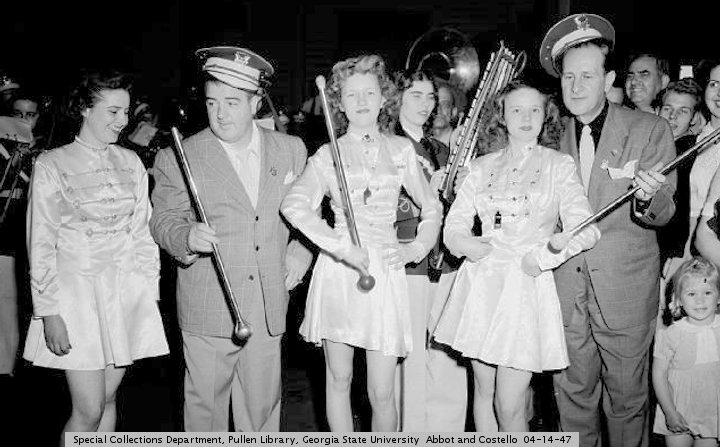
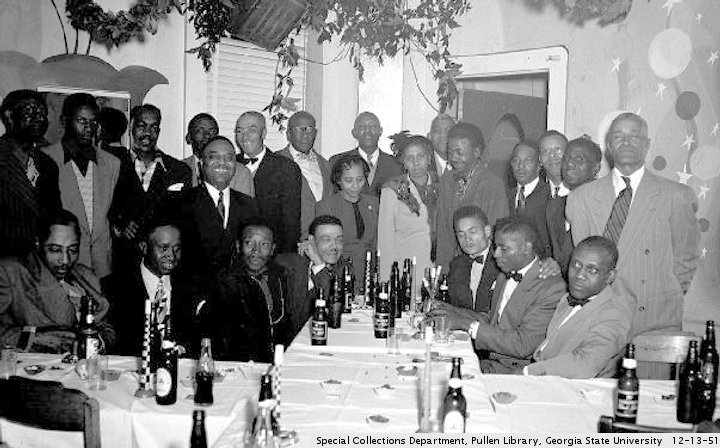
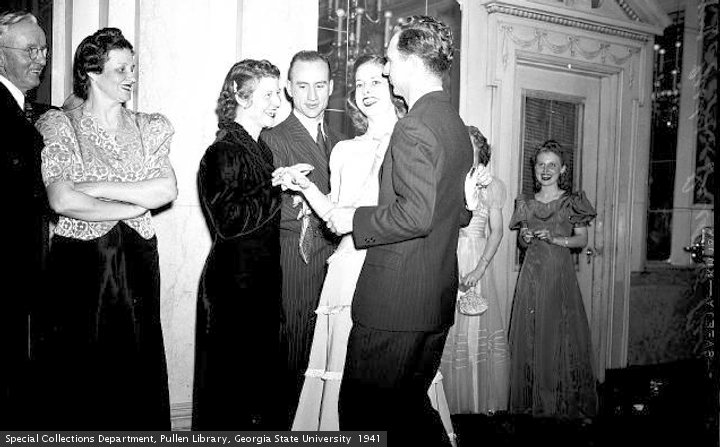
Pictures today are from ” The Special Collections and Archives,Georgia State University Library”



Self Portraits On Drugs

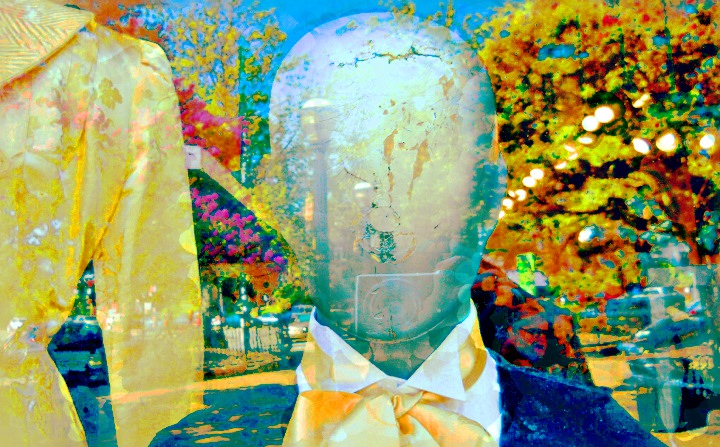





A person, Bryan Lewis Saunders, conducted an experiment. “After experiencing drastic changes in my environment, I looked for other experiences that might profoundly affect my perception of the self. So I devised another experiment where everyday I took a different drug and drew myself under the influence. Within weeks I became lethargic and suffered mild brain damage. I am still conducting this experiment but over greater lapses of time. I only take drugs that are given to me.”
Abilify / Xanax / Ativan ~ 90mg Abilify ~ 1 sm Glass of “real” Absinth ~ 10mg Adderall ~ 10mg Ambien ~ Bath Salts ~ 15mg Buspar (snorted) ~ 4 Butalbitals ~ Butane Honey Oil ~ 250mg Cephalexin ~ 1/2 gram Cocaine ~ Computer Duster (2 squirts) ~ 2 bottles of Cough Syrup ~ 1 “Bump” of Crystalmeth ~ 4mg Dilaudid ~ 1 shot of Dilaudid / 3 shots of Morphine ~ DMT ~ 60mg Geodon ~ Hash ~ Huffing Gas ~ Huffing Lighter Fluid ~ 7.5mg Hydrocodone / 7.5mg Oxycodone / 3mg Xanax ~ 3mg Klonopin~ 10mg Loritab ~ Marijuana (Kine Bud) ~ G13 Marijuana ~ Morphine IV ~ Psilocybin Mushrooms (2 caps onset) ~ 2mg Nicotine Gum ~ Nitrous Oxide ~ Nitrous Oxide / Valium I.V. ~ PCP ~ 7.5mg Percocet ~ 2 Pot Brownies ~ 1 Glass of Pruno ~ Marijuana Resin ~ 4mg Risperdol ~ Ritilin (doseage unknown-snorted) ~ Salvia Divinorum (right before but mostly right after) ~ 100mg Seroquel ~ 100mg Trazadone ~ 20mg Valium ~ Valium I.V. (doseage unknown in hospital) ~ Valium IV, (Albuterol, Saline & Oxygen) mixture ~ 2mg Xanax ~ 50mg Zoloft (after 2 weeks prescribed) ~ 10mg Zyprexa ~ Ativan / Haloperidol (doseage unknown in hospital)
Mr. Saunders is a piece of work. He has done a self portrait every day for years, and performs something called “stand up tragedy”. His website has a massive interview page. The rest of this post will be selections from that.
Recently there’s been a lot of chatter on the internet about a series of self-portraits that Bryan Lewis Saunders drew/painted/etched while he was on a whole potpourri of different drugs. My friend Kelly sent me the link because the day previous, I sent her a video of some chick on YouTube describing the experience of turkey-bastering DMT up her butthole . That her brain connected Bryan Saunders with that video should give you some idea as to what his work is like.
These portraits alone, though, are hardly interesting enough to merit Bryan any additional attention. It wasn’t until I realized that these 32 paintings comprise only 1/250th of a 16 year self-portrait project that I decided to spend a Sunday afternoon Skyping him at his home in Johnson City, Tennessee. As our conversation teetered between horrifying and hilarious, I realized that–although colossal–the self-portrait project is only a fragment of his dense portfolio of other equally involved multimedia projects. Bryan’s hermitic, Appalachian livelihood fostered an unarguable talent for embarking on extremely bizarre and elaborate artistic undertakings.
What started as a simple conversation about self-portraits spiraled into a cordial chat about crystal meth, Chinese standup comedy, blood, obese girls who suck dicks for attention, the process of getting severely overweight dead people out of an apartment building, and a few other equally engaging topics. By the end of our two-hour chat, I decided that Bryan Lewis Saunders is a living manifestation of Xenia, Ohio in Harmony Korine’s film, Gummo . And now he’s my friend. ~ ~
Well I wanted to be a famous comedian in China. I was living in my aunt’s trailer in Virginia, and the family was having a lot of problems. One of my cousins was on meth. My great aunt had Alzheimer’s. Another one had a stroke. It was a lot of confusion and constant arguing back and forth, so I just thought to myself, “well I’ll be better in China.” I spent like six hours a day, seven days a week for like nine months straight teaching myself Mandarin. I thought that I’d go to some cities in communist China where they don’t have any tourism, and I would do standup comedy there. I figured within one year I’d have my own sitcom, then I’d be doing blockbuster features in China, and then I’d be a big international superstar. I went and did a Chinese wedding in New York City, and it went pretty well, so I went to Fujo to become a superstar. After like the third day, I met a guy who could speak English pretty well, and he told me that they didn’t have stand up comedy in China. I was pretty devastated, so when I was forced to leave I thought, “Well hell, Tennessee is pretty cheap, so I moved back here and decided that I’d just do standup tragedy and try to make all of these strangers cry instead. ~ ~
What were your favorite substances consumed? What were the worst? Xanax (totem poles – 4mg) would probably be one of my favorites. It made me feel real at peace with life and with the trauma, and it also made me a real social dynamo! I’m sort of a recluse but with the Xanax I could just walk up and talk to total strangers! The Butane Honey Oil was a real blast too! The worst is a toss up between PCP and Seroquel (heavy tranquilizer/anti-psychotic agent) 100 mg. I went to a doctor to hopefully get more different drugs and told him about my project and showed him my pictures on various drugs and he only wrote one prescription for 90 Seroquels thinking I was psychotic.~ ~
What’s next? Where’s the acid? As far as acid goes, I’ve tried acid 3 times in NE Tennessee and all 3 times it was really crappy. Nothing like the U.V.A. acid in the mid eighties. People here say, “I did 8 of ’em. I took 4. I did 6 of ’em.”. And I’m like, “If one doesn’t do it for you, why take 7 more? That’s ignorant!” As for what’s next, it all depends on what people give me. I don’t seek them out and there are still plenty of big ones I need to draw under the influence of; Heroin, LSD, DMT, Computer Duster, Ayahuasca, Peyote and I don’t want to die until I do a self-portrait on Crack. You see today we live in a narcissistic and obsessive culture, totally overflowing with drugs. And as an artist I am the filter. Picasso and Matisse got it right when one of them said, “Cézanne is the father of us all.” It’s not a stretch by any means to say, “On some days, my brain chemistry is my vantage point and my face is his Mont Sainte-Victoire.” For people interested in this particular body of work, my Facebook has the best and most up to date collection of drawings under the influence. And I’m a weird person, and I’m way more well known for other stuff besides the drawings and drugs… ~ ~
On your MySpace page, you say you have mental problems. How do you deal with these on a day-to-day basis? I’ve been labeled with: Antisocial Personality Disorder (as a child), Borderline (in my teens), Schizotypal (as a young adult), Paranoid Schizophrenic (at present)… but I believe all that says much more about the system of classification than it does about me as an individual. Their response to that, of course, is that I’m in denial. So I self-medicate with art, obsessively and constantly, and when things in my environment get too overwhelming, I check into a hospital and get medicated, get out, wean myself off the drugs and start over. Not a cycle I recommend, but I know myself well and have the art…I’ve been living with it forever. Sometimes when I get “woggy” and can’t understand what people are saying, I’ll go to another country and fight the (imaginary) mental language problem with a (real genuine) language problem and make art… It depends on how severe the crisis is. I’m the most rational psychotic I know, if I even am psychotic? I’m fortunate in that respect; most aren’t so lucky.
Is there anything you’d like to add or anything you’d like to tell our readers? Thanks for giving me the opportunity to share what I do! It feels good to be included here. Oh, and if you’re online sometime and come across my series of self-portraits under the influence of different drugs, know that I don’t “party” I just experiment, and I’m willing to trade art for drugs that I haven’t drawn myself on yet. But keep the jenkem to yourselves! ~ ~
Any last words? “Be leery of signs. Once I drove to Alabama, and the first fruit stand I came to across the State Line had a sign that said, “COLOREDS WELCOME”. It struck a nerve. I didn’t know if they meant it or not. With language like that – surely they didn’t. It confused me. The same with the “Free Speech Zone” sign. I’ve performed at many places here in Johnson City using the exact same material and have never had a problem with censorship. After all it’s America ? The only place that advertises FREE SPEECH here, is the only place that DOESN’T allow it. So be wary of signs, chances are – THEY ARE INSTRUCTING THE EXACT OPPOSITE !!!”







Cemetery Blues
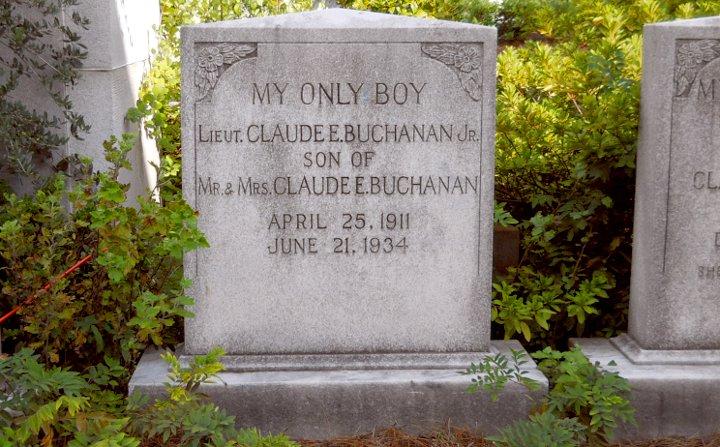



PG and Uzi had their usual Sunday phone call, and agreed to go to “Sunday in the Park”. It is a festival in Oakland Cemetery, with live music, people in costumes, open mausoleums, and lots of good clean fun. It wasn’t until that evening that PG learned that today is Dead Poets Remembrance Day. Edgar Allan Poe met his maker on this day in 1849.
There was a Chamblee54 post about DPRD two years ago. The idea is to go to a cemetery and read a poem. An effort will be made to do that tonight, although promises about dead poets are notoriously unreliable. The 2010 post is included as part two of this feature.
The first poem read that afternoon was “Looking for the Buckhead Boys” by James Dickey. In the intervening two years, PG listened to a podcast with Christopher Dickey, the son of the writer. Sometimes bard is short for bastard.
So PG, Uzi, and Hazmat went to a festival in Oakland Cemetery. Like everything else, it is more popular and expensive. You had to pay to park, which Uzi generously took care of. The brick walls around the boneyard have been repaired, and no longer look like they are going to fall down. Those walls are important, because people are dying to get inside. This is the second time that PG and Uzi have attended the October festival in Oakland Cemetery.
There are always things that you need to see at Oakland. Margaret Mitchell, the Lion Statue, and the mausoleums are important stops. PG followed the signs to the grave of Bobby Jones. It had golf balls and a putter, which was not necessary.
Don LeVert was a member of the Atlanta Sky Hi Club for many, many years before his departure in 1997. PG and Uzi always seek him out, and it is usually a bit of an adventure finding him.
After visiting Don, PG found the marker for “Brother John Wade”. His time on earth was September 23, 1865 to January 15, 1916. This was from the autumn just after the War Between the States until 37 days before PG’s father was born in Rowland, North Carolina. There was a renewed sense of connection to the stone monuments.
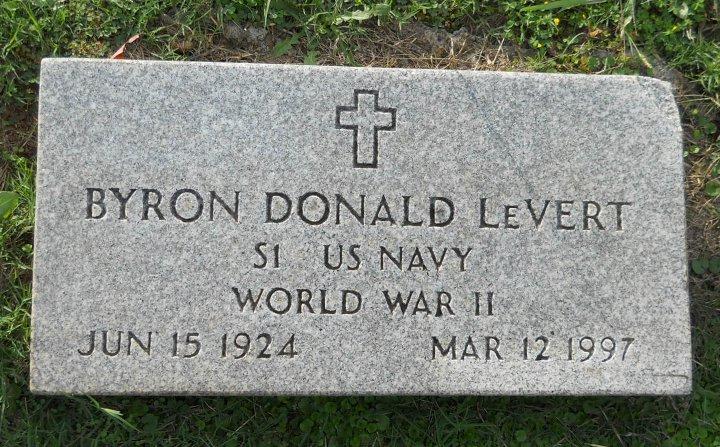
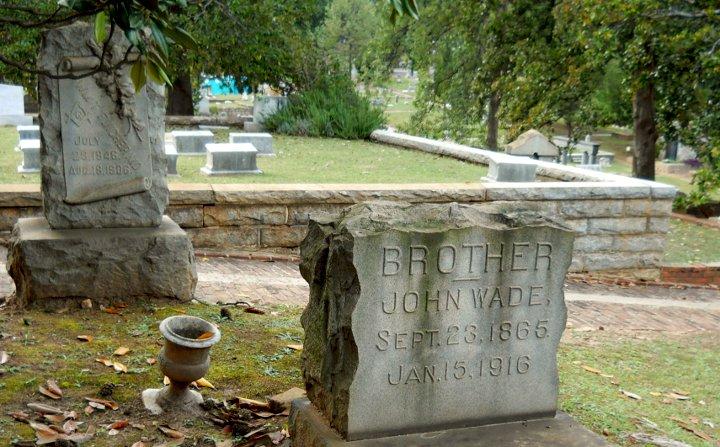


The facebook friend said “Today is Dead Poets Remembrance Day, Oct. 7th, the day Edgar Allan Poe died. Be sure to visit a graveyard and read some poetry today”. PG didn’t have anything better to do.
The first obstacle was finding a book of poetry. PG is not a poetry person. A look at the shelf turned up a paperback, “125 years of Atlantic “. Poetry was to be found between those covers.
The book had two stickers, both saying 69 cents. At the old Book Nook, this meant that the book was half the price on the sticker. With tax, that would be 38 cents.
125YOA had stayed in PG’s car for a few years. Whenever he was stuck somewhere with time to kill, this book was waiting. One afternoon in 1998, there was a slow day at work. PG read a remembrance by Gertrude Stein, about life in France at the start of World War II.
The cemetery of choice was connected to the Nancy Creek Primitive Baptist Church. PG has driven by this facility thousands of times. He walked past the graves until he found a fallen tree to sit down on.
The first poem was “Looking for the Buckhead Boys” by James Dickey. PG began to read out loud, and soon could smell the drug store air of Wender and Roberts. The author bought fifty cents worth of gas at a Gulf station. Today, fifty cents might buy a tablespoon of gas, and Gulf was long ago bought out by BP. Wender and Roberts became a bar, which was torn down, to make way for a shopping destination.
Buckhead is not what it used to be. When Mr. Dickey was the bravest man in Buckhead ( he took a shit in the toilet at Tyree’s pool hall), PG was not even thought of. The traffic jams on Peachtree Street are still there, as the blue haired ladies follow poets into the ground.
When PG finished reading Mr. Dickey, he put a teal postit in the book, where the poem stood. PG looked up, and the graveyard seemed different. Maybe the sun had sank a bit in the sky, and maybe the poem had changed PG in a way he could not put into words. Maybe another poem was the answer. Take the glasses off, open the book at random, and turn the pages until a poem shows up.
On page 404…the historic Atlanta area code…was “The Wartime Journey” by Jan Struther. The 1944 work was unknown territory. A group of people are traveling on a train. The wounded vet, the untried recruit, the salesmen shared the space with a lady, taking a baby for her soldier husband to meet. The theme of the rhymes was that America was totally at war, and that war is different from peacetime. Today’s war in Babylon is not like that.
Halfway through the reading, a freight train pulled by. Today, passenger trains are a novelty, and freight rules the rails. The shipment today was double decked containers, ready to pull off and slap on an eighteen wheeler.
Deaths are said to come in threes, and reading poetry in a graveyard should be the same. PG went on a random search for a Moe, to go with the Curley and Larry already digested. A page of poems by Emily Dickinson was the result. These pages left PG unmoved. It was as if he was back in the sixth grade, with a horrible English teacher forcing him to memorize Hiawatha. It was time to go home.

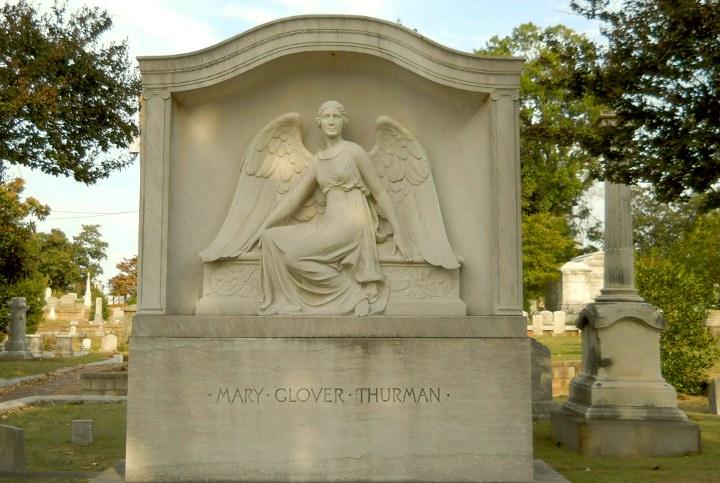

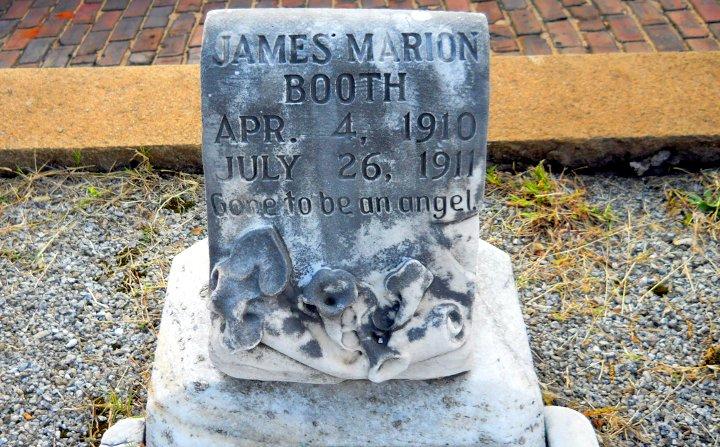

The Pursuit Of Truth



There is a podcast called The Fact of the Matter. It is about a man who likes to separate fact from fiction. “The pursuit of truth properly considered shouldn’t stop short of insanity.” After an hour or so plumbing the digital depths, PG began to appreciate the truth of that comment. Does anyone have a recipe that uses a can of worms?
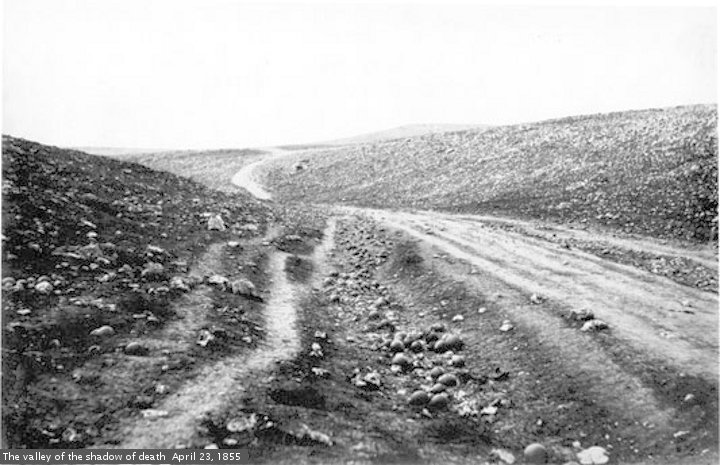
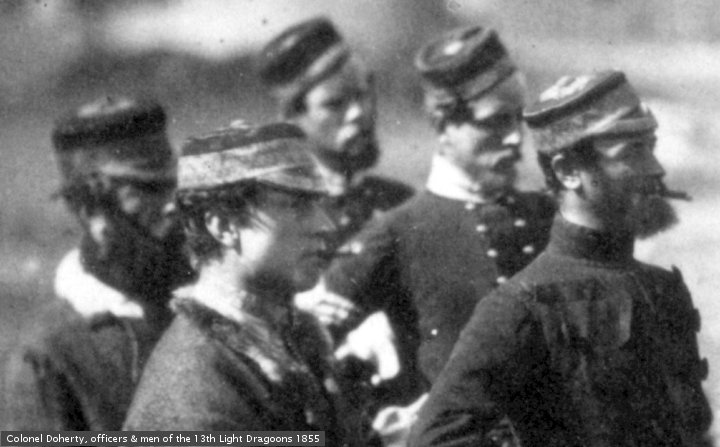
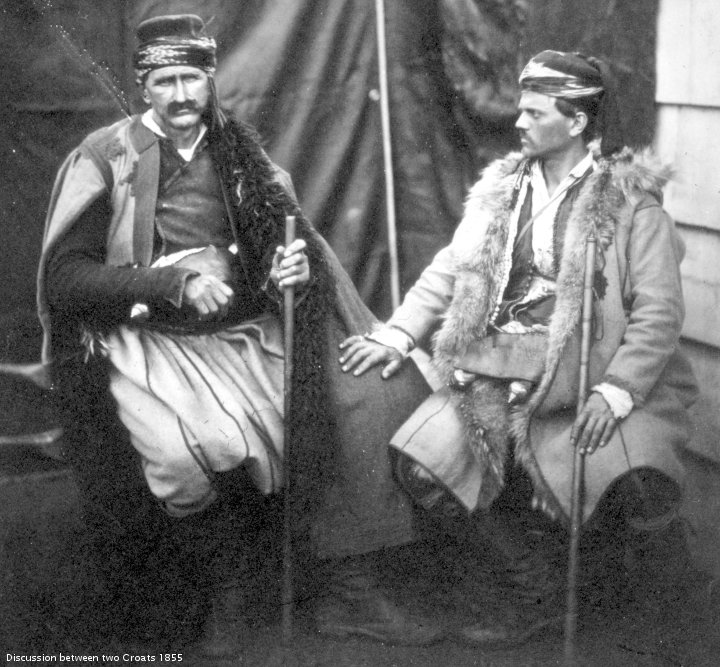
The show is about a photograph from the Crimean War, The valley of the shadow of death. It was taken by Roger Fenton April 23, 1855, near a place called Balaclava. Today, this is in Ukraine. Balaclava was the site of a nasty battle, in a bloody, pointless war. Today, a Balaclava is a colorful ski mask. It is the fashion statement of Pussy Riot.
PG cannot understand why this picture is a big deal. The Library of Congress has a collection of the Fenton Crimean War Photographs. This Fenton pictures were one of the first collections in the LOC that PG worked with. The picture of a road, with cannonballs, did not catch his eye.
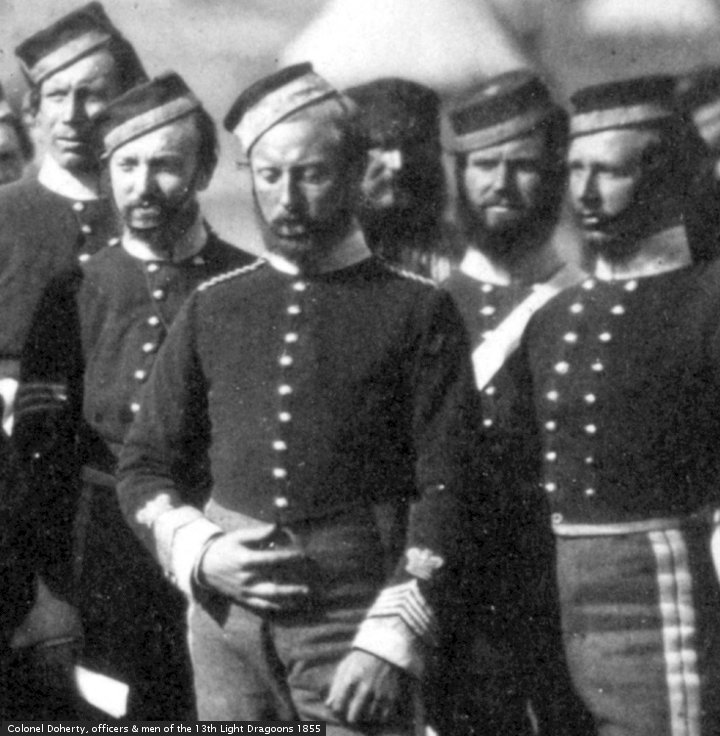
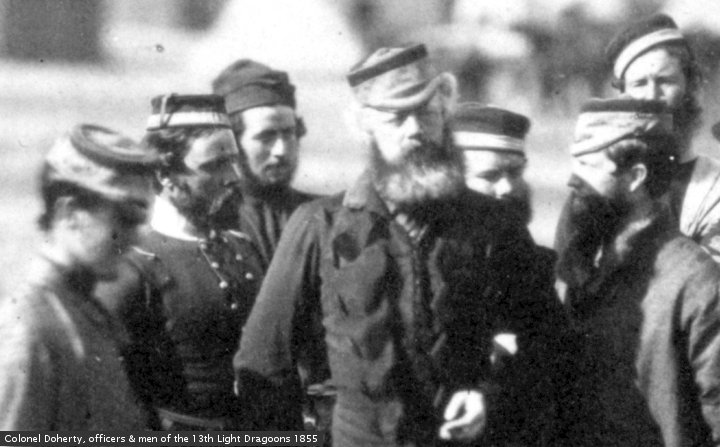
The more historic pictures PG edits, the better he gets. One thing he learned was to download the high resolution .tif pictures. When he did the Fenton pictures before, he used the lower quality .jpg images. When he paused the podcast, and went to the LOC to see “Shadow of Death”, he decided to download a few old favorites. These are the pictures that go with this post.
The podcast is a detective story. It seems that there are two versions of the photograph. One has the cannonballs in the road, the other doesn’t. Were the cannonballs tossed on the road to make the picture more dramatic, or were they removed? They could have been removed to clear the road for wagon traffic, or to recylcle the balls. In those days, people picked up used cannonballs and fired them again.
A very good question is why anyone should care? A man named Errol Morris cares. The link is to a very long article at the New York Times about the picture. Mr. Morris went to Ukraine to investigate the pictures. It is possible that his pursuit of truth did not stop at the boundary of insanity.
So the podcast mentions this famous picture, with a second shot that casts doubts. PG went to the LOC, and found the famous picture right away. The second shot proved elusive. PG viewed all 263 pictures in the Fenton collection in a slide show, and could not find the second picture. PG began to think that maybe the second picture was the fake. The New York Times article by Errol Morris has a copy of the second picture. The possibility remains that the second picture is a fabrication.
The podcast says that the location of some rocks changes in the two pictures. In the picture without the cannonballs on the road, the rocks are higher up on a hill, than they are in the famous picture. To Mr. Morris, this is evidence that the famous picture is a fake. PG has examined the two images, and includes them here. Perhaps this search for truth will be called off before the onset of dementia.
Controversies about famous images is not new. The shot of the flag going up over Iwo Jima has long been suspected of being posed. Just today on facebook, there was a link to a feature, The Kissing Sailor, or “The Selective Blindness of Rape Culture”. The idea is that the nurse did not want the sailor to kiss her on VJ day.




Three More Years




The United States is currently in the second longest streak of Presidents living to finish their term in office. The last POTUS to die in office was John F. Kennedy, who met his maker on November 22, 1963. In a few weeks, that will be 49 years ago.
The first President to not finish his term for mortal reasons was William Henry Harrison. He perished April 4, 1841. This was roughly 52 years after George Washington was sworn in, on April 30, 1789. If the POTUS can get through three more years without passing away, then America will have a new record. This will seem odd to many of a certain age, who remember the Kennedy shooting as though it happened yesterday.
On the other side of the Atlantic, a three year countdown is in progress. Victoria served as Queen of England from June 20, 1837 to January 22, 1901, or 63 years. The current monarch, Elizabeth II, began her reign February 6, 1952. This was 59 years ago. In another three years, unless her purse explodes and kills her, Elizabeth will be the longest serving ruler of England. She recently passed George III, who served 59 years. Elizabeth did not have a revolution in the colonies to concern her. This is a repost.




Cursive



There was a feature in the NY Daily News about the death of cursive writing. HT to JoemyG-d. It seems like it is no longer being taught. PG says good riddance.
Cursive refers to the flowing style of handwriting, where the letters are joined. It is from the French word cursif. This is derived from Medieval Latin cursivus, literally, running, from Latin cursus, past participle of currere to run
Cursive sounds like curse, or using bad language. Many people trying to read cursive will curse. The synonym for cuss, however, is from the middle english word curs.
At Ashford Park , print writing was taught in the first grade, and cursive in the third grade. PG learned cursive, and then promptly forgot. He prints when he needs to write, except for a signature. Printing is much, much easier to read.
Some say that with the decline of cursive, that old handwritten letters will be impossible to read. With many cursive writers, they already are. Some people have the patience to write beautifully, but many others scrawl. There is a cliche about doctor’s handwriting on prescriptions. One wonders how many lives have been lost because a pharmacist is not a mind reader.
There is a quote, attributed to an ancient Greek, that “When we start to write, we will lose our ability to remember”. There was grumbling when the printing press replaced hand copied scrolls, and when the typewriter came onto the scene. Whenever machinery advances into manual territory, someone is not going to like it. This is a repost.



 Chamblee54
leave a comment