The Kinks


Dangerousminds brings the sad news that Pete Quaife, the original bass player for The Kinks , passed away yesterday. He was 66, and had been in dialysis for several years. Maybe it is time for Chamblee54 to do a post about The Kinks. This is a repost.
Battling brothers Ray and Dave Davies are the core of The Kinks. (The name is pronounced like the american Davis, as though the e did not exist). Ray was the vocalist, writer, and rhythm guitar player. Dave was the lead guitarist, and sparring partner for his brother. The fisticuffs were not restricted to the brothers. This led to the band being barred from performing in the United States between 1965 and 1969. The sixties happened anyway.
There were several hits in the early days, most notably “You really got me”. (This later became a signature tune for Van Halen). The band had numerous adventures, but never became the superstars that other British bands of that era did. Ray Davies developed as a songwriter, with many witty tunes, full of social commentary and britishness.(spell check suggestion:brutishness)
In the seventies The Kinks kept trooping on. They did an album called Preservation Act, which became the basis of a theatrical presentation. The next album was called Soap Opera, with a theater like production. This is where PG got to see The Kinks.


It was sometime in the spring of 1975, at the Atlanta Municipal Auditorium. Elvin Bishop was the opening act. The Kinks had started when PG arrived, buying a $4.00 balcony seat. Alex Cooley was in the box office counting money, and broke open a roll of quarters to make change for a five.
The band was playing “Celluloid Heroes” when PG walked into the auditorium. There was no one on the door checking tickets, so PG walked onto the floor and found an empty seat on the 13th row. The next number was “Lola”.
Ray Davies introduced the song by saying ” If you are a man, sing LO. If you are a woman, sing LA. If you are not sure, clap your hands”. The next number was about demon alcohol. There were lights shining on the crowd during this number, as Ray Davies asked if there were any sinners in the audience. The band did several more songs, ending the first half of the evening with “You really got me”. Dave Davies got some spotlight time with a rave up intro to this number.
The second part of the show was a theatrical presentation of “Soap Opera”. The band wore rainbow colored wigs, and stood at the back of the stage while Ray Davies told the tale. “Soap Opera” was about a rock star who traded places with Norman, who lived a boring life. The flat Norman lived in has pictures of ducks on the wall, which drove Ray/Norman to scream “I can’t stand those f*****g ducks”. This led into a rocking ditty called, predictably, “Ducks on the Wall”.
As the show dragged on, Ray/Norman was embarrassed by the mess he was in. “You can’t say that in front of The Kinks, they are my band, and that is my audience.” The audience lights were turned on again, and the band played a medley of hits from 1964.
Finally, the real Norman came back to reclaim his wife, put the ducks back on the wall, and kick out The Kinks. The band gave up on theater before much longer, and were popular for the rest of the concert happy seventies. Ray Davies was the babydaddy for Chrissie Hynde . Eventually, the band quit performing, and continued to cash royalty checks.
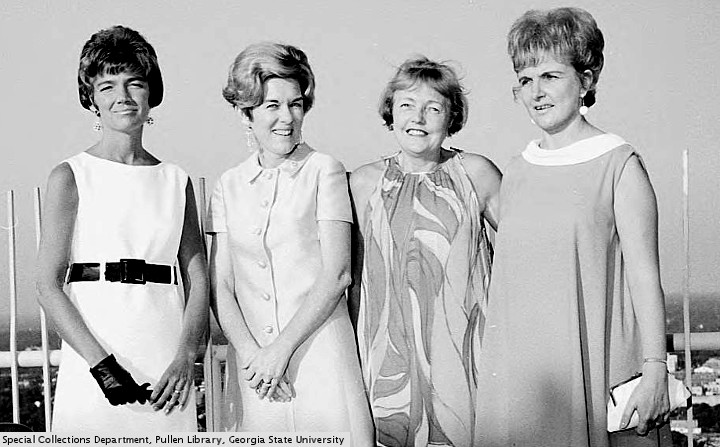
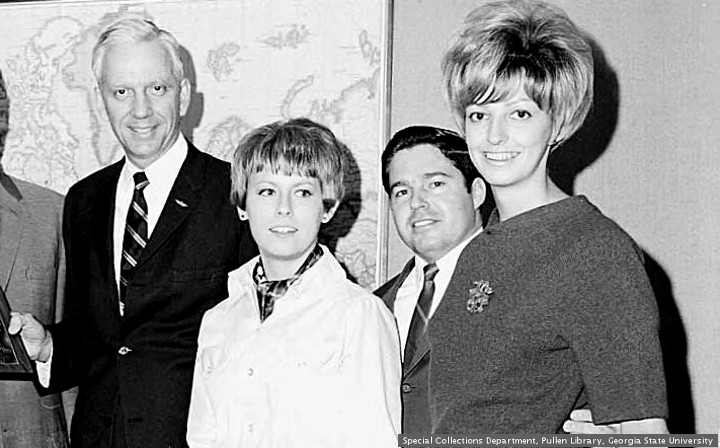
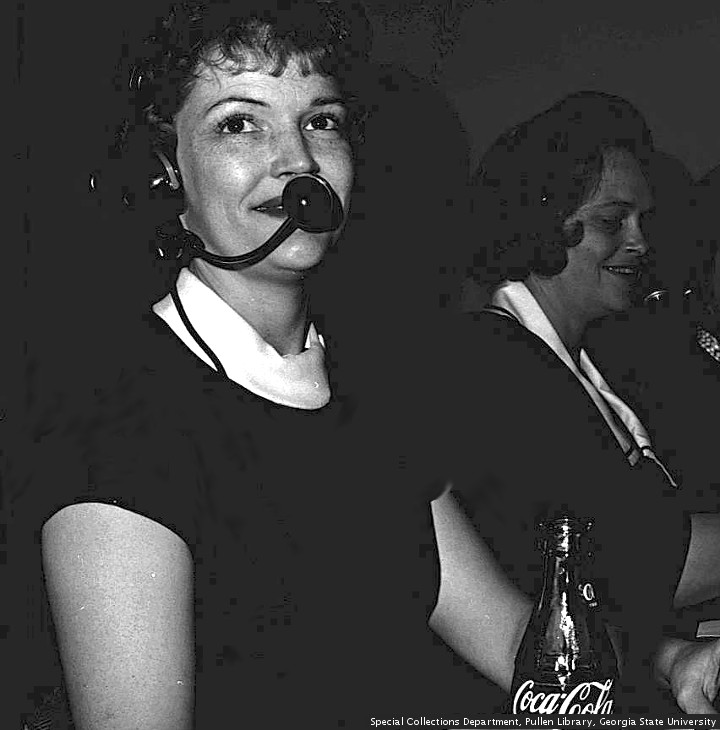
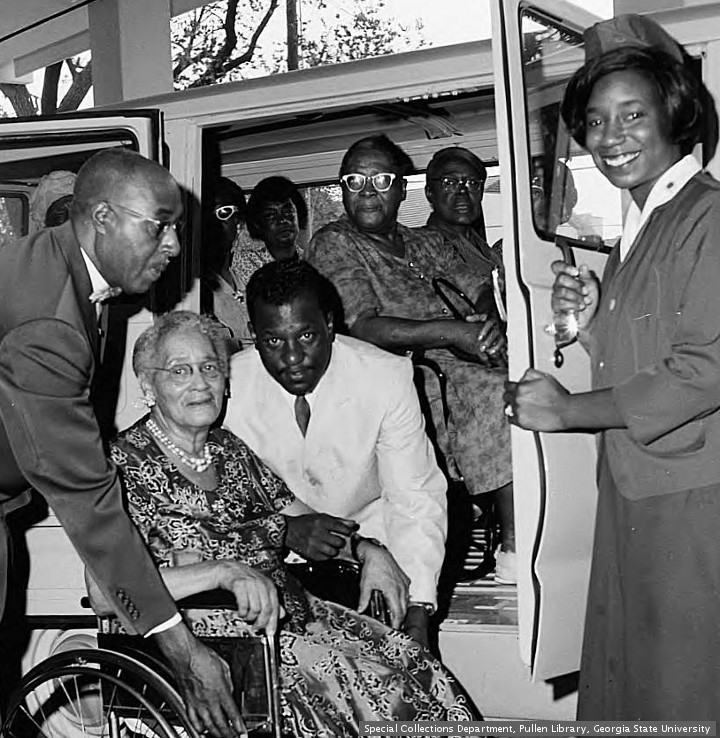
Pictures are from the ” Special Collections and Archives,Georgia State University Library”

Conspiracy Double Feature


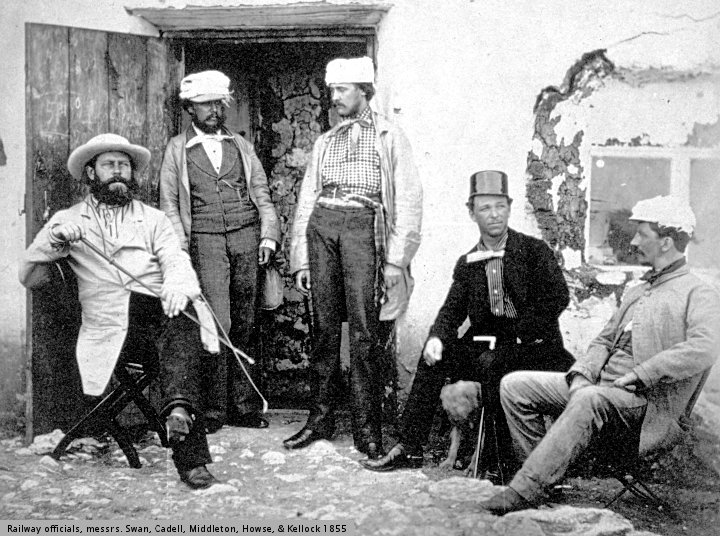
This is the 2014 repost of a previously published effort. This is a work of speculation, and has no basis in proven fact. The thesis of this post cannot be proved nor disproved.
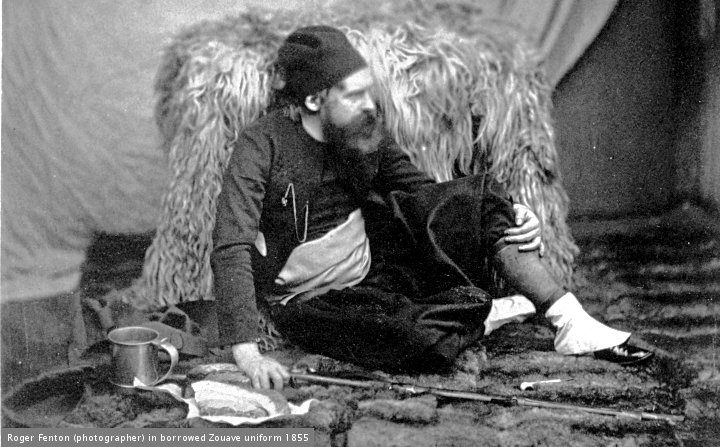
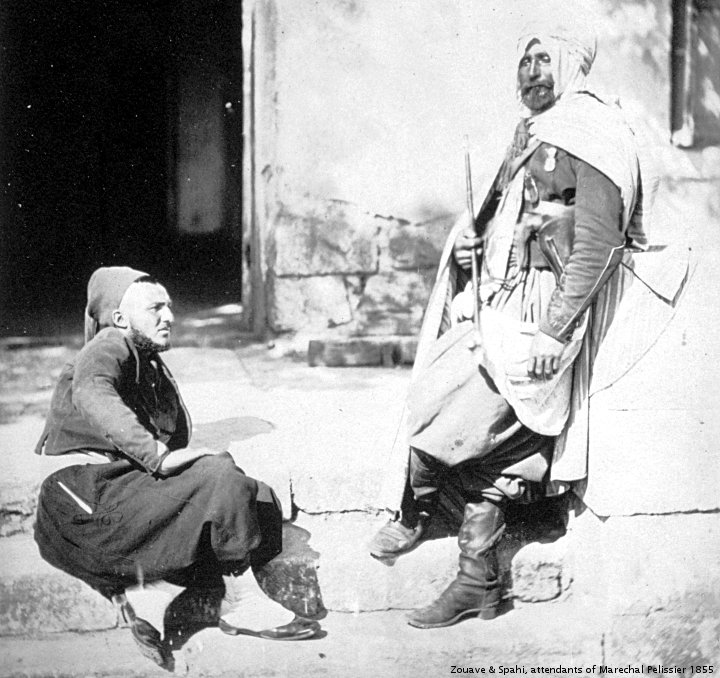
Pictures are from The Library of Congress. These images are from the Crimean War, the first war to be photographed. It was the conflict that gave us “The charge of the light brigade”, with the line “ours is not to reason why, ours is but to do or die”. Or often, to do and die. Thousands of men died in the Crimean War, and not one person today can tell you why.
Listening to talk radio while you drive is a dangerous activity. You might start to think, and look at the man behind the screen. Neal Boortz (spell check suggestions:Boor, Booster, Boozer) was on a rant today about Jane Fonda. It it the same story you have heard many times…she gave aid and comfort to the enemy, she is a traitor, American troops died because of her,she should have been executed.
Sometimes when you hear something too many times, you begin to have doubts about what you heard. A light bulb went off in PG’s head when he heard the Fonda Rant again.. .What if Jane Fonda was working for the US government when she went to Hanoi?
What was in it for the government? This trip gave our government a discredited leader of the antiwar movement to denounce. When the government was trashing Jane Fonda, they did not have to defend the disastrous policies of that war.
Miss Fonda has been an icon of right wing hatred ever since, as well as of military training. One story has Miss Fonda giving the North Vietnamese information about activities by American forces. How would she get this information?
The infamous trip to Hanoi took place in the Summer of 1972. American troops were being withdrawn, and anti war protests lost most of their passion. (It was also soon after the death of F.B.I. Director J. Edgar Hoover, and the Watergate burglary) The war in Vietnam was essentially over for America. We were no longer trying to win, but to negotiate a face saving treaty. President Nixon called it “Peace with Honor”. Miss Fonda’s actions had little impact on these negotiations.
Miss Fonda made some radio broadcasts from Hanoi. Is it possible that coded messages to our troops were included in these broadcasts? Is it also possible that she gave the North Vietnamese misinformation on purpose?
Why would a women known for her left wing activism do such a thing? Maybe, the FBI had some dirt on her, and blackmailed her.
In 1967, Kurt Vonnegut published a book titled “Mother Night”. It tells the story of Howard W. Campbell Jr. Mr. Campbell made propaganda broadcasts for Germany in World War II, which were secretly used to pass coded messages to the Allies. He was condemned as a traitor after the war, but never prosecuted. He did not win an Academy Award.
The role of the government in this affair could have taken another role. Perhaps Miss Fonda was sincere in her actions, but aided by the government. Miss Fonda was under surveillance in 1972. The government would have known about her plans to go to North Vietnam, and perhaps could have stopped her. But, because her going to Hanoi was to their advantage, the government allowed the trip to take place.
The above is speculation, and could be horribly wrong. The fact that Miss Fonda has expressed regrets over her trip neither proves nor disproves this. She got great movie roles, and won two Academy Awards, during the seventies. This may be a coincidence, or maybe it was a reward for her service.
Clearly, the trip she made to Hanoi had propaganda value to the US government. It has been a Godsend over the years. You should always consider who benefits from an action.
During his rant today, Mr. Boortz said that US troops died because of Miss Fonda. (He does not discuss the man who went to Nam in his place, after his draft deferment.) By saying this, he can ignore the tens of thousands of troops who died because Richard Nixon chose to wait until 1973 to sign a “peace treaty”. He could have made the same deal in 1969. Peace with honor indeed.
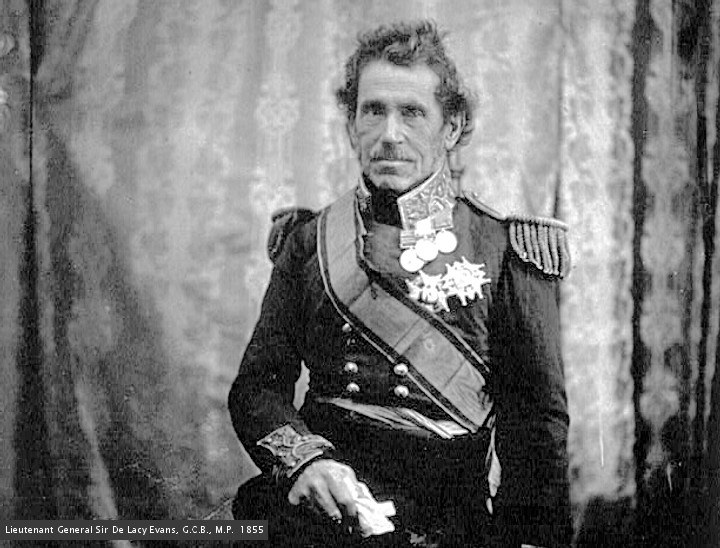
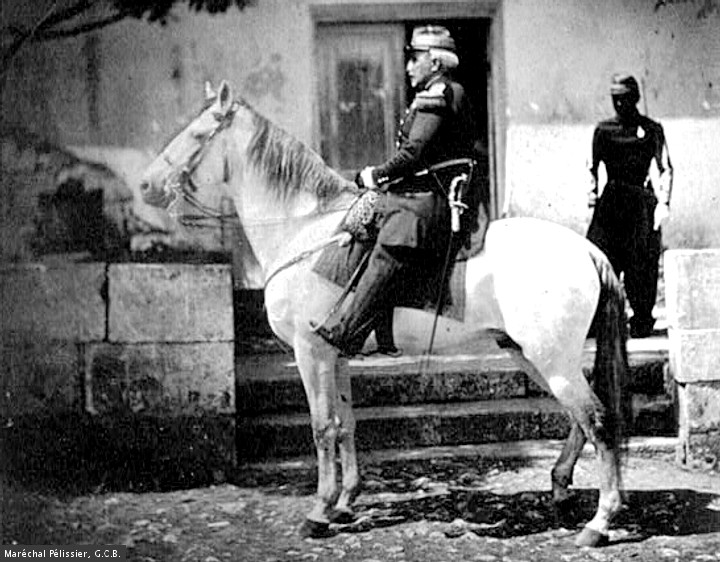
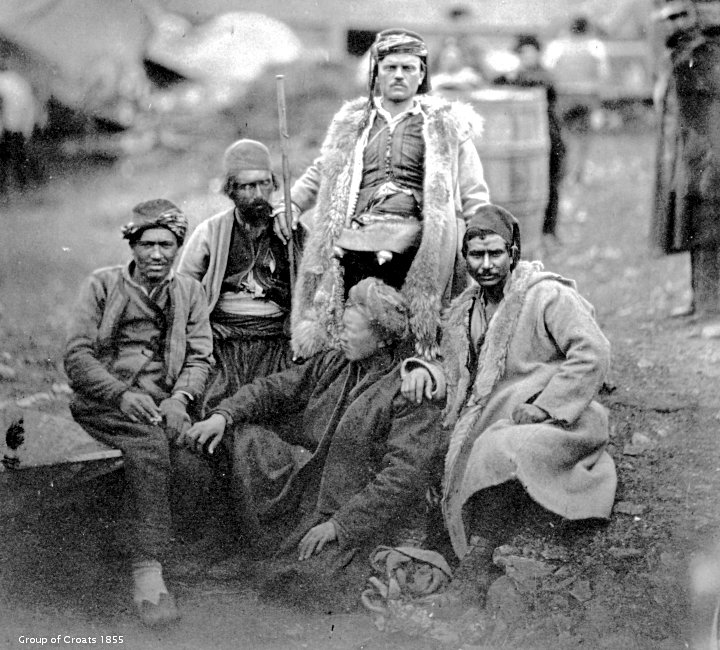


This is a repost, through and through. Pictures are from The Library of Congress
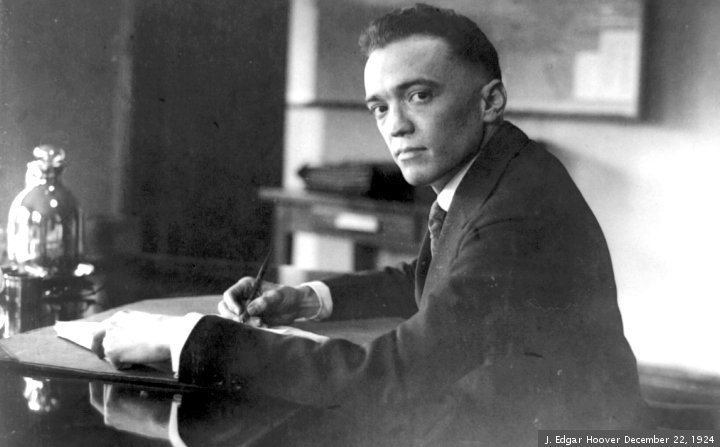
A few days ago, the possibility that the government allowed Jane Fonda to go to Hanoi was discussed. Ms. Fonda’s trip to North Vietnam had numerous propaganda/p.r. advantages to the American government. Direct government sponsorship cannot be ruled out. Another scenario would have the government knowing about the trip, having the ability to stop the trip, but allowing it to happen. For the purposes of today’s discussion, we will call this the “Hoover Option”(HO). It is named for John Edgar Hoover, the publicity savvy director of the FBI until his death in 1972.
HO is a favorite of conspiracy theorists. It is difficult to prove or disprove, and explains a lot of things.
Another conspiracy rich event is the shooting of John Kennedy on November 22, 1963. The various hypotheses on this event are well known. Numerous people wanted JFK to retire…gangsters, teamsters, Republicans, Lyndon Johnson, Vietnamese… to the point to where it is tough to sort out all the possible candidates. The thinking goes here, that J. Edgar Hoover knew of the plot to kill JFK, could have stopped it, but chose to allow it to happen. Even conspiracy skeptics think this is plausible.
The concept of Lee Harvey Oswald working alone does not eliminate the possibility of HO. Here was a sketchy character, known to have traveled to the Soviet Union, and favor “fair play for Cuba”. He worked in a building on the parade route. As much as the FBI knew…especially about those with Soviet connections…is it possible that Mr. Hoover knew what Mr. Oswald was going to do that Friday? And decided to allow it to happen. And why did Jackie choose that photogenic pink outfit?
A few years later, Dr. Martin Luther King Jr. was murdered in Memphis, TN. Mr. Hoover had a well known hatred of Dr. King. How did a sketchy character get a room, within gunshot range of the hotel Dr. King stayed in? How did he know when Dr. King would be stepping on the balcony? Did Mr. Hoover know all of this, and still allow the shooting to take place? Why was Jesse Jackson there?
J. Edgar Hoover died on May 2, 1972. This was 13 days before Arthur Bremer shot George Wallace, six weeks before the Watergate burglary, and eight weeks before Jane Fonda went to Hanoi. Mr. Hoover died at the height of the Nixon administrations “dirty tricks”, just a few weeks before they got caught. No doubt, Mr. Hoover knew what Tricky Dick was up to.
HO has probably been in existence throughout history. Most leaders have blood on their hands, and it is always better to get someone else to do the dirty work.
Pearl Harbor has long been the object of this speculation. There is little doubt that Mr. Roosevelt wanted the United States to join the war, but was having a tough time with an isolationist public. After the Japanese attacked Pearl Harbor, Mr. Roosevelt got what he wanted. It has long been speculated that he knew in advance about the attack, and let it go down. There were obvious advantages to him.
Which brings us to the Pearl Harbor of the modern era, 911. The attacks that day were a political jackpot for George W. Bush. He was able to ram many restrictions on civil liberties through congress, and begin a war in Iraq, that had clearly been planned for some time. Did our government know about plans for the 911 attacks, and quietly let them happen?


The Last Night Of Judy Garland
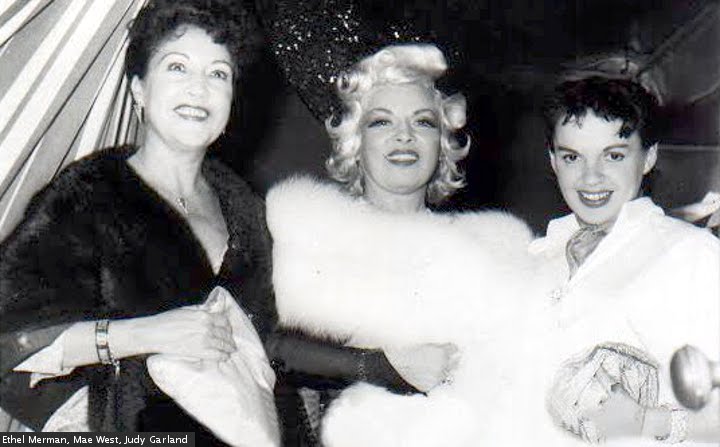
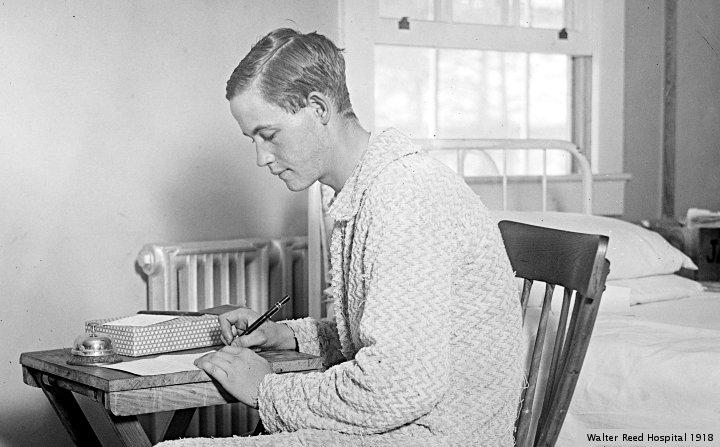


In march of 1969, Judy married her fifth husband, Mickey Devinko, better known as Mickey Deans, a gay night-club promoter. Judy had an unfortunate habit of marrying gay men. They lived together in a tiny mews house in Chelsea, London. The evening of Saturday June 21 1969, Judy and Mickey were watching a documentary, The Royal Family, on television, when they had an argument. Judy ran out the door screaming into the street, waking the neighbors.
Several versions of what happened next exist, but the fact remains that a phone call for Judy woke him at 10:40 the next morning, and she was not sleeping in the bed. He searched for her, only to find the bathroom door locked. After no response, he climbed outside to the bathroom window and entered to find Judy, sitting on the toilet. Rigor Mortis had set in. Judy Garland, 47, was dead.
The press was already aware of the news before the body could be removed. In an effort to prevent pictures being taken of the corpse, she was apparently draped over someone’s arm like a folded coat, covered with a blanket, and removed from the house with the photographers left none the wiser.
The day Judy died there was a tornado in Kansas…. in Saline County,KS, a rather large F3 tornado (injuring 60, but causing no deaths) did hit at 10:40 pm on June 21st, that would be 4:40 am, June 22nd, London time, the morning she died. I know the time of death has never been firmly established, but since Rigor Mortis had already set in, I think this tornado may very much be in the ballpark in terms of coinciding with time of death…. Other news articles suggest the tornado struck Salina “late at night” which could certainly also mean after midnight on June 22, or roughly 6:00 am London time.
The Toledo Blade for June 24th, also in an article located right next to a picture of Garland, in a write-up on the Salina tornado noted that “Late Saturday [June 21] and early Sunday [June 22, another batch of tornadoes struck in central Kansas.” So it seems the legend seems confirmed.
The text for this story comes from Findadeath. You can spend hours at this site. Pictures are from The Library of Congress. This is a repost.
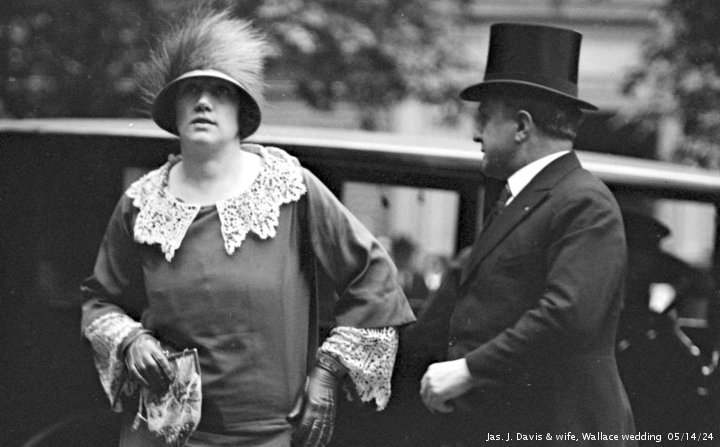
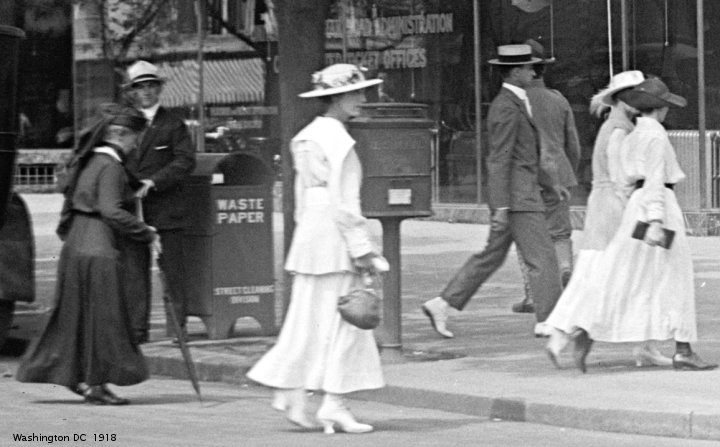



November 17, 1963, Liza Minnelli was on “The Judy Garland Show”. The former Frances Gumm was looking rusty from years of hard living. Five days later, President Kennedy made a trip to Dallas. Six years later, Judy Garland left the building. Liza Minelli is still with us, fifty years later. She has been every bit as wild as her mother, but lived to see another day. Pictures are from The Library of Congress. This is a rerun of two previously posted items.



Luther C. McKinnon
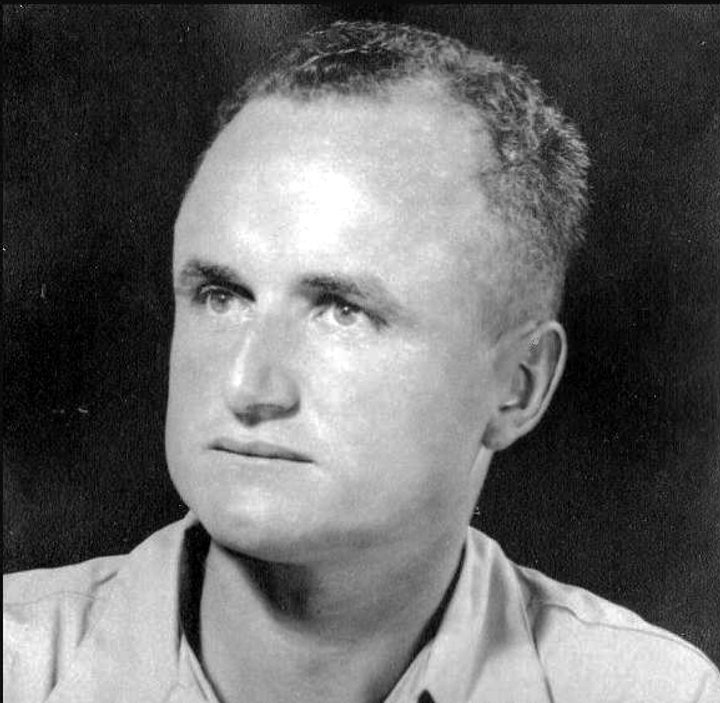

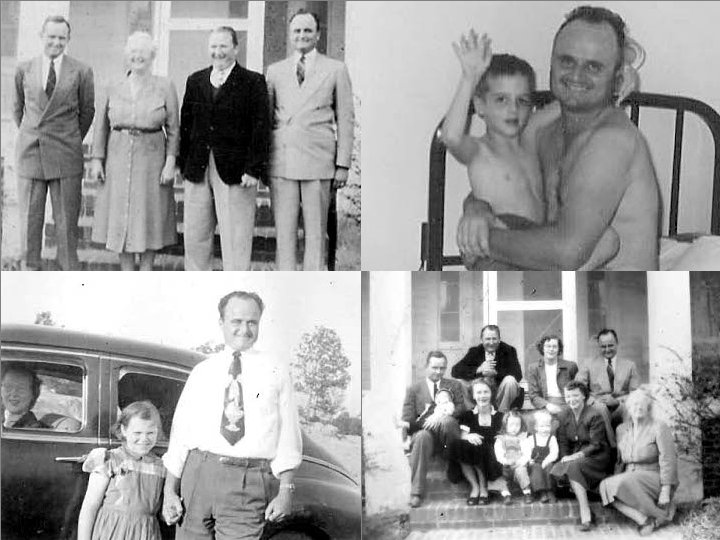
Luther Campbell McKinnon Sr. was born February 22, 1916, on a farm in Rowland, North Carolina. Europe was stuck in a war that would change the world, and not until The United States got involved. This didn’t happen for another year.
Luke was the youngest of four children. After life as a farm boy, he went to Wake Forest University, and then came back when his Daddy died. He ran a family dairy for a few years, and went to live in New Jersey. He lived near a prison, and saw the lights dim when the electric chair was used.
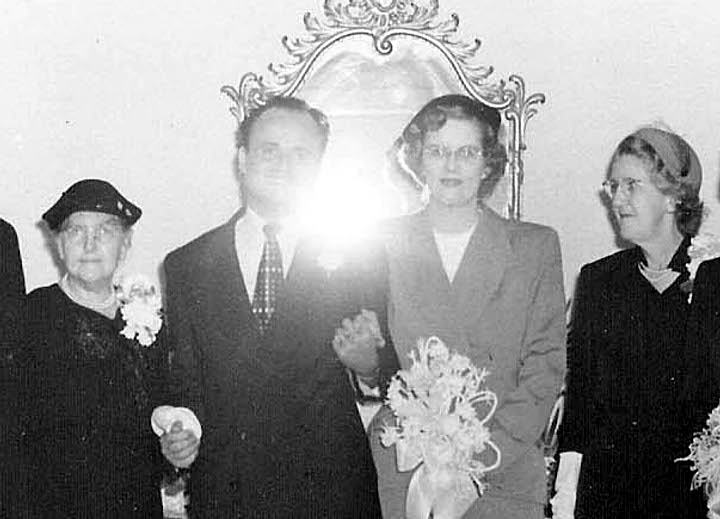
In the early fifties, he came to Atlanta to live. This was where his sister Sarah stayed, with her husband and two daughters. One day he went into the C&S bank on 10th street, and took notice of one of the tellers. On October 6, 1951, he married Jean Dunaway. She was with him the rest of his life.
At some point in this era he started selling shoes. He would go to warehouses, gas stations, and wherever barefoot men needed shoes. He was “The Shoe Man” .
Before long there were two boys, and he bought a house, then another. The second house is the current residence of my brother and myself, and is probably worth 15 times what he paid for it. He had the good fortune to not buy in an area that was “blockbusted,’ as many neighborhoods were.
And this was his life. He tended a garden, went to the gym, and was in the Lions Club for many years. When he met Mom, she let him know that going to church with her was part of the deal. They found a church that was good for their needs, and made many friends there. The Pastor at Briarcliff Baptist, Glen Waldrop, was his friend.
When I think of the character of this man, there is one night, which stands out. My brother was away at the time. The day before, Mom had discovered she had a detached retina, and was in the hospital awaiting surgery. Her job had arranged a “leaf tour” by train in North Georgia, and she got one of her friends at work to take me. There was some mechanical trouble on the train, and it did not get back into town until 3am Monday morning. And yet, Daddy stayed at home, did not panic, and had faith that all of us would be back soon, which we were.
Through all the struggles of his life, Dad was cheerful, laughed a lot, and was good company. He left me with a rich repertoire of country sayings, and had many stories to tell. He was surprising mellow about black people, if a bit old fashioned. (In the south when I grew up, this was highly unusual).
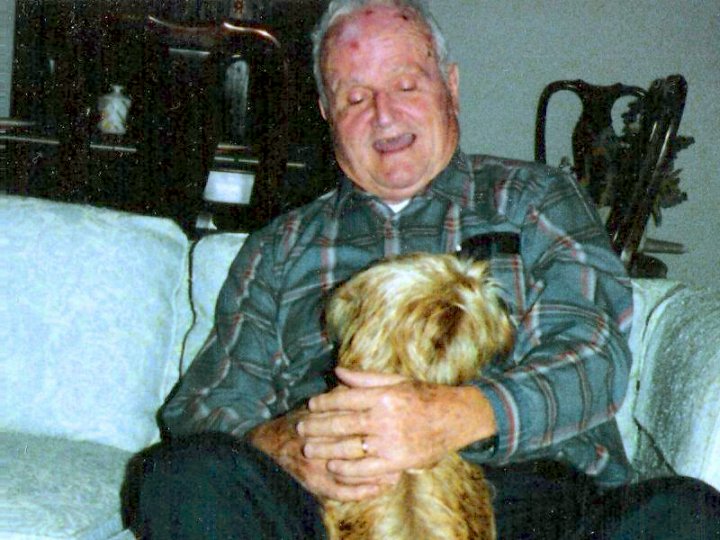
Dad was always in good, vigorous health, and I thought he would be with us for a long time. Well, that is not how things work. A cancer developed in his liver, and spread to his lungs (he did not smoke). After a mercifully brief illness, we lost him on February 7, 1992. This is a repost.


Eagerness To Label




During the Booknotes chat with Howard Zinn, someone compares Mr. Zinn to Noah Chomsky and Michael Parenti. PG had never heard of Dr. Parenti. There was a Booknotes chat, to promote The Assassination of Julius Caesar: A People’s History of Ancient Rome.
There is a lot about Roman history that PG does not know. It seems as though the death of Julius Caesar marks the end of an ara. Arguably, it was downhill from then on. There were many people who were not happy with Mr. Caesar, and had reasons to kill him.
Mr. Parenti was critical of the American government being focused on communism during the cold war. This leads to the best quote of the show.
LAMB (Brian Lamb, host of Booknotes) : I was on a Web site … they defined you as a Marxist. Is that fair? PARENTI: Well, what I don`t like about the term is, I write about all sorts of things that Marx — you know, that`s what somebody said about “Inventing Reality.” Is this a Marxist analysis of the media? The eagerness to label something puts a closure on thought. And I said, Well, you know, I don`t know what Karl Marx had to say about U.S. corporate media in the 20th century. In fact, he didn`t have a word to say about it. He`s been dead for 100 years. So I came to these things on my own. So I don`t use — I don`t use labels of that sort.
There are two more dandy quotes. If you have an hour to spare, the entire show is worthwhile.
PARENTI: Could I read a quote by Joseph Schumpeter? LAMB: Sure. Who was? PARENTI: Joseph Schumpeter was a conservative economist who was read widely in the first half of the last century. … and he said, “Rome was governed by that policy which pretends to aspire to peace but unerringly generates war, the policy of continual preparation for war, the policy of meddlesome interventionism. There was no corner of the known world where some interest was not alleged to be in danger or under actual attack. If the interests were not Roman, they were those of Rome`s allies. And if Rome had no allies, then allies would be invented. The fight was always invested with an aura of legality. Rome was always being attacked by evil-minded neighbors, always fighting for breathing space. The whole world was pervaded by a host of enemies, and it was manifestly Rome`s duty to guard against their indubitably aggressive designs.” ….
LAMB: So where does that phrase, “as pure as Caesar`s wife,” come from PARENTI: It`s — it`s — that`s true. It`s only half the phrase. It really should be “One must be.” If you`re Caesar`s wife, you must be pure, in other words. And his statement was, I`m divorcing her. He maintained, No, no, she had no affair with Claudius. But Caesar`s wife must be above suspicion, so Caesar`s wife must be pure. Doesn`t mean Caesar`s wife was pure. You know, it`s a misphrasing, in a way.
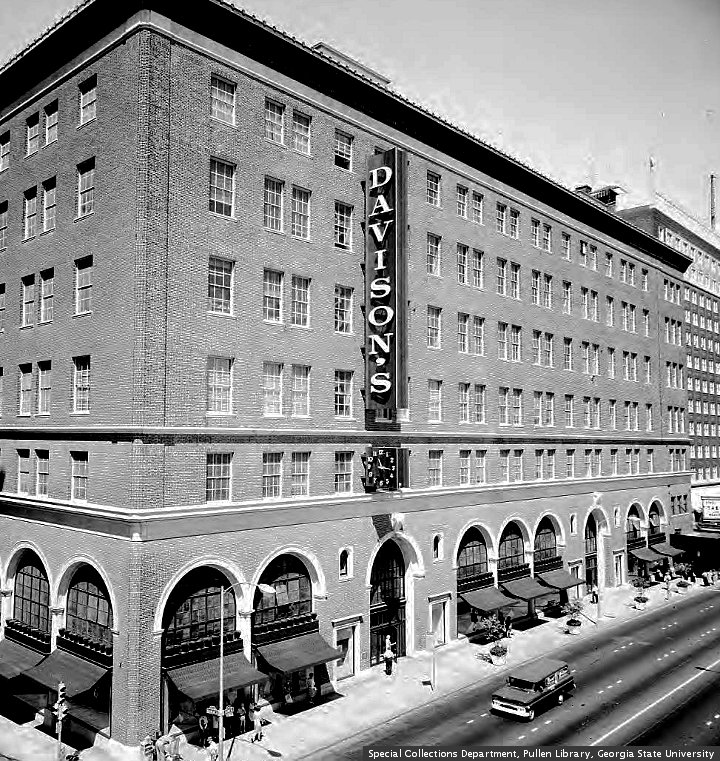
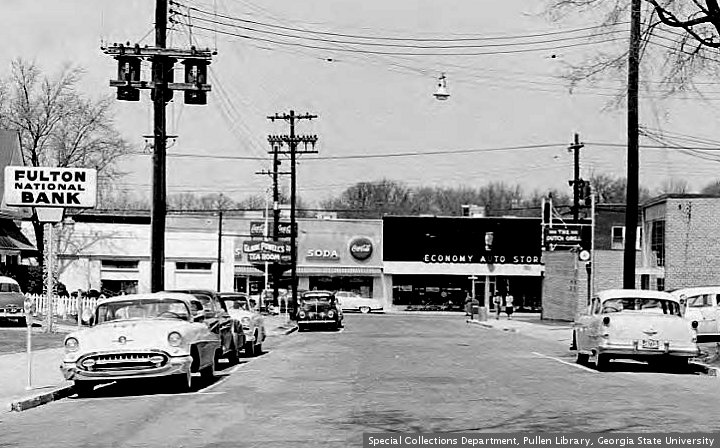
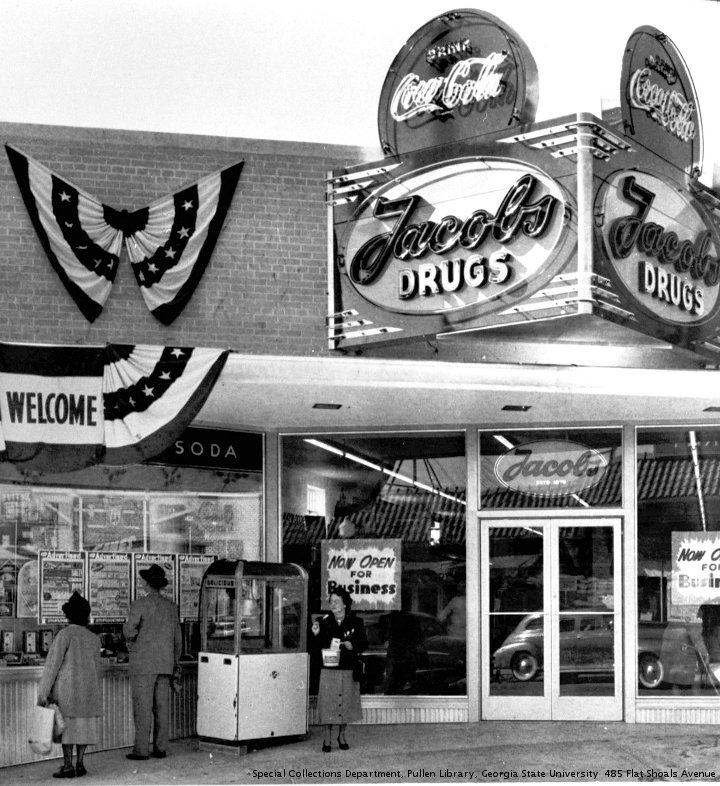
Pictures are from “The Special Collections and Archives, Georgia State University Library”.


Howard Zinn






Howard Zinn, author of A People’s History of the United States: 1492 to Present, spent an hour talking on Booknotes. This is a C-SPAN show, with author interviews. The show aired March 12, 2000. Later that night was a show about the 2000 election, featuring Green Party candidate Ralph Nader. The role Mr. Nader would play in the November election was unimaginable in March. Life is bad fiction.
The first serious job Mr. Zinn had was World War II. He served in the Air Force. Towards the end of the war, “we bombed a little French town on the Atlantic coast called Royon… `We’re not going to use regular demolition bombs. We have something new. We w–you’re going–instead of dropping our usual 12 500-pound demolition bombs, you’re going to drop 30 100-pound canisters of jel—jellied gasoline.’ It was napalm–the first use of napalm in the European theater.”
Later, Mr. Zinn thought about it all. “And it didn’t s–the–the thing is you’d bomb from 30,000 feet. You don’t see what’s happening down there. You don’t see people suffering. You don’t see people burning. You don’t see limbs falling. You–you just see little flashes in the–in the d–in the dark, you know. And—and you go back, and you’re debriefed and you don’t think about it. And it’s horrifying.
Later–only later did I begin to think about it, and I was horrified by what I had done, and I’m still horrified by what I did. But I think that had an effect on my thinking about war, because here I was in the best of wars. And I believed it was the best of wars because I volunteered for it. A war against fascism? I mean, how could you find a more bestial enemy? And yet it’s a–it complicated the war for me. It complicated the morality of the war, and it made me begin to think that war itself is evil. Even when it starts with good cause, even when the enemy is horrible, that there’s something about war, especially in our time when war inevitably involves indiscriminate killing–and I came to the conclusion that war simply cannot be accepted morally as a solution for whatever problems are in the world.
Whatever tyranny, whatever borders are crossed, whatever problems there are, somehow human ingenuity has to find a way to deal with that without the indiscriminate killing that war involves.”
Brian Lamb is the host of Booknotes. He speaks non theatrically, often with questions that are very different from the narrative presented by the author. After this talk about war, the question was “LAMB: What would you have done had you been president and those bombs were dropped on Pearl Harbor? Mr. ZINN: That’s the toughest question I’ve ever faced. I … And–and I confess, I–I–I haven’t worked out an alternative scenario.
PHOTUS is known for taking a non-heroic view of our history. Regarding the US Constitution, “When they set up the new government, when they set up the new Constitution, I mean, they set up a strong, central government which will be able to legislate on behalf of bondholders and slaveholders and manufacturers and Western land speculators.”
Mr. Zinn does not discuss The War Between The States on this show. (PG has not read PHOTUS, and does not know how WBTS is treated.) This was a case where the central government was favoring the industrial interests, at the expense of the agricultural interests. How much of that conflict was economic, with abolition serving as a moral fig leaf?
After the war, Mr. Zinn went back to school. A job appeared at Spelman College, and he worked there seven years. After that, he taught at Boston University for 24 years. His next door neighbor was five year old Matt Damon, who later read the audiobook version of PHOTUS.
There is one more bit of amusement from the transcript. Mr. ZINN:`For the United States to step forward as a defender of helpless countries matched its image in American high school history books but not its record in world affairs. It had opposed the Haitian revolution for independence from France at the start of the 19th century. It had instituted a war with Mexico and taken half the country. It had pretended to help Cuba win freedom from Spain and then planted itself in Cuba with a military base, investments and rights of intervention. It had seized Hawaii, Puerto Rico, Guam and fought a brutal war to subjugate the Filipinos. It had opened Japan to its trade with gunboats and threats. It had declared an open-door policy in China as a means of assuring the United States would have opportunities equal to other imperial powers in exploiting China. It had sent troops to Peking with other nations to assert Western supremacy in China and kept them from–kept them for over 30 years.’ LAMB: There’s a lot more in here about Colombia and Haiti and Nicaragua. Is this country at–this sounds like I’m–I’m arguing here, but has this country done anything right?
Pictures today are from The Library of Congress
Mrs. Dora Stainers




Some pictures have longer captions than others. Shorpy published one with a mouthful.
Mrs. Dora Stainers, 562 1/2 Decatur St. 39 years old. Began spinning in an Atlanta mill at 7 years, and is in this mill work for 32 years. Only 4 days of schooling in her life. Began at 20 cents a day. The most she ever made was $1.75 a day & now she is earning $1 a day when she works. She is looking for a job. Her little girl Lilie is the same age she was when she started work, but the mother says, “I ain’t goin to put her to work if I can help it. I’m goin’ to give her as much education as I can so she can do better than I did.” Mrs. Stainers is a woman of exceptional ability considering her training. In contrast to her is another woman (this name was withheld) who has been working in Atlanta mills for 10 yrs. She began at 10 yrs. of age, married at 12, broke down, and may never be able to work again. Her mother went to work in the cotton mill very young. Location: Atlanta, Georgia.
The photographs of Mrs. Stainers were made in March, 1915. The photographer was Lewis Wickes Hine. “Working as an investigative photographer for the National Child Labor Committee (NCLC), Lewis Hine (1874-1940) documented working and living conditions of children in the United States between 1908 and 1924.” “In 1954 the Library received the records of the National Child Labor Committee, including approximately 5,000 photographs and 350 negatives by Lewis Hine. In giving the collection to the Library, the NCLC stipulated that “There will be no restrictions of any kind on your use of the Hine photographic material.”
The house that Mrs. Stainer lived in is long gone. 562 1/2 Decatur Street is across the railroad tracks from the Fulton Cotton Mill. With real estate agents demanding names for all neighborhoods, the area is known as the Old Fourth Ward. At 552 Decatur Street is A & R Welding.
Pictures are from The Library of Congress. This is a repost.




Midtown

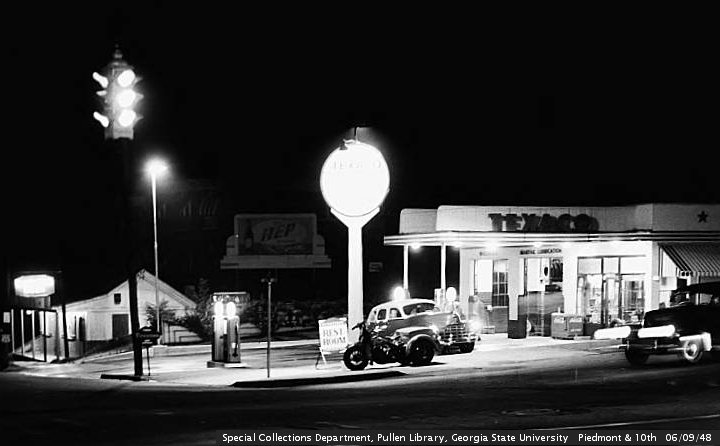


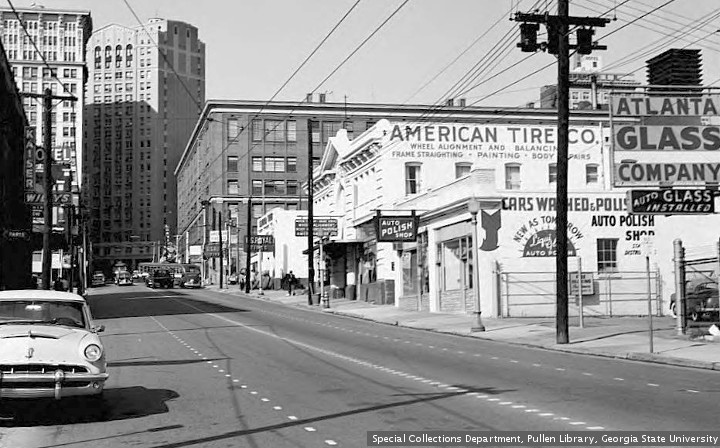
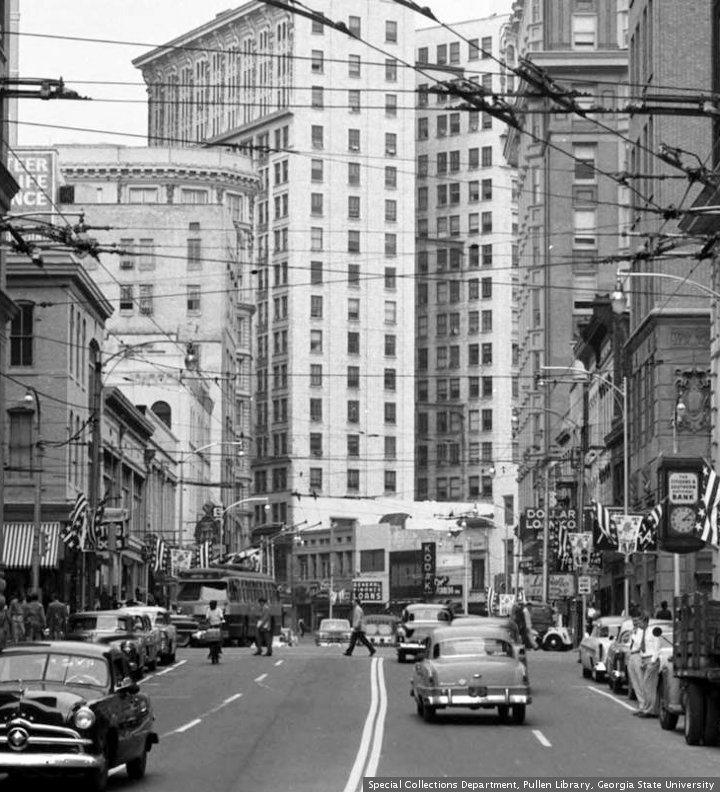
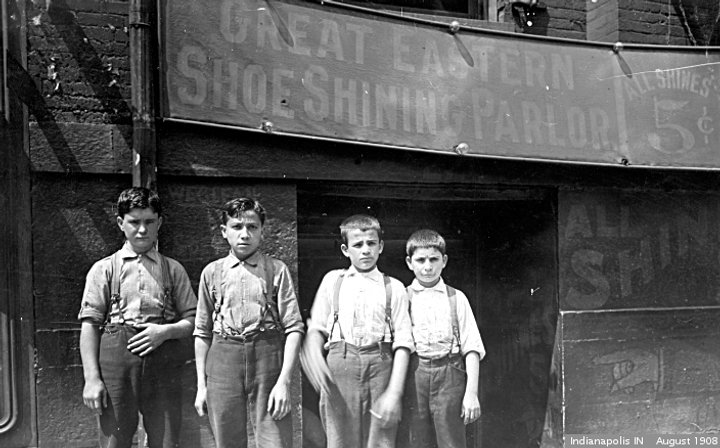
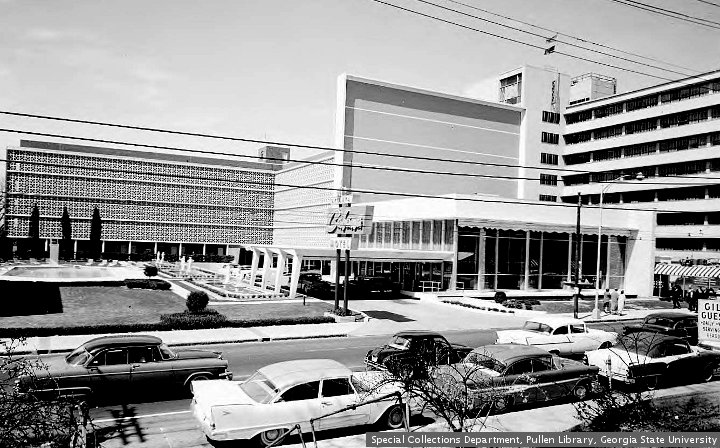
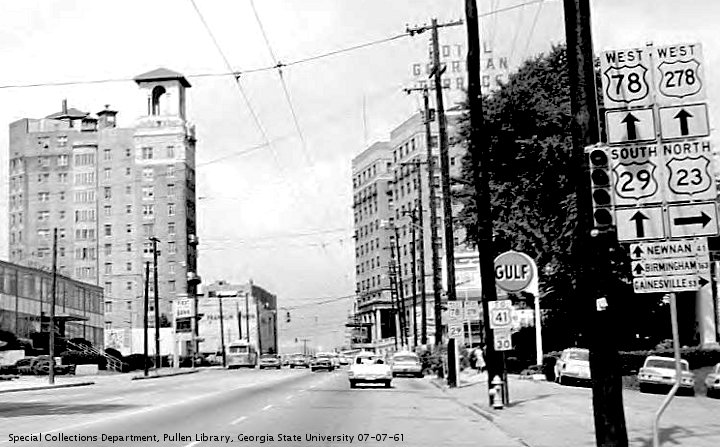
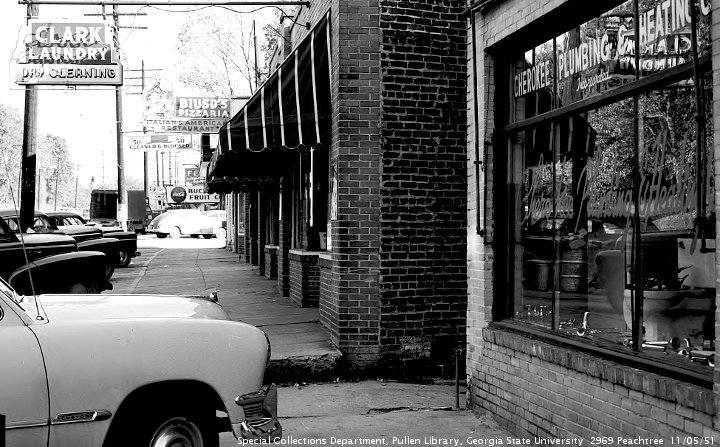
The neighborhood along Peachtree Road has always been a great place to be a freak. For a long time it didn’t have a name. It is north of downtown, between Piedmont Park and Georgia Tech. Sometime in the early eighties, people started to call it Midtown, and the name stuck.
In the time after the War Between the States, this area was a shantytown called “Tight Squeeze”. It evolved into a pleasant middle class area. In the sixties, hippies took over. The area was known as the strip, or tight squeeze. Many stories could be told.
After the flower children moved on, the area went into decline. Gays started to move in, with the battle cry “Give us our rights or we will remodel your house”. Developers, worshiping the triune G-d of location, location, location, began to smell money. The neighborhood became trendy, then expensive, then more expensive. The freaks with money remain. Pictures are from “The Special Collections and Archives,Georgia State University Library”.
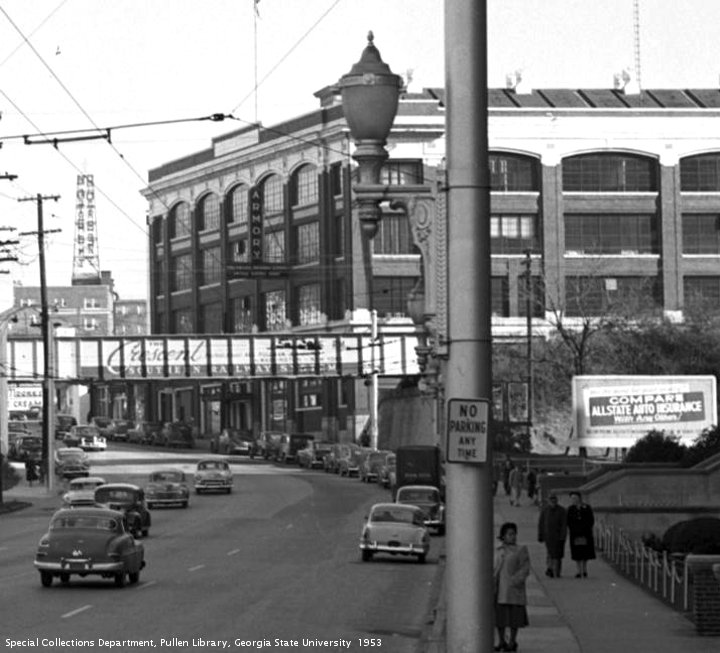

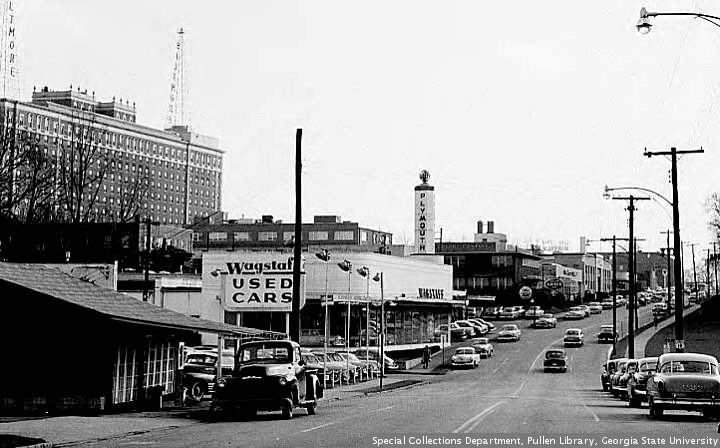



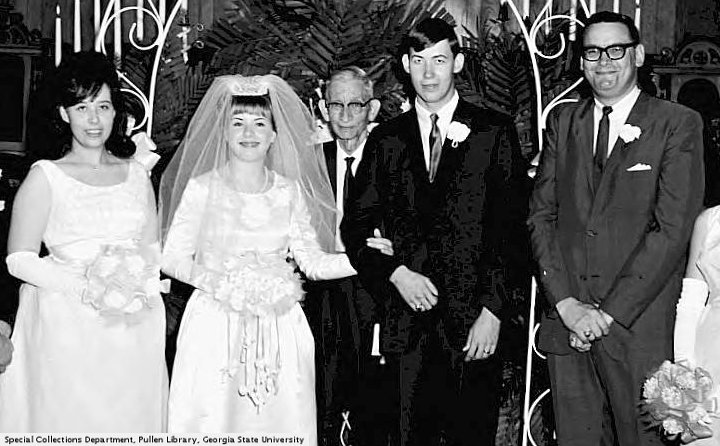
 A few years ago, a man started to twirl a baton around Atlanta. He wears eye catching outfits, traditionally intended for females. His handle is Baton Bob. Yesterday, BB went out to celebrate the Supreme Court decisions on DOMA, and Proposition 8. He went to Colony Square, where apparently his act is not appreciated. He was asked to leave, became verbally abusive, and was arrested. Here is the police report.
Baton Bob is African American. So is the arresting officer, and the two security guards. This matter might not be about race. Further, it seems as though BB has had problems with the management at Colony Square before. A security guard, on private property, has a right to tell a man not to come in to the food court and blow a whistle.
Baton Bob does not appreciate those who don’t enjoy his act. He does not have a problem with cussing out those who get in his way. Apparently, this was a problem when he was in St. Louis. Could it be that Baton Bob has gotten too big for his Tutu?
Historic pictures are from “The Special Collections and Archives,Georgia State University Library”. The mug shot is from Fulton County Sheriff’s Office. This is a double repost.




Proverbs 26



The folks at WIST had a nifty quote this morning. “Never argue with a fool; onlookers may not be able to tell the difference.” Mark Twain. The fun starts with the attribution. “Frequently attributed to Twain, but also to Immanuel Kant (but never, in either case, with any citation). See also Proverbs 26:4.” Maybe WIST Kant remember where he heard it.
There are several chestnuts that are similar. “You should never wrestle with a pig. You will just get dirty, and the hog will enjoy it.” “Never argue with an idiot. He will pull you down to his level, and beat you with experience.” Both are attributed to a host of famous people. None of the fp expressed it in a verifiable manner. The internet has made the problem of who-said-what worse.
The fun really starts when you go to Proverbs 26:4, and continue to Proverbs 26:5. 4 Answer not a fool according to his folly, lest thou also be like unto him. 5 Answer a fool according to his folly, lest he be wise in his own conceit. Verse 5 contradicts verse 4.
Proverbs 26 has more to offer. Many of these verses might apply to the fervent Jesus worshipers of today. 11 As a dog returneth to his vomit, so a fool returneth to his folly. 17 He that passeth by, and meddleth with strife belonging not to him, is like one that taketh a dog by the ears. 26 Whose hatred is covered by deceit, his wickedness shall be shewed before the whole congregation. 27 Whoso diggeth a pit shall fall therein: and he that rolleth a stone, it will return upon him. 28 A lying tongue hateth those that are afflicted by it; and a flattering mouth worketh ruin.
Pictures are from The Library of Congress.


The Ira Hayes Story


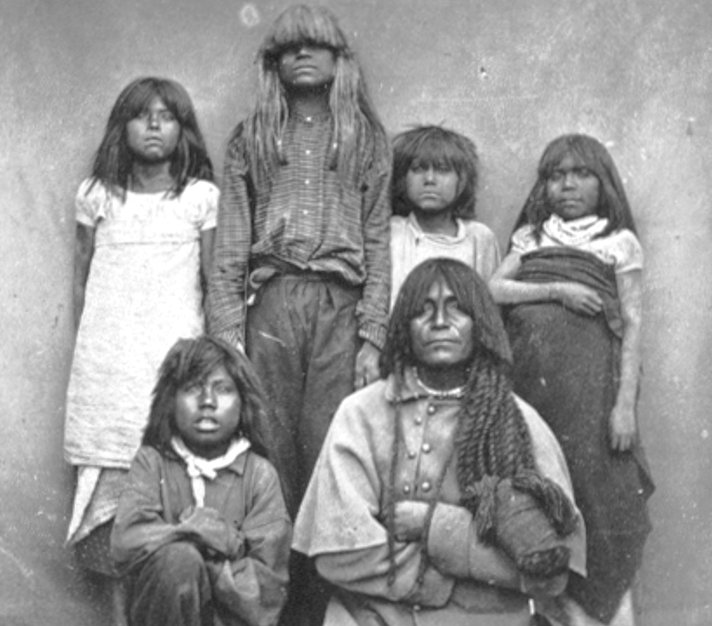
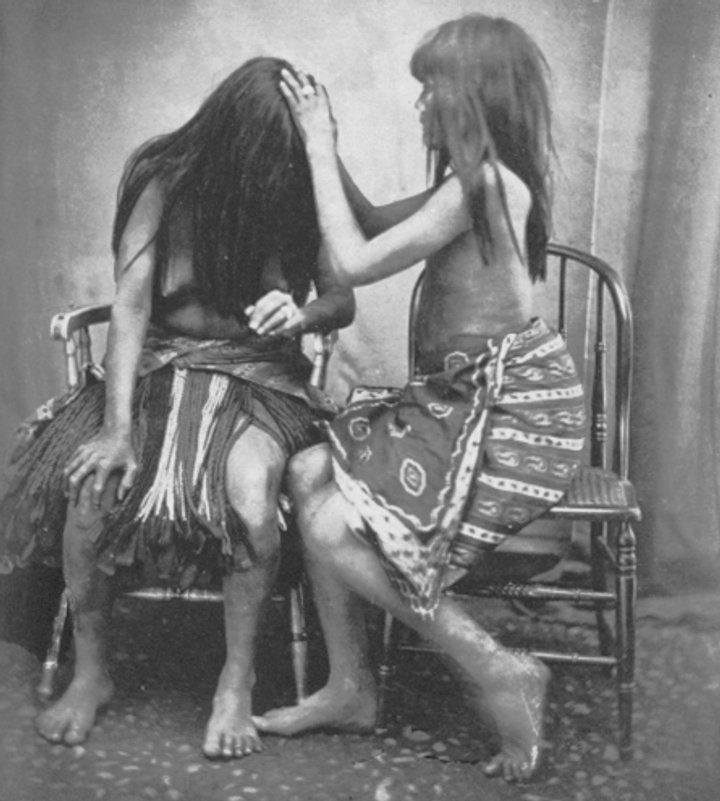
The post before this is about Arizona SB1070, a controversial measure dealing with illegal immigration. One of the men quoted is the Sheriff of Pima County, which lies on the border.
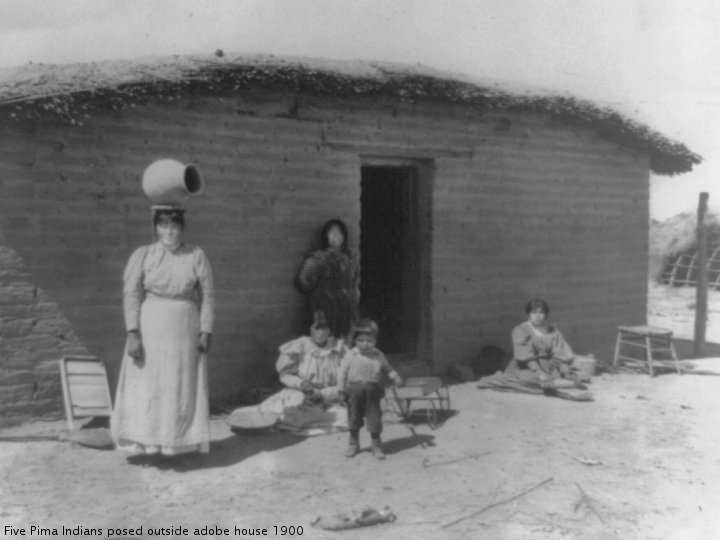
Pima County is named for the Pima Tribe, whose land was in Arizona and Sonora, Mexico. Their name for the “river people” is Akimel O’odham. According to Wikipedia, “The short name, “Pima” is believed to have come from the phrase pi ‘añi mac or pi mac, meaning “I don’t know,” used repeatedly in their initial meeting with Europeans.”
Many of the Mexicans crossing the border are Native Americans. They did not agree to the Gadsden Purchase , or the Treaty of Guadalupe Hidalgo . In other words, they were here first, and the white man (and black associates) are the uninvited guests. Maybe the natives should ask the English speakers for their papers.
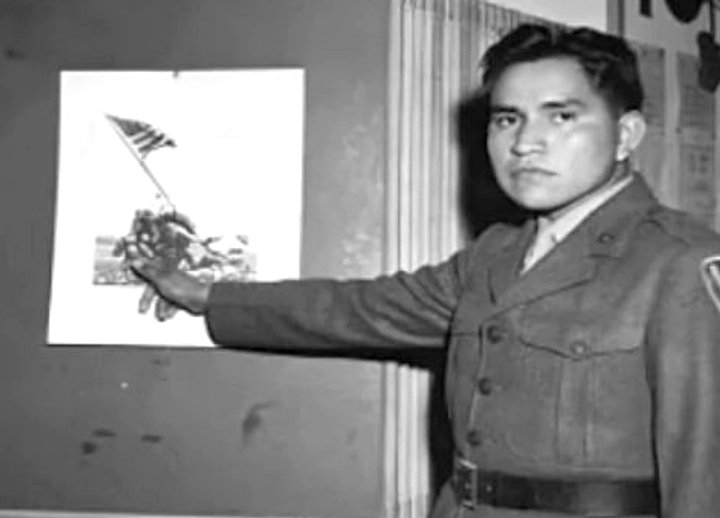
The second part of this feature is a repost. One of the best known Pimas was Ira Hayes. He was one of the Marines who raised the flag on Iwo Jima.
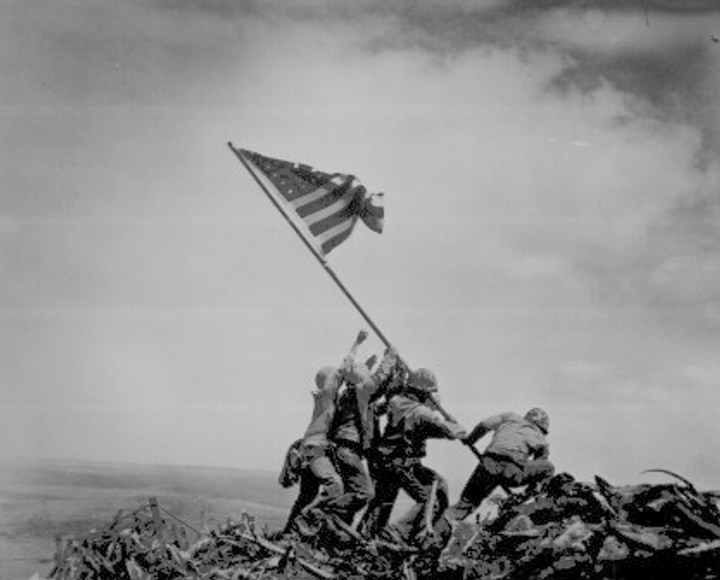
One of the enduring images of World War II was raising the flag on Iwo Jima. Three of the six men raising the flag died on the island. A fourth, Ira Hayes, became a casualty after the war.
The story of Ira Hayes is well known, but needs to be told again. A Pima Indian, his people had not been treated well by the conquerors. Nonetheless, when the War against Japan started, men were needed for the struggle, and Ira Hayes joined the Marines.
Iwo Jima was a steppingstone to the main island of Japan. After Iwo Jima and Okinawa were in Yankee hands, preparations could be made for the invasion of the main island. However, the stepping stone islands proved to be incredibly tough to secure. There were more American casualties on Iwo Jima than on D Day.
On the fourth day of the battle, a picture was made of six marines raising the flag on top of Mount Suribachi. A month of sticky, treacherous fighting was ahead for the fighting men. Of 21,000 Japanese soldiers, 20,000 died. Still, the image is inspiring. The photographer fiercely denied having staged it.
The flag was raised on February 23, 1945. Germany was all but defeated. The “explosive lens” for the atom bomb had been successfully tested. Viewed from the standpoint of 1945, it seems inevitable that the costly island hopping needed to continue, to be followed by an invasion of the Japanese mainland. From the view of 2009, one wonders if the fight for Iwo Jima, in retrospect, was really needed. War is fought in the present tense.
Two of the twelve hands holding the flagpole belonged to Ira Hayes. Ira Hayes did not adjust to peacetime well. He became a drunkard. On January 24, 1955, he passed away.
Ira Hayes was a native American. Thousands of African Americans have returned from foreign wars, to be treated poorly. Until a few months ago, if a man, or woman, is accused of being gay, the service is forgotten. On Memorial Day, we should struggle to ensure that all future veterans are treated with respect, all year long. This is a repost, with pictures from The Library of Congress.

Ben Franklin Said What?



There is a meme floating around. “THE U.S. CONSTITUTION DOESN’T GUARANTEE HAPPINESS, ONLY THE PURSUIT OF IT. YOU HAVE TO CATCH UP WITH IT YOURSELF. – BENJAMIN FRANKLIN – PLEASE SHARE Freedom Works”
Luther Mckinnon Do you have a source for that quote? It is not shown in wikiquotes.
*Meme Poster* Luther. If you Google: Benjamin Franklin quote “the Constitution doesn’t guarantee hapiness”. You’ll find a bunch of websites devoted to famous quotes. Personally I don’t like Wikipedia. They leave out a lot of information
Luther Mckinnon The problem is that many quote websites do not provide a source. Many of the quotes are erroneous. Yes, wikiquotes is not an authoritative source. However, if they do not list the quote, that is an indication that perhaps the quote is not genuine.
Luther Mckinnon After I made the post above, I highlighted the phrase “Benjamin Franklin quote “the Constitution doesn’t guarantee hapiness” (BTW, happiness is spelled with two p’s. You need a pp to have happiness.) Anyway, I right clicked, and went to google search. I found this link. The money quote: “The quote is a fake. Benjamin Franklin never said this.”
It turns out that “pursuit of happiness” is in the Declaration of Independence, not the Constitution. Of course, Mr. Franklin was getting old by the time of the Constitutional Convention. He may have gotten things mixed up. It is not known whether the phrase “catch up” was used in the eighteenth century. Maybe Mr. Franklin meant mustard.
Ben Franklin was present at both the Continental Congress, and the Constitutional Convention. He signed both documents. The Declaration of Independence was written by Thomas Jefferson. He was the United States Ambssador to France when the Constitutional Convention was held. During this time, Mr. Jefferson was engaged in the pursuit of Sally Hemmings.
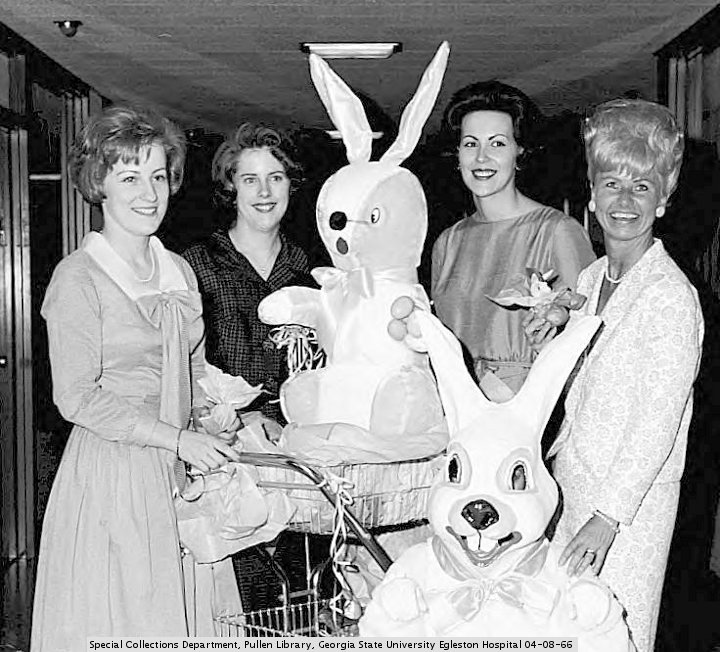
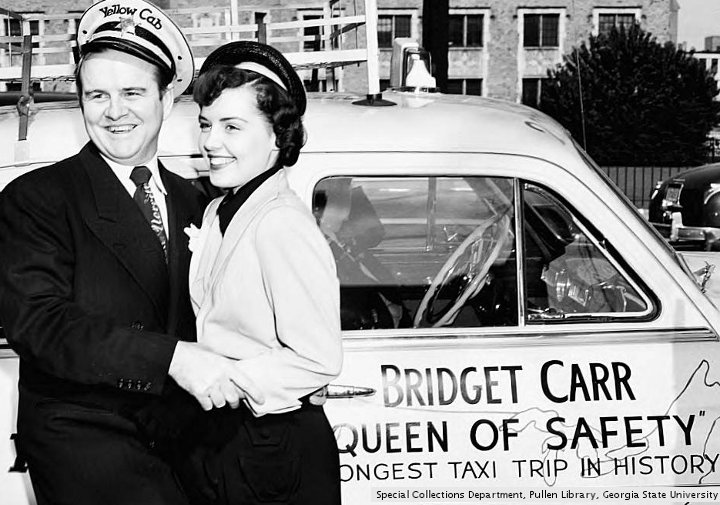
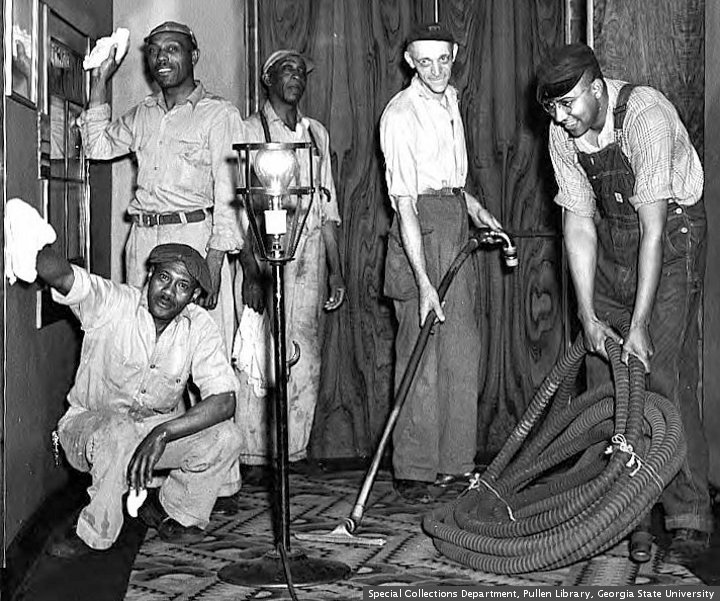
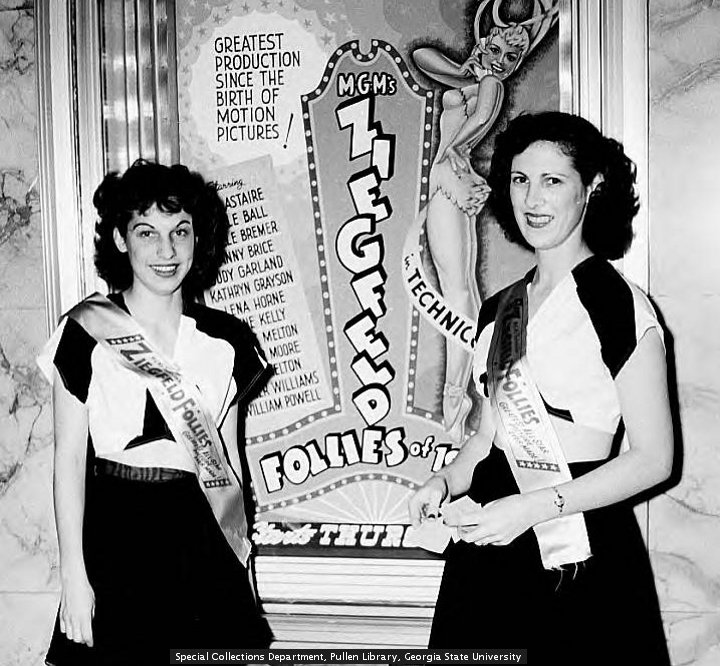
Another indication that the meme is phony is the connection to Freedom Works. In the meme comments, even Freedom Watchers seemed to know the difference between the Declaration of Independence, and the Constitution. Pictures today are from “The Special Collections and Archives, Georgia State University Library”.
UPDATE:*Meme Poster* Luther Mckinnon, thank you for taking something that was meant to be inspirational and stomping on it. *Meme Poster* unfriended Luther Mckinnon.




HBDBD



This is a repost. Pictures are from “The Special Collections and Archives, Georgia State University Library”. Technically, the birthday of Bob Dylan was yesterday. After seventy three years, another twenty four hours is not going to make much difference.
It was a late may morning in Atlanta GA, and a slack blogger was searching his archives. Yes, Issac Asinov never got writers block, and when he wasn’t going to the bathroom he was typing, but that is a lifestyle choice. Easy writing makes tough reading. So, anyway, in the may archive for 2011 there was a post about Bob Dylan’s seventieth birthday. People were taking bets on whether he would make it to thirty, and here he is at seventy three.
Hibbing MN is a cold place. At least it can claim to be the birthplace of Robert Allen Zimmerman. That’s Allen ,with an e, and double L just like hell. The original initials were RAZ, which might be a good trivia question, or, with a silent W in front, radio station call letters. The problem is, he legally changed his name to Bob Dylan, with no known middle name. Those initial are BD.
On May 24, 1941, the curly haired wonder boi arrived. The world was a different place. Europe was in flames, and eyeing the young men of America as fresh cannon fodder. This was twelve years, eleven months, and eighteen days before PG graced the planet. A twelve year old in Hibbing MN would have no reason to think of a newborn baby in Atlanta GA.
These days, not everyone knows who Bob Dylan is. Auto tuned automated canned music is the next big thing. If auto tune had been around in 1963, we would never had known how badly Mr. Dylan sings. In an age where rappers pay ghost writers to compose their tweets, being able to write songs is not valued. There is just no telling. And so it goes.
A.J. Weberman has made a life out of going through Bob Dylan’s garbage. He wrote a book, “The Devil and Bob Dylan”. “THIS BOOK CHALLENGES ALL PREVIOUS CONVENTIONAL THINKING ABOUT BOB DYLAN. DYLAN IS JUST THE OPPOSITE OF WHAT YOU BELIEVE HIM TO BE. BUT WHAT PURPOSE DOES IT SERVE EXPOSING HIM AS A RACIST, HIV POSITIVE EX-JUNKIE AND HOLOCAUST DENIER? NONE EXCEPT THAT OF TRUTH, AND THE TRUTH WILL SET YOU FREE. $17 INCLUDING POSTAGE! THE BOOK IS 500 PAGES AND FULLY ILLUSTRATED. Selling this book is like selling a book to Catholics entitled Why The Pope Sucks. The pope might such but no one wants to hear it.
This chamblee 54 birthday tribute is composed primarily of three previously published pieces of work. The pictures are from ” Special Collections and Archives,Georgia State University Library”
There was a comment on the Bob Dylan webpage… Everybody knows by now that there’s a gazillion books on me either out or coming out in the near future. So I’m encouraging anybody who’s ever met me, heard me or even seen me, to get in on the action and scribble their own book. You never know, somebody might have a great book in them. PG doesn’t write books. He did grow up in America, and has a few opinions about Bob Dylan. It ought to be good for a few hundred words here. (HT to dangerous minds ) (Chamblee54 has posted about Mr. Dylan before.)
The first time PG heard of Bob Dylan was probably at the record rack of Zippy’s dime store in Cherokee Plaza. There was an album of his greatest hits, and it came with a poster. The poster had a drawing of the man, with psychedelic waves of hair cascading in multi colored glory to the edges. PG never did buy the LP.
The former Mr. Zimmerman was never big on top 40 am radio. Somebody somewhere was getting a headache over those lyrics, but Atlanta GA was not somewhere in those days. By this time, Mr. Dylan had crashed his motorcycle, and gone into hiding. As the counter culture exploded (if only someone had disinfected that counter) the curly haired poet was in hiding, the subject of much speculation. At one point, people were stealing his garbage, and claiming to find evidence of investment in munitions firms. The neoscience of Dylanology continues to this day.
As PG got older and stupider, he heard more and more Bob Dylan music. In the summer of 1972, there was a performance at the Concert for Bangladesh. A couple of albums released during this era sucked, and some people stopped caring about Bob Dylan.
At the start of 1974, a tour was announced. The Band was to be the backing group. The circus came to the Omni, and PG got some of the mail order tickets. He couldn’t find anyone to use the second ticket, and sold it to a stranger outside the arena.
The show was nothing special. Bob Dylan excels at writing, is ok in the studio, and blah on stage. Georgia Governor Jimmy Carter was at the show, and was said to look bored. Mr. Dylan was invited to the Governor’s mansion after the show, and talked to the Governor. A lot of people in Georgia were surprised that he would want to run for President.
As the Seventies went me me meing into sex and drugs oblivion, Bob Dylan regained both his writing touch, and love of the spotlight. The Rolling Thunder tour happened, he got back together with Joan Baez, divorced his wife, became born again, became more Jewish, counted money, and generally lived the life. PG did his own version of all that, without Joan Baez or being circumcised again.
In the winter of 1991, America was consumed by war fever. Saddam Hussein had been elevated to next Hitler status, and had to be taught a lesson. One night, Bob Dylan played on a music awards show, and performed “Masters of War”. He played a discordant version of that ditty, with the result that few understood what he had said. By this time, Mr. Dylan had assembled a band, and gone out on the “Never Ending Tour”. A Bob Dylan concert had gone from being a special event, to being another name on the festival roster. Overexposure will do that.
On the last night of the Olympics in 1996, Bob Dylan played the House of Blues downtown. PG won a pair of the $80 tickets in a radio station contest. It was his only trip downtown during the games, and had to wait in a security line to get into Centennial Olympic Park.
The only celebrity, other than Mr. Dylan, seen at the House of Blues that night was Bill Walton. The band was competent…they impressed PG as being like a bar band that did a lot of Dylan songs, with a strangely authentic lead vocalist. The sound in the room was not good, at least in the spot where PG stood. The only song he recognized was “All along the Watchtower”, the Jimi Hendrix classic. Mr. Dylan got a cheer when he put his harmonica appliance on.



The aptly named dangerousminds has a link to a story about the recording of Blonde on Blonde, by Bob Dylan. It only happened once.
Bob Dylan was 24 years old, newly married, and had “sold out” i.e. started to play electric guitar. A bunch of Canadians known as The Hawks (later The Band) was touring with him. Barely a month after the release of “Highway 61 Revisited”, sessions started at a New York studio.
The New York sessions did not work, so a decision was made to go to Nashville. Al Kooper played organ, and served as a music director. A crew of Nashville players was recruited. A bass player named Joseph Souter, Jr. would become famous a few years later using the name Joe South. Kris Kristofferson was the janitor at the studio.
Most studios have bafflers, or sound proof room dividers, splitting the studio into cubicles. For these sessions, the bafflers were taken down, and the band played together as a unit.
The second session in Nashville started at 6pm and lasted until 530 the next morning. Mr. Dylan was working on the lyrics to “Sad eyed lady of the lowlands”, and the recording could not start until he was ready. The musicians played ping pong and waited. At 4am, the song was ready, and the record was finished in two takes.
PG had marginal encounters with two of the players on this album. He met a lady once, who worked in an insurance office. One of the customers was Joe South. His driving record file was an inch thick.
Al Kooper had a prosperous career after his association with Bob Dylan. The former Alan Peter Kuperschmidt produced the first three Lynyrd Skynyrd albums, sold that contract for a nice piece of change, and lived happily ever after.
One night, Mr. Kooper was playing a show at the Great Southeast Music Hall, and PG sat in front of the stage. During a break between songs, PG asked his friend “what time is it?”. Mr. Kooper heard him on stage, and said it was 11:30.




If it ever quits raining, PG is going to walk to the Chamblee library and return a book, and a cd. The cd is by Bob Dylan, and is a work of genius. The book is about the former Mr. Zimmerman, and is a piece of garbage. (BTW, Dylan is not the only Zimmerman to hit the big time. Ethel Merman was born Ethel Agnes Zimmerman.The Zimmerman telegram got us into World War I.)
When returning cd’s to a library, you need to get a check in receipt. Once, PG returned a stack of cd’s to the Brookhaven library. When checking them in, one was missed by the scanner. A few days later, there was a note in the mail about an overdue cd.
The good news was, the cd was on the shelf when PG went back to investigate, and the matter was quickly settled. It did not help that the cd was a collection of disco music called “Shake your booty”.
“The freewheelin’ Bob Dylan” was released in the early sixties, when the man was barely old enough to buy a drink. There is not a bad song on it, and several are classic rock staples. At a time when mindless pop dominated pop music, here were thoughtful, moving lyrics.
In 1991, with America in a war frenzy, Mr. Dylan appeared on a music awards show. He performed “Masters of War”, at a time when the majority would be appalled if they could understand what he was singing. Mr. Dylan has been reinvented many times, and often the lyrics get gargled.
Five years later, PG won tickets to a Bob Dylan concert. It was the last night of the Olympics, and the man was appearing at the House of Blues. (Tickets were $80, so the radio contest is the only reason PG went). It was like hearing a good bar band, that did nothing but Dylan songs, with the man as the vocalist. Due to the mix of the sound, PG could not recognize many of the songs.
The book is Bob Dylan: Prophet, Mystic, Poet by Seth Rogovoy. It tells the Dylan tale as a story of Jewish prophecy. PG got to page 16, where the author claims that “Like a Rolling Stone” “almost single handedly revolutionized rock’n roll music”. Huh?
PG was eating dinner, and did not have anything else to read. He got to page 38. Nothing in the next 22 pages changed his mind away from ditching the book. How does nonsense like this get published?





 Chamblee54
1 comment