Luther C. Mckinnon
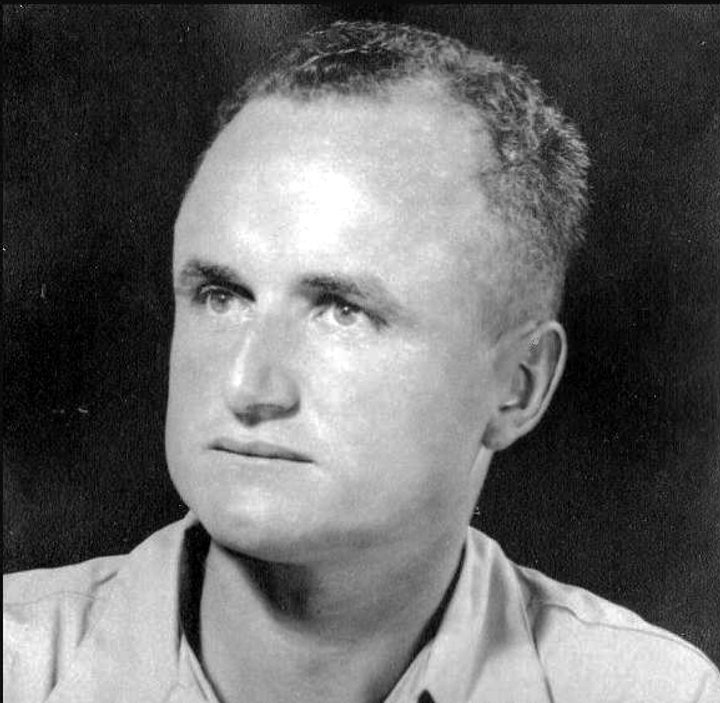

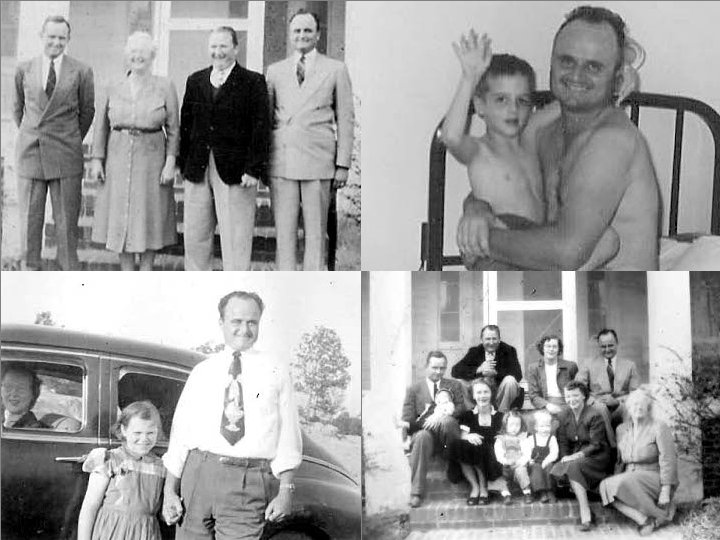
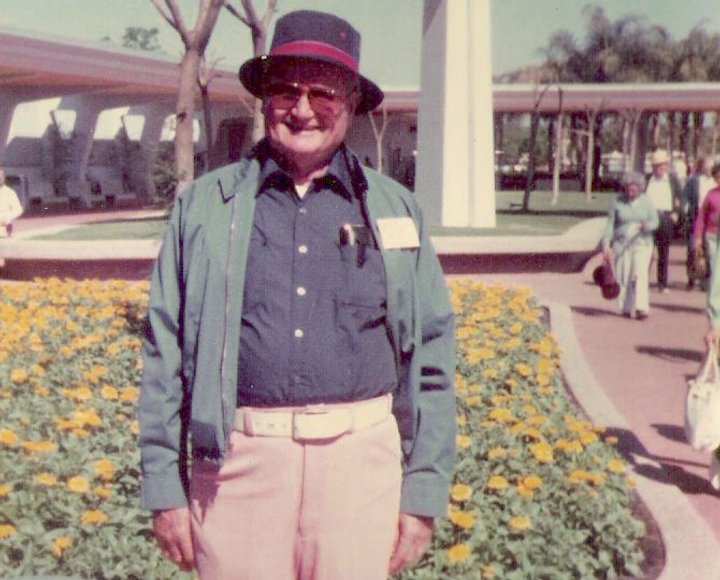
Luther Campbell McKinnon Sr. was born February 22, 1916, on a farm in Rowland, North Carolina. Europe was stuck in a war that would change the world, and not until The United States got involved. This didn’t happen for another year.
Luke was the youngest of four children. After life as a farm boy, he went to Wake Forest University, and then came back when his Daddy died. He ran a family dairy for a few years, and went to live in New Jersey. He lived near a prison, and saw the lights dim when the electric chair was used.
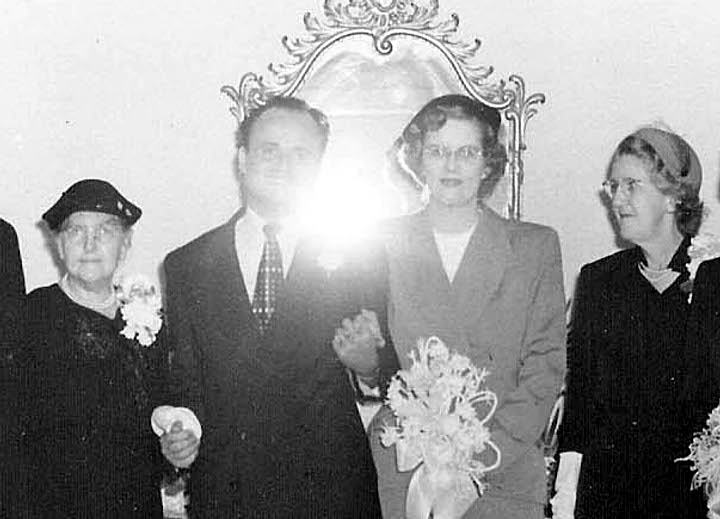
In the early fifties, he came to Atlanta to live. This was where his sister Sarah stayed, with her husband and two daughters. One day he went into the C&S bank on 10th street, and took notice of one of the tellers. On October 6, 1951, he married Jean Dunaway. She was with him the rest of his life.
At some point in this era he started selling shoes. He would go to warehouses, gas stations, and wherever barefoot men needed shoes. He was “The Shoe Man” .
Before long there were two boys, and he bought a house, then another. The second house is the current residence of my brother and myself, and is probably worth 15 times what he paid for it. He had the good fortune to not buy in an area that was “blockbusted,’ as many neighborhoods were.
And this was his life. He tended a garden, went to the gym, and was in the Lions Club for many years. When he met Mom, she let him know that going to church with her was part of the deal. They found a church that was good for their needs, and made many friends there. The Pastor at Briarcliff Baptist, Glen Waldrop, was his friend.
When I think of the character of this man, there is one night, which stands out. My brother was away at the time. The day before, Mom had discovered she had a detached retina, and was in the hospital awaiting surgery. Her job had arranged a “leaf tour” by train in North Georgia, and she got one of her friends at work to take me. There was some mechanical trouble on the train, and it did not get back into town until 3am Monday morning. And yet, Daddy stayed at home, did not panic, and had faith that all of us would be back soon, which we were.
Through all the struggles of his life, Dad was cheerful, laughed a lot, and was good company. He left me with a rich repertoire of country sayings, and had many stories to tell. He was surprising mellow about black people, if a bit old fashioned. (In the south when I grew up, this was highly unusual).
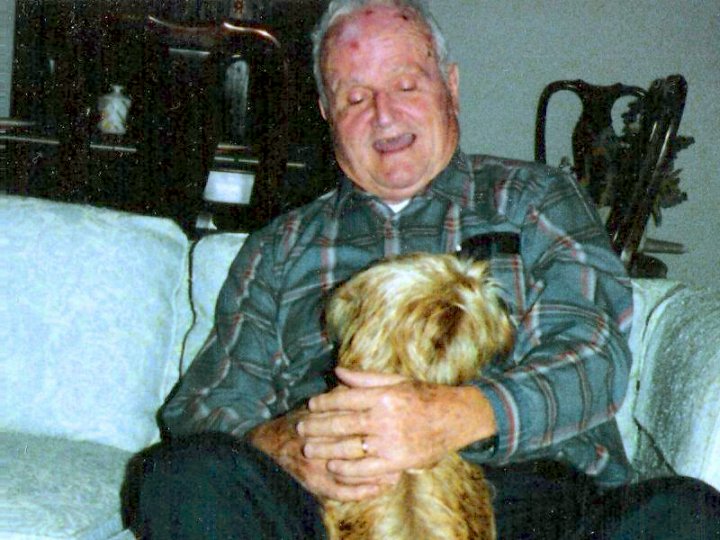
Dad was always in good, vigorous health, and I thought he would be with us for a long time. Well, that is not how things work. A cancer developed in his liver, and spread to his lungs (he did not smoke). After a mercifully brief illness, we lost him on February 7, 1992. This is a repost.


35 Broad Street
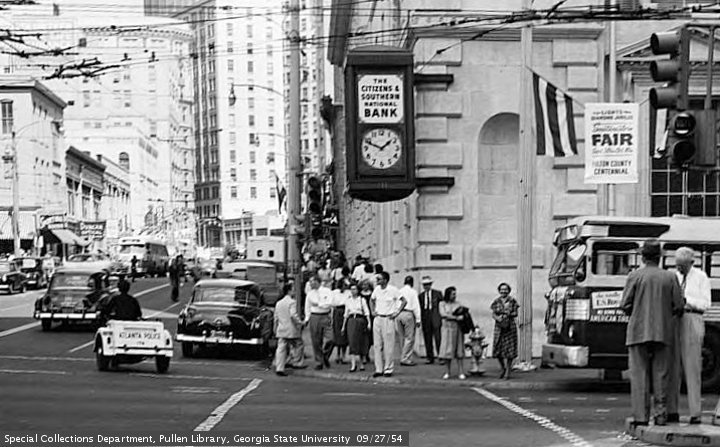
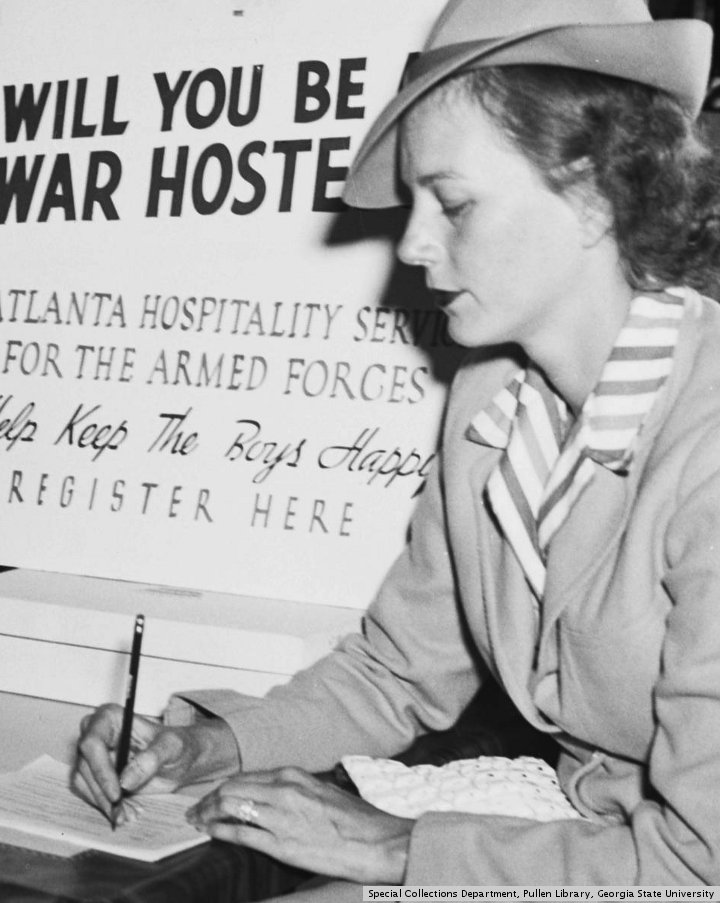
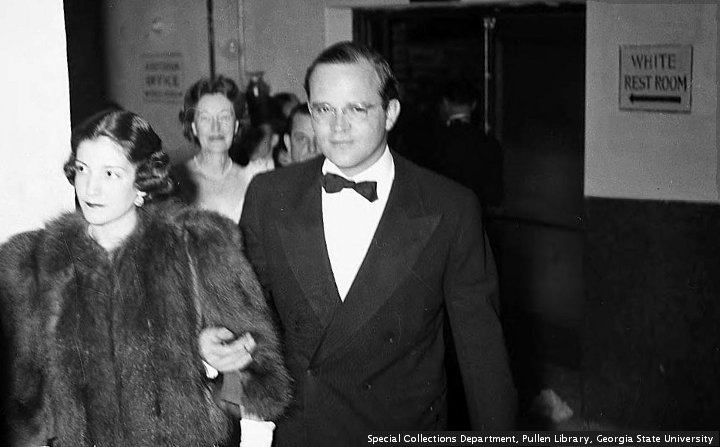
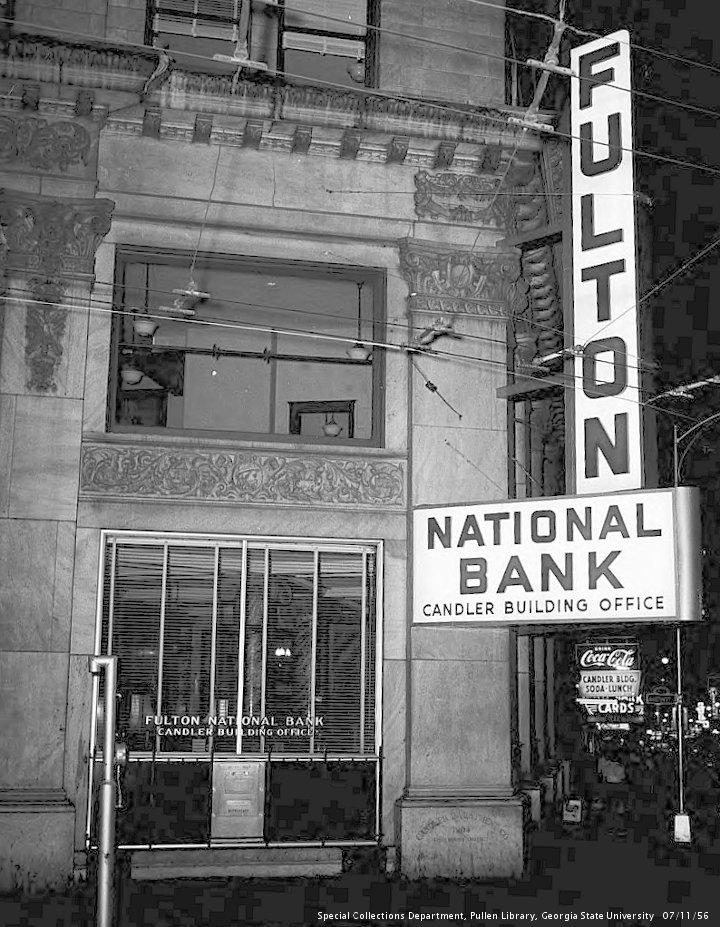
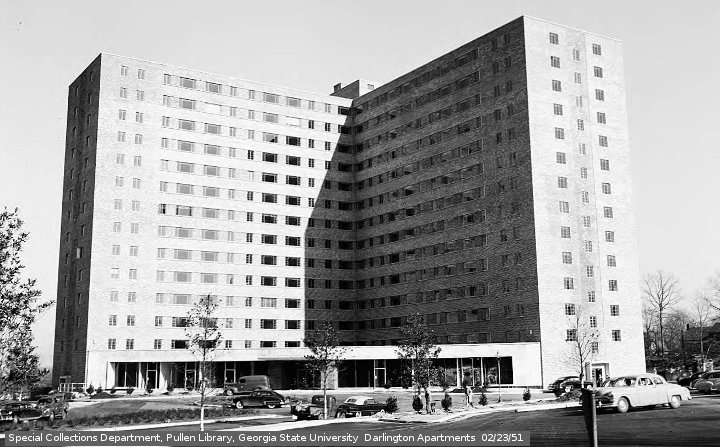
PG was having a delightfully slack afternoon, The one productive activity was editing pictures from “The Special Collections and Archives, Georgia State University Library”. In box seventy two of “corporate bodies”, in the Lane Brothers archive, there was a picture commissioned by King Road Marker Company. It displayed a brand new crosswalk, over Marietta Street at the intersection of Broad Street. The picture was taken at 1:51 p.m. September 27, 1954. This is a repost.
The time caught PG’s eye. 1:51 is one of the times used to display clocks and watches in advertising. Most ads use 10:09. This arrangement of the hour and minute hands makes a welcoming gesture. This allows the logo of the watch to be visible, and is thought to encourage the viewer to purchase the timepiece. The shadows on the buildings indicate that the picture was shot in early afternoon.
The clock with the magic time advertised the C&S national bank. The building behind the clock was the headquarters of that bank. In 1954, Citizens and Southern bank was a prime player in the Atlanta market. (PG’s dad said that C&S stood for choke’m and squeez’m.) At some point, C&S merged with NCNB to become Nationsbank, which was later absorbed by Bank Of America.
C&S kept it’s headquarters at 35 Broad Street for many years after competitors built trophy buildings. Their were constant rumors about where the C&S highrise was going to go. Finally, C&S Plaza was built at Peachtree and North Avenue, a mile north of five points. The building was to become the tallest building in America outside of New York and Chicago. During the construction of this building, C&S became part of Nationsbank.
The picture is featured in Atlanta Time Machine. The building is now owned by Georgia State University, with a BOA branch on the first floor. The banking hall is spectacular. It was designed by Philip Shutze, before the great depression. Here is more information.
Nations Bank Building (Citizens and Southern National Bank Building, Empire Building)
35 Broad Street, NW 1901: Bruce and Morgan, Architects, NR.
Remodeling of Lower Floors and Interiors 1929:
Hentz, Adler and Shutze, Architects; Philip Shutze, Designer
Fourteen stories high, the Nations Bank Building was the first steel-frame structure to be built in Atlanta. Its clear-cut silhouette, simple fenestration, and heavily decorated terra-cotta top bear the influence of the Chicago School. In 1929 the building became the headquarters of the Citizens and Southern National Bank, which asked Philip Shutze to redesign its three lower floors. Because the impression of load-bearing masonry was regarded as better suited for a banking establishment than large glass panes were, the original display windows were replaces by classical motifs apparently “carved out” of Indiana limestone.
Philip Shutze was inspired by Italian Mannerism, and especially by the city gates of Verona by Michele Sanmichelo (1484-1559) … Reached from Marietta and Walton streets through lofty arcaded entryways and a more intimate elevator lobby in the early Renaissance style on Broad Street, the banking hall is a long nave articulated by colossal Corinthian pilasters. While its walls and floors feature several kinds of Georgia, Tennessee, and European marbles in a warm gold-brown color scheme, the ceiling, from which hang gigantic chandeliers, is left bare. The Pantheon, which Shutze had measured during his internship at the American Academy in Rome, served as direct source for the pedimented niches, and for the floors with alternate square and circular patterns. Also, of Roman inspiration are the bronze desks and the eagle motif found throughout the design.
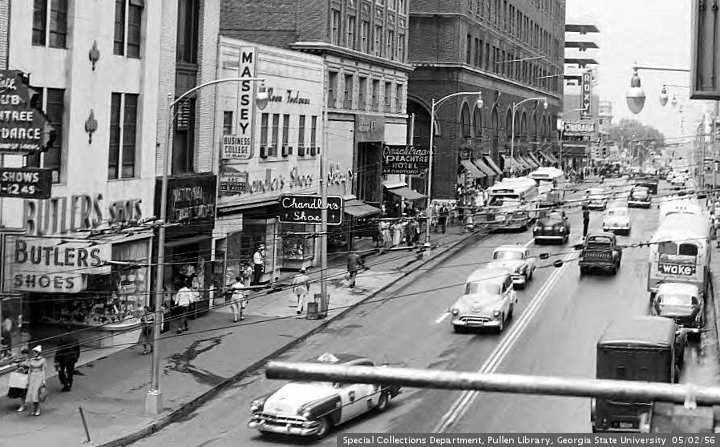
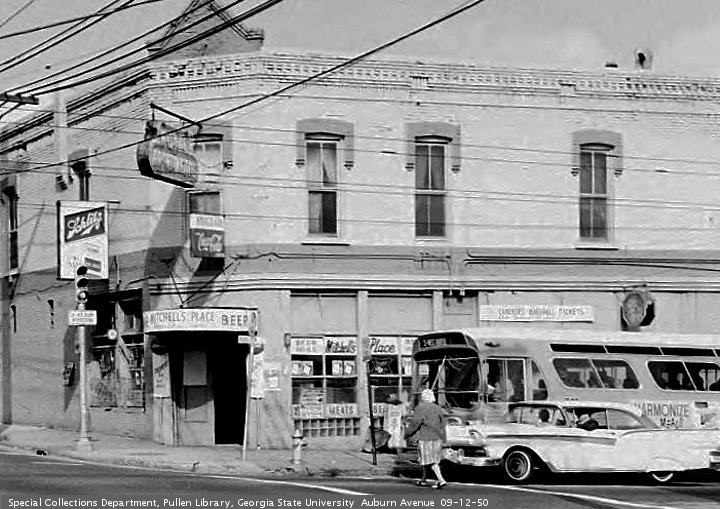


Midtown

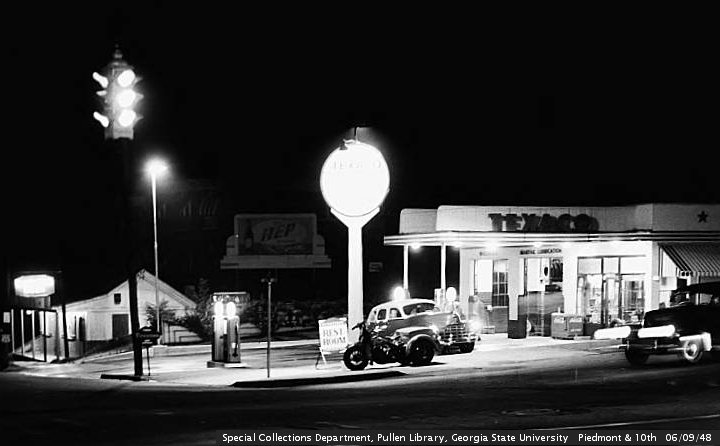


The neighborhood along Peachtree Road has always been a great place to be a freak. For a long time it didn’t have a name. It is north of downtown, between Piedmont Park and Georgia Tech. Sometime in the early eighties, people started to call it Midtown, and the name stuck.
In the time after the War Between the States, this area was a shantytown called “Tight Squeeze”. It evolved into a pleasant middle class area. In the sixties, hippies took over. The area was known as the strip, or tight squeeze. Many stories could be told.
After the flower children moved on, the area went into decline. Gays started to move in, with the battle cry “Give us our rights or we will remodel your house.” Developers, worshiping the triune G-d of location, location, location, began to smell money. The neighborhood became trendy, then expensive, then more expensive. The freaks with money remain. This is a repost. Pictures are from “The Special Collections and Archives, Georgia State University Library”.
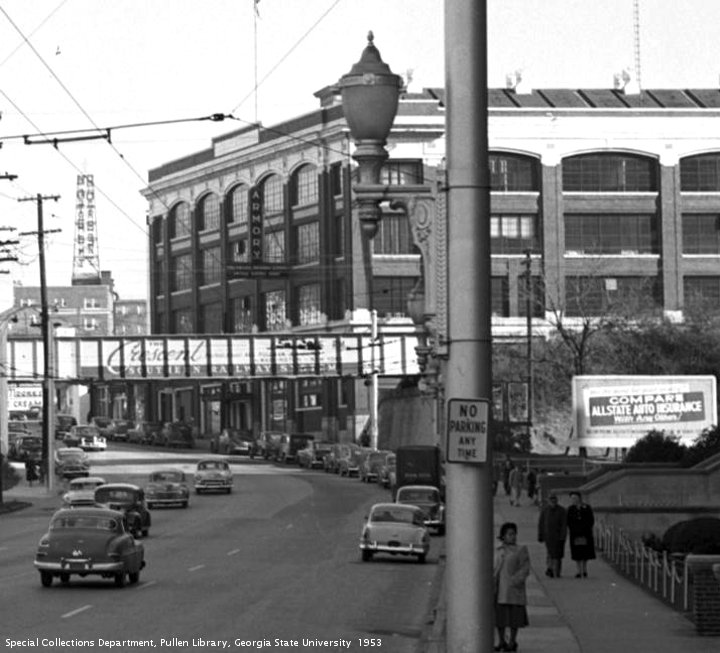



The Night Muhammad Ali Fought In Atlanta

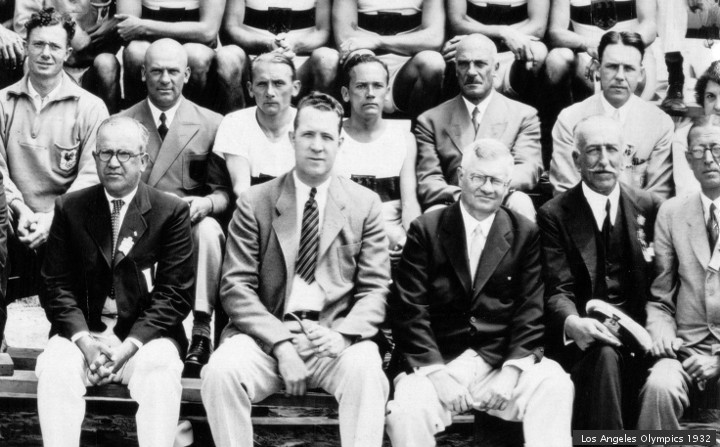


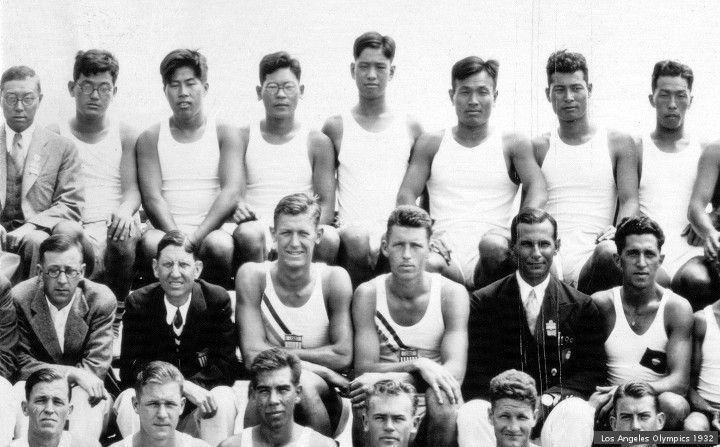


Many have noted that Muhammad Ali lit the Olympic torch in 1996. Few seem to remember another Atlanta appearance from the former Cassius Clay. It happened October 26, 1970, at the Municipal Auditorium. To get to this point, lets borrow a few lines from a Courier-Journal Ali Timeline.
1960 – “Clay defeats Zbigniew Pietrzykowski of Poland on Sept. 5 to win the light-heavyweight boxing gold medal at the Olympics in Rome…”
1962 – “Clay hears Elijah Muhammad speak for the first time. He meets another Nation of Islam leader, Malcolm X, who becomes a friend and adviser. – On March 9, the military draft board classifies Clay 1-A, meaning he is fit and available to be called into the Army…”
1964 -” Because of a low score on the Army intelligence test, Clay is reclassified 1-Y, not qualified for military service, in January. “I said I was The Greatest,” he explains. “I never said I was the smartest.” – Clay scores a stunning seventh-round technical knockout over 7-1 favorite Sonny Liston on Feb. 25 at the Miami Convention Center, winning the world heavyweight championship at age 22. – In response to a reporter’s question the day after the fight, Clay confirms he is a member of the Nation of Islam, saying: “I believe in Allah and in peace. … I’m not a Christian anymore. … Followers of Allah are the sweetest people in the world. They don’t tote weapons. They pray five times a day.” – A rift grows between Elijah Muhammad and Malcolm X. Ali sides with Elijah, causing grief for Malcolm. – Casting off his “slave name,” Clay adopts the temporary name Cassius X. Later he announces that Elijah has bestowed on him the name Muhammad Ali. The name means “Praiseworthy One.”…”
1965 – “Ali knocks out Liston in the first round of their rematch, before only 4,280 fans in Lewiston, Maine, on May 25. Liston falls under a “phantom” punch that apparently few people see, giving rise to suspicions that he threw the fight. Former champion Joe Louis eventually declares Ali “unfit” to hold the title. – In October, former champion Floyd Patterson says: “Cassius Clay is disgracing himself and the Negro race.” On Nov. 22, Ali delivers a punishing defeat to Patterson, in part, he says, because Patterson refuses to call him Ali….”
1966 – “With the Vietnam War heating up, the Army lowers test-score standards, reclassifying Ali 1-A — fit for service. – “Man, I ain’t got no quarrel with them Viet Cong,” he says to reporters who call him at home in Miami. He later explains that “no Viet Cong ever called me nigger.” – Ali asks to be reclassified a conscientious objector to military service. A hearing officer sides with him, but the draft board keeps him 1-A, armed with a U.S. Justice Department opinion that Ali’s objections to military service are political not religious….”
1967 – “On April 28, Ali refuses induction into the Army in Houston.” “It is the light of my consciousness as a Muslim minister and my own personal convictions that I take my stand in rejecting the call to be inducted in the armed services,” Ali stated after refusing induction on April 28, 1967. “I have searched my conscience and I find I cannot be true to my belief in my religion by accepting such a call.” He was convicted of draft evasion on June 20, 1967. Ali was sentenced to five years in prison and fined $10,000, the maximum penalty for the offense. He remained free on a $5,000 bond while he appealed his conviction. Ali was also stripped of the World Heavyweight Championship by the New York State Athletic Commission and the World Boxing Association, systematically denied a boxing license in every state and stripped of his passport. “
For three and a half years, Mr. Ali was unable to fight in the ring. The WBA had a tournament, and installed their own champion. People tried to set up a fight for Mr. Ali, but were blocked by politicians, and state boxing authorities. California Governor Ronald Reagan said “That draft dodger will never fight in my state, period.” Then someone had the idea to have the fight in Atlanta.
Atlanta has never been a boxing town. There was no boxing commission. The Municipal Auditorium, the only venue that could host, was a dump. As Ring magazine tells the story: “So it was the height of irony that it was Atlanta, a city that occupied the heart of the Deep South, that provided the breakthrough. State Senator Leroy Johnson and Governor Lester Maddox helped pave the way for a most improbable return by persuading the City of Atlanta Athletic Commission to grant Ali a boxing license on Aug. 12, 1970. Shortly thereafter, it was announced Ali would fight Jerry Quarry on Oct. 26 at the City Auditorium in Atlanta. The bout was scheduled for 15 rounds, probably in recognition of Ali’s status as lineal heavyweight champion.” (Other sources say that Governor Maddox was opposed to hosting the fight, but was powerless to stop it.)
The opponent was Jerry Quarry, whose white skin was apparent that night. His obituary notes: :His most famous night was in Atlanta, Georgia, in October 1970, when he was the “fall-guy” for Ali’s comeback from his three- year exile. Quarry was stopped because of a badly cut eye in the third round. It brought him his biggest payday, $338,000. … By 1995 he was in the care of his brother James, and was suffering from severe pugilistic dementia.” Jerry Quarry died January 3, 1999.
The fight was not much of a contest. It lasted three rounds, before the referee stopped the match. Mr. Ali fought for ten more years, and regained the Heavyweight Championship twice. “On June 28, 1971, the Supreme Court unanimously overturns Ali’s 4-year-old draft conviction, saying that his claims as a conscientious objector were based on religion and were sincere.”
The fight was the occasion for a display of black pride, and black money. The New Yorker essayist George Plimpton remembered that invasion of the Harlem peacocks in their enormous purple Cadillacs: “I’d never seen crowds as fancy, especially the men – felt hatbands and feathered capes, and the stilted shoes, the heels like polished ebony, and many smoking stuff in odd meerschaum pipes.”
“The times reported that the bout was like “a page out of the roaring twenties. … The ladies had beads down to the hem of their maxi-skirts. One man wore an ankle length mink coat, with a high hat of mink to match. … Diana Ross sat in the forth row, ringside, with a bouffant, Afro-American hair-do that stretched out 10 inches on each side.” Many of those in attendance were invited to a party.
“Engraved invitations to one party in particular had been passed around to the hustlers in New York a week earlier and in Atlanta in the days leading up to the fight. The invitations announced that “Fireball” was throwing a party at 2819 Handy Drive, in Collier Heights.
The Handy Drive house happened to be one of several properties that “Chicken Man” Williams owned. He’d given a friend, an Atlantan-turned-New-Yorker known as “Fireball,” permission to use the house. He’d even helped build a craps table the week before so all the big-time gamblers who were sure to show up could “roll the bones.”
Williams’ girlfriend, Barbara Smith, skipped the fight to help prepare for the party. She and two girlfriends were busy in the kitchen when they heard the front door open. The fight was still going on, so Smith went to the front, expecting to meet an early bird. She was greeted by three men in ski masks standing in the hallway. All were armed; one was pointing a shotgun at her face. …
An estimated 80 to 200 people had arrived at the house expecting to party, only to be fleeced by masked men with shotguns. According to news accounts, the victims were led to the basement, then ordered to strip to their underwear, throw all their valuables in a pile and lay on the floor…
As more victims arrived, floor space in the basement became scarce, so the gunmen ordered the victims to lie on top of each other. Cash and jewelry was swept into pillowcases. That went on for hours as more and more people kept showing up. By 3 a.m., the half-naked victims were stacked like cordwood on top of each other.
Not one shot was fired. But as they left, the gunmen took Smith and one of her friends hostage and told everyone else to stay put. Three hours later, they dropped the women off on the other side of town and gave them $10 each for cab fare. By that time, the investigation was underway.
Creative Loafing has a terrific story about the party at Chicken Man’s house. If you have a few minutes, it is worth your time. Ditto for this newspaper story, in the sucky google books format.
A key person in the story is J.D. Hudson. One of the first eight black Atlanta policemen, Lt. Hudson was Mr. Ali’s bodyguard the night of the fight. Lt. Hudson wound up conducting the investigation of the party at Chicken Man’s house. Lt. Hudson met Gordon “Chicken Man” Williams, under rather unpleasant circumstances, in 1949.
Lt. Hudson never suspected Chicken Man of being part of the robbery. “From the time he took over the case, Hudson says, he knew Williams wasn’t responsible — even though other investigators already had pinned the crime on him. For one thing, Hudson could place Williams at the fight at the time the gunmen were at the house setting up the crime.
For another, Hudson says, “I knew [Williams] wasn’t dumb enough to pull a stunt like that. This was a man who ran [a] million-dollar operation from a pay phone on a street corner. He was smart. He could’ve run IBM or Coke. There’s no way he would’ve risked all that to pay somebody off. This was pulled off by a bunch of young thugs who were trying to knock over a party, and when they got there and saw how big it was, they improvised.”
Chicken Man went to prison in the seventies, and became a minister. He served as the Pastor of the Salem Baptist Church. Gordon Williams died December 6, 2014. J.D.Hudson died June 4, 2009. The men who robbed the party goers were killed a few months after the fight.
Pictures today are from The Library of Congress.
Watering Hole Story


PG and his neighbor DA went out to drink beer and shoot pool. The destination was a place called the Watering Hole. The Watering Hole used to be a VFW. There was a TV repair store next door. When the county legalized bars, the VFW went somewhere else. The TV repair store became the game room. You could see on the floor where the counter used to be.
This was a weeknight. The other customer was past his limit. The drunk was fussing at the bartender when PG and DA walked in.
PG got lucky and hit a good shot on the pool table. He got a bit cocky, and said “and now for my next trick”. The drunk staggered into the game room, and lay down on an empty pool table. DA replied, “Is that your next trick?”
Before long, it was time to go home. As PG and DA were leaving, the drunk was arguing with the bartender. He wanted to buy a twelve pack to take home. The drunk won the argument, and started walking up Clairmont Road with his prize.
PG got a block or so away from the Watering Hole. He saw the drunk sitting in front of a seven eleven store. The drunk was sitting on the curb, drinking a beer. PG drove in front of him, and stopped the car. DA got out, and walked over to the curb. She picked up the eleven pack, and walked over to the car. Her pace was deliberate. The drunk stood up and yelled obscenities. The car drove away. off. This is a repost. Pictures are from The Library of Congress.




Gene Talmadge
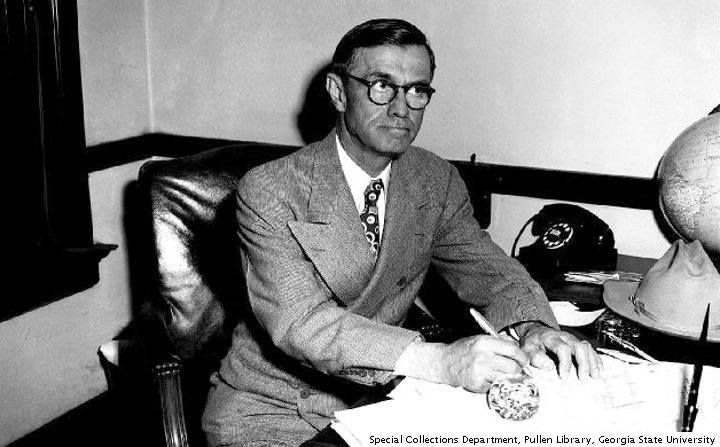



There is a quote making the rounds from Jack Murtha. It seems like some of his nephews have been profiting from the family ties. The verbatim is “If I’m corrupt, it’s because I take care of my district.” This appearance of impropriety is a gift to supporters of military adventure in Babylon. Mr. Murtha…a decorated Vietnam Vet…has been a vocal critic of the wars. His apparent ethical issues give war fans a convenient diversion.
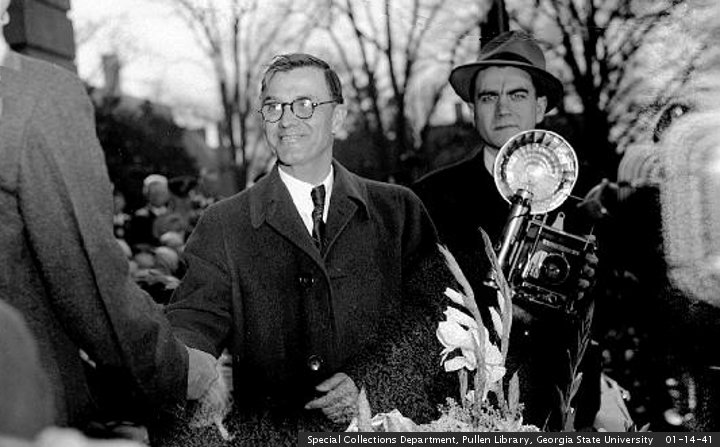
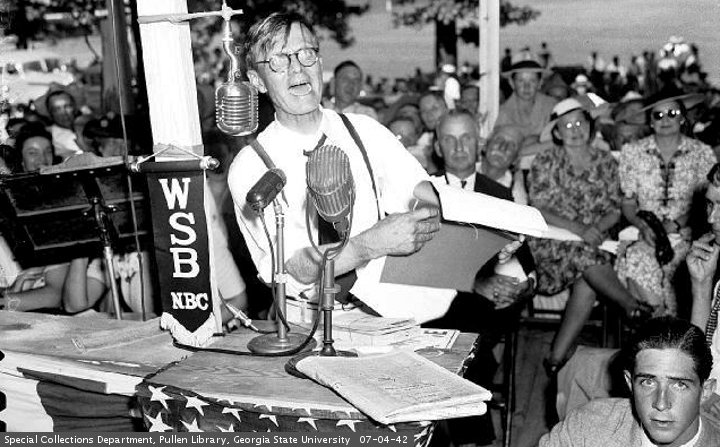
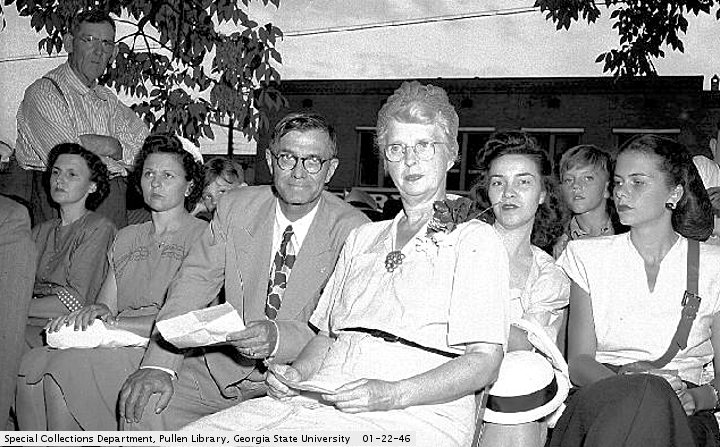
This comment brings to mind a former Governor of Georgia, Eugene Talmadge. He was famous for saying, to cheering crowds, “Sure I stole, but I stole for you”. PG suspected an urban legend, and decided to see what Mr. Google had to say.
Eugene Talmadge was Agriculture Commissioner before he was Governor. He had some relatives on the state payroll. There was something funky going on with fertilizer. He bought a bunch of hogs, and sent them to Chicago, where he thought he could make more money. After a while, some people started to ask questions. His answer was “If I stole, it was for farmers like yourselves”. (This is on page 59 of “The Wild Man from Sugar Creek”.)
This was in 1931. The depression hit Georgia hard. The wool hat boys were in a world of fertilizer. Mr. Talmadge set himself up as the champion of the dirt farmers, and the enemy of the lyin’ Atlanta newspapers. In 1932 he was elected Governor. He was re elected three times, but died in 1946, before he could serve again. He was replaced by two Governors.
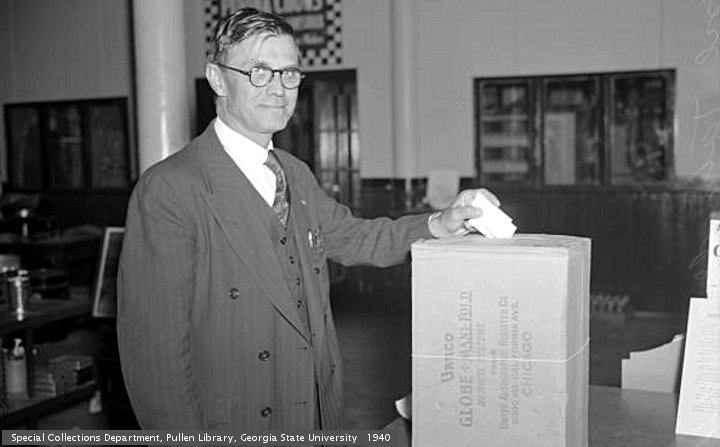
Mr. Talmadge was elected because of the county unit system. Each of Georgia’s 159 counties got a certain number of votes. Three rural counties were the equivalent of winning Fulton County. Mr. Talmadge boasted that he never won a county with street cars.
Mr. Talmadge’s campaigns were legendary. He would speak at the county courthouse, and plants in the crowd would scream questions, like “what about those lyin Atlanta newspapers?”. One of his favorite lines was “Yeah, it’s true. I stole, but I stole for you, the dirt farmer”.
PG’s aunt went to work at the Trust Company of Georgia in the early fifties. There was a story that the new employees were told. It seems as though Governor Talmadge was in the lobby of the Trust Company, after having a happy lunch. He had to use the restroom, and went to the corner of the lobby to relieve himself.
There is a statue of Gene Talmadge in front of the State Capitol. The plate at the base reads “I may surprise you, but I shall not deceive you”. It remains to be seen what will be carved underneath a statue of Jack Murtha.
This is a repost, with pictures from “The Special Collections and Archives, Georgia State University Library”. Jack Murtha died February 8, 2010.



The Great Southeast Music Hall


The Great Southeast Music Hall was an important part of life in Atlanta during the seventies. It was located in the elbow of a shopping center, Broadview Plaza. A bowling alley was downstairs, a two level K mart next door, and Atlanta’s first hispanic neighborhood across the street. Like almost everything else here, Broadview Plaza was torn down, and replaced by a more uppity set of stores.
When you went into the lobby of the Music Hall, you noticed the walls. Performers were given a magic marker, and encouraged to leave a message. John Mayall found the ladies room, and said he likes to be near the ladies. The late Phil Ochs said “Impeach Nixon and Agnew”. What happened to those boards is a good question.
The auditorium held about 500 people. The stage was only three feet or so above the floor. There was an empty space in front of the stage, and a few rows of bench backs behind that. When the place opened, there were lots of pillows on this floor, with the Music Hall logo. The carpet in this front area was fresh when the place opened, and got progressively grosser as the years went by. Beer was served in aluminum buckets, and inevitably some wound up on the carpet.
The show the Music Hall is most famous for is the US debut of the Sex Pistols. PG didn’t make it that night, but has heard from a few who did. The performance was said to be horrible. There are stories of Sid Vicious wandering through the apartments around Broadview trying to find heroin. Years later, PG was reading about that night in Please Kill Me, when the train he was riding pulled into the Lindberg Marta station. This is across the street from the Broadview Plaza, still standing at the time.
These days, the intersection of Lindbergh Drive and Piedmont Road (about a mile north of the park) is next to Hiway 400. When the Music Hall was in it’s prime, the land for the Highway was owned by the State of Georgia, which was fighting legal battles over the highway. The land had a network of dirt roads, one of which connected Buford Hiway to Lindbergh Drive. When you went from Chamblee to the Music Hall, the most direct route was over this dirt road. This dirt road is where Sidney Marcus Boulevard is today. Broadview Plaza was torn down, and replaced by a Home Depot.
Eventually, the business model for the Music Hall did not work, and the facility moved to Cherokee Plaza. This Music Hall was in a movie theater. The Cherokee Plaza Theater was the scene for the world premiere of Son of Dracula . This move did not work, for a number of reasons. The parking lot was too small, and people who wanted a loaf of bread from the A&P were blocked out during shows. Cherokee Plaza is just outside the city limits, on Peachtree Road. In the late seventies, DeKalb county was aggressively fighting drunk driving, and had roadblocks. Many of these roadblocks were outside the Music Hall, which kept many people from attending. Before long, this Music Hall closed.
Many years later, PG bought a second hand typewriter, and needed a ribbon. (Younger readers should ask an older person about this.) He went into an office supply store in Broadview Plaza, and soon realized that he was standing on the site of the Music Hall. He asked the clerk if he could have a bucket of beer, and got a very strange look in return.
 One industrious afternoon during this era, PG made a list of shows he saw at the Music Hall. The memory cells are already protesting, but we are going to try and remember as much as possible about these shows. A big thank you to Wikipedia for help with spelling and names.
New York Rock Ensemble – PG walked into the auditorium during the last part of the first show, as the band played “A whiter shade of pale”. The bass player wore lace up boots, with the pants legs tucked into them. Before long, the second show came on stage. Keyboard player Michael Kamen was the central focus, acting out the lyrics to “Anaconda”.
Silverman Deborah McColl fronted this drummerless band
Al Kooper PG has written about an unfortunate incident involving Al Kooper during this show. This would have never happened in “The Catcher in the Rye”…the kids always knew what time it was in that story. Mr. Kooper did a solo show, including “Sam Stone” by John Prine.
Ellen McIlwaine/ James Cotton Blues Band Ms. McIlwaine was pregnant, and played slide guitar. Mr. Cotton played harmonica. One of his players started to fan him with a towel, because he was hot.
Breakfast Special/ Doc and Merle Watson Breakfast Special was a local bluegrass crew, who did “The coming down song”. The Watsons did ” Deep River Blues” and “Thats All”, among other things. PG had a copy of their latest LP, and asked Merle to autograph it. He wrote his name on one side, turned it over, and signed Doc’s name on the other side.
Mason/Atlanta Rythym Section This show was the night Led Zeppelin played Atlanta Stadium.
New Riders of the Purple Sage When the Music Hall opened, a performer would typically play from Tuesday to Sunday. NRPS was a one night show. They worked well in the packed hall, and shined on “Glenville Train”. The next year, they did a tour with Commander Cody and The Lost Planet Airmen. Commander Cody opened, and raised hell. NRPS followed with a mellow rock show, and before long people were getting bored and leaving.
David Buskin / Loudon Wainwright III Chamblee 54 has written about this show before. Mr. Buskin talked about doing a show at Max’s Kansas City, the person sitting next to PG said “Gross”.
Steve Martin / Nitty Gritty Dirt Band Chamblee54 has written about the show by Mr. Martin . This was his last tour as an opening act. Nitty Gritty was a sight to behold. John McEuen played fiddle, and recited a poem about life.
Martin Mull / Melissa Manchester PG went to see Mr. Mull, who opened the show with a three piece band. (After the show, Mr. Mull said the name of the band was the (your name) (draws a blank with his fingers) orchestra.) The headliner was Ms. Manchester, little known at the time. She was a knockout. While standup comedy has it’s place, for emotional impact there is nothing like a singer.
Texas Gary Bennett / Weather Report Mr. Bennett played acoustic guitar, and sang, as an opener for a packed house of jazz rockers. It did not go well. At one point, trying to get some rapport with the crowd, he said ” has anyone here been busted at the Omni?” (The authorities had begun arresting people for smoking pot at the major concerts.)
Weather Report was amazing. Josef Zawinul had the loud keyboard sound, Wayne Shorter played his leads on soprano sax, and there was a drummer and percussion player. There was tons of rythym, to go with the electronic jazz sounds. When it was over, PG went up to Mr. Zawinul, shook his hand and, and said thank you. He was pouring a glass of beer from a pitcher, and looked a bit startled.
David Pomerance / Rahsaan Roland Kirk Chamblee54 has written about this show before. Mr. Kirk was a force of nature, the modern miracle of the tenor saxophone. He did not suffer from false modesty. This was the night Richard Nixon resigned, which pleased Mr. Kirk no end. The blind Rahsaan said that he did not want to see his audience, because we were too ugly. At one point, his band had been jamming for about ten minutes, when PG realized that Mr. Kirk had been holding a single note the entire time. The three saxophones at one time thing was a visual shocker, but he got sounds that way that you cannot get from a single instrument. At one point, Mr. Kirk pulled his sunglasses off, and made a face at the crowd. It was an amazing evening.
Chic Corea / Return to Forever This was a disappointment. Tickets were $4.50, which may be the most PG ever paid at the Music Hall. The band only played about an hour. It was all electric, ignoring the acoustic instruments set up on stage. RTF was a four piece, all star band. They had Chic Corea on keyboards, Stanley Clarke on bass, Al Demeola on guitar, and Lenny White on drums. That sounds like a great show, but it turned out to be four solo artists jamming. There was no cohesion, and the overall sound was less than the sum of the individual parts. Corea leaned over his keyboard, twisted knobs, and made faces, as if to say “look at how intense this is”. It wasn’t.
Mccoy Tyner The former Coltrane sideman played a very nice show. He had a percussion man, with several tables covered in exotic instruments. PG took a break after to first show to hang out at a neighborhood disco. When he got back, there was no doorman checking tickets, and anyone could walk in for free. PG took advantage of this discovery many times over the next few years.
Bill Crystal / Jean Luc Ponty Former Frank Zappa player Jean Luc Ponty played at the Music Hall, with a bass player who was a fellow Zappa alumni. The surprise of the evening was then-unknown Bill Crystal. A few weeks after this show, “Soap” would premiere, and make him a star. Mr. Crystal did a killer impersonation of a gila monster.
Between shows, Mr. Crystal had been entertained by a local musician. During the second show, he held his finger to his nose, made a snorting sound, and said thank you. PG heard this, and yelled “Locker Room”, the name of a “deooderizer” that some liked to get a buzz sniffing. Mr. Crystal said “Locker room. Jeez, I need to get the hecklers rosetta stone to know what he means”. Good times.
Keith Jarrett This is another show that might have been better than PG’s enjoyment. At one point early in the show, PG moved over to the front of the stage, to look at Mr. Jarrett’s hands. After the show, people told PG that the player had been giving him dirty looks when he did that. PG asked Mr. Jarrett about it, and he said that PG had interfered with his concentration.
This show featured a quartet, instead of a solo piano. The bass player was Charley Haden, who seemed a bit puffy faced. PG later learned that he had been addicted to heroin at the time.
Melissa Manchester Ms. Manchester came back for another week at the Music Hall, about a year after her first appearance. At one point, she asked the band if they were ready to do a new song, and then performed “I got eyes” for the first time in public. This was later the b side to “Midnight Blue”. One of the players in her band was a man named James Newton Howard. Part of the deal for touring with her was that he could play a solo number on piano, called “Newton’s Ego”. He later played with Elton John, and became wealthy writing film scores.
Flora Purim /Airto Moreira On PG’s 23rd birthday, Flora Purim played at the Music Hall. At the time, PG had a profound appreciation of her albums. The band had a nice sound, and was the equal of her records. The Chic Corea tune “Light as a Feather” was a standout. Her husband, Airto Moreira (eye, ear, toe) fronted the band on some of the numbers, and had some funny routines. Ms. Purim held two microphones throughout the show, with one connected to some audio filters. PG found holding two microphones to be visually distracting. PG had known of the Jewish ancestry of Ms. Purim, but had not thought much about it. Then he saw her live, and realized that she does, indeed, look Jewish.
Hot Tuna Hot Tuna is a dependable, though not spectacular, band. On a previous show in Atlanta, they went on stage at 10:55, and played without a break until 2:50. This night, a fried of a friend was working at the Music Hall, and PG got in before the crowds, to get a prime spot, in the first row of benchbacks. At one point, PG was rocking back and forth against the benchback, and a neighbor asked him to quit. Those buckets of beer were influential.
Shakti This was an acoustic, Hindu oriented band fronted by guitar superman John McLaughlin. The numbers seemed to go on forever.
David Manion / Mark Almond This was a long awaited Atlanta performance by Mark Almond. (This is a jazz/blues band, totally different from the Soft Cell vocalist with a similar name.) They played two sets, which were only an hour or so long. This was disappointing to the people who could not wait for the second show. In the second show, they “took the shackles off” saxophone player Johnny Almond, and he played a wild solo during “The city”.
The incident we are about to describe may or may not have involved David Manion. What happened was, a small portable radio was playing on the edge of the stage. The spotlight was on the radio, which sounded like gibberish to most of the audience. Gradually, the chattering audience got quiet, and tried to listen to the radio. After a few minutes, a man came out, and stood in darkness behind the radio. The PA speaker announced “The new force of rock in Atlanta”. The man then dropped a large piece of granite on the radio, smashing it into bits.
Laurie Chapman / Stomu Yamashta Laurie Chapman was a singer/piano player, with some good stories. She told of a trucker, driving beside her and talking to her on a cb radio. ” You better get that drink out from between your legs before it gets too hot to handle”.
Stomu Yamashta is somewhat of a star in Japan. The show here was filmed for showing on TV there. His band, Go, was an all star collection, including Ava Cherry. She was a backup vocalist, and girlfriend, with David Bowie. After the show, PG was introduced to Spencer Davis in the lobby.
The next few shows were at Cherokee Plaza.
Martin Mull Mr. Mull was a solo star this time. He did a song about doing nothing, adding that dead people can do it too. The parking lot was packed, which was a major problem at the new location.
The week before the Super Bowl in 1994, Mr. Mull filmed a Comedy Central show in Woodruff Park. The Dallas Cowboys cheerleaders were kicking field goals. After the filming PG stood a few feet away from Mr. Mull, but could not think of anything to say.
Sun Ra PG went to a wedding, and a bunch of people from there went to see Sun Ra. This was an entertaining spectacle, with a big band and dancers. After the show, PG asked Sun Ra how he could afford to take a band like that on the road. He said he was doing it for beauty.
David Bromberg This was another big band production. PG showed within a few minutes of the gateman leaving his post, and saw about 45 minutes without buying a ticket.
Lester Flatt/John Hartford One boring Saturday night, PG walked up to the Music Hall, and saw the two fiddle players jamming. A few weeks later, Lester Flatt passed away. This is a repost. Pictures today are from “The Special Collections and Archives, Georgia State University Library”. As a bonus to the reader(s) here, we are reposting Great Southeast Music Hall Stories. It is a collection of comments from an earlier posting of this feature.
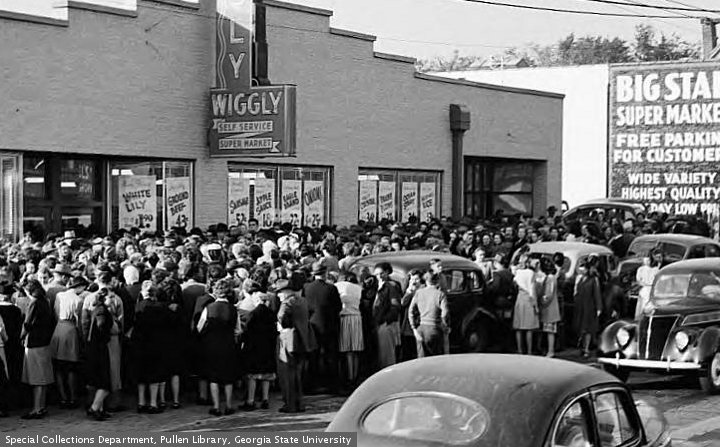
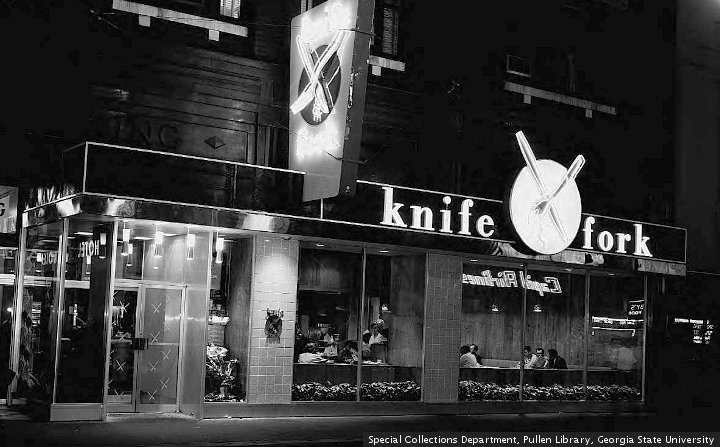
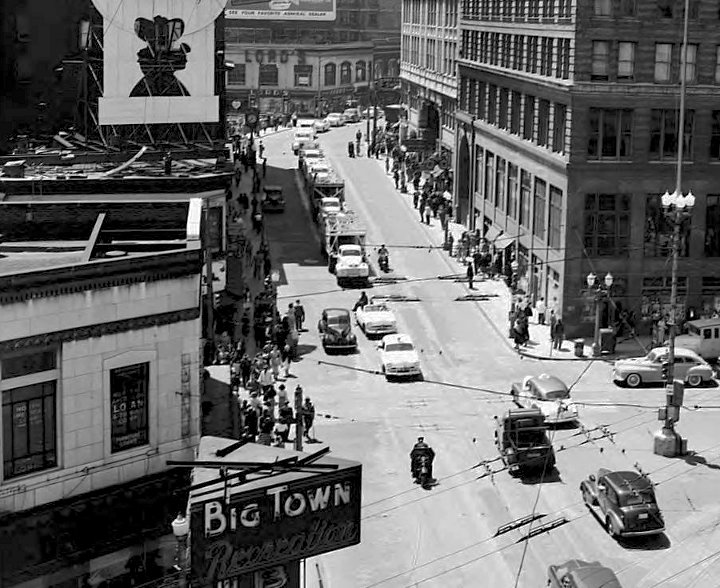

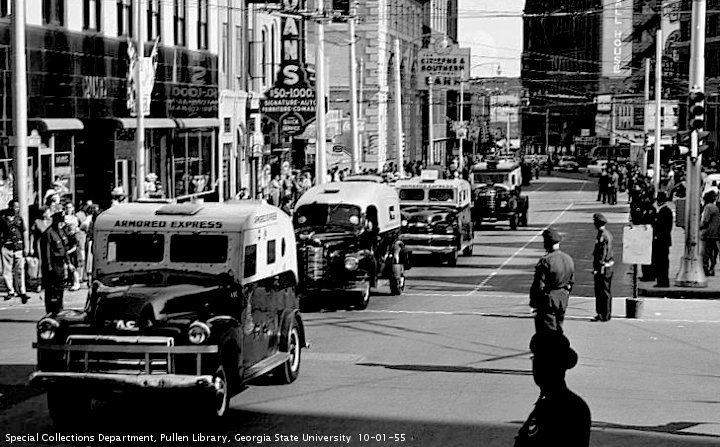
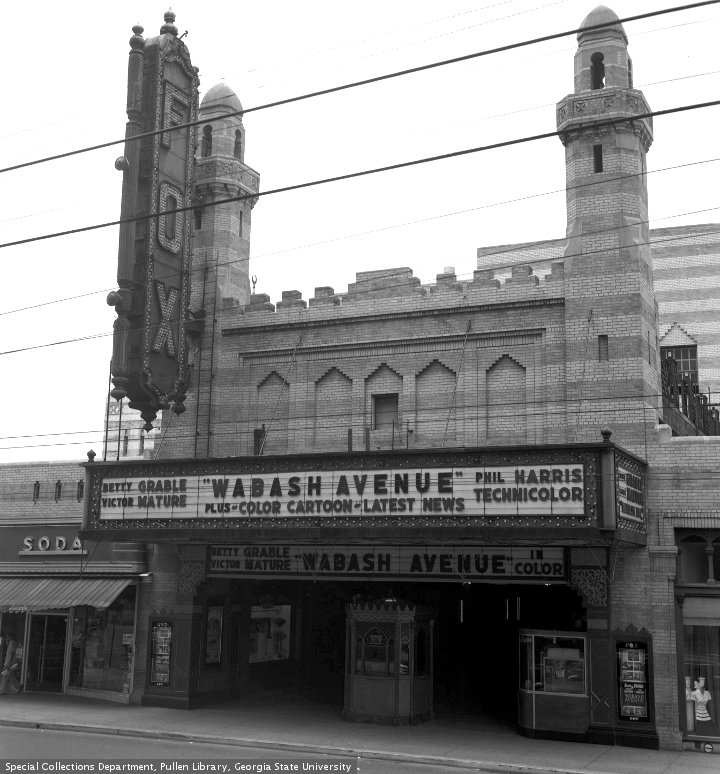



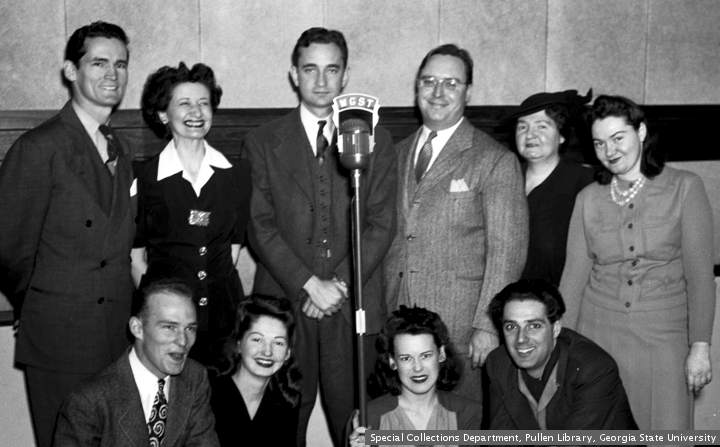
Chamblee54 posted a tribute to The Great Southeast Music Hall a few years ago. This was a concert venue, with no hard liquor and a 500 person capacity, next door to a bowling alley on Piedmont Road. It was about a mile north of Piedmont Park, and in front of the dirt road that became Sidney Marcus Boulevard. GSEMH hosted some great shows. This was when record companies would invest in new bands by putting them on promotional tours, and Atlanta was a popular stop.
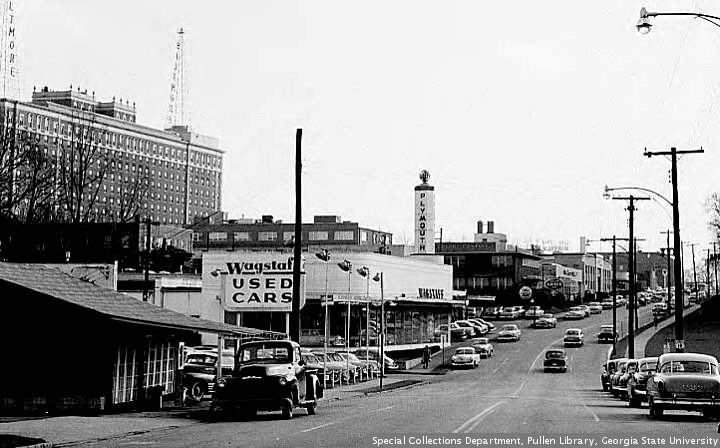
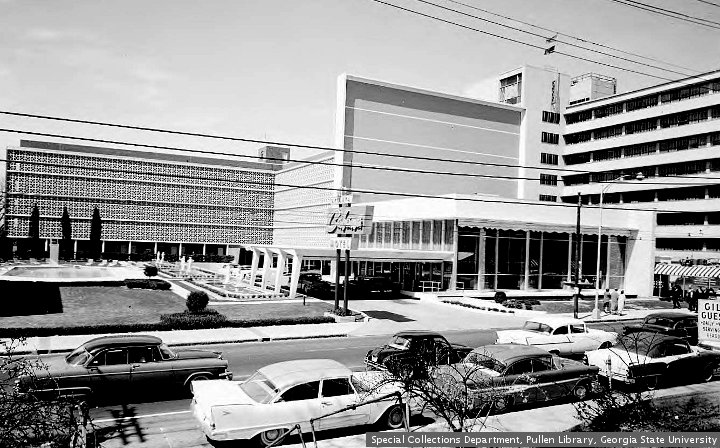
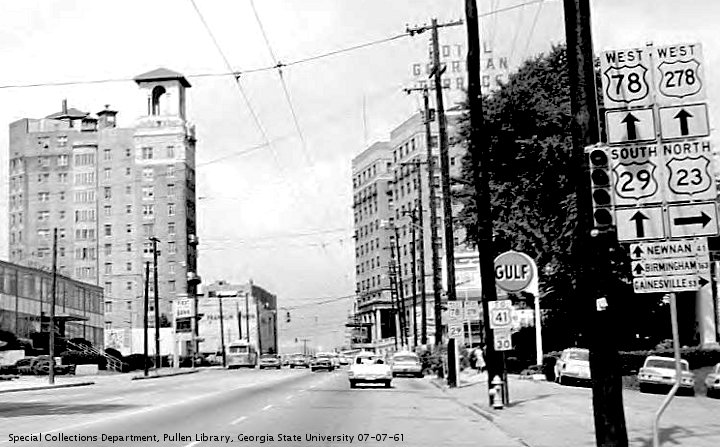
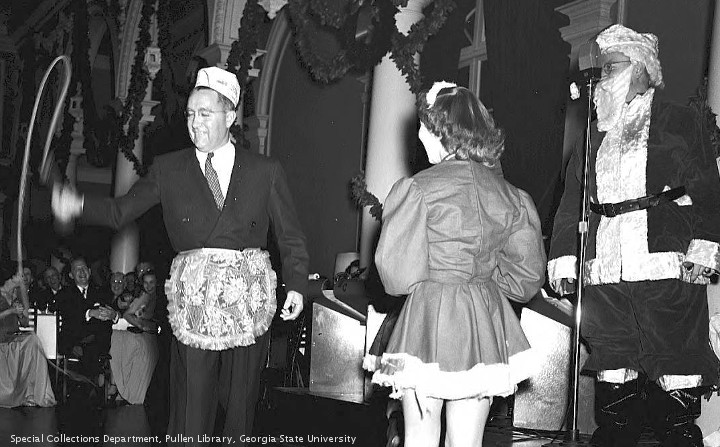
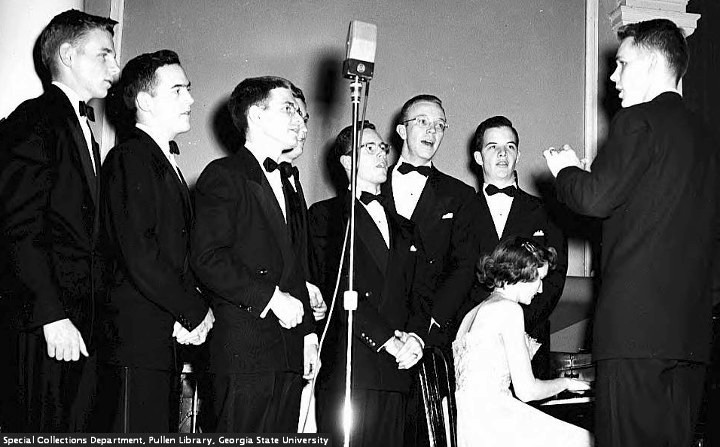
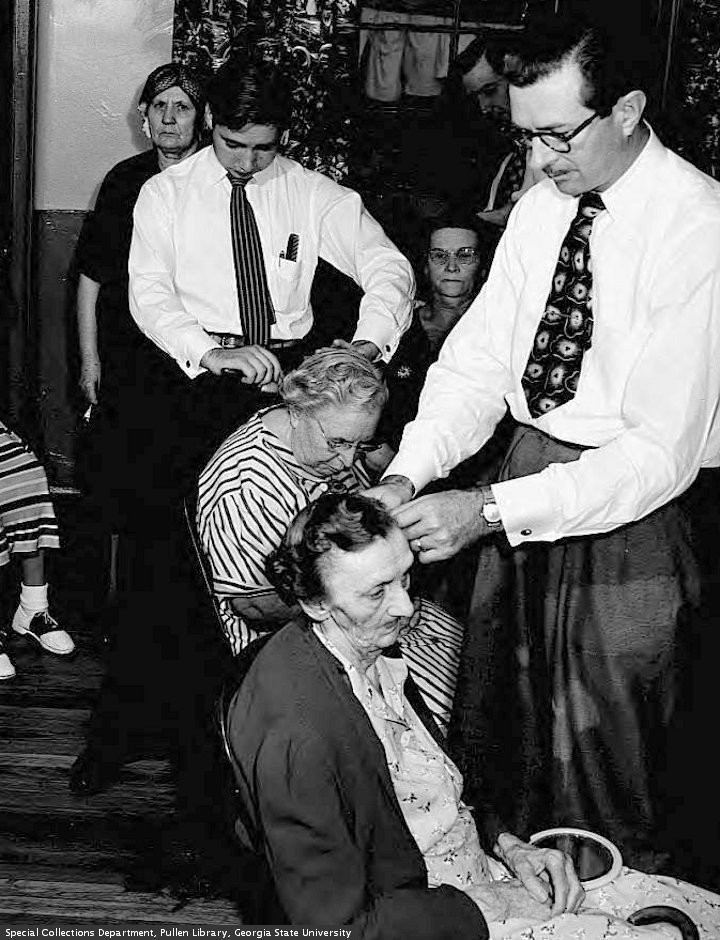
The chamblee54 post attracted 85 comments. This is a slow day for Matt Walsh, but is a record for chamblee54. Most of the comments were boring … great place to play, I saw Steve Martin there and drank too many buckets of beer. A few of these comments tell stories. This post puts the best of the GSEMH comments in one place. Pictures are from “The Special Collections and Archives, Georgia State University Library”. See if you can guess which one was taken at GSEMH.
Neal B. – Som Records June 10, 2012 at 5:18 pm Great reading! Brought back some memories. I saw three shows at the Music Hall – The Dixie Dregs, Elvin Bishop and David Allan Coe. I saw Coe the night before my SATs in 1978 or ’79 and it was (and still is) the most bikers I’ve ever seen in once place. Elvin Bishop just tore it up, really good.
jake lamb May 17, 2011 at 11:34 am Great stories of our past. I can’t remember the shows I went to, but after reading your post it certainly helps clear the fog. As I went thru the list I noted, “Yep I was with CG at that show, that one too, oh yeah, I remember Al saying to you what time it was but didn’t you delete the expletives? Odetta blasting the audience for not showing her the proper respect…what a crybaby! The autographed Marc Almond Album, meeting them backstage to learn how the finger was ripped from Jon’s hand after a tree limb caught on his ring finger when he jumped out of a tree during a photo shoot, resulting in having to learn how to play the saxaphone with one less digit ala Jerry Garcia, and the Hot Tuna Show with Papa John Screech. Flora and Eye Ear Toes logo on his equipment. Was it there that we went on Halloween, me dressed as a bagman for Nixon (A paper sack over my head) and you going as a Bee-keeper (a vegetable strainer over your head)? God we were hilarious! It’s all beginning to come back, but what never went away was remembering the great friend I went with.
Eugene Gray June 24, 2012 at 11:30 am I grew up in Atlanta so thanks for the memories about the shows at The Great Southeast Music Hall. I attended numerous shows between the years 1974 and 1977. From what I can remember (I do have “70s Memory” after all), here’s some highlights: Kinky Friedman — Smoked a huge cigar throughout the show and tipped his ashes in an ash tray attached to his microphone stand. Brought the house down with ‘Sold American.’ David Allan Coe — Played the first half of the show in his “Country Crooner” persona wearing a white suit and white cowboy hat; then played the second half as The Mysterious Rhinestone Cowboy complete with rhinestone jacket and black mask. Played a hard-rockin’ version of ‘Bossier City’ to close out the show. Best memory: New Riders of the Purple Sage Show opened late with only John Dawson (acoustic guitar) and Buddy Cage (pedal steel) taking the stage. Seems their limo made the right exit off of 285 but the other limo kept going. After Dawson telling us that, he said, “Well, you might not have all of us but you do have two.” He and Cage then played a short set together including a beautiful version of ‘Gypsy Cowboy.’ The other members trickled in and started playing, all having a good time with the audience about their site-seeing tour of Atlanta via 285. Fantastic show and my best memory of The Hall. Weirdest experience: For lack of something to do, went to see the New Zealand group Split Enz. A fun but bizarre show with a group outside my typical taste. Sort of a cross between Devo and Bowie and the Bay City Rollers. Truly a strange show. Worst experience: Pure Prairie League — I was always, always let in and served beer before I turned 18 in ’76. Except for one time. Missed Pure Prairie League because we were all carded; the only time I was ever asked for my ID here. Always regretted missing them since the original band broke up right after this tour. Damn. Thanks again for a spot to remember one of the best concert venues (ever) in Atlanta.
Anonymous July 11, 2012 at 3:03 pm Saw many great shows at the Music Hall; Leon Redbone, Don McLean, Bruce Cogburn, but the funniest thing was at Darryl Rhoads show. My girlfriend (now wife of 30 years) went missing when she left to go make the parent check-in phone call. I found her coming around the corner in the hallway, mad at some guy who wouldn’t get off the phone in the lobby. The “guy” was Darryl and he made a few comments to her from the stage during the show just to keep her pissed. It’s funny now, but I could have died then…
Pharmacist Jim April 28, 2013 at 12:01 pm How about when Jimmy Buffett opened for Billy Joel there in 1974. I was a Pharmacist at Eckerd Drugs in the plaza at the time when Jimmy called me and asked me to call his physician in Key West for a prescription–a musician who wanted to get a legitimate prescription, unheard of!!! I was already a Buffett fan, but this just made me respect him that much more and I’ve been a “Parrot Head” since, now so more than ever since I live in Florida.
Anonymous October 23, 2013 at 8:29 am My best friend and I moved to Atlanta (on purpose) for just the summer of ’73 and attended MANY MANY great shows at the Music Hall. It was SO awesome. Saw Billy Joel right around the Captain Jack release time and he asked me out after the show. Of course, I answered with a resounding “NO! Thank You!!” (you see, I was ABSOLUTELY too cute for him…hehe — not to mention, I thought his nose was entirely too big.) Also, saw Jimmy Buffett who talked to us from the stage because we were from Hattiesburg, MS and he had gone to school there at the University of Southern Mississippi. SOOO COOL!!!
Rod Pearman May 28, 2015 at 10:00 am Couldn’t help but have a smile on my face as I read all these comments. THE Great Southeast Music Hall and Emporium………man, the memories. Sometimes I think I could write a book. My roommate and I lived at Bordeaux Apts. on Buford Hwy, which was just a hop skip and jump over to The Hall via the dirt road which is now Sidney Marcus……..we lived there from 1972 to early 1980, which might be a record for two dudes that were party animals to have survived that long in one apartment complex. Anyhow, we frequented GSEMH about once a month when an act we wanted to see was to play there. A couple of my fondest memories now that I’m in my mid 60’s is, it had to be sometime in ’75. We went to see The Dirt Band (one my favorites of all time) The opening act was this guy named Steve Martin, who at that time, no one on the planet had ever heard of him. Well he comes out, and within 30 seconds he has us so cracked up we’re shooting beer out our noses from his comedy. Really funny stuff, and had no idea it was coming. Well, he does his gig, then the Dirt Band comes out. They play a great set, take a little break, and when they came back out on stage, here comes Steve Martin with a banjo over his shoulder. So we’re all thinking this will be something funny, this guy with a banjo. This guy took off on his “ban-jer” and everybody’s jaw hit the floor. He really tore it up. Then the Dirt Band joined in and he played a few tunes with the band. The guy was incredible on the banjo. Then a few months later, Saturday Night Live did their first show, and there’s Steve Martin on TV. I look over at my roommate as he’s looking at me, and we’re both saying in unison, hey, that’s the guy from The Great Southeast Music Hall. Pretty neat that we got to see him when nobody had a clue of his talent. … I got home later that night, and my roommate (yeah, the same guy I mentioned in earlier chapters of this book….) said he saw something on TV that I wouldn’t believe. Turns out, one of the local TV stations (2, 5, or 11) had sent a reporter over to cover the final show of The Great Southeast Music Hall, and while reporting out front of the establishment, there were about a dozen folks standing there sorta behind the reporter. Well, this one fair lady decided to nonchalantly pull a boob out of her tank top and display it for all the world to see, right there on live TV. My roommate said it was something he’d never forget, and we tell the story often. (I wonder who that young lady was sometimes……) but I digress……..
alun v September 23, 2014 at 11:54 am As the Audio Engineer and last guy to walk out the door @ the Lindbergh (and Cherokee Plaza) locations, the walls, painted and autographed by many of the acts, were destroyed; (legal issues I guess). I still have the door to the tech room, signed by Cowboy, a personal favorite. BTW, I saw the concrete sidewalk @ Peaches, with hand / foot prints and signatures, also destroyed and hauled off………lawyers.
julia guthrie November 26, 2015 at 10:38 pm I just caught the 50th anniversary! of Alice’s restaurant masacree on pbs. Brought back the memory of seeing Arlo at the Great Southeast Music Hall. I was drunk(and maybe other) and it was my birthday, so my bf said I should try to talk to Arlo because my name is Guthrie! I was just drunk and young enough to do just that. I finagled my way to the tourbus door(was pretty good at talking my way into things back then), announced that I was a cousin, and ended up sitting at the little bus table, smoking and talking with Arlo and fam. Pretty sure all I added to the conversation was a shit-eating grin, but it was one of the highlights of my youthful escapades. Loved going to the Music Hall! Ah…youth and happy times. I also lived at Bordeaux apts for a while! Peace:)
Rod November 27, 2015 at 11:06 am You can’t beat Alice’s Restaurant on Thanksgiving Day. I used to have an annual tradition of listening to that song on my Technic’s turntable for probably 30+ years, but somehow that tradition faded out a few years ago. (Maybe because my turntable is sitting on a shelf in my closet Definitely great memories at the Hall. Hard to believe it’s been 40 years ago, give or take. I lived at Bordeaux for 7 years through the ’70’s, which might be a record. We were in G building, and had some of the best parties in NE Atlanta. It was standing room only, kegs on the deck, music crankin’ just below distortion level. Those were the days!
BRIAN HOLCOMB June 19, 2015 at 6:00 pm I was a freshman student a GSU in 74 After one of the shows( can’t remember who) I was standing outside in the corridor waiting on some friends. When out the door came my General Chemistry Professor Dr Sears arm in arm with the best looking girl in my class. They turned beet red turned and got away from me as quick as they could. I often wonder if I could have went and bribed an A out of him. LOL
SideShow Bennie December 1, 2015 at 5:24 pm I just stumbled across this article when I Googled GSMH. I lived in Atlanta in 1972-73 and attended a lot of shows at the Broadview Plaza location. I was at one of the Howdy Doody Revival shows that is on the poster pictured in the article. I remember Bob Smith hitting a bad note on the piano, reaching inside and pulling out a pack of ZigZag rolling papers saying, “Clarabelle leaves these things everywhere.” Other shows I remember seeing were Johnny Nash with Sons of The Jungle (The first actual Jamacian Reggae band I ever saw) John Hartford, The Earl Scruggs Revue, Joe Walsh with Barnstorm, Jim Croce, Harry Chapin, Doc Watson, The Hahavishnu Orchestra, Martin Mull, Doug Kershaw. I am pretty sure I was at the Ellen McIllwain and the Breakfast Special shows you mentioned but there were show where a lot of beer buckets were emptied so a lot of those shows are a little hazy. I still have a bucket or two around the house here somewhere. Thanks for the memories!!


Changing The Flag
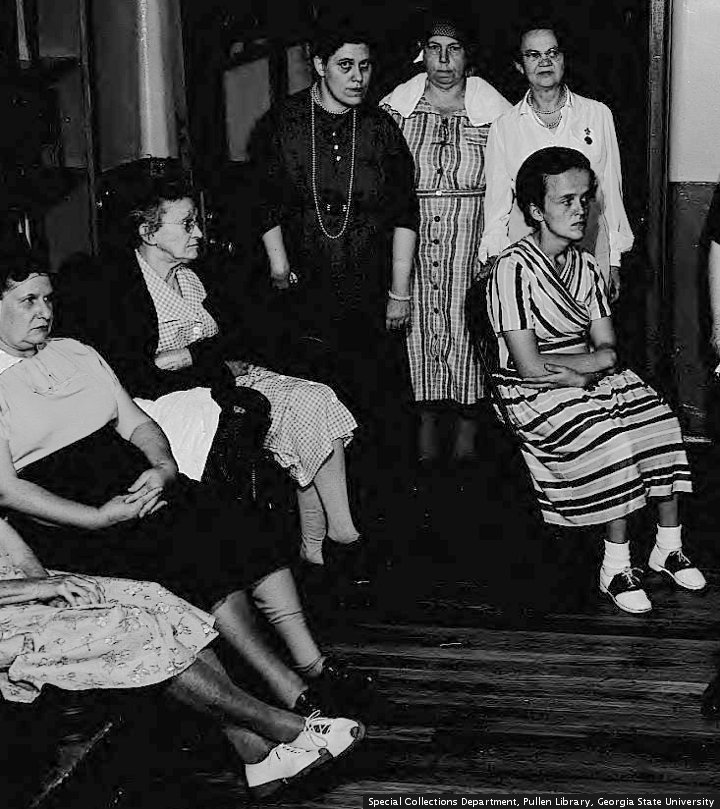
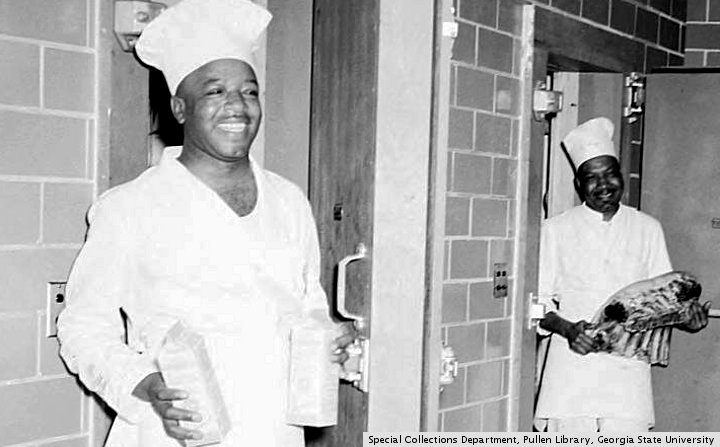

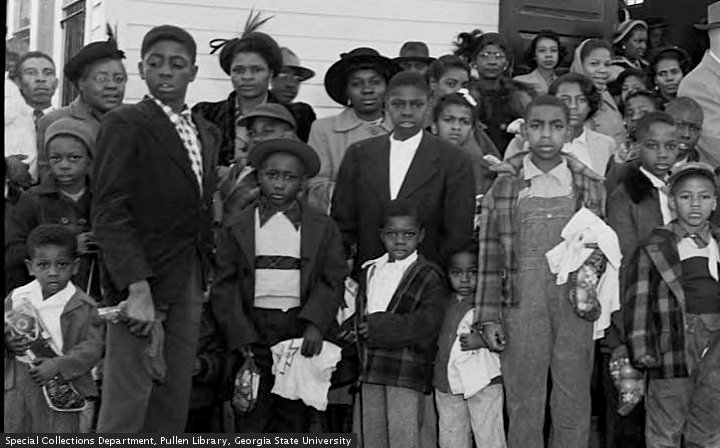
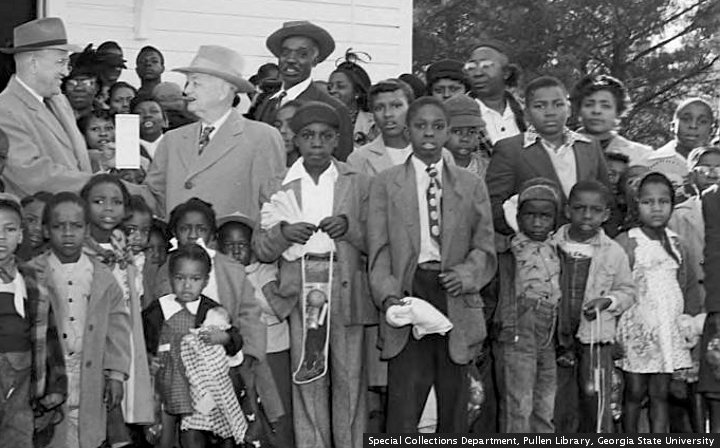
This is a repost, with pictures from “The Special Collections and Archives, Georgia State University Library”. It was written in first person. The issue discussed has mostly faded away, except for a few hardcore cranks. Politicians have found new issues to distract voters when they want to make crooked deals. These things too shall pass away.
In 1994 I was working in downtown Atlanta. I represented my company in a customer’s office, and there was often time with nothing to do. At the very least, there was no time clock. Lunch could slip into overtime with few consequences.
There was an issue in the news in 1994, along with some claims that I did not believe. This issue was whether, or not, to change the state flag. One day, I went to the library, and sat down with the microfilms of the Atlanta Constitution (Covers Dixie Like the Dew) for the Winter of 1956.
One of the fun things about doing research is the things you were not looking for. Elvis Presley made a personal appearance at the Fox Theater. Atlanta Blue opened a facility on West Peachtree Street. There was speculation about whether Dwight Eisenhower would have a different Vice President in the next election. Mr. President had a heart attack in 1955. Many did not want Richard Nixon to be Vice President. 1994 was 20 years after Mr. Nixon resigned the Presidency in disgrace. You wonder how things might have been different if Mr. Eisenhower found a new Vice President.
1956 was two years after Brown vs. The Board of Education, and many were concerned about school desegregation. A bill was proposed in the legislature to make it a felony to advocate integration.
The Governor at the time was Marvin Griffin. Georgia Tech played Pittsburgh in the Sugar Bowl that year, in spite of the fact that Pittsburgh had a black player. The Governor strongly objected, but was overruled. The game was played without incident.
The State of Georgia changed the state flag that year. The new flag had the state seal on a blue stripe next to the St. Andrews Cross, the battle flag of the Confederate States of America.
In 1994 many wanted to change that flag. Some said that it was a symbol of slavery and oppression; others said it was a reminder of battlefield valor. A native southerner, I could appreciate both points of view. I was neutral regarding a change of the flag.
One thing that I did not understand was an argument made for changing the flag. The line in those days…first expressed by Governor Zell Miller and endlessly repeated by the local fishwrapper media … was that the flag had been changed as a protest against desegregation.
I did not believe that for a minute. The legislature in 1956 was not that smart. They were a bunch of white males who were, with a few exceptions, racist, alcoholic crooks. If someone had suggested a flag change as a stand of defiance against desegregation, they might have thought it a good idea, but I somehow doubt that anyone thought like that. This was 1956. The sixties, where protest became the new national pastime, were a few years away.
After a few minutes of searching through the department store ads and sports pages, I found what I was looking for…. the article announcing the flag change. There was no mention of a protest against desegregation. They announced it as a way of honoring the Confederacy. This is in keeping with the times. Georgia in 1956 was still recovering from the War, and the Cult of Honoring the Confederacy was strong. Fergit Hell!
The flag was eventually changed during the administration of Governor Roy Barnes. The new flag was even uglier than the old one, which I did not think was possible. Sonny Perdue defeated Mr. Barnes in his bid for reelection, in no small part because he proposed a referendum on the flag. He forgot this promise as soon as he got into office, but the flag was changed once again.


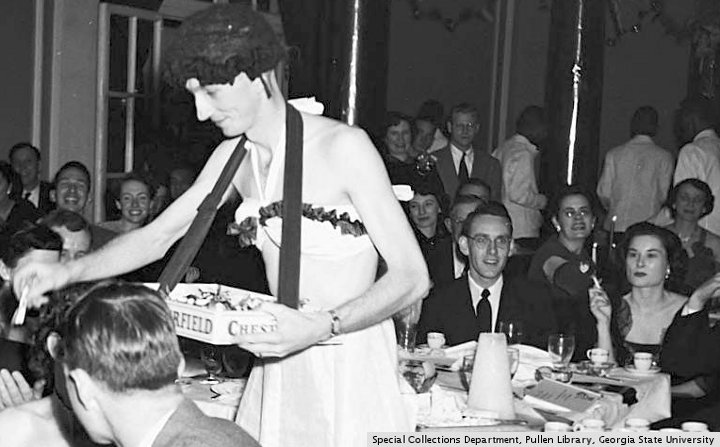

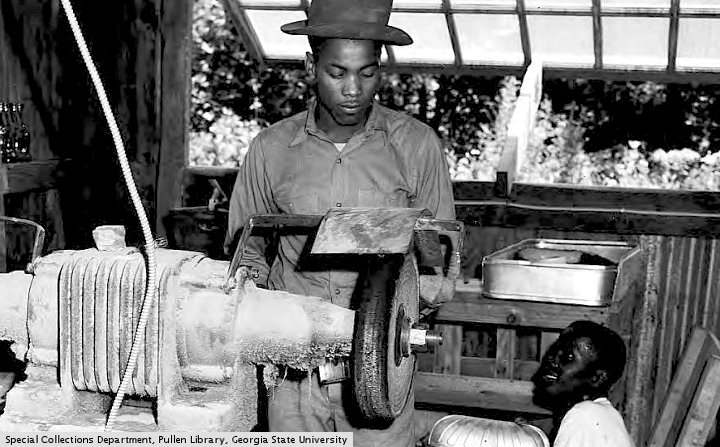


Jean D. McKinnon

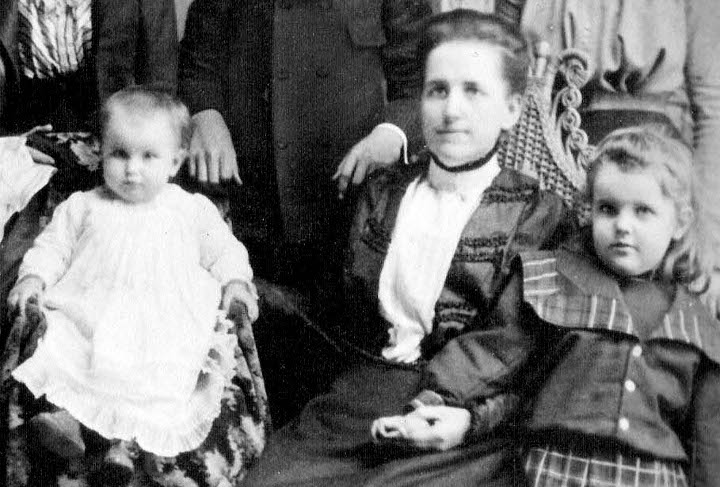


The first picture in this episode is a family portrait of the Quin family in Washington Georgia. The nine surviving children of Hugh Pharr Quin are sitting for the camera. Mr. Quin had joined the Georgia State Troops of the Army of the Confederacy at the age of 16, and after the war went to Washington to live with his sister. Mr. Quin was in the church choir of the First Methodist Church when he met the organist, Betty Lou DuBose. They were married January 22, 1879.
The original name of Mrs. Quin was Louisa Toombs DuBose. She was the daughter of James Rembert DuBose. His brother in law was Robert Toombs, the Secretary of State of the Confederacy, and a man of whom many stories are told.
In this picture, Mrs. Quin is holding the hand of her second youngest daughter so she will not run away. This is Mattie Vance Quin. She is my grandmother.
After the Great War, Mattie Vance Quin was living in Memphis Tennessee, where she met Arthur Dunaway. Mr. Dunaway was a veteran of the war, and was from Paragould, Arkansas. On July 23, 1922 her first Daughter, Jean, was born. This is my mother.
Mr. Dunaway died in 1930, shortly after the birth of his son Arthur. There were hard times and upheaval after this, with the family settling in Atlanta. There her third child Helen Ann Moffat was born on December 12, 1933. This is my Aunt Helen and my mother’s best friend.
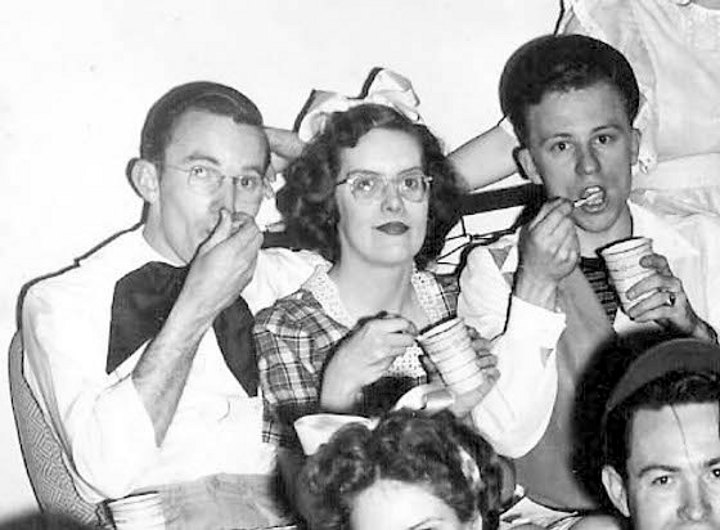
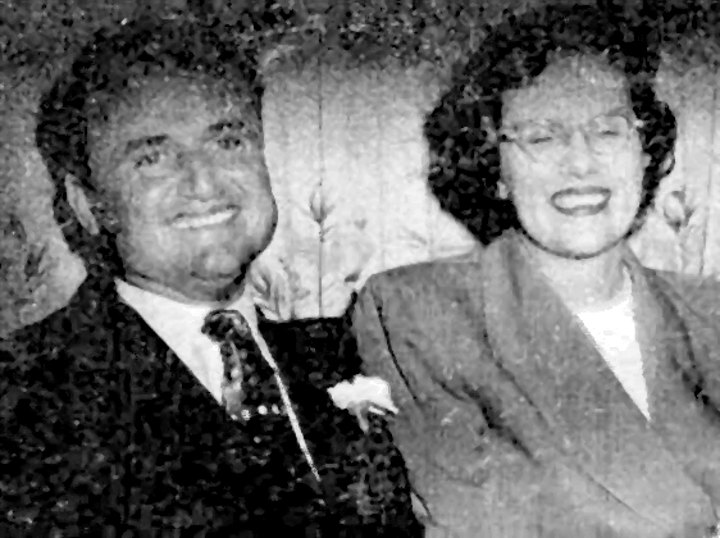


Jean lived for many years with her mother and sister at 939 Piedmont, among other locations. She joined the First Baptist Church and sang in the choir. She got a job with the C&S bank, and was working at the Tenth Street Branch when she met Luther McKinnon. He was a native of Rowland, North Carolina. They were married October 6, 1951.
They moved into the Skyland Apartments, which in those days was out in the country. Mom told a story about Dad taking her home from Choir practice, and going home on the two lane Buford Hiway. There was a man who went to the restaurants to get scraps to feed his pigs, and his truck was always in front of them. This was a serious matter in the summer without air conditioning.
Soon, they moved into a house, and Luther junior was born on May 6, 1954. This is me. Malcolm was born May 10, 1956, which did it for the children.
The fifties were spent on Wimberly Road, a street of always pregnant women just outside Brookhaven. It was a great place to be a little kid.
In 1960, we moved to Parkridge Drive, to the house where my brother and I stay today. The note payment was $88 a month. Ashford Park School is a short walk away…the lady who sold us the house said ” you slap you kid on the fanny and he is at school”.
In 1962, our family followed the choir director from First Baptist to Briarcliff Baptist, which is where my parents remained.
In 1964, Mom went back to work. She ran the drive in window at Lenox Square for the Trust Company of Georgia until it was time to retire. She became a talk radio fan when RING radio started, and was a friend of her customer Ludlow Porch. She gave dog biscuits to customers with dogs.
During this era of change, Mom taught me that all people were good people, be they black or white. This was rare in the south. She later became disgusted with the War in Vietnam, and liked to quote a man she heard on the radio. “How will we get out of Vietnam?”” By ship and by plane”.
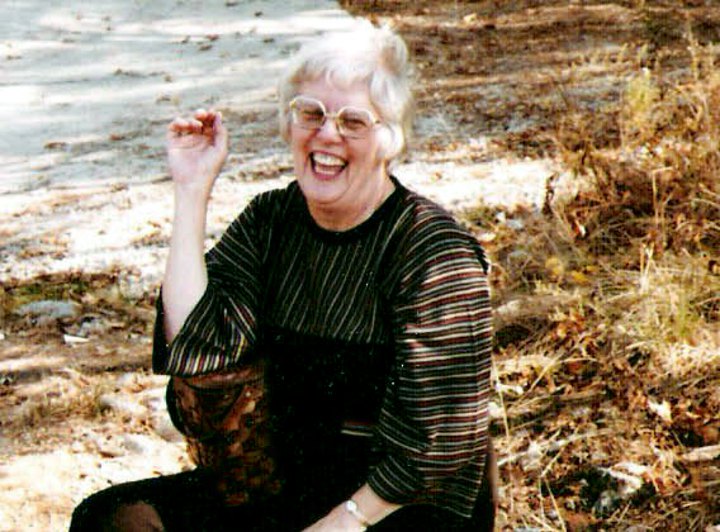
Eventually, it was time to retire. Her and Dad did the requisite traveling, until Dad got sick and passed away February 7,1992. Mom stuck around for a few more years, until her time came December 18, 1998. This is a repost.
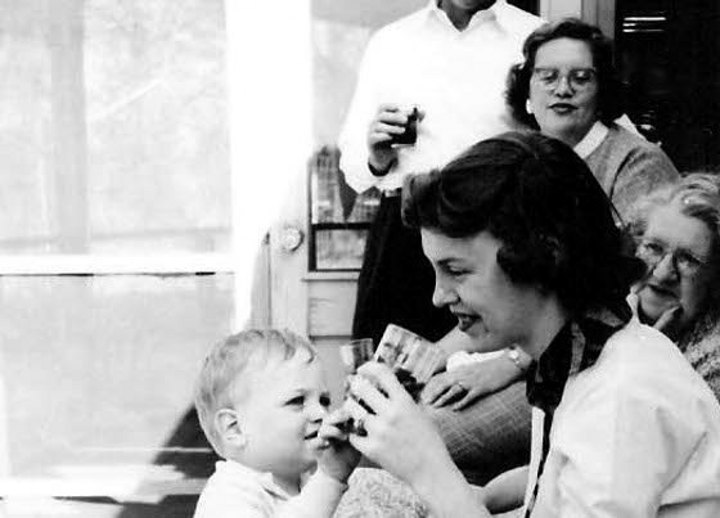

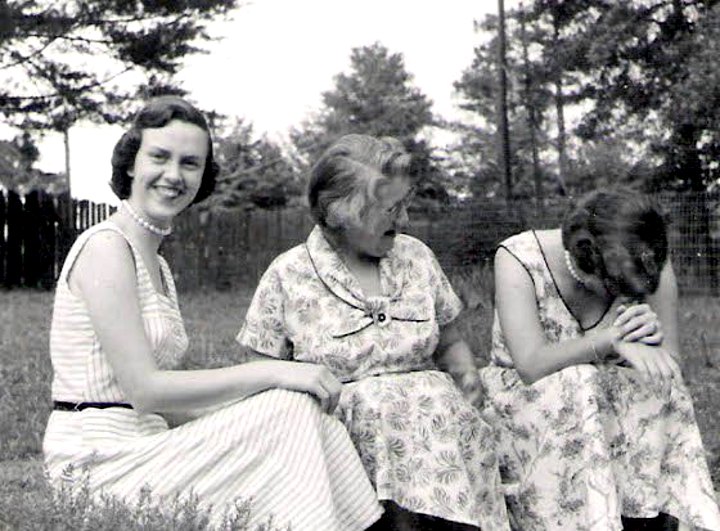
04-30-92
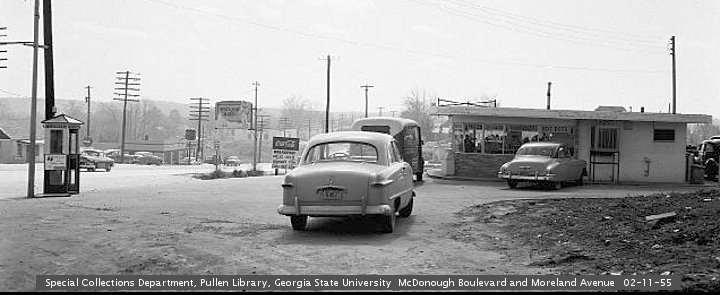
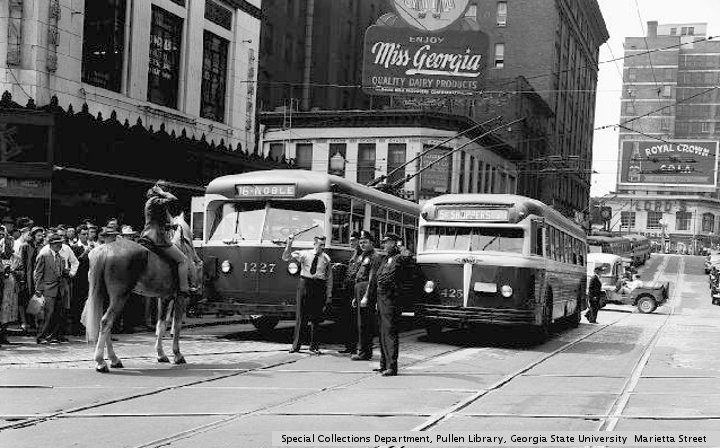

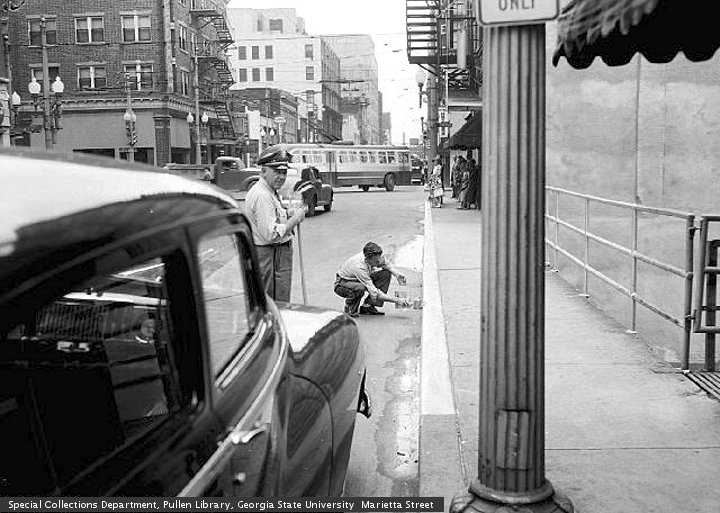

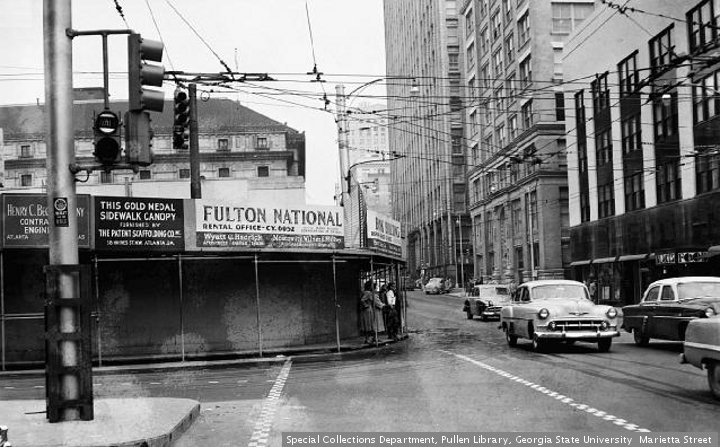

Doug Richards is an Atlanta tv news reporter. He writes a blog, live apartment fire. He was on the scene twenty four years ago. There was a riot downtown. Mr. Richards had a bad night.
PG was working in the Healey building that day. He ran an RMS, or reprographic management service, in an architects office. He had a blueline machine, ran jobs for the customer, and had free time. PG did a lot of exploring, and enjoyed the various events downtown. On April 30, 1992, there was an event he did not enjoy.
The day before, a jury in California issued a verdict. Four policemen were acquitted of wrongdoing in an incident involving Rodney King. The incident had been videotaped, and received widespread attention. The verdict of the jury was not popular. The dissatisfaction spread to Atlanta.
Sometimes, PG thinks he has a guardian angel looking over him. If so, then this thursday afternoon was one of those times. PG went walking out into the gathering storm. He was a block south of the train station at five points, when he saw someone throw a rock into a store front. The sheet metal drapes were rolled down on the outside of the store. PG realized that he was not in a good place, and quickly made his way back to the Healey building.
A group of policeman were lined up in the lobby of the building, wearing flack jackets. One of the police was a white man, who was familiar to workers in the neighborhood. A few weeks before the incident, he had been walking around the neighborhood showing off his newborn baby.
There was very little work done that afternoon in the architect’s office. Someone said not to stand close to the windows, which seemed like a good idea. Fourteen floors below, on Broad Street, the window at Rosa’s Pizza had a brick thrown threw it. There were helicopters hovering over downtown, making an ominous noise.
There was a lot of soul searching about race relations that day. The Olympics were coming to town in four years, and the potential for international disaster was apparent. As it turned out, the disturbance was limited to a few hundred people. It could have been much, much worse. If one percent of the anger in Atlanta had been unleashed that day, instead of .001 percent, the Olympics would have been looking for a new host.
After a while, the people in the office were called into the lobby. The Principal of the firm, the partner in charge of production, walked out to his vehicle with PG and a lady in operations. The principal drove an inconspicuous vehicle, which made PG feel a bit better. PG took his pocketknife, opened the blade, and put it in his back pocket. It probably would not have done him much good.
PG usually took the train downtown. As fate would have it, there was a big project at the main office of redo blue on West Peachtree Street. That is where PG’s vehicle was, in anticipation of working overtime that night. The principal drove PG to this building. PG called his mother, to let her know that he was ok. The Atlanta manager of Redo Blue talked to him, to make sure that he was not hurt.
If PG had not gone back downtown the next day, he might not have ever gone back. He was back at the West Peachtree Street office, and was assured that it was safe to ride the train into town. The Macy’s at 180 Peachtree had plywood nailed over the display windows. A gift shop in the Healey building had a sign in the window, “Black owned business”. Friday May 1, 1992, was a quiet day.
This is a repost. The events of twenty four years ago are mostly forgotten in Atlanta. Pictures are from “The Special Collections and Archives, Georgia State University Library”.





Lewis Grizzard




In the time between 1980 and 1994, if you lived in Atlanta you heard about Lewis Grizzard. Some people loved him. Some did not. He told good old boy stories about growing up in rural Georgia. Many of them were enjoyable. He also made social and political commentaries, which upset a few people. This is a fishwrapper friday repost, with historic pictures from “The Special Collections and Archives, Georgia State University Library”.
PG had mixed feelings about Lewis. The stories about Kathy Sue Loudermilk and Catfish were funny. His opinions about gays, feminists, and anything non redneck could get on your nerves. His column for the fishwrapper upset PG at least twice a week.
In 1982, Lewis (he reached the level of celebrity where he was known by his first name only) wrote a column about John Lennon. Lewis did not understand why Mr. Ono was such a big deal. PG cut the column out of the fishwrapper, and put it in a box. Every few years, PG would be looking for something, find that column, and get mad all over again.
The New Georgia Encyclopedia has a page about Lewis, which expresses some of these contradictions. If Grizzard’s humor revealed the ambivalence amid affluence of the Sunbelt South, it reflected its conservative and increasingly angry politics as well. He was fond of reminding fault-finding Yankee immigrants that “Delta is ready when you are,” and, tired of assaults on the Confederate flag, he suggested sarcastically that white southerners should destroy every relic and reminder of the Civil War (1861-65), swear off molasses and grits, drop all references to the South, and begin instead to refer to their region as the “Lower East.” Grizzard also wore his homophobia and hatred for feminists on his sleeve, and one of the last of his books summed up his reaction to contemporary trends in its title, Haven’t Understood Anything since 1962 and Other Nekkid Truths (1992).
In the end, which came in 1994, when he was only forty-seven, the lonely, insecure, oft-divorced, hard-drinking Grizzard proved to be the archetypal comic who could make everyone laugh but himself. He chronicled this decline and his various heart surgeries in I Took a Lickin’ and Kept on Tickin’, and Now I Believe in Miracles (1993), published just before his final, fatal heart failure.
As you may have discerned, Lewis McDonald Grizzard Jr. met his maker on March 20, 1994. He was 47. There was a valve in his heart that wasn’t right. The good news is that he stayed out of the army. At the time, Vietnam was the destination for most enlistees. The bad news is that his heart problems got worse and worse, until it finally killed him.
Sixteen years later, PG found a website, Wired for Books. It is a collection of author interviews by Don Swaim, who ran many of them on a CBS radio show called Book Beat. There are two interviews with Lewis Grizzard. The first one was done to promote My Daddy Was a Pistol and I’m a Son of A Gun. This was the story of Lewis Grizzard Senior, who was another mixed bag.
PG found himself listening to this chat, and wondered what he had been missing all those years. The stories and one liners came flowing out like the Chattahoochee going under the perimeter highway. Daddy Grizzard was a soldier, who went to war in Europe and Korea. The second one did something to his mind, and he took to drinking. He was never quite right the rest of his life. His son from adored him anyway. When you put yourself in those loafers for a while, you began to taste the ingredients in that stew we called Lewis Grizzard.
PG still remembers the anger that those columns caused … he has his own story, and knows when his toes are stepped on. The thing is, after listening to this show, PG has an idea of why Lewis Grizzard wrote the things that he did. Maybe PG and Lewis aren’t all that different after all.




Atlanta Rising
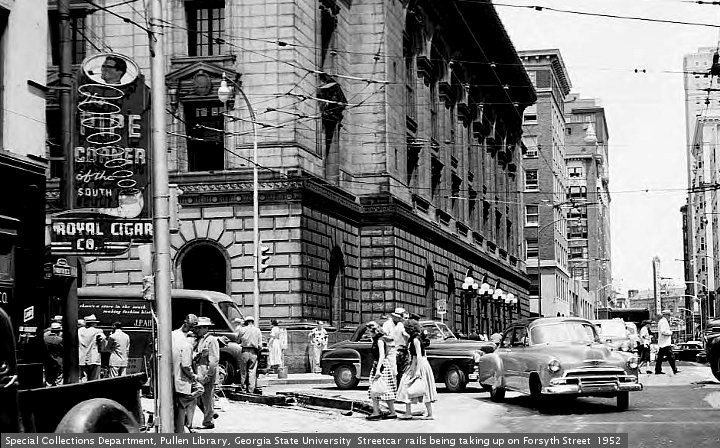


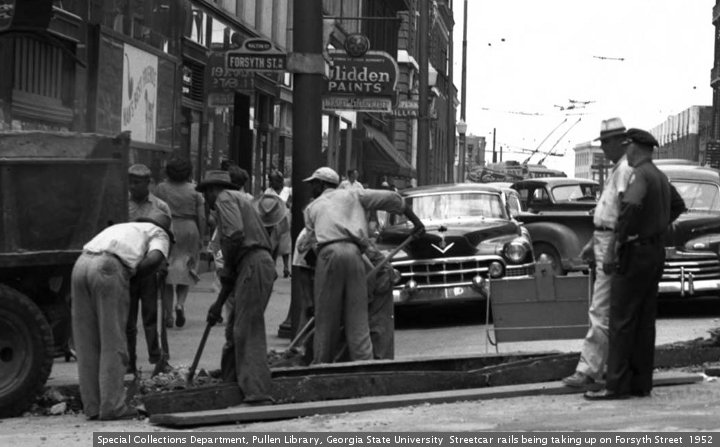
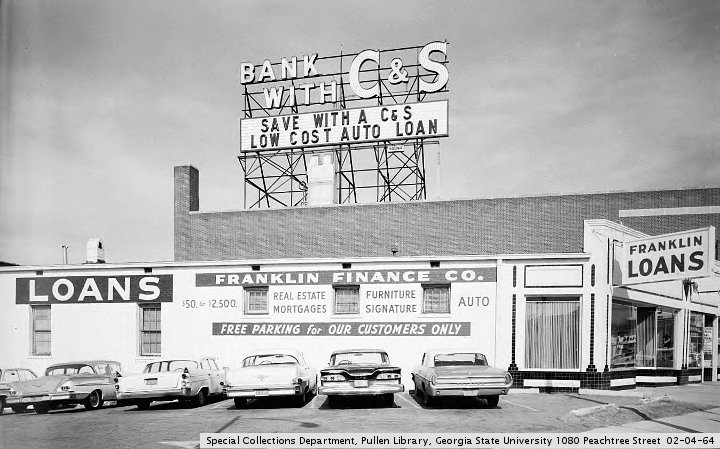
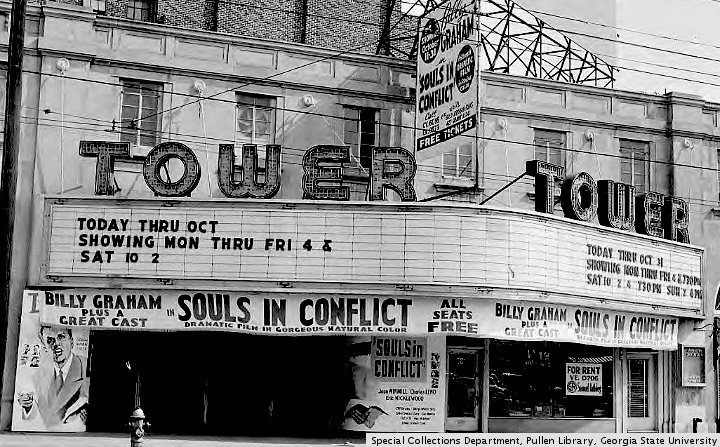
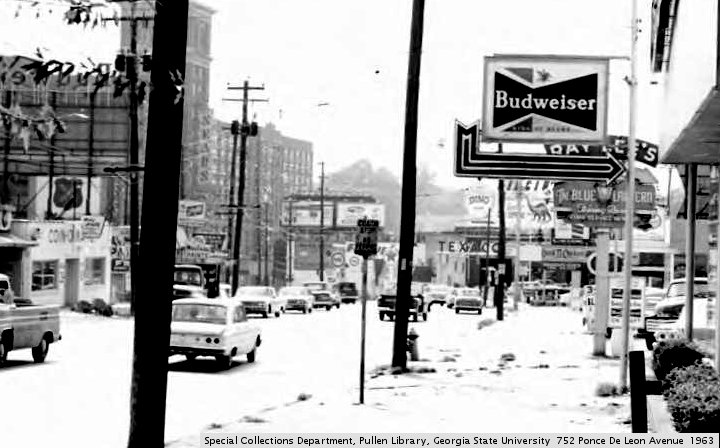
Atlanta Rising: The Invention of an International City 1946-1996 is on the shelf at the Chamblee library. This book is a history of Atlanta in the modern era, written by former fishwrapper scribe Frederick Allen. This is a repost, with pictures from “The Special Collections and Archives, Georgia State University Library”.
The story begins in 1948. AR is weighted more to the older part of the story. The main text is 248 pages. On page 124, Ivan Allen has just built a controversial roadblock on Peyton Road, which would be in 1962. The further along in the story, the fewer details are included. The first big story is when Georgia had two governors. This is one of the best descriptions of the two Governors controversy around, and does not mention Ben Fortson’s wheelchair cushion.
The mayor at the start of the story is William B. Hartsfield. “Willie B” was a leader in creating the Atlanta Airport, and in building it into the powerhouse it is today. He was mayor until 1961, when Ivan Allen Jr. moved into the office.
AR has many moments of unintentional irony. When you read a book 18 years after it was written, and fifty years after the events in the book, you see things that could not have been imagined before. In 1960, many of the political-business elite thought it was time for Mr. Hartsfield to retire. Among his shortcomings was an indifference to sports. Mr. Hartsfield thought that a new stadium would be too great a drain on the city’s taxpayers. Fifty four years, and three stadiums, later, the power elite is going to build another stadium. Atlanta Stadium cost eighteen million dollars. The Blank bowl will cost over a billion. (In the past year, a plan to move the Braves to Smyrna was announced.)
One of the big stories here is civil rights. Atlanta came out of that struggle looking pretty good. It was a combination of image conscious businessmen, enlightened black leadership, and a huge helping of dumb luck. In 1961, the city was under federal pressure to integrate the schools. The state was firm in opposition, and the city wasn’t crazy about the idea anyway. Then, another federal court ordered the integration of the University of Georgia. Since the people would not stand for messing with their beloved University, the state laws forbidding integration were quietly repealed. The city schools were integrated with a minimum of fuss. (The book tells this story much better than a slack blogger.)
The controversy about the 1956 model state flag was going full steam when AR was written. The book has some legislative records, which for some reason never made it into the fishwrapper. There is no clear cut answer as to why the legislature changed the state flag. It was mentioned that at the national political conventions, you could not have a written sign, but you could wave a state flag. This controversy provided a diversion from gold dome crookedness, and hopefully has been laid to rest.
A man named Lester Maddox sold fried chicken, and ran for public office. AR describes Lester as looking a bit like an angry chicken. Through a series of constitutional convulsions, Lester was elected Governor in 1966. The state survived his tenure. In the seventies, when Jimmy Carter was running for President, Lester said a lot of rude things about Jimmy, helping the smiling peanut farmer get elected. In another turn of fate, Lester Maddox died June 25, 2003. This was two days after the eternal departure of Maynard Jackson, the first black Mayor of Atlanta.
The book ends with the 1996 Olympics looming over the city. Billy Payne led a smart campaign to secure the games for Atlanta. One of his moves was to keep Jimmy Carter and Ted Turner out of the action. After the 1980 boycott, and the Goodwill Games, neither person was popular with the I.O.C. The book was published before 1996. The Olympics were a blast.




 Chamblee54
leave a comment