The Cynic’s Word Book S







What follows are selections from The Devil’s Dictionary, by Ambrose Bierce. TDD began as a newspaper column, and was later published as The Cynic’s Word Book. TDD is in the public domain. TDD is a dictionary, going from SE to SY. Today’s selection covers x to x. More selections are available. A – D E – G H – I J – L M – O P – R R – S
SERIAL, n. A literary work, usually a story that is not true, creeping through several issues of a newspaper or magazine. Frequently appended to each installment is a “synposis of preceding chapters” for those who have not read them, but a direr need is a synposis of succeeding chapters for those who do not intend to read them. A synposis of the entire work would be still better. (Mr. Bierce probably meant to say synopsis. I looked into this. All google references to synposis point back to synopsis. The rabbit hole is deeper than that. I wondered what the author’s middle name was. When I learned that it was Gwinnett, like the county, I was charmed. The wikipedia outpost had more fascinating details, which I had to turn away from if I am ever going to finish this post.)
SIREN, n. A musical prodigy famous for a vain attempt to dissuade Odysseus from a life on the ocean wave. Figuratively, any lady of splendid promise, dissembled purpose and disappointing performance.
SOPHISTRY, n. The controversial method of an opponent, distinguished from one’s own by superior insincerity and fooling. This method is that of the later Sophists, a Grecian sect of philosophers who began by teaching wisdom, prudence, science, art and, in brief, whatever men ought to know, but lost themselves in a maze of quibbles and a fog of words.
SOUL, n. A spiritual entity concerning which there hath been brave disputation. Plato held that those souls which in a previous state of existence (antedating Athens) had obtained the clearest glimpses of eternal truth entered into the bodies of persons who became philosophers. Plato himself was a philosopher. The souls that had least contemplated divine truth animated the bodies of usurpers and despots. Dionysius I, who had threatened to decapitate the broad-browed philosopher, was a usurper and a despot. Plato, doubtless, was not the first to construct a system of philosophy that could be quoted against his enemies; certainly he was not the last.
“Concerning the nature of the soul,” saith the renowned author of Diversiones Sanctorum, “there hath been hardly more argument than that of its place in the body. Mine own belief is that the soul hath her seat in the abdomen—in which faith we may discern and interpret a truth hitherto unintelligible, namely that the glutton is of all men most devout. He is said in the Scripture to ‘make a god of his belly’ —why, then, should he not be pious, having ever his Deity with him to freshen his faith? Who so well as he can know the might and majesty that he shrines? Truly and soberly, the soul and the stomach are one Divine Entity; and such was the belief of Promasius, who nevertheless erred in denying it immortality. He had observed that its visible and material substance failed and decayed with the rest of the body after death, but of its immaterial essence he knew nothing. This is what we call the Appetite, and it survives the wreck and reek of mortality, to be rewarded or punished in another world, according to what it hath demanded in the flesh. The Appetite whose coarse clamoring was for the unwholesome viands of the general market and the public refectory shall be cast into eternal famine, whilst that which firmly though civilly insisted on ortolans, caviare, terrapin, anchovies, pates de foie gras and all such Christian comestibles shall flesh its spiritual tooth in the souls of them forever and ever, and wreak its divine thirst upon the immortal parts of the rarest and richest wines ever quaffed here below. Such is my religious faith, though I grieve to confess that neither His Holiness the Pope nor His Grace the Archbishop of Canterbury (whom I equally and profoundly revere) will assent to its dissemination.”
SUCCESS, n. The one unpardonable sin against one’s fellows. In literature, and particularly in poetry, the elements of success are exceedingly simple, and are admirably set forth in the following lines by the reverend Father Gassalasca Jape, entitled, for some mysterious reason, “John A. Joyce.”
The bard who would prosper must carry a book, · Do his thinking in prose and wear
A crimson cravat, a far-away look · And a head of hexameter hair.
Be thin in your thought and your body’ll be fat; · If you wear your hair long you needn’t your hat.
SUFFRAGE, n. Expression of opinion by means of a ballot. The right of suffrage (which is held to be both a privilege and a duty) means, as commonly interpreted, the right to vote for the man of another man’s choice, and is highly prized. Refusal to do so has the bad name of “incivism.” The incivilian, however, cannot be properly arraigned for his crime, for there is no legitimate accuser. If the accuser is himself guilty he has no standing in the court of opinion; if not, he profits by the crime, for A’s abstention from voting gives greater weight to the vote of B. By female suffrage is meant the right of a woman to vote as some man tells her to. It is based on female responsibility, which is somewhat limited. The woman most eager to jump out of her petticoat to assert her rights is first to jump back into it when threatened with a switching for misusing them.
SYCOPHANT, n. One who approaches Greatness on his belly so that he may not be commanded to turn and be kicked. He is sometimes an editor.
SYMBOL, n. Something that is supposed to typify or stand for something else. Many symbols are mere “survivals”—things which having no longer any utility continue to exist because we have inherited the tendency to make them; as funereal urns carved on memorial monuments. They were once real urns holding the ashes of the dead. We cannot stop making them, but we can give them a name that conceals our helplessness.
SYMBOLIC, adj. Pertaining to symbols and the use and interpretation of symbols.
They say ’tis conscience feels compunction; · I hold that that’s the stomach’s function,
For of the sinner I have noted · That when he’s sinned he’s somewhat bloated,
Or ill some other ghastly fashion · Within that bowel of compassion.
True, I believe the only sinner · Is he that eats a shabby dinner.
You know how Adam with good reason, · For eating apples out of season,
Was “cursed.”But that is all symbolic: · The truth is, Adam had the colic. · G.J.
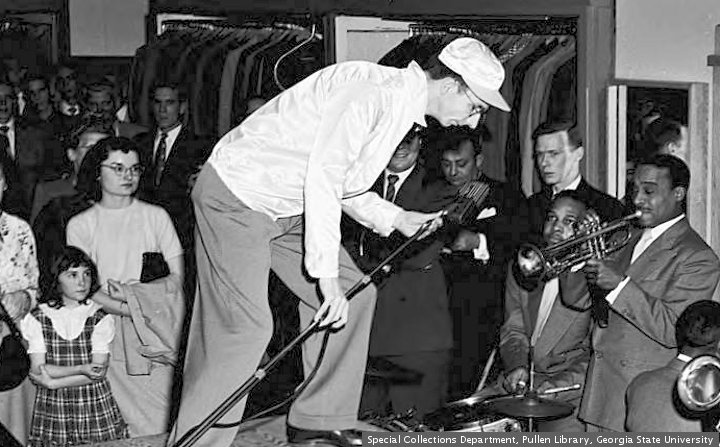
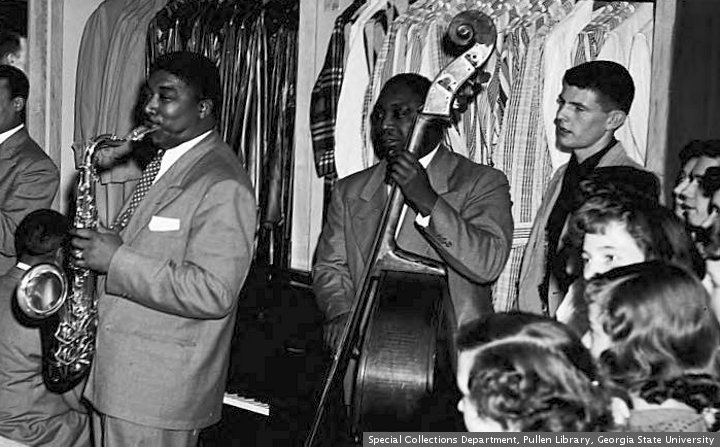
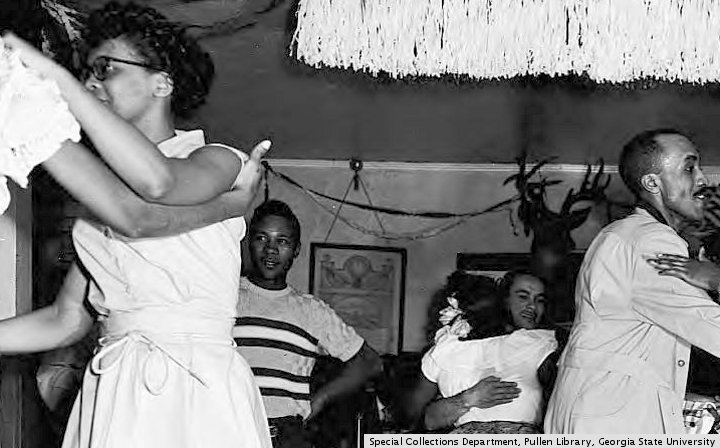
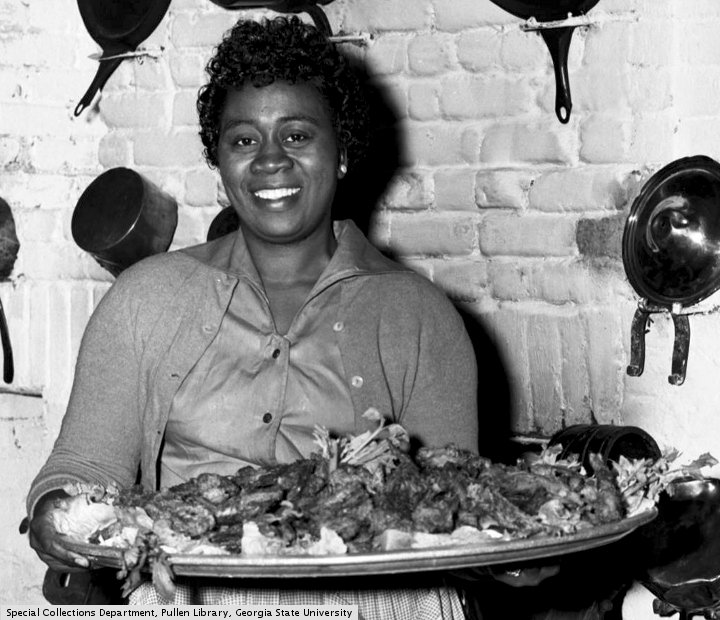
The classical references in this text have not been verified. Pictures today are from Special Collections and Archives, Georgia State University Library. Charles D. Jackson took the social media picture October 10, 1951. “Zenas Sears, WGST Radio personality, promoting “20 Grand Cream Ale,” for the Gate City Beverage Company, 350 Marietta Street, Atlanta, Georgia ©Luther Mckinnon 2025 · selah





 Chamblee54
[…] art and, in brief, whatever men ought to know, but lost themselves in a maze of quibbles and a fog of words. · is ___ a content creator affiliated with Chorus · i am at peace about g-d and about death, i […]