Desiderata





 .
.







A poem, of unknown origin, was found in a Baltimore church. It was revived by a Lawyer, who lived in Terre Haute, IN. He liked to read it his friends, and his lips were moving. The attorney, Max Ehrmann, copyrighted this poem in 1927. Rumor has it that the manuscript was in an ambulance Mr. Ehrmann was following. How the accident victim came to possess this document is a mystery.
Mr. Ehrmann, the poet laureate of Terre Haute, wrote in his diary “I should like, if I could, to leave a humble gift — a bit of chaste prose that had caught up some noble moods”. The poem is Desiderata and is a favorite of gift shops the world over.
In 1956, Rev. Frederick Kates became the rector of St. Paul’s Episcopal Church in Baltimore, MD. He had found a copy of “Desiderata”, without the copyright notice. He printed a handout for his congregation on church stationary. At the top of the page was the notation “Old St. Paul’s Church, Baltimore A.C. 1692.” As the sixties devolved, the poem became famous.
Desiderata was the text of a recording. The entertainer, Les Crane, found a poster, in a Baltimore church gift shop. He thought the text was in the public domain, when in fact it is copyrighted. Mr. Crane was taken to court, and forced to pay the owners of the copyright. It seems that Mr. Ehrmann used “Desiderata” in a Christmas greeting, without citing the copyright. Later,during World War II, Ehrmann allowed a friend – Army psychiatrist Dr. Merrill Moore – to hand out more than 1,000 copies of the poem to his soldier-patients, without the copyright.
Don’t copyrights expire, get renewed, and then expire again? If a work was written in 1927, doesn’t it go into the public domain 83 years later. Fleurdelis says the copywright question depends on your point of view, and place of residence. Robinsweb tells of being forced to remove “Desiderata” from her site, because of a complaint by the copyright owner. Remember, we are dealing with a legal concept, as it relates to a poem, allegedly written by a lawyer.
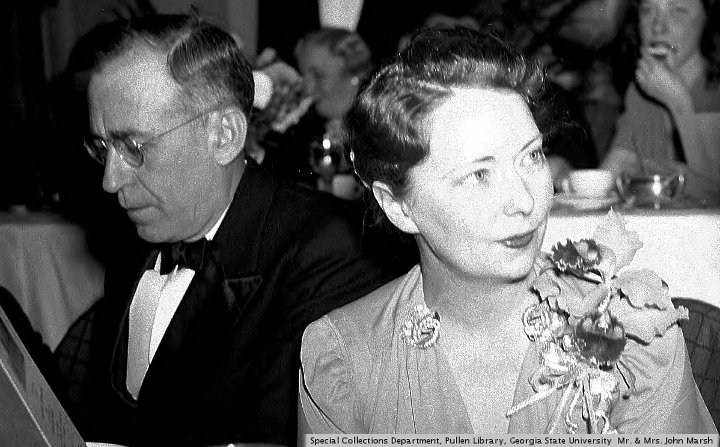
National Lampoon produced a new translation, Deteriorata. This is a repost. Pictures are from Special Collections and Archives, Georgia State University Library










 Chamblee54
leave a comment