Who Invented The Word Racism?





Writers tackle was rampaging through Brookhaven. PG looked in a list of old product, and found a feature built on the output of Teju Cole. He has a dandy article, at the New Yorker, about what is antiseptically called drone warfare. It is the twitter feed that gets attention. This is a repost.
@tejucole George Carlin’s original seven dirty words can all be said freely now. The one word you can’t say, and must never print, is “racist.”
The quote marks lend mystery to the tweet. Does he mean the dreaded “n word”? Or does he mean that other six letter slur? There is no shortage of people screaming racist in Georgia, often at the slightest provocation. There is an attitude that racism is the worst thing you can be accused of. Once accused, you are guilty until proven innocent. If you do a bit of research into racism, the word, you will see some interesting things.
The concept of populations not getting along is as old as mankind. The word racism apparently did not exist before 1933 (merriam webster), or 1936 (dictionary dot com). (In 2020, both of these sources have updated their notes, on the original use of the word “racism.”)
Something called the Vanguard News Network had a forum once, What is the true origin of the term racism? This forum is problematic, as VNN seems to be a white supremacist affair. One of the reputed coiners of the R word was Leon Trotsky, also referred to as Jew Communist. Another Non English speaker who is given “credit” for originating the phrase is Magnus Hirschfeld. As for English, the word here is: “American author Lawrence Dennis was the first to use the word, in English, in his 1936 book “The coming American fascism”.”
The terms racist and racism seem to be used interchangeably in these discussions. This is in keeping with the modern discussion. As Jesus worshipers like to say, hate the sin, love the sinner.
The Online Etymology Dictionary has this to add: “racist 1932 as a noun, 1938 as an adjective, from race (n.2); racism is first attested 1936 (from French racisme, 1935), originally in the context of Nazi theories. But they replaced earlier words, racialism (1871) and racialist (1917), both often used early 20c. in a British or South African context. In the U.S., race hatred, race prejudice had been used, and, especially in 19c. political contexts, negrophobia.”
Pictures are from The Library of Congress. Part two is now available.





Last week this blog ran a story about the word racism. The story stated that the earliest use of the r-word was 1932. A comment led to The Ugly, Fascinating History Of The Word ‘Racism.’ Apparently, Col. Richard Henry Pratt used the word in 1902.
“The Oxford English Dictionary’s first recorded utterance of the word racism was by a man named Richard Henry Pratt in 1902. “Segregating any class or race of people apart from the rest of the people kills the progress of the segregated people or makes their growth very slow. Association of races and classes is necessary to destroy racism and classism.” Col. Pratt was speaking at the Lake Mohonk Conference of Friends of the American Indian.
It is always good to check out the context. Col. Pratt spoke at the Fourth session, Thursday Night, October 23, 1902. The event was well documented. There are some other noteworthy quotes.
“We have brought into our national life nearly forty times as many negroes as there are Indians in the United States. They are not all together citizen and equal yet, but they are with us and of us; distributed among us, coming in contact with us constantly, they have lost their many languages and their old life, and have accepted our language and our life and become a valuable part of our industrial forces.” The text capitalizes Indian, and presents Negro in lower case.
“It is the greatest possible wrong to prolong their Indianism, whether we do it for humanitarian or so-called scientific reasons. … The ethnologists prefer the Indian kept in his original paint and feathers, and as part and parcel of every exposition on that line. … It will be a happy day for the Indians when their ethnological value is of no greater importance than that of the negro and other races which go to make up our population.”
Col. Pratt “is best known as the founder and longtime superintendent of the Carlisle Indian Industrial School at Carlisle, PA.” While progressive for the times, many of the school’s policies were harsh.
“He pushed for the total erasure of Native cultures among his students. … The students’ native tongues were strictly forbidden — a rule that was enforced through beating. Since they were rounded up from different tribes, the only way they could communicate with each other at the schools was in English. … “In Indian civilization I am a Baptist,” Pratt once told a convention of Baptist ministers, “because I believe in immersing the Indians in our civilization and when we get them under, holding them there until they are thoroughly soaked.” … Pratt also saw to it that his charges were Christianized. Carlisle students had to attend church each Sunday, although he allowed each student to choose the denomination to which she would belong.” Carlisle closed in 1918.
“In 1875, Captain Richard Pratt escorted 72 Indian warriors suspected of murdering white settlers to Fort Marion in St. Augustine, FL. Once there, Pratt began an ambitious experiment which involved teaching the Indians to read and write English, putting them in uniforms and drilling them like soldiers. … News of Pratt’s experiment spread. With the blessing of Congress, Pratt expanded his program by establishing the Carlisle School for Indian Students to continue his “civilizing” mission. Although liberal policy for the times, Pratt’s school was a form of cultural genocide. The schools continued into the ’30s until administrators saw that the promised opportunities for Indian students would not materialize, theat they would not become “imitation white men.”
“Beginning in 1887, the federal government attempted to “Americanize” Native Americans, largely through the education of Native youth. By 1900 thousands of Native Americans were studying at almost 150 boarding schools around the United States. The U.S. Training and Industrial School, founded in 1879 at Carlisle Barracks, was the model for most of these schools. Boarding schools like Carlisle provided vocational and manual training and sought to systematically strip away tribal culture. They insisted that students drop their Indian names, forbade the speaking of native languages, and cut off their long hair.” As Col. Pratt said at the LMCFAI, “I also endorse the Commissioner’s short hair order. It is good because it disturbs old savage conditions.”
Col. Pratt was known for saying “Kill the Indian, and Save the Man” He probably meant that you should destroy the native culture, so the man inside could flourish. It is easy to misunderstand this type of rhetoric. The source of this phrase: “Official Report of the Nineteenth Annual Conference of Charities and Correction (1892), 46–59. Reprinted in Richard H. Pratt, “The Advantages of Mingling Indians with Whites,” Americanizing the American Indians: Writings by the “Friends of the Indian” 1880–1900 (Harvard University Press, 1973), 260–271.” There are some tasteful quotes.
“Inscrutable are the ways of Providence. Horrible as were the experiences of its introduction, and of slavery itself, there was concealed in them the greatest blessing that ever came to the Negro race—seven millions of blacks from cannibalism in darkest Africa to citizenship in free and enlightened America; not full, not complete citizenship, but possible—probable—citizenship.” Col. Pratt used African Americans as an example of how to assimilate Native Americans.
“The five civilized tribes of the Indian Territory—Cherokees, Choctaws, Chickasaws, Creeks, and Seminoles—have had tribal schools until it is asserted that they are civilized; yet they have no notion of joining us and becoming a part of the United States. Their whole disposition is to prey upon and hatch up claims against the government, and have the same lands purchased and repurchased and purchased again, to meet the recurring wants growing out of their neglect and inability to make use of their large and rich estate.”
The best known student at the Carlisle School was Jim Thorpe, coached by Pop Warner. Wa-thohuck was born May 28, 1888, near Prague OK, into the Sauk and Fox Nation. He won gold medals in the pentathlon, and decathlon, at the 1912 Olympic Games in Stockholm, Sweden. It later came out that he had been paid to play semi-pro baseball, and was not an amateur. The gold medals had to be forfeited. Pictures today are from The Library of Congress.



Hollywood Part Five




This is the fifth, and final, installment of chamblee54’s revenge fantasy against Hollywood, by Charles Bukowski/Hank Chinaski. The book is an account of making the movie Barfly. Other chapters in this series are available. one two three four Pictures today are from The Library of Congress.
37 – Some photographer comes by. He wants to take photographs of Hank, and Francine Bowers/Faye Dunaway. Jack Bledsoe/Mickey Rourke also posed, but refused to sign a release. I went looking for the pictures online. I found a picture that Francine and Hank did after the movie has been released. I don’t know what happened to the glamor shots.
38 – The action starts at a party, after shooting for Barfly wrapped up. It’s at a club somewhere, rented only until midnight. Hank orders a drink after midnight. The bartender says she has to charge him. Tonight, because, she’s a fan, Hank won’t have to pay. The evening is a mixed blessing for Hank. Some guy comes up to him, and swears he got drunk with Hank at Barney’s Beanery. The fan is offended that Hank does not remember.
The Super Bowl turned into a disaster. I was at my online poetry reading, watching the game with the sound cut off. Channel 11 was not doing very good. It kept going into this video catastrophe. It was tolerable as long as the picture came back, and I could see most of the action. But then, just as the game was starting to get good, the video just completely went out. I’m probably not going to watch too much TV until football season starts again, so it might not be a problem.
I’m trying to pay attention to the game, and feeling terrible because I can’t. I get a phone call, pick up the phone, and push this button. It is supposed to turn on speaker phone, but, if the call is not fully connected, will decline the call. IOW, I hung up. The call was from “J,” who lives in Mexico. He can call me, but I cannot call him. After some facebook messaging buzzouts, we get to talk on the phone. “J” was carrying on about how he does not care about the super bowl, and I just zoned out and said yeah, yeah, yeah. Tomorrow is another day.
39 – Hank goes to the editing room, and asks John Pinchot about the producers. “They are like children, they have heart. Even when they are trying to cut your throat, there is a certain warmth about them. I’d much rather deal with them than with the corporate lawyers who run most of the business in Hollywood.”
There’s a tasty quote on page 200. Hank notices a shot in the movie where his alter ego is meeting a girl. He takes a beer that he’s halfway through, pushes it aside, and doesn’t finish it. Hank points out that no alcoholic would ever do that. “That’s what happens you have a director who isn’t an alcoholic, an actor who hated to drink, and an alcoholic writer who preferred to be at the racetrack.”
40 – Hank and Sarah go to a screening of the movie. They get to the screening place, and it’s been moved to another location. They have to drive over there, and Hank needs a bottle.
There is a rhetorical tactic called the Motte and Bailey. As I understand it, this strategy involves making a claim that no one could disagree. Later, you learn that the plan is for something treacherous. An example would be CRT in K-12 schools. Who could disagree with learning about racism in school? It seems reasonable enough. It is only when you bring in Robin DiAngelo that you learn the truth. “Its always something. If its not one thing its another.”
Motte and Bailey is based on a medieval castle. The motte is a ground in front, where people live their everyday lives. The Bailey is a fortified stone house behind a moat. When there is trouble, this is where people go to wait out the trouble.
41 – Well Hank is going good, now that he’s made it to the premiere. This chapter is pretty boring, except when Hank tells about the time he lived with Tully and Nadine. This is not the same Nadine that Chuck Berry wrote a song about. Nor is it about the facebook friend who lives in Florida with three cats, one of whom is named Nadine.
Hank was living with this lady named Tully, some sort of entertainment industry suit. Tully thought Hank was in a bad way, and needed to be cared for. Hank responded by staying drunk, insulting all her friends, and fornicating with Tully whenever appropriate. Tully had a housemate named Nadine, who was keeping a musician named Rich. One night Hank and Rich got drunk, and decided that this business of being a kept fuckboy was not working too good, even if Nadine was a nymphomaniac. Nadine was going around the house naked one time, when Tully was out. Hank was not amused, and said he didn’t want to see her p**** flapping around. Nadine replied that she wouldn’t screw him if he was the last man on Earth.
42 – Hank is hanging out at the house in Los Angeles, and takes a phone call from Jon Pinchot at the Cannes Film Festival. Mickey never showed up, and Francine is making a spectacle of herself. She’s the last great movie star. Meanwhile Hank is reading James Thurber, who he thought was pretty funny. It was a shame that Thurbur had such a upper-middle-class view point. “He would have made one hell of a badass coal miner.”
It’s time for another interlude from real life. I was at the gym, and Neil Young’s “Rockin in the free world” came over the noise box. It was so ironic to hear that old geezer sing about freedom, when he is made taken it upon himself to censor Joe Rogan. I agree with Lynyrd Skynyrd about Neil Young.
I will give Neil Young credit for one thing. One afternoon in 1978 I went over to see someone. He told me that 96 Rock was giving away tickets to see Neil Young. 96 Rock was in that triangle building on Clairmont Road. There was a man out in front, with a shoebox full of tickets for Neil Young at the Omni. You could have taken you could have asked him for 15 tickets, and he would have happily given them to you. The seats were in the upper level, at the back of the hall. The band was so loud you could hear them clear as day. Even though I think Neil Young is a pretentious, half-crazy fuquad, he puts on a damn good show. He was doing the Rust Never Sleeps show. The roadies were dressed up like Star Wars characters. Neil tore the place up, so you have to give a man credit, even if he has way too many opinions for his own good, and is ugly is boiled over sin.
The only Neil that’s uglier than Neil Young is Neal Boortz. I would hate to be the judge of that beauty contest. I saw Mr. Boortz give a show, at the CNN Center, one time. They had an on camera talk show, with Neal as the host. It is a cliche that Neal has a face for radio, but there is another reason he never made it on tv. When he talked that day, you could see the disdain for the audience in his face. You can just look at him, and tell that he’s a lying a*******. He thinks you’re an idiot for paying attention to him, which many of his followers are … this robo secretary rant is being edited on the day after Russia invaded Ukraine. It is amazing how last week’s concerns are now obsolete.
43 – At first, there was not going to be a premiere for Barfly. Then Hank insisted that he wanted one. He wanted to have a white limousine take him to this premiere. On the night of the premiere, this gentleman named Frank picks him up. Frank was sort of an a******, but then very few people got along with Hank. They made it to the premiere without breaking down in Hollywood traffic.
There used to be a dirt road in Chamblee, where a bunch of limousines were parked. I just rode my bike by there, and I saw them. There’s another place down on Whitehall Street, just south of downtown. They kept horses that used to pull buggies for the tourists . I don’t go downtown anymore, so I don’t know if it is still there.
44 – So the premiere happened. Hank and Sarah showed up, and had to have some wine brought in for them. They sat on the front row, where all he could see was these huge figures towering above. He realized that one day he was going to watch it all on videocassette, so he could actually see it.
After the premiere Hank is in the men’s room. There’s this drunk at the urinal next to him. He says “hey you’re hanging trying to ski.” Hank says “no, I’m his brother Danny.” “why don’t you talk to him” “because I used to beat him up every time I could and that’s why we don’t get along. I don’t know why I came to this premiere, I hate his guts, but that’s how life goes”
There were a bunch of hippies at Cross Keys who thought forty four was a magic number. It was Hank Aaron’s jersey number. Forty four has a certain synchronicity, with the multiplication of two times two times eleven. Eleven is two ones to that, so there is a sequence of two ones multiplied by two twos. There’s a certain fibonaccian synchronicity afoot. Two is a fibonacci number, as is thirteen, which is two plus eleven. Thirteen is also considered unlucky.
45 – I am starting to run out of things to say. The story is over, but Hank might be getting paid by the word. I did enjoy this adventure. The next book is The Santa Suit, by Mary Kay Andrews. TSS is off to a slow start, and seems a touch boring, after the antics of Hank Chinaski. An Amazon one-star review gets to the inner truth: “The book is ripped and dirty. I can’t give this to a patient for christmas! If I could give it zero stars I would”
The one-star review did not have a period at the end. When you write stuff, you notice details like that. God is in the details. I always think I am going to have a red-pencil happy english teacher going over my text. Like my butch tenth grade teacher. She was married at the time, to a greasy haired man with two packs of cigarettes in his shirt pocket.
46 – This is the last chapter. This has been a fun series. It was my first production written, in part, by the google robo secretary. While it requires a lot of editing after the fact, it does have its applications. It is good for reading text from a book, like this cable tv movie show review of The Dance of Jim Beam, which is what Hank calls Barfly. The next paragraph was borrowed, and not written by me.
“Selby shook his head, and limp-wristed the movie away. Awful, terrible. This has to be the worst movie of the year. Here we have this bum, with his pants down around his ankles. He’s filthy, uncaring, obnoxious. All he wants to do is beat up the bartender. From time to time he writes poems on torn pieces of paper, but mostly we see this scumbag sucking on bottles of wine, or begging for drinks at the bar. In one bar scene, we see two ladies fighting to their very death over him. Impossible. Nobody nobody would ever care for this man. Who could care for him. We rate movies from 1 to 10 here. Is there anyway I can give this a -1?”
From what I remember of my bar-room days, there’s a lot of characters like that. I’ve always felt that Hank Chinaski is the one person who actually created something, instead of just feeding a urinal. Drunks are generally useless people.
One morning, a friend and I had been up all night tripping. We wound up in the blue room, a beer joint across the street from the bus station. There was this guy in there named Hawaiian Eddie. He was insisting that we stay, and let him buy us another beer. We had to lie to him, and tell him we had to go to work, so we could leave without drinking more beer. Life was fun in those days.

Gloomy Sunday
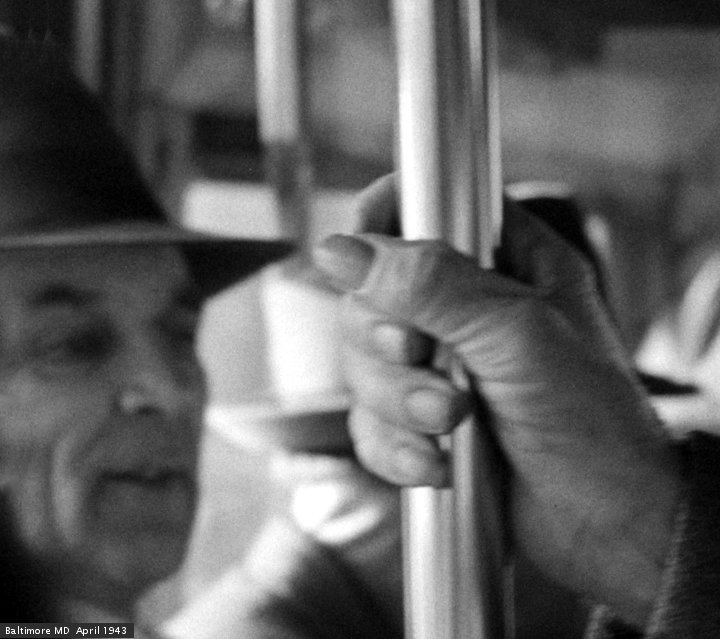
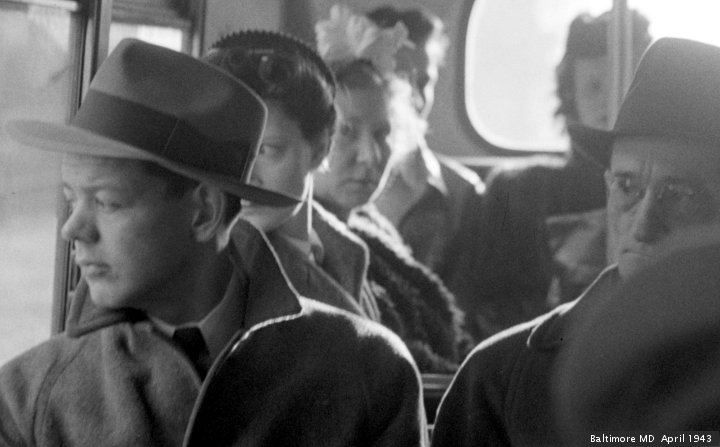




Billie Holiday had a hit with Gloomy Sunday in 1941. The legend is that people would listen to the song, and kill themselves. As a result, the song was banned from the radio. Or was it?
Gloomy Sunday was written in 1933 by Rezső Seress. Additional lyrics were later written by László Jávor. It became known as the “Hungarian Suicide Song”, and was reportedly banned in Hungary. An english translation (which is said to not do justice to the original Hungarian) was rendered.
Gloomy Sunday has a melancholy sound, even as an instrumental. The story is about a person…it is not gender specific…who decides to join a loved one who has died. A third verse was added, to the english version, where the singer says it was all a dream.
Gloomy Sunday became popular in the United States. And the suicide stories started to spread, along with rumors that the song had been banned from the radio. (It was indeed banned by the BBC.) There are indications that these rumors were part of a publicity campaign.
Snopes. calls the story “undetermined”. Legends like this get a life of their own. A grieving person hearing this song on a dreary Sunday is not going to be uplifted. One thing is known for sure…the original composer did take his own life. Rezső Seress jumped off a tall building in Budapest in 1968. The legend is he had never had another hit song after writing “Gloomy Sunday”. This repost has pictures from The Library of Congress.






The Portrait Of Mr. W. H.
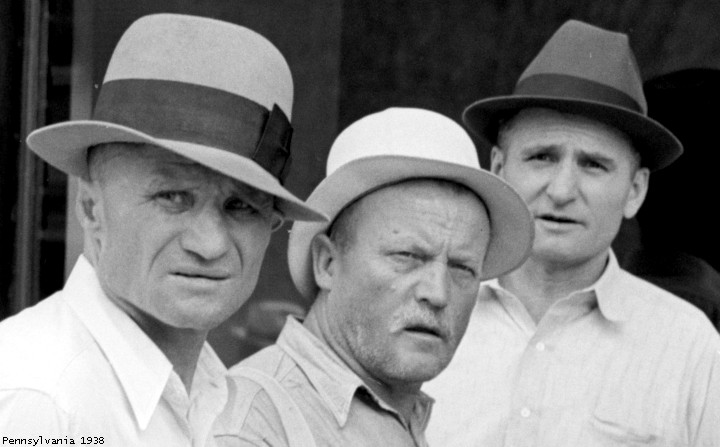


“A thing is not necessarily true because a man dies for it.” The gem, blamed on Oscar Wide, turned up on a data mining site. A quick search indicates that the quote in genuine, and is found in The Portrait of Mr. W. H. (1889.) Searching for context in a Wilde story can yield more than you bargained for.
PMWH is a tacky short story, with an eyeroll-inducing ending. SPOILER ALERT: This ending will be discussed today. PMWH is the story of an unnamed correspondent (UC), who is having a conversation with Erkskine. The players are Englishmen of a certain class, who all seem to have servants. The conversation gets onto forgery in the arts. UC felt that “to censure an artist for a forgery was to confuse an ethical with an aesthetical problem.” To which Erkskine replied, ‘What would you say about a young man who had a strange theory about a certain work of art, believed in his theory, and committed a forgery in order to prove it?’
Erkskine’s friend was Cyril Graham. “He was very fascinating, and very foolish, and very heartless.” Cyril developed some theories about the identity of Mr. W.H. … “A person known only by his initials, to whom the first edition of William Shakespeare’s sonnets (1609) was dedicated”… “To the onlie begetter of, These insuing sonnets, Mr. W.H. all happinesse … ” Cyril thought that W.H. was Willie Hughes, an androgynous young man of great beauty. “He felt, as indeed I think we all must feel, that the Sonnets are addressed to an individual, – to a particular young man whose personality for some reason seems to have filled the soul of Shakespeare with terrible joy and no less terrible despair.”
Erkskine thought that these ideas were foolish, and said so to Cyril. Soon after, Cyril produced a painting, that he found under strange circumstances. Allegedly, it was a portrait of Willie Hughes. Erkskine thought this a bit odd, but played along … until he stumbled onto evidence that the painting was a forgery. “I went off at once to Cyril’s chambers, waited there for three hours before he came in, with that horrid lie staring me in the face, and told him I had discovered his forgery. He grew very pale and said – “I did it purely for your sake. You would not be convinced in any other way. It does not affect the truth of the theory.
“The truth of the theory!” I exclaimed; “the less we talk about that the better. You never even believed in it yourself. If you had, you would not have committed a forgery to prove it.” High words passed between us; we had a fearful quarrel. I daresay I was unjust. The next morning he was dead.'”
“… he shot himself with a revolver. … By the time I arrived – his servant lad sent for me at once – the police were already there. He had left a letter for me, evidently written in the greatest agitation and distress of mind. … he believed absolutely in Willie Hughes; that the forgery of the picture had been done simply as a concession to me, and did not in the slightest degree invalidate the truth of the theory; and that in order to show me how firm and flawless his faith in the whole thing was, he was going to offer his life as a sacrifice to the secret of the Sonnets. It was a foolish, mad letter. I remember he ended by saying that he entrusted to me the Willie Hughes theory, and that it was for me to present it to the world, and to unlock the secret of Shakespeare’s heart.’ “
UC is convinced that the Willie Hughes story is real. “Erskine looked at me in amazement. ‘You are carried away by the sentiment of the whole story,’ he said. ‘You forget that a thing is not necessarily true because a man dies for it. ” UC leaves, and tries to prove the Willie Hughes hypothesis to be true. This goes on for a while, until UC talks himself out of it. By this time, however, Erkskine has changed his mind, and is a Willie Hughes true believer. If this is getting complicated and confusing, you can read the story. Oscar’s prose is entertaining, if a bit archaic to the modern reader.
Erkskine is dismayed by UC’s lack of belief. He sent UC a letter. “The concluding words of the letter were these: ‘I still believe in Willie Hughes; and by the time you receive this, I shall have died by my own hand for Willie Hughes’s sake: for his sake, and for the sake of Cyril Graham, whom I drove to his death by my shallow skepticism and ignorant lack of faith. The truth was once revealed to you, and you rejected it. It comes to you now stained with the blood of two lives, – do not turn away from it.'”
“It was a horrible moment. I felt sick with misery. … To die for one’s theological beliefs is the worst use a man can make of his life, but to die for a literary theory! It seemed impossible.”
SPOILER ALERT: Fret not, gentle reader. When UC caught up with the Erkskine’s family, he heard a different story. “I turned to the doctor and said, ‘What a dreadful shock it must have been to Lady Erskine! I wonder that she bears it as well as she does.’ ‘Oh, she knew for months past that it was coming,’ … if a mother knows that her son is going to commit suicide’ … ‘Suicide! Poor Erskine did not commit suicide. He died of consumption. He came here to die. The moment I saw him I knew that there was no hope. … At that moment Lady Erskine entered the room with the fatal picture of Willie Hughes in her hand. ‘When George was dying he begged me to give you this,’ she said. As I took it from her, her tears fell on my hand.”
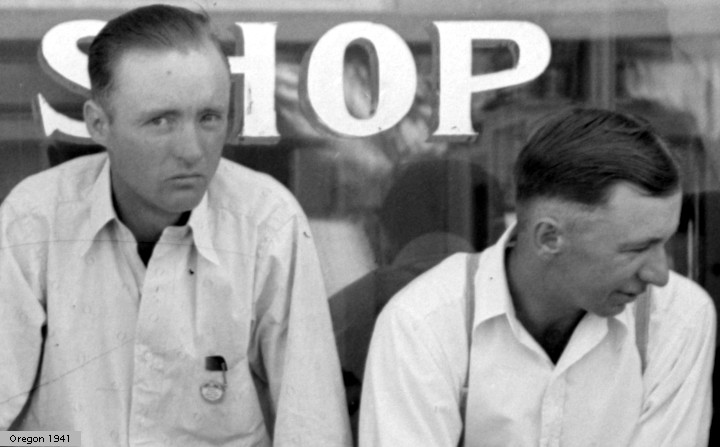


“It is always a silly thing to give advice, but to give good advice is absolutely fatal.” The Portrait of Mr. W. H., by Oscar Wilde, has many zesty quotes not included above. The one about advice stands out. It is similar to well known Oscarism. “A little sincerity is a dangerous thing, and a great deal of it is absolutely fatal. ” The line about sincerity is found in The Critic as Artist. In this episode, Gilbert and Ernest are exchanging clever thoughts.
Gilbert: Ernest, you are quite delightful, but your views are terribly unsound. I am afraid that you have been listening to the conversation of some one older than yourself. That is always a dangerous thing to do, and if you allow it to degenerate into a habit you will find it absolutely fatal to any intellectual development. As for modern journalism, it is not my business to defend it. It justifies its own existence by the great Darwinian principle of the survival of the vulgarest. …
Ernest: But what is the difference between literature and journalism?
Gilbert: Oh! journalism is unreadable, and literature is not read. … How appalling is that ignorance which is the inevitable result of the fatal habit of imparting opinions! …
Ernest: The true critic will be rational, at any rate, will he not?
Gilbert: There are two ways of disliking art. One is to dislike it. The other, to like it rationally. …
Ernest: Well, at least, the critic will be sincere.
Gilbert: A little sincerity is a dangerous thing, and a great deal of it is absolutely fatal.
Gilbert also says “Anybody can make history. Only a great man can write it.” This is a rather sexist counterpoint to that bumper sticker classic, “Well behaved women rarely make history.” The latter was penned by Laurel Thatcher Ulrich, in a scholarly article. “1976 Spring, American Quarterly, Volume 28, Number 1, “Vertuous Women Found: New England Ministerial Literature, 1668-1735” by Laurel Thatcher Ulrich, The Johns Hopkins University Press” The seminal quote said seldom, rather than rarely. Pictures today are from The Library of Congress.
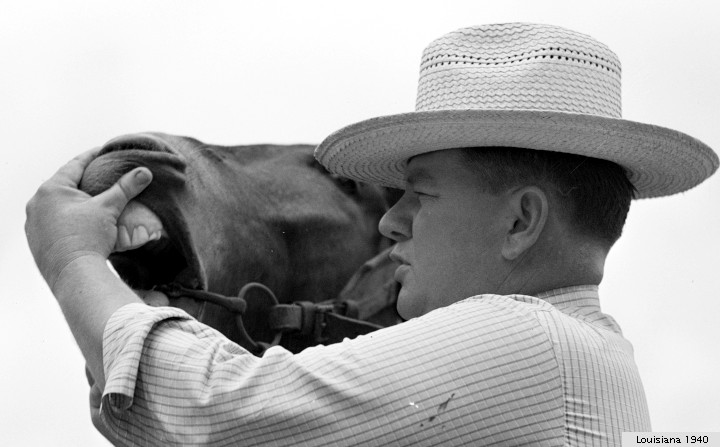
Examine Your Whiteness Part Three



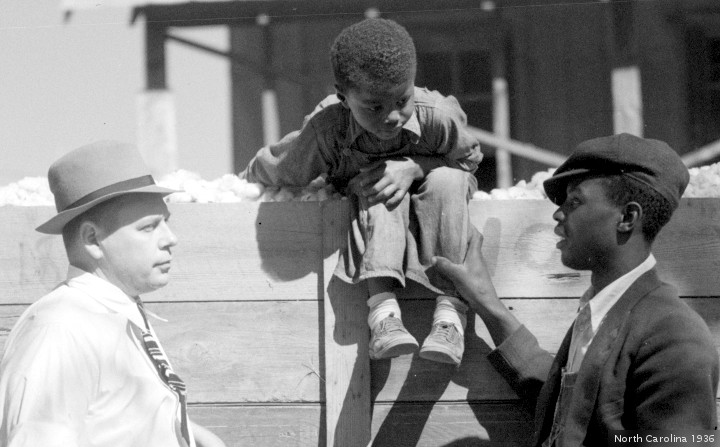




During the debate about ex-employee revenge, PG took a bit of heat for his position. He was told repeatedly to “Examine your whiteness.” This was rather confusing. To attempt to get more information about EYW, PG typed the phrase into google. This is what he found. Out of consideration to the reader’s attention span, none of these results will be *examined* in depth. If the reader uses the links, they can get more information. This is a repost.
Examining Whiteness: An Anti-Racism Curriculum “These materials, prepared by the Rev. Doctor William Gardiner, are made available to Unitarian Universalists (UUs), particularly white people interested in transforming their whiteness through understanding the complex history of white supremacy of over four hundred years in the United States, and the impact it has on us as individuals and the society as a whole.” This is a study course, for groups and individuals. Two of the documents are DIFFERENT WAYS OF BEING WHITE and DEVELOPING A POSITIVE WHITE IDENTITY. Some of the materials seem a bit contradictory, but may prove valuable with enough study.
Why Talk About Whiteness? “Her statement illustrates why educators, activists and allies doing racial justice work are increasingly focused on the importance of examining whiteness: It’s impossible to see the privilege and dominance associated with white racial identity without acknowledging that whiteness is a racial identity.” There is a great deal of semantic prestidigitation in these materials, and in the overall discussion of racial values.
Examine Your Whiteness, and Examine Your Whiteness Part Two, are the two posts that PG wrote about Palmer Marsh. This is results three, and four, of the google search request. Hopefully, this will generate some traffic.
The Meaning of Whiteness ” One of the requested topics was “whiteness,” a topic both obvious—how can a book about race not examine whiteness?—and curious, for I was quite sure that there would be no similar entries for “blackness” or “Asian-ness”. Whiteness, you see, is a unique concept and explaining it poses unique challenges. … who gets to define whiteness? In contemporary progressive circles, it is generally assumed that a group should be able to define itself, but whiteness has historically been defined by non-whites. … There are several different components of whiteness. These include: 1) racial identity, 2) racial bias, and 3) racial privilege.”
What Is Whiteness? is from the New York Times. PG foolishly used one of his four free articles for this month to see this. The article was written in 2015, and used two current stories to illustrate a whiteness binary. While some might see what follows as nonsense, you should be aware that it was written by “Nell Irvin Painter, a professor emerita of history at Princeton University and the author of “The History of White People.”
“The terrorist attack in Charleston, S.C., an atrocity like so many other shameful episodes in American history, has overshadowed the drama of Rachel A. Dolezal’s yearslong passing for black. And for good reason: Hateful mass murder is, of course, more consequential than one woman’s fiction. … An essential problem here is the inadequacy of white identity. Everyone loves to talk about blackness, a fascinating thing. But bring up whiteness and fewer people want to talk about it. Whiteness is on a toggle switch between “bland nothingness” and “racist hatred.” On one side is Dylann Storm Roof … On the other side is Ms. Dolezal … . But why, we wonder, did she pretend to be black? … Eliminating the binary definition of whiteness — the toggle between nothingness and awfulness — is essential for a new racial vision that ethical people can share across the color line.”
America’s newspaper of record is saying is that the choices for whiteness are Dylann Roof and Rachel Dolezal. Maybe they are talking about hair. We get to choose between the soupbowl haircut of Dylann Roof, or the horror movie frizzle of Rachel Dolezal.
5 Ways To Check Your White Privilege Imagine you walk into a room of 10 random strangers and shout the words “white privilege.” There is no need for suspense. The five ways are: “1. During discussions on race, be mindful not to silence people of color. 2. Do not assume you worked harder than a person of color to get where you are today. 3. Don’t expect a person of color to educate you on race whenever you feel like it. 4. Consume film, television, music, and other media in a mindful way. 5. Don’t assume people of color are “pulling the race card.””
How Much Sweat is Too Much Sweat? The article above had a header ad to pay the bills. “When sweating gets excessive and happens for no clear reason, it could be a sign of a real medical condition known as hyperhidrosis.”
The Whiteness Project “The Whiteness Project is an interactive investigation into how Americans who identify as “white” experience their race. … The latest installment, Intersection of I, is a collection of 23 interviews filmed in Dallas, Texas in July 2015 and released in April 2016.” This feature does not give any specific instructions for the examination of whiteness. OTOH, it is entertaining and enlightening. Twenty three young people, all white, give video talks about their experience with race. One is a running back, who people are surprised to hear is white. One is a high school student, who says some of the black kids at his school are disruptive. If you have the time, these videos are worth your time to watch. If nothing else, many of the young adults are cute.
Pictures today are from The Library of Congress. The North Carolina pictures were taken in October, 1936, by Arthur Rothstein. The South Carolina pictures were taken in July, 1937, by Dorothea Lange.




Such A Society


The writing workshop announcement appeared before the event. I went to the signup, and was checked in at 7:27. Tonight’s prompt is to write a “golden shovel.” The gs poem is going to be 25 lines long. Every word in the original piece will appear at the end of a line. The seminal poem is by Dr. Doris Derby. … Pale green husks, Of corn grow, Tall and proud, As the young kernels, Of each one, Emerge from darkness, With bright faces, Bathed in Sunlight. … I finish the first draft at 7:55. I will now edit, until the workshop says to stop.
Seeking the beauty beyond the Pale, blue shimmering waves of green, another shucker looking for husks, recovering from the harvest Of, telepathic aromatic corn, after the earth is done with grow, yesterday’s yellow Tall, and wide and frangrant and, retro rainbow standing proud, wearing polyester of the nines As, whimsical overtures of the, quasi legal sticky ripe young, wallowing in the southern kernels, escaping from the yankee sludge Of, teach one reach one each, five four three two one, fighting and kicking to Emerge, out of the twilight from, the placebo darkness, driving out the donald With, fibonaccian synchronistic bright, well scrubbed faces, dark golden moonlight Bathed, over toes and behind ears in, radiant convulsive Sunlight, just, a suggestion she tells me now.
The day started with breakfast, and medications. I looked on Twitter and I saw this: @robstiles1 “All tyrannies rule through fraud and force. Once the fraud is exposed they must then rely solely on force.” – George Orwell” There are a lot of flaky Orwell quotes. The Orwell wikiquote does have a similar quote, and a source. I did a search of the TLDR document, and found the quote that uses “fraud.”
“Totalitarianism, however, does not so much promise an age of faith as an age of schizophrenia. A society becomes totalitarian when its structure becomes flagrantly artificial: that is, when its ruling class has lost its function but succeeds in clinging to power by force or fraud. Such a society, no matter how long it persists, can never afford to become either tolerant or intellectually stable. … The mere prevalence of certain ideas can spread a kind of poison that makes one subject after another impossible for literary purposes. Wherever there is an enforced orthodoxy … good writing stops. …”
The second quotable is more relevant today. “The mere prevalence of certain ideas can spread a kind of poison that makes one subject after another impossible for literary purposes. Wherever there is an enforced orthodoxy … good writing stops.” The free flow of information, and entertainment, is currently under fire from many sources. The government, working in tandem with big data, has one agenda. Social Justice Jihad has a powerful ideology, upon which one trespasses at one’s own peril. With all these regulators of information, it is a miracle we hear anything other than football scores.
A poem was well on its way to completion. The soundtrack was a new episode of the Bret Easton Ellis podcast. The poem is a series of nine images, with text added at the bottom. When you finish a picture, the first reaction is to go look at facebook and twitter.
Grab the book nearest to you, turn to page 18, and find line 4. The book is the Holy Bible, with Jean D. Mckinnon in gold letters. Page 18/line 4: Genesis 18:15 “Then Sarah denied, saying, I laughed not; for she was afraid. And he said, Nay; but thou didst laugh.” Line 4 is underlined.
18:15 is just another verse from Genesis, and did not do much for me. What made me cry was the presentation page. “Presented to Jean, by Luke, 7-23-56” This was in my father’s challenging handwriting, on my mother’s birthday. 7-23-56 was a few weeks after my brother was born.
The guest on the BEE podcast was another writer, Jarett Kobek. The desperate state of modern publishing was lamented. The chat picked up when Mr. Kobek asked BEE if he heard about the amateur American Psycho porn. The video features two women having fun, while reading, out loud, a murder scene from American Psycho. It is moments like this, when you want to see the BEE reaction, that podcasting shows a weakness. Bret recovered fast enough, and said “I hope they were hot.” Soon another image was finished, and it was back to twitter.
Kyle Rittenhouse Reveals He Intends On Suing LeBron James. Announcing intention to sue online might not be a good legal strategy. Of course, we are talking deep pockets, and a deep throat. After the televised testimony of Mr. Rittenhouse, this tweet appeared: @KingJames What tears????? I didn’t see one. Man knock it off! That boy ate some lemon heads before walking into court. 🤣🤣
Mr. James likes to express his opinions. “James also made waves back in April for suggesting … that an officer was racially motivated for fatally shooting 16-year-old Ma’Khia Bryant, who was, at the time, attempting to stab another girl. … I am so desperate for more ACCOUNTABILITY.” You should be careful what you wish for. Pictures today are from The Library of Congress.



Sedevacantism






@LearningthePath “Not enough of you are concerned about the Charismatic Roman Catholic Sedevacantist Dispensationalism of William Tapley, and it shows.” @chamblee54 “too many big words” @LearningthePath “This time, that was intended to help make the joke. Charismatic – Believes in continuing Apostolic Gifts (prophecy, healing, tongues, etc.) Sedevacantist – Believes that the office of the Papacy is Empty.” This is a repost.
Sedevacantism (SV) is weird business, even by Catholic standards. The word literally means the seat is vacant. SV believe that the post-Vatican II has strayed away from the correct faith. The Pope is not Catholic enough to be the Pope. The last legitimate Pope was Pius XII. He died in 1958, after looking the other way during the Holocaust.
This video uses fancier language, to say the same thing. “satyakant ism/said of account ism (you tube transcripts are not inerrant) is the position of those Catholics who refuse to recognize for gay bergoglio (Jorge Mario Bergoglio, aka Pope Francis) as a true Pope. The seed of a canister(?) found that the Copt is vacant on account of the apostasy from the faith on the part of the official hierarchy since the promulgation in 1965 of the documents of the Second Vatican Council.”
If you search for SV on google and youtube, you will find lots of material. Dealing with a Sedevacantist Priest is a video of a radio show. The caller is concerned about some of the things a priest is saying to the flock. Bible verses are trotted out, and used to justify opinions. This is true of all the SV videos. The tone is heavy, heavy Catholic. If you come from a Protestant background, you might think you’re watching science fiction.
Sedevacantism Is Modern Luciferianism is a rather lurid discussion. Alas, there is a bait and switch here. “With the crisis in the Church since Vatican II, many comparisons have been drawn with the Arian crisis of the 4th century, when the majority of the Church’s bishops fell into the heresy of Arianism. … There is the remarkable similarity between today’s sedevacantists and a group of schismatics who were spawned during the Arian crisis: the Luciferians. The Luciferians were less nefarious than their name implies. Rather than being devil-worshipers, they were simply followers of the schismatic Bishop Lucifer of Cagliari.”
There are memes, both SV and anti SV. There is a twitter account: @animesedevacant Anime Sedevacantist ☩ Lover of Pius XII and Anime! SV Singles is another manifestation. Brian-sede is “Seeking Sedevacantist Catholic Woman”. Alas, even here, man just can’t seem to get it right. “Sedevacantist Singles” Employees Not Sure Whether To Recognize Authority. Pictures today are from The Library of Congress. The spell check suggestion for Sedevacantism is Antisemitism.






Unbeschreiblich Weiblich




The display of a link on this page does not indicate approval of content.
“‘streaming is evil’ narrative is doing more harm than good, particularly for …
Chevy Chase says he doesn’t care his old … SNL cast mates thought he was a “jerk”
Georgia educators push back against bill restricting how race is taught in classrooms
Nina Hagen Band VÖ: 11. Februar 1978 Unbeschreiblich weiblich – das Referenzwerk …
To slow an epidemic, focus on handwashing – Improving rate of handwashing at …
Did Andy Warhol really say “In the future, everyone will be famous for fifteen minutes”?
‘I trust my drug dealer more than I trust this vaccine’ By Nicholaus Christian
COVID-19 risk and outcomes in patients with substance use disorders: analyses from …
“we’ve been very clear that we are not providing funding for crack pipes”
OK Physicians Are Not Prohibited From Prescribing Off-Label Medicines
New Homes at a Former Castro Diner Site Should be More ‘Queer Affirming,’
‘I didn’t understand’: Response to NJ mall scuffle ignites critique of policing
pastor baptized people for decades using one wrong word those are considered invalid
An Analysis of the Root Causes for Opioid-Related Overdose Deaths in the United States
Immunizing Strategies and Epistemic Defense Mechanisms
Chapter 7 of David Stove, The Plato Cult and Other Philosophical Follies
Sophia Loren Finally Explains That Infamous Pic With Jayne Mansfield
“i truly believe that god presented the adult film industry to me”
Make Protection of Children and Families from Health Coverage Loss a Priority
Georgia Gov Candidate Roasted for ‘Jesus, Guns, Babies’ Campaign Bus’
Geena Davis Remembers Brad Pitt’s Audition for Thelma & Louise Role
How and why the U.S. Government Perpetrated the 2014 Coup in Ukraine
Here’s what we know about Georgia basketball assistant Wade Mason’s suspension
1 dead, 5 injured in shooting near Normandale Park in Northeast Portland
Not a Tolkien quote: “A single dream is more powerful than a thousand realities.”
Pro Gamer Fired After Saying Short Men ‘Don’t Have Human Rights’
Sheriff Blasts Dept of Corrections Over Convicted Killer’s Transfer, Use of Contraband
until gen z takes over, wipes out all of us i encourage that they couldn’t possibly do worse
The Disinformation Campaign Against Ivermectin – JAMA’s “Diversion”
Children in Syrian ISIL prison Hundreds of kids held in the Hassakeh jail
Hundreds of children held by IS in besieged prison in Syria
Maajid Nawaz on the Misguided Nature of the War on Terror
Michigan driver deliberately struck, killed retiree so he could have sex with her body
Psaki Tells Rob Lowe His West Wing Character Inspired Her to Return to White House
Listen to your skin, a monthly erotic reading with Thank you, Janet & Hannah!
lincoln memorial ~ bo winegard ~ jre1780 ~ brian fish ~ marilyn mosby
botox ~ jre 1779 osterholm ~ yoko ono ~ synchronicity ~ warren buffet
kandis taylor ~ harvest ~ levis ~ rivian ~ chancellor perdue
faye dunaway ~ tender greens ~ noir ambient ~ sophia loren ~ motte and bailey
warranty ~ mcmichaels ~ right to farm ~ woody show ~ pedro ramiriz
bnr102 ~ doreen/fox ~ doreen ford ~ r/antiwork ~ archie leach
tom robbins ~ Motte-and-Bailey ~ tibet house ~ medicine ~ semantle
hope quest ~ Omerettà The Great ~ omeretta ~ lou reed ~ zevon
jemele hill ~ rollins ~ rollins 090721 ~ jean-luc brunel ~ tony 0219
do re mi ~ nikki sixx ~ demonym ~ readers magnet scam ~ pjo’rourke ~ hollywood park
bill kristol ~ out there ~ nyc crime ~ hamburgers ~ nope ~ creek walk connector
“Where are my eyes? I’m staring at her nipples because I am afraid they are about to come onto my plate. … In my face you can see the fear. I’m so frightened that everything in her dress is going to blow—BOOM!—and spill all over the table. ” ~ @EPoe187 My favorite part of any modern academic article that’s even slightly controversial is the “I do renounce satan and all of his works” preamble that is now required before saying anything that might contradict sacred dogmas. ~ @OttawaBylaw Attention animal owners at demonstration If you are unable to care for your animal as a result of enforcement actions, your animal will placed into protective care for 8 days, at your cost. After 8 days, if arrangements are not made, your animal will be considered relinquished. ~ @helenlewis I’ve spent a week watching American TV and I will mildly note that it’s slightly bizarre to watch news programmes discussing Joe Rogan and “medical misinformation” and then throw to a commercial break full of ads for completely ineffective cold remedies and quack diet pills. ~ @EPoe187 Hyperbole causes verbal inflation as words such as “fascism” and “racism” become degraded by overuse. The result is even more overheated rhetoric, as people chase emotional reactions with words and phrases that have been thoroughly debased. ~ this quote is frequently memed out by people who do not consider the implications @SonofBaldwin We can disagree and still love each other unless your disagreement is rooted in my oppression and denial of my humanity and right to exist. ~ @chamblee54 bob comes out in support of euthanasia until gen z takes over and wipes out all of us i encourage that they couldn’t possibly do worse ~ @TylerMahanCoe Warren Zevon was more of a piece of shit than Lou Reed but Lou was more of an asshole than Zevon ~ @chamblee54 @MarkJEngleson @TylerMahanCoe a man, who might be Harlan Ellison, walked up to Sophia Loren. “I want to fuck you” “If you do, and I find out about it, I am going to be very angry.” ~ Ezekiel 23:20 For she doted upon their paramours, whose flesh is as the flesh of asses, and whose issue is like the issue of horses. ~ Urban legend claims that if you play Pink Floyd’s “Dark Side of the Moon” while watching “The Wizard of Oz,” there’s an synchronicity that could only come about had the band planned the album around the movie. Pink Floyd has denied the rumor outright for years. Floyd drummer Nick Mason: “It’s absolute nonsense. It has nothing to do with ‘The Wizard of Oz.’ It was all based on ‘The Sound of Music.’” ~ pictures today are from The Library of Congress. ~ selah



The Cynic’s Word Book J – L




What follows are selections from The Devil’s Dictionary, by Ambrose Bierce. TDD began as a newspaper column, and was later published as The Cynic’s Word Book. TDD is in the public domain. TDD is a dictionary, going from A to Z. Today’s selection covers J to L. More selections are available. (A – D E – G H – I) Pictures today are from The Library of Congress.
JEALOUS Unduly concerned about preservation of what can be lost only if not worth keeping.
JUSTICE A commodity which is a more or less adulterated condition the State sells to the citizen as a reward for his allegiance, taxes and personal service.
KEEP He willed away his whole estate, And then in death he fell asleep,
Murmuring:”Well, at any rate, My name unblemished I shall keep.”
But when upon the tomb ’twas wrought Whose was it?—for the dead keep naught.
KILL To create a vacancy without nominating a successor.
KILT A costume sometimes worn by Scotchmen in America and Americans in Scotland.
KING A male person commonly known in America as a “crowned head,”
although he never wears a crown and has usually no head to speak of.
KLEPTOMANIAC A rich thief.
KORAN A book Mohammedans foolishly believe to have been written by divine inspiration,
but which Christians know to be a wicked imposture, contradictory to the Holy Scriptures.
LABOR One of the processes by which A acquires property for B.
LANGUAGE The music with which we charm the serpents guarding another’s treasure.
LAP One of the most important organs of the female system—an admirable provision of nature for the repose of infancy, but chiefly useful in rural festivities to support plates of cold chicken and heads of adult males. The male of our species has a rudimentary lap, imperfectly developed and in no way contributing to the animal’s substantial welfare.
LAW Once Law was sitting on the bench, And Mercy knelt a-weeping.
“Clear out!” he cried, “disordered wench! Nor come before me creeping.
Upon your knees if you appear, ‘Tis plain your have no standing here.”
Then Justice came.His Honor cried: “Your status?—devil seize you!”
“Amica curiae,” she replied— “Friend of the court, so please you.”
“Begone!” he shouted—”there’s the door— I never saw your face before!”
LAWFUL Compatible with the will of a judge having jurisdiction.
LAWYER One skilled in circumvention of the law.
LAZINESS Unwarranted repose of manner in a person of low degree.
LEAD A heavy blue-gray metal much used in giving stability to light lovers—particularly to those who love not wisely but other men’s wives. Lead is also of great service as a counterpoise to an argument of such weight that it turns the scale of debate the wrong way. An fact in the chemistry of international controversy is that at the point of contact of two patriotisms lead is precipitated in great quantities.
LECTURER One with hand in your pocket, tongue in your ear and faith in your patience.
LIAR A lawyer with a roving commission.
LIBERTY One of Imagination’s most precious possessions.
The rising People, hot and out of breath,
Roared around the palace:”Liberty or death!”
“If death will do,” the King said, “let me reign;
You’ll have, I’m sure, no reason to complain.”
LIFE “Life’s not worth living, and that’s the truth,” Carelessly caroled the golden youth.
In manhood still he maintained that view And held it more strongly the older he grew.
When kicked by a jackass at eighty-three, “Go fetch me a surgeon at once!” cried he.
LITIGANT A person about to give up his skin for the hope of retaining his bones.
LITIGATION A machine which you go into as a pig and come out of as a sausage.
LOGIC The art of thinking and reasoning in strict accordance with the limitations and incapacities of the human misunderstanding. The basic of logic is the syllogism, consisting of a major and a minor premise and a conclusion—thus:
Major Premise: Sixty men can do a piece of work sixty times as quickly as one man.
Minor Premise: One man can dig a posthole in sixty seconds; therefore—
Conclusion: Sixty men can dig a posthole in one second.
This may be called the syllogism arithmetical, in which, by combining logic and mathematics, we obtain a double certainty and are twice blessed.
LOGOMACHY ‘Tis said by divers of scholar-men, Poor Salmasius died of Milton’s pen.
Alas! we cannot know if this is true, For reading Milton’s wit we perish too.
LOQUACITY Disorder which renders sufferer unable to curb his tongue when you wish to talk.
LORD In American society, an English tourist above the state of a costermonger, as, lord ‘Aberdasher, Lord Hartisan and so forth. The traveling Briton of lesser degree is addressed as “Sir,” as, Sir ‘Arry Donkiboi, or ‘Amstead ‘Eath. The word “Lord” is sometimes used, also, as a title of the Supreme Being; but this is thought to be rather flattery than true reverence.
LOSS Here Huntington’s ashes long have lain, Whose loss is our eternal gain,
For while he exercised all his powers, Whatever he gained, the loss was ours.


Hollywood Part Four



What follows is part four in the chamblee54 celebration of Hollywood, by Charles Bukowski/Hank Chinaski. The book details making the movie Barfly. Other installments of this series are available. one two three five Pictures today are from The Library of Congress.
29 – The movie is shooting. Press people are starting to descend, in search of interesting copy. People have this notion that Hank is gonna be interesting. “The phone rang every day. People wanted to interview the writer. I never realized that there were so many movie magazines, or magazines interested in the movies. It was a sickness, this great interest in a medium that relentlessly and consistently failed, time after time after time, to produce anything at all. People became so used to seeing **** on film that they no longer realized it was ****.”
Hank Chinaski has to have a pro-active editor. This book is too smooth, and too easy to read. There is no way that a broken broken down urinal-feeder like pink China’s key can write a page turner like this. (Sometimes it is best to not correct the robo secretary.) Easy riding makes hard reading. Stream of consciousness is more fun to write, than it is to read.
Barbet Schroeder/Jon Pinchot did a series of interviews with Hank for French TV. I’m gonna find them on YouTube, and listen to as much as I can stand. (I did not make it through two minutes.) I thought I could use them as background noise for a graphic poem. The text was written by Ambrose Bierce, yet another drunken journalist. I’m gonna to use pictures of dogs for the background. This is gonna be the first time that I’ve married images to text in a while.
30 – Hank and Sarah go to a party. They meet a lawyer representing somebody. The client owes Hank money. The lawyer says the check is in the mail. Hank, Sarah, and the lawyer, continue to drink heavily. The lawyer’s wife, Helga, is a retired drunk. Hank says that there is absolutely nothing worse then being sober around drunks.
I was brought up in a Southern Baptist house. Father would drink a beer or two, but mom was a teetotaler. As a result, I really never learned how to drink. A social outcast in high school, I didn’t learn there either. I may be the only person alive that never drank, before he was legal. By this time, I was a dedicated pothead. It went from enjoying an occaisonal beer, to the point where the drinking was more than I was comfortable with. I never got a DUI, and I never progressed to hard liquor dependency. When I was 34, I quit, and never looked back.
I quit drinking on December 31st 1988 … The windows robo-secretary quit, for the last time. I am moving over to google docs, which is much better. … I’m not as willing to put up with alcoholic nonsense as I was before. I try not to be obnoxious about it. Alcohol serves as a social lubricant, that helps you get to know people. I spend a lot more time by myself now. It got even worse when I quit smoking pot. Now I’m an anti-social mess. It would be best if I could figure out *moderation,* but that is not happening for me.
31 – The checks did arrive. They promptly bounced. … I’ve always liked the phrase, returned for insufficient funds. The last time I got a reality check, it was returned for insufficient funds.
There’s a campaign ad, from a lady named Kay Ivey. She’s some sort of politician in Alabama, and she has nothing good to say about President Brandon. I’ve condensed this video down to the best 5 seconds. This lady looks at the camera all sweet and squishy and says “poor Joe bless his heart.”
32 – So they’re shooting the scene in a bathtub. Francine is concerned that her tits are going to show. Mickey is not loosening up. They’re on their 19th to take. The camera man wants a drink … he’s a brilliant camera man, and a drunk. They don’t want him to drink. However, people do want Francine to have a drink, so she can loosen up. Finally, Sarah comes out of the kitchen, with of coffeecup of whiskey, gin, and cat piss. Francine drinks the concoction, and the scene is shot.
Being a retired drunk is nothing to be proud of. If I was really doing it right, I would have learned the gift of … what’s that word, not sobriety, not temperance … anyways that that word that means that you can drink enough to enjoy yourself, or to loosen up when you need to, but not become a basket case. Now I can’t remember the word. I never could do it when I was drinking, and now I can’t remember the word for it. I’m sure I’ll remember it later.
33 – They’re shooting a scene. The building they’re using used to be a ballroom. It was full on Saturday night. The drunks outside hated the bougie dancing people. Now the building is a rehabilitation center for alcoholics, full of “reformed drunks who read the Bible, smoke too many cigarettes, and play bingo.”
This German lady, and this Italian lady, want to interview Mr. Chinaski. Italian lady goes first, all she wants to do is talk about drinking. Hank wants to talk about being pickling up the ass of death. By the time he got to German lady, Hank ran out of things to say. … There’s an old joke, about this Polish starlet. She thought she could get a part by fucking the screenwriter.
I am happy with the google robo secretary. It is time to take this further, and try editing in gd. as this program is affectionately initialized. I have to have background music. This would be The fastest guitar in the world. A man named Lloyd Ellis created the album in 1958. A bunch of studio musicians record instrumentals, destined for the $1.98 bin at K-mart. Meanwhile, the timer on the phone goes off. Breakfast is ready. Life is good.
34 – Jon Pinchot calls Hank. The movie has been cancelled, again. That seems to happen a lot. Hank is sympathetic, and invites Jon over for a few drinks. Pinchot says no thank you, I have a date with two lesbians. Hank was going to go to the racetrack anyway.
The racetrack system is all based on the concept that the public must lose. You decide what the public is going to do, and bet against it. Hank has a good system, but doesn’t always follow it. One of the problems that you have to defeat is human weakness.
Cary Grant was a star of LA racing. He would go to Hollywood Park, place a $2 bet, and go into hysterics when losting. The former Archie Leach was so well known at the track, they named a race The Cary Grant Stakes. Randolph Scott was a drink served in the clubhouse.
Hollywood Park eventually became obsolete. It was torn down, and SoFi stadium was built on the site. The Super Bowl is playing in this venue as we speak. I have a digital converter powering a huge tv that weighs 66.6 pounds. It was given to me. The game is on Channel 11, where over-the-air broadcasting is not a priority. The picture is on for a while, then breaks down into pixelated goulash.
35 – Hank and Sarah go to see a scene shot. They go to the bar. It is somehow connected to a flop house hotel. They go in, and a famous film critic there. .. Siskel and Ebert or Airhead or one of those guys .. Soon, Francine Bowers/Faye Dunaway comes in with her little notebook.
She is playing Jane, Hank’s gf, and wants to know about her. The Barfly cheat sheet says that Jane is “real,” but I suspect that her name is really Betty. In one of his books, Hank talks about his shack job Betty. Neither one was a member of the Junior League.
This man, Illiantovitch, comes in, and orders a double vodka. I had that I had to Google that name because it’s not in the Wikipedia summary. I found this Bukowski Forum. They had a text document, with every character in Hollywood, and the real life counterpart. There is no information about Illiantovitch, which is too bad. He is a sloppy drunk, but a neat character. Illiantovitch keeps drinking double vodkas, cussing out everybody when they go to watch the movie.
Francine is a great name. On dead Saturday, 1973, I went to a Stadium concert in Charlotte NC. One of the bands was ZZ Top. This was back when their beards were only about three fingers long. ZZ Top was the only band that to play an encore. One of their star songs was Francine.
36 – They need to shoot the bar fight. They’ve got doubles, to do the real fighting. Mickey Rourke is just going to pretend, in a couple of close-ups. Let the doubles do all the dirty work. Hank is nostalgic for his days as a barroom drunk. Later, Francine asks Hank how Jane died. She was the maid in this hotel, and everybody gave her a bottle of wine for Christmas. Hank went over to see her, and saw all these bottles in her room. “Babe you can’t drink all of that you’re going to die.” He came back a few days later, all the bottles were empty, and she was laying on the bed unconscious. Jane came to long enough to say “I knew it was you going to be you.” She died an hour later.



Dog Walking On Highway 400


I avoid going to Roswell, because it usually means getting on the dreaded Highway 400. Because of the reconstruction chaos at 285, I decided to get on the highway at Abernathy.
The soundtrack was the “punch and judy” podcast, blocked and reported. Today’s story was a subreddit called Auntie work r/antiwork. The mod, Doreen Ford, was interviewed by Fox news, with disastrous results. The mod is a dog-walker by trade, who someday wants to be a philosophy professor. Ms. Ford is a non-passing trans woman.
I get on 400 at Abernathy Road. There is a construction festival going on. You go through the intersection, and drive onto this two mile long driveway. One lane, one way, no other cars. I was convinced I was about to come to a dead end.
Meanwhile, the B&R story has gone from comedy to psycho-farce. The mod has offended people, who returned the favor. “Years before /r/antiwork rose to prominence, Doreen Ford, facing accusations of serial rape from a prior sexual partner, confessed to inebriated sex that the partner later stated was non-consensual. Soon after, Ford confessed to masturbating while lying next to “a person with whom [she] had an ongoing sexual relationship and living arrangement,” against the individual’s will, placing their hand over her boxers nonconsensually while in bed, and shutting off alarms the individual had set to avoid falling asleep together.”
The cis/trans nature of the players was not specified. “placing their hand over her boxers nonconsensually.” Were the pronouns they/their, or was the author just playing it safe? This was all very disorienting to absorb while driving down a two mile long driveway, on a freeway in progress. Maybe this was all a simulation. Pictures today are from The Library of Congress.


Fifteen Minutes





Andy Warhol is quoted as saying that “in the future, everyone will be famous for fifteen minutes.” This has become a popular saying. If a celebrity is getting tiresome, people will wonder when their fifteen minutes will be up. After hearing about fifteen minutes his entire life, PG began to wonder if Drella really said that. If you can’t be cynical about Andy Warhol… This is a repost.
Wikipedia is a good place to start. “In the future, everyone will be world-famous for 15 minutes” … appeared in the program for a 1968 exhibition of his work at the Moderna Museet in Stockholm, Sweden. Photographer Nat Finkelstein claimed credit for the expression, stating that he was photographing Warhol in 1966 for a proposed book. A crowd gathered trying to get into the pictures and Warhol supposedly remarked that everyone wants to be famous, to which Finkelstein replied, “Yeah, for about fifteen minutes, Andy.” Nat Finkelstein was a sketchy character, in the Warhol tradition. His version is suspect. The Swedish museum part is real.
“Andy Warhol’s first European museum solo show took place at the Moderna Museet in Stockholm from February through March 1968. Pontus Hultén curated the exhibition together with Olle Granath. The exhibition came with a catalogue that was, like the show, named ‘Andy Warhol’. Kasper König, who worked for the Moderna Museet as an intern of sorts in New York, developed a basic concept for the book. … After Warhol had given his approval to this first proposal, König proceeded to create a dummy. … When König returned his dummy to the Factory, Warhol scrutinized it carefully but made only a small number of changes. Contrary to what Warhol wanted to be popular belief, those who produced input at the Factory were carefully monitored. … The final edits on the dummy were made in Stockholm by Olle Granath. He compiled a small selection of Warhol quotes and aphorisms from a stack of books and clippings collected by Hultén and placed them in the book as an introduction before the image sections.”
“Sometime in the autumn of 1967, Pontus Hultén called and asked me if I (Olle Granath) could help him and the Moderna Museet to organize an Andy Warhol exhibition that was due to open in February…. An important part of the exhibition was the production of a book. It was not supposed to be an analytical catalog of Warhol’s work, but a book that conveyed his aesthetics without heavy texts. … One day, Pontus brought me a box, almost the size of a Brillo box, and told me that it contained everything written by and about Andy Warhol (today the equivalent would probably be two truck loads). My job was to read it all and present a proposal for a manuscript with Swedish translations. After a couple of nights of reading and taking notes I delivered a script to Pontus and awaited his reaction with great anticipation. ‘Excellent,’ Pontus said when he called me, ‘but there is a quotation missing.’ ‘Which one?’ I said. ‘In the future, everyone will be world-famous for 15 minutes,’ Pontus replied. ‘If it is in the material I would have spotted it,’ I told him. The line went quiet for a moment, and then I heard Pontus say, ‘If he didn’t say it, he could very well have said it. Let’s put it in.’ So we did, and thus Warhol’s perhaps most famous quotation became a fact.”
“The exhibition in Stockholm attracted a relatively small number of visitors, due to the extremely cold winter, but also to the fact that leftist radicalization increasingly drove the Museets public to mistrust anything American or consumerist. There was no space yet for a more complex reading of Warhol’s relation to consumption. The book, however, became very popular: its enormous edition allowed it to be distributed in nightclubs and record stores, not only museums. A timeless update on the latest from New York, it first became a cult object, then a collectors item.”
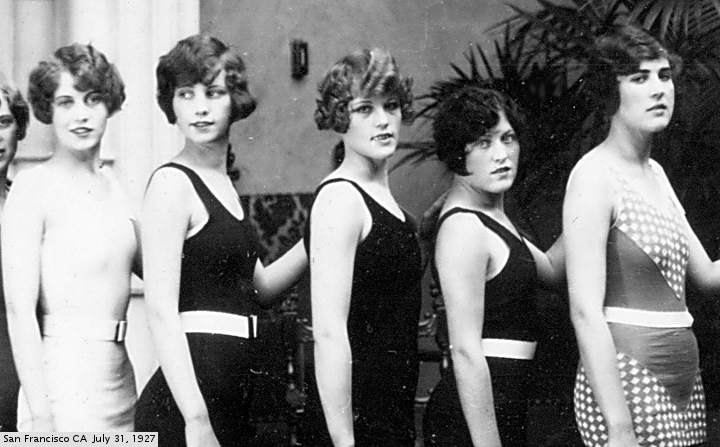
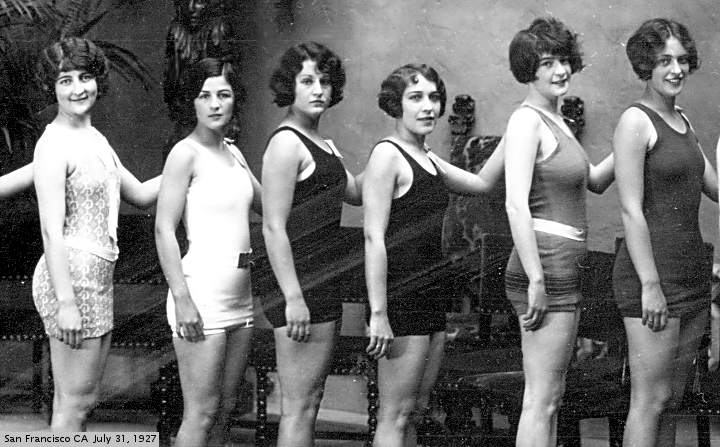
Did Andy say that? Probably, but not definitely. Andy was shot by Valerie Jean Solanas on June 3, 1968, a few months after the show in Sweden. Andy survived, and had fifteen more minutes. Pictures today are from Pictures are from The Library of Congress. The 1927 pictures were taken at “California Beauty Week, Mark Hopkins Hotel, July 28 to Aug. 2, auspices of San Francisco Chronicle.”





leave a comment