Lost Atlanta


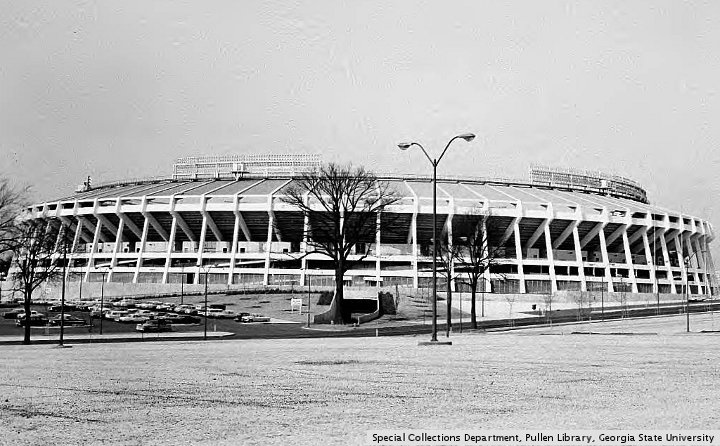


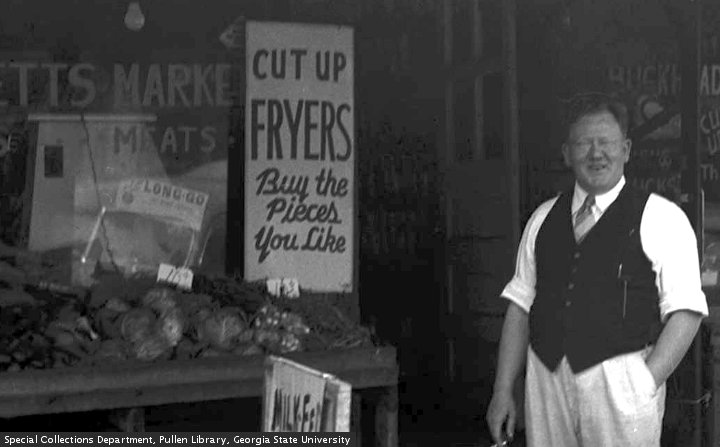

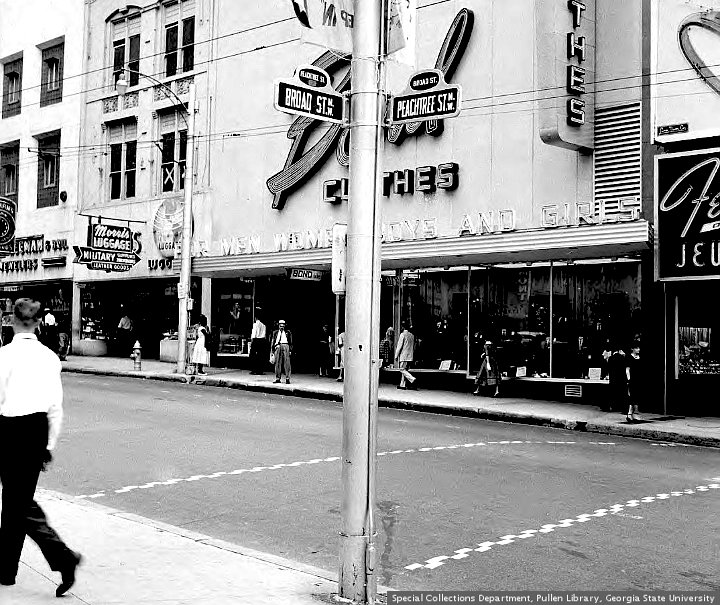
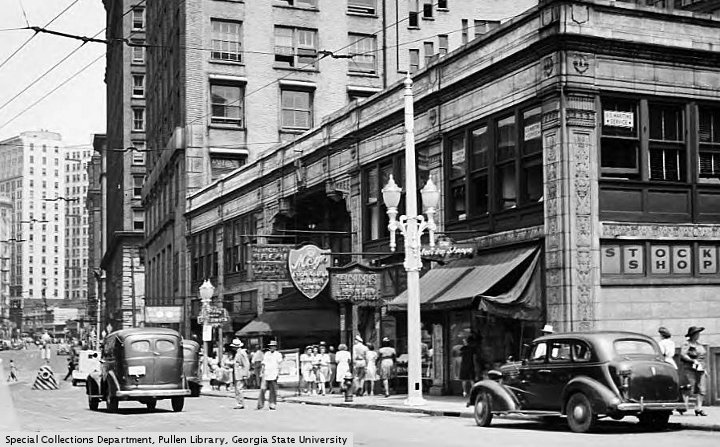
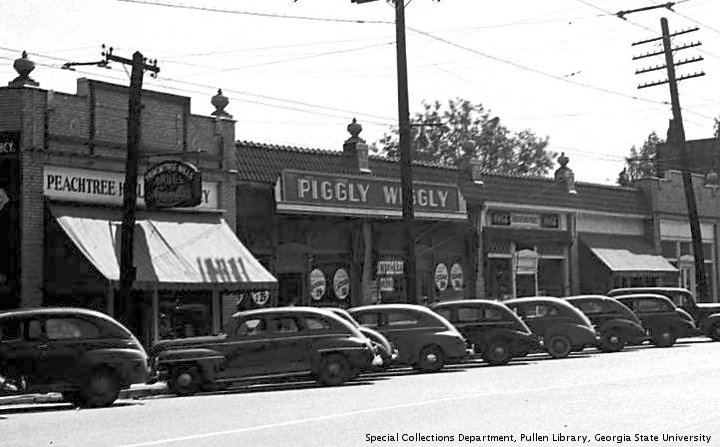
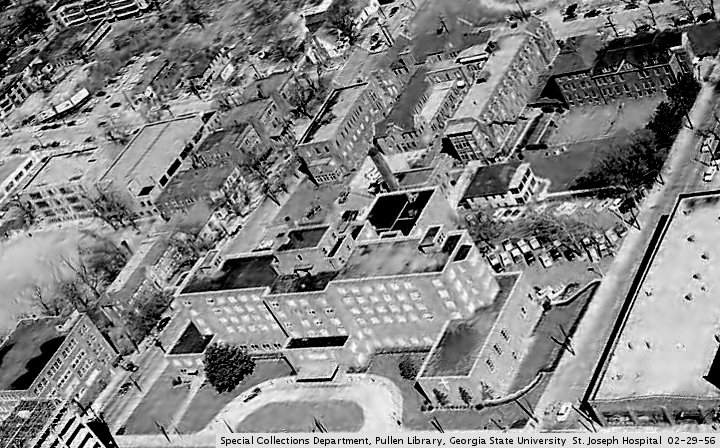
Lost Atlanta is a coffee table book. The content is the buildings, and institutions, that no longer exist. Atlanta has a long love affair with the wrecking ball. General Sherman was a minor player. Pictures for your Wednesday morning entertainment are from “The Special Collections and Archives, Georgia State University Library.” This is a repost.
PG is a native, and knows a few things about the city. While looking through LA, he began to take notes of things he did not know. The names behind the Ferry Roads is one. Plantation owner James Power established Power’s Ferry in 1835. Hardy Pace established his ferry in the 1850s. The fare was 62 cents for a full wagon, 50 cents for an empty wagon, 12 cents for a man and a horse, and 4 cents per head of cattle. The last ferry to cease operations was the Campbellton Ferry, in south Fulton county. The Campbellton Ferry ceased operations in 1958.
Wheat Street Baptist Church is a prominent Atlanta institution. If you look for Wheat Street on google, all you see is Old Wheat Street. It turns out that Wheat Street was renamed Auburn Avenue. “Originally called Wheat Street, the road was renamed in 1893 at the request of white petitioners who believed Auburn Avenue had a more cosmopolitan sound.”
Bald Hill, aka Leggett’s Hill, was leveled in 1958 to make way for the East Expressway, later known as I-20. On July 22, 1864, the Battle of Atlanta was fought there. After the unpleasantness, Frederick Koch bought farm land on the site. His house was at 382 Moreland Avenue. The house was demolished in 1953. South of I-20, 1400 McPherson Avenue has a monument. Maj. Gen. James B. McPherson was killed at that location.
The outfield wall at Ponce De Leon park was covered with advertising. One sign was for Southern Bread. The picture had a “Southern Colonel”… apparently the only type of officer in the CSA … saying “I’d even go North for Southern Bread.” This ad was also painted on the side of a building on Tenth Street, just off Peachtree. The late Jim Henson produced a tv ad for Southern Bread.
Jacobs Drug Store was a prominent chain at one time. It was founded by Joseph Jacobs. Mr. Jacobs had a store in the Norcross building, on Peachtree Street at Marietta Street. In 1886, the soda fountain mixed John Pemberton’s patent medicine with carbonated soda water. The rest is history.
There are a few notes, which do not justify a paragraph. The Governor’s Mansion was at 250 The Prado, in Ansley Park, until a new GM was built on West Paces Ferry road. The Henry Grady hotel did not have a thirteenth floor, but went from 12 to 14. This did not stop the building from being demolished, to make way for the Peachtree Plaza hotel.
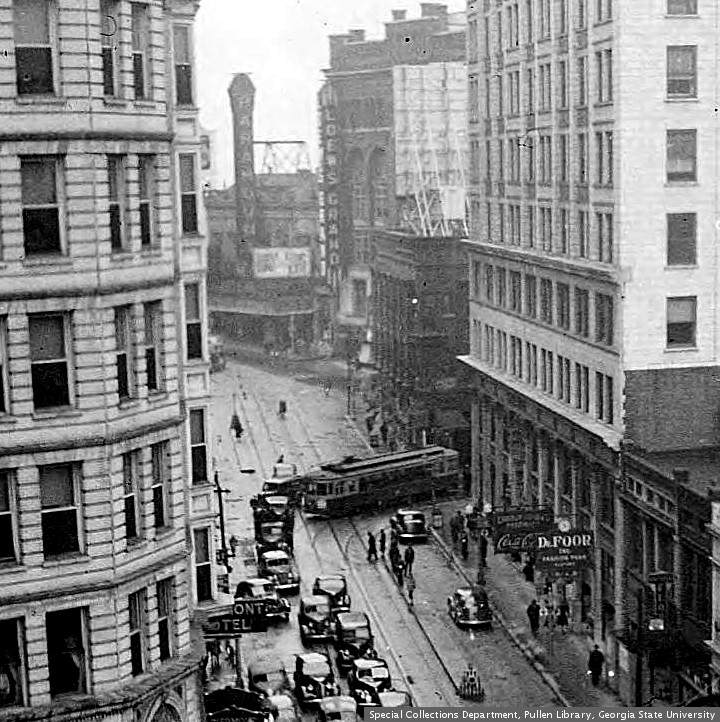
When Laurent DeGive built his grand opera house at Peachtree and Houston (Now JW Dobbs,) people were horrified. The central business district was south of five points. The area north, where the opera house went up, was residential. In 1932, the opera house was renovated, and opened as the Loew’s Grand. In 1939, it hosted the world premiere of “Gone With The Wind.” On the other side of Houston Street was the Paramount Theater, and across Peachtree was the Coca Cola sign. The GP building occupies the site today.



 Chamblee54
[…] content was posted January 25, 2024. … Lost Atlanta is a coffee table book. The content is the buildings, and institutions, that no […]