Manley Pointer
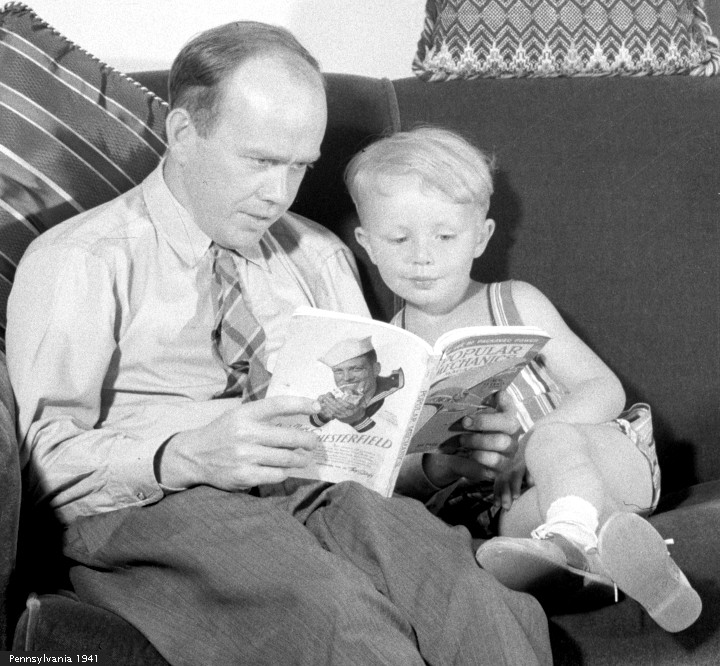

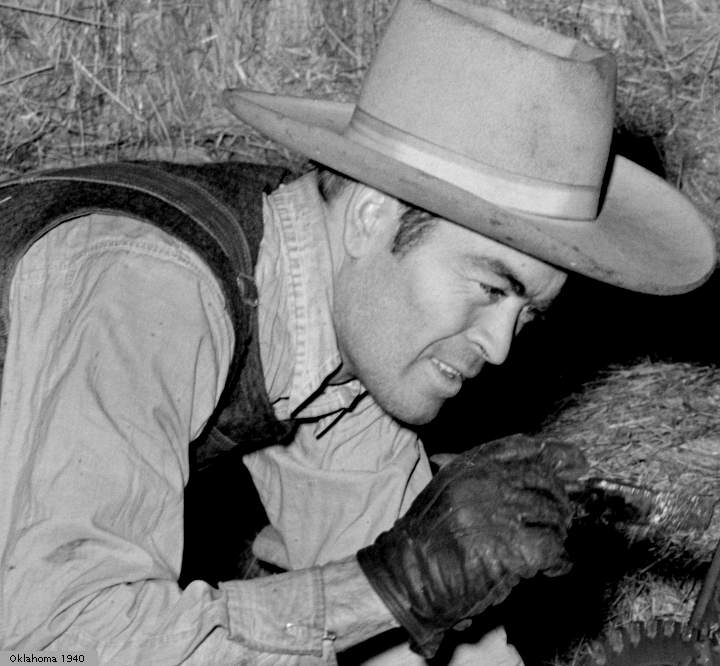
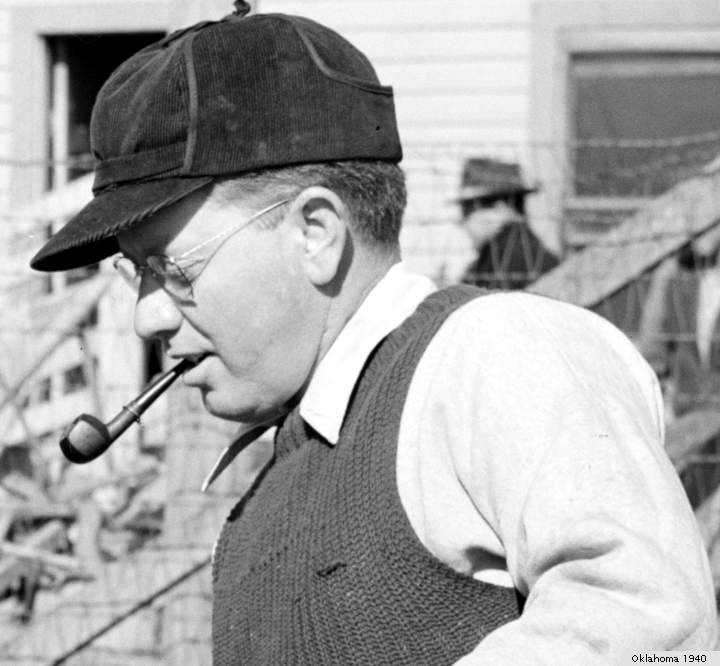
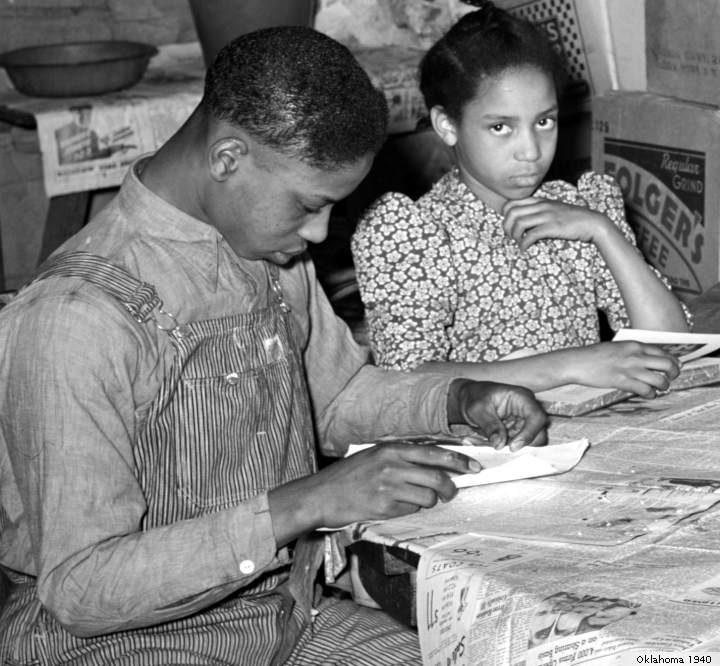
Good Country People is a Flannery O’Connor story. Manley Pointer is a Bible salesman in rural Georgia. He calls on the Hopewell family. Manley doesn’t sell any Bibles, but he does get a date with Hulga Hopewell. Pictures today are from The Library of Congress.
“O’Connor portrays a one-legged, unemployed female with a Ph.D. in philosophy, who has nothing to do but stay at home and irritate her mother. When a Bible salesman, Manley Pointer, … arrives at the Hopewell house, Joy, who has changed her name to Hulga, much to the annoyance of her mother, joins her new friend in an excursion to a nearby barn, complete with a romantic hayloft.” source
The first few minutes of the Hulga-Manley date are special. “Smiling, he lifted his hat which was new and wide-brimmed. He had not worn it yesterday and she wondered if he had bought it for the occasion. It was toast-colored with a red and white band around it and was slightly too large for him. He stepped from behind the bush still carrying the black valise. He had on the same suit and the same yellow socks sucked down in his shoes from walking.”
“He crossed the highway and said, “I knew you’d come!” The girl wondered acidly how he had known this. She pointed to the valise and asked, “Why did you bring your Bibles?” He took her elbow, smiling down on her as if he could not stop. “You can never tell when you’ll need the word of God, Hulga,” he said. She had a moment in which she doubted that this was actually happening and then they began to climb the embankment. They went down into the pasture toward the woods. …”
“Wait,” he said. He leaned the other way and pulled the valise toward him and opened it. It had a pale blue spotted lining and there were only two Bibles in it. He took one of these out and opened the cover of it. It was hollow and contained a pocket flask of whiskey, a pack of cards, and a small blue box with printing on it. He laid these out in front of her one at a time in an evenly-spaced row, like one presenting offerings at the shrine of a goddess. He put the blue box in her hand. THIS PRODUCT TO BE USED ONLY FOR THE PREVENTION OF DISEASE, she read, and dropped it. The boy was unscrewing the top of the flask. He stopped and pointed, with a smile, to the deck of cards. It was not an ordinary deck but one with an obscene picture on the back of each card. “Take a swig,” he said, offering her the bottle first. He held it in front of her, but like one mesmerized, she did not move.” …
“Mrs. Hopewell and Mrs. Freeman, who were in the back pasture, digging up onions, saw him emerge a little later from the woods and head across the meadow toward the highway. “Why, that looks like that nice dull young man that tried to sell me a Bible yesterday,” Mrs. Hopewell said, squinting. “He must have been selling them to the Negroes back in there. He was so simple,” she said, “but I guess the world would be better off if we were all that simple.” source (This is the only time Black people are mentioned in “Good Country People.”)
Erik Langkjær is the possible inspiration for Manley Pointer. A Russian-Danish young man, Mr. Langkjær worked as a textbook salesman. “Klaus Rothstein, a literary critic and commentator for the national Danish newspaper Weekendavisen” got Mr. Langkjær to tell his story.
“I searched for a job in publishing, in the hope that I would be hired as an editor. I did get a job, but it was as a sales representative in the South. During these travels, I met a professor at the University of Georgia. She suggested that I pay a visit to a local woman who had had her first book published by Harcourt, Brace & Company, where I was now a sales agent in the education branch. The professor believed that this author would enjoy meeting me because of her affiliation with the publishing firm. Weakened as she was by her disease, lupus, she wasn’t in contact with many people, so it would be nice to receive a visit from outside. A few years back, her father had died from the same disease, but the doctors had told her not to worry. …”
“Flannery and I quickly became friends. I made an effort to plan my sales route in a way that made it possible for me to visit her every two or three weeks. I would arrive in my own car, and then suggest going for a ride in the surrounding countryside. She was always up for it. We talked about our family backgrounds, and she was excited to hear about my mother’s Russian heritage and my father’s career as a consul general … Flannery herself was a devout Catholic, highly conscious of living in the Protestant South. She considered it a great challenge to be surrounded by Protestants, and to belong to a minority. She had a church to go to on Sundays, but she was aware of the growing secularism, which she considered a threat.”
“I was not really in love; I simply enjoyed the company of women during my lonely travels in the South. Although Flannery was both conventional and religious, we eventually became so close that she, while the car was parked, allowed me to kiss her. At that moment, her disease revealed itself in a new way: there was no strength in her lips. I hit her teeth with my kiss, and since then I’ve thought of it as a kiss of death. …
“I visited her twelve to fourteen times, and later we started exchanging letters. As I returned to Denmark to settle down, she wrote that she would like to hear more from me, and her first letter from June 1954 ends with a reference to our drives around Milledgeville: . . . I haven’t seen any dirt roads since you left and I miss you. I think Flannery was hoping for it to be the two of us. Between April 1953 and June 1954, when my visits were frequent, there was indeed enough contact between us for her to envisage something more. Her letters might also contain a certain disappointment in the fact that the contact wasn’t as strong on my part. …”
“When I later read one of Flannery’s short stories, ‘Good Country People,’ I noticed that the main character was a travelling Bible salesman. I didn’t sell bibles, but I used to call my binder with the records of the publishing firm ‘my bible.’ Also, the salesman in the story is named Manley Pointer, which has an obvious erotic connotation.”source
Miss O’Connor wrote Mr. Langkjær many times. 13 June 54 “My mother has just attended a dairy festival in Eatonton. The governor attended and Miss America. All the cows were in rope stalls around the Courthouse and Miss America, very sunburned, my mother said and in a white strapless evening dress (11 A. M.) had to pick her way among them and admire each one while she kept the tail of the dress out of the little piles of manure. She also had to kiss a calf. Universal suffering.” 18 July 54 “Everything here is busy electing the Governor. There are 9 candidates and the ones I have heard over the radio all sound like hound dogs that have learned to declaim. They are all but one running on keep-segregation platforms and everything is geared to the boys who sit in front of the wooden stores and tell you not to run into a street car down there. (On acct. of the rotten borough system their vote is worth three or four of a city vote.”) source
“Flannery first met Erik in April 1953, she was clearly taken with him and relished their time together, especially their drives through Baldwin County in his car. When he decided to break off their friendship and return to Europe a little over a year later, O’Connor, then using a cane, felt betrayed, as revealed in their short-lived correspondence. In early 1955, O’Connor took only four days to write this story; her intense feelings about Langkjær quickly found their outlet.”source
“Unfortunately, while she may have had romantic feelings towards him, they were not reciprocated. This was especially noticeable after he returned to Denmark in 1954. Flannery would write to him, and it would be weeks before she would hear back. … Eventually, she received a letter from him stating that he had met another woman and they were intending to get married. Flannery was devastated. However, instead of wallowing in her grief she threw herself into her art, writing one of her best short stories, “Good Country People.” Shortly after this story came out, Langkjær wrote Flannery and said that he recognized himself in the character of the salesman, Manley Pointer. Flannery responded with the epistolary equivalent of Carly Simon’s You’re So Vain, telling him in essence not to flatter himself so.” source
29 April 56 “I am highly taken with the thought of your seeing yourself as the Bible salesman. Dear boy, remove this delusion from your head at once. And if you think the story is also my spiritual autobiography, remove that one too. As a matter of fact, I wrote that one not too long after your departure and wanted to send you a copy but decided that the better part of tact would be to desist. Your contribution to it was largely in the matter of properties. Never let it be said that I don’t make the most of experience and information, no matter how meager. But as to the main pattern of that story, it is one of deceit which is something I certainly never connect with you. In my modest way, I think it’s a wonderful story. I read it over and over and nobody enjoys it as much as I do—which is more or less the case with all my productions.”source


 Chamblee54
leave a comment