Essential Liberty



It is a popular line. “They who can give up essential liberty to obtain a little temporary safety deserve neither liberty nor safety.” The credit, or blame, for this gem is assigned to Ben Franklin. Did he really say it? What was he talking about?
The good news is that Mr. Franklin did say these words. (Here is the text.) What follows was written by a lawyer. Prepare to be confused.
“The words appear originally in a 1755 letter that Franklin is presumed to have written on behalf of the Pennsylvania Assembly to the colonial governor during the French and Indian War. The letter was a salvo in a power struggle between the governor and the Assembly over funding for security on the frontier, one in which the Assembly wished to tax the lands of the Penn family, which ruled Pennsylvania from afar, to raise money for defense against French and Indian attacks. The governor kept vetoing the Assembly’s efforts at the behest of the family, which had appointed him. So to start matters, Franklin was writing not as a subject being asked to cede his liberty to government, but in his capacity as a legislator being asked to renounce his power to tax lands notionally under his jurisdiction. In other words, the “essential liberty” to which Franklin referred was thus not what we would think of today as civil liberties but, rather, the right of self-governance of a legislature in the interests of collective security.”
Mr. Franklin was writing on behalf of legislators who wanted to assess a tax. The quote is used by tax hating conservatives. The modern conservative wants to send a hundred thousand troops to a conflict eight time zones away, and pay for it with tax cuts.
Another article tells much the same story, but with a couple of twists. There is a google gimmick that shows how often a quote is used. The BF quote was little known until the twentieth century.
The techcrunch article introduces a dandy word for the rampant misuse of quotes. The word is contextomy. This explanation is from Matthew McGlone of the University of Texas at Austin.
“‘Contextomy’ refers to the selective excerpting of words from their original linguistic context in a way that distorts the source’s intended meaning, a practice commonly referred to as ‘quoting out of context’. Contextomy is employed in contemporary mass media to promote products, defame public figures and misappropriate rhetoric. A contextomized quotation not only prompts audiences to form a false impression of the source’s intentions, but can contaminate subsequent interpretation of the quote when it is restored to its original context. …”
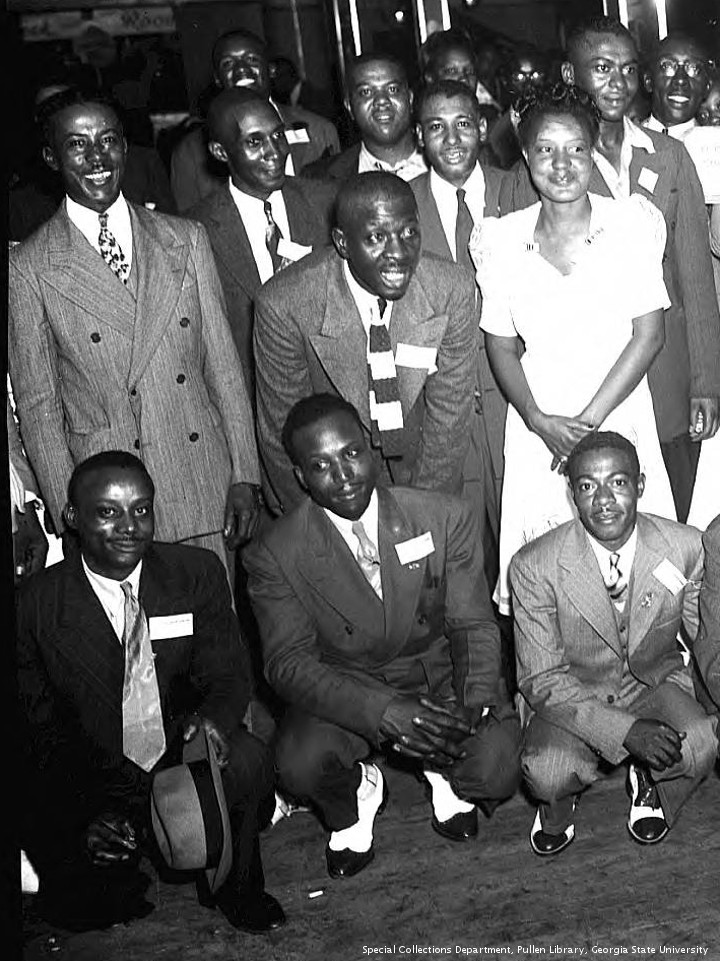
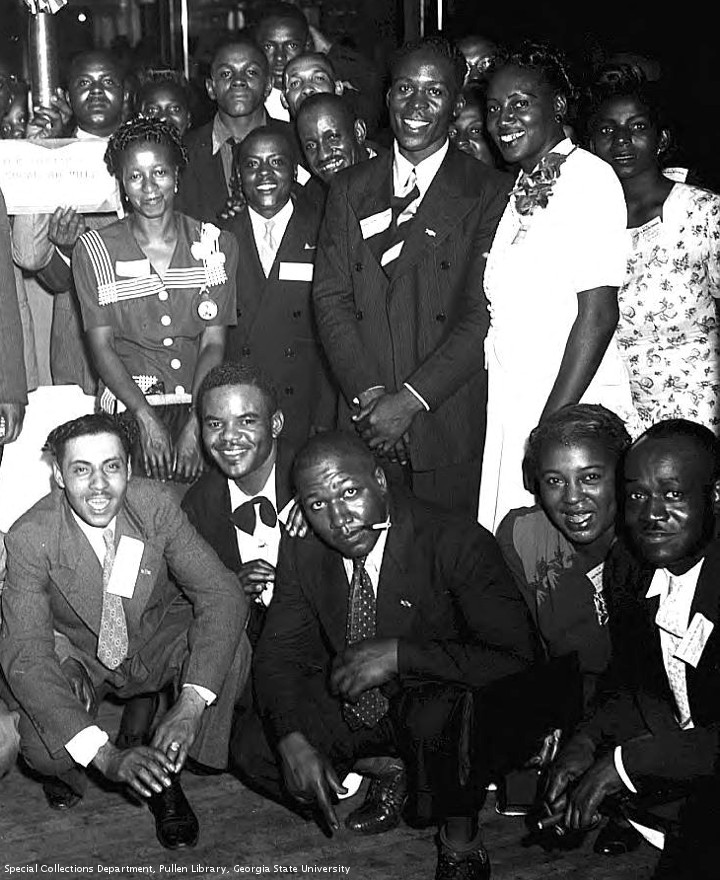
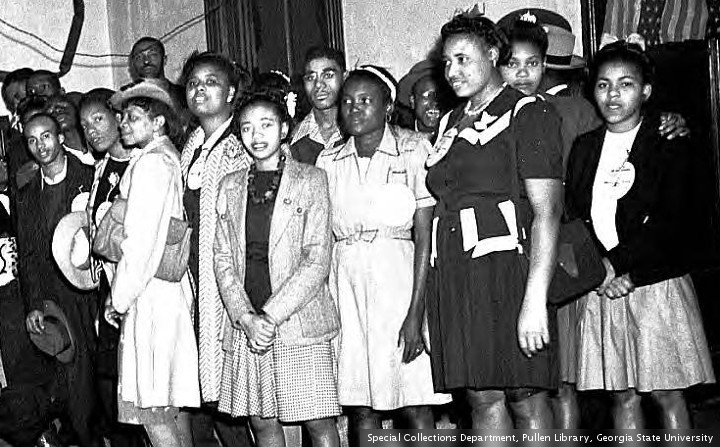
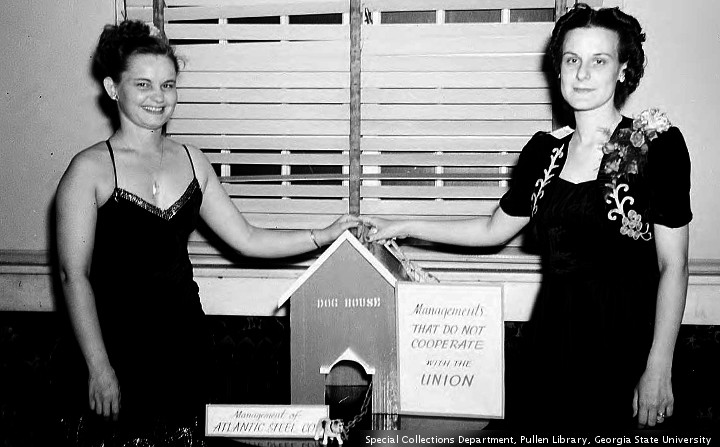
The spell check suggestion for contextomy is contentment. This is a repost. Pictures today are from “The Special Collections and Archives, Georgia State University Library.”



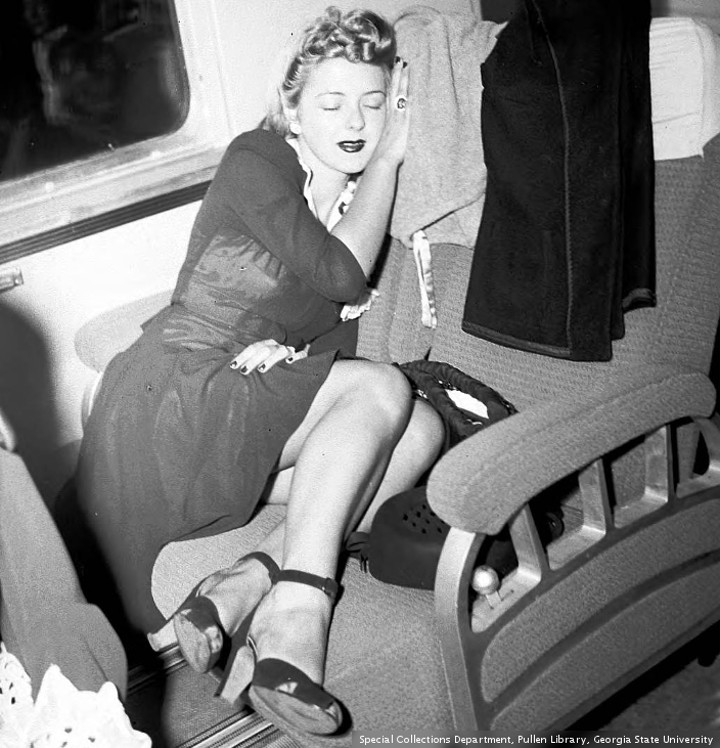

The Return Of The Spoon


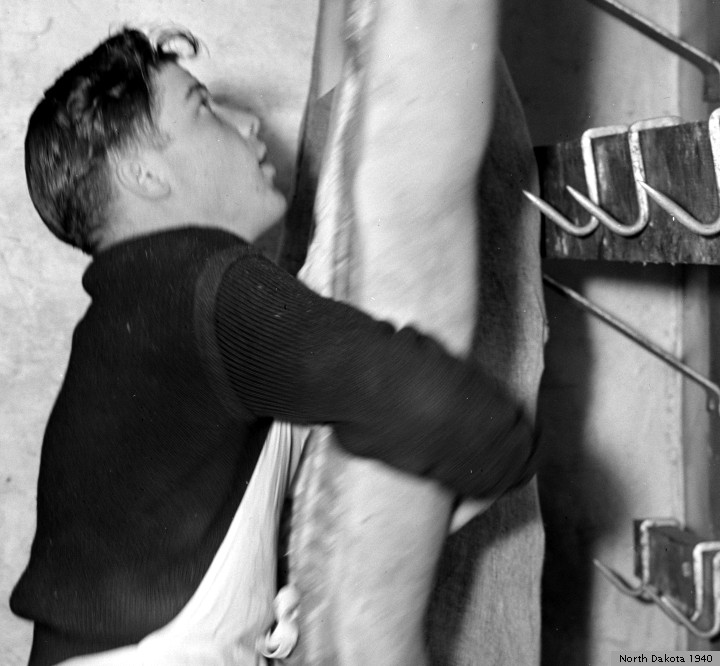


PG finally finished Skinny Legs and All. Part one of the chamblee54 book report was published July 7, when PG read page 207 at 2:07 pm. Part two followed 11 days later.
It is now October 1. It took PG this long to read the remaining 272 pages. Reading while you are warming up the vehicle only goes so far. Slack is real. Slack is important, even when it’s impolite to say slack lives matter. Slack death is going too far.
SLAA winds up in Jerusalem. Boomer Petway built a statue of a multi-phorodite donkey. The heavy metal hulk drew both hipster praise, and righteous indignation. Ellen Cherry Charles is living with Boomer, having overcome divorce to go back to her man.
The last action of SLAA takes place in a Jerusalem garden. A recently fucked Ellen Cherry is eating breakfast, when Boomer bounters in. He found a spoon resting near the non-binary donkey. It looks “exactly like the one we lost in the cave that day.” It probably is that silver spoon.
Tom Robbins writes fantasy tales, set in modern america. SLAA takes the concept a bit further. A dessert spoon, a purple sock, and a can o’ beans are left behind in a cave, after a conch shell hears a Petway scream jezebel in a moment of passion. After the Petways go to New York, the spoon follows, along with the other objects. The reader is not exactly sure how this happens, but it does. The spoon winds up in a New York apartment, where it finds a painting Ellen Cherry made of it. Somehow, the spoon goes out a window, and lands on the head of a detective. After a few more plot twists, the spoon winds up in Jerusalem. This is all in the book. If you read it, you might be able to keep up with it.
The action in SLAA culminates on super bowl sunday. In the story, a New York team … the Jets/Giants binary is left to the imagination … wins the game. When PG was reading SLAA for the first time, in wintertime 1991, the New York Giants won the Super Bowl. Meanwhile, a few hundred thousand American troops were in Saudi Arabia, anticipating the start of a mid-east war. This war had something to do with Jerusalem, among other things. Did Tom Robbins anticipate a smidgen of synchronicity? Pictures today are from The Library of Congress.


 Chamblee54
leave a comment