Thomas Jefferson Said What?



PG was wasting time with facebook when he saw a friend say “Damn I love this quote”. The passage being praised was “If you are neutral in situations of injustice, you have chosen the side of the oppressor.” Desmond Tutu. The rhetoric alert started to flash. These days, the wolf and the sheep buy their clothes at the same Walmart. To hear some oppressors talk, they are the ones under attack. It is tough to tell the good guys from the bad guys. Often you can make things worse by getting mixed up. Sometimes the best thing to do is mind your own business.
Ok, now that is out of the way. Some lines sound good, but don’t hold up to a bit of thinking. As for the veracity of the quote, Desmond Tutu may very well have said it. (or maybe one of his rivals said it, and Mr. Tutu copied it.) The quote has been attributed to Thomas Jefferson, Edmund Burke, Patrick Henry, and probably others. Almost no one has a source, for the quote, from the dead white guys.
A post called MISQUOTING THE FOUNDERS did not mince words. “The only problem with this scene that has been repeated many times across the country is that Thomas Jefferson never said that, never wrote that, and quite possibly never thought it. Our aspiring politician had fallen victim to the perils of popular misattribution. You could fill a book with misquotes and misattributed quotes we hear repeated regularly today. Right now if I Google “All tyranny needs to gain a foothold is for people of good conscience to remain silent” the entire first page of results wrongly attribute it to Thomas Jefferson. The quote and its many variants have been attributed in the past to Thomas Paine and Edmund Burke, but no record exists of the quote in any of their writings or contemporary accounts.”
On November 13, 1787, Mr. Jefferson wrote a letter to William Smith. The letter is full of zesty quotes. “What country before ever existed a century & a half without a rebellion? & what country can preserve it’s liberties if their rulers are not warned from time to time that their people preserve the spirit of resistance? Let them take arms. The remedy is to set them right as to facts, pardon & pacify them. What signify a few lives lost in a century or two? The tree of liberty must be refreshed from time to time with the blood of patriots & tyrants. It is it’s natural manure.”
A few lines above that, Mr. Jefferson said “God forbid we should ever be 20 years without such a rebellion.” Twenty years after he wrote this, Mr. Jefferson was President. He probably did not want to deal with a revolution when he was President.
Getting back to the quote about tyranny, Martin Porter wrote an entertaining essay, A study of a Web quotation. He gives credit, or blame, to Edmund Burke. First, a list of different versions is presented. This is a clue that something is awry. The conclusion: “There is no original. The quote is bogus, and Burke never said it. It is a pseudo-quote, and corresponds to real quotes in the same way that urban legends about the ghost hitch-hiker vanishing in the back of the car and alligators in the sewers correspond to true news stories.”
Mr. Porter wrote a follow up essay, Four Principles of Quotation. These principles are: Principle 1 (for readers) Whenever you see a quotation given with an author but no source assume that it is probably bogus. Principle 2 (for readers) Whenever you see a quotation given with a full source assume that it is probably being misused, unless you find good evidence that the quoter has read it in the source. Principle 3 (for quoters) Whenever you make a quotation, give the exact source. Principle 4 (for quoters) Only quote from works that you have read.
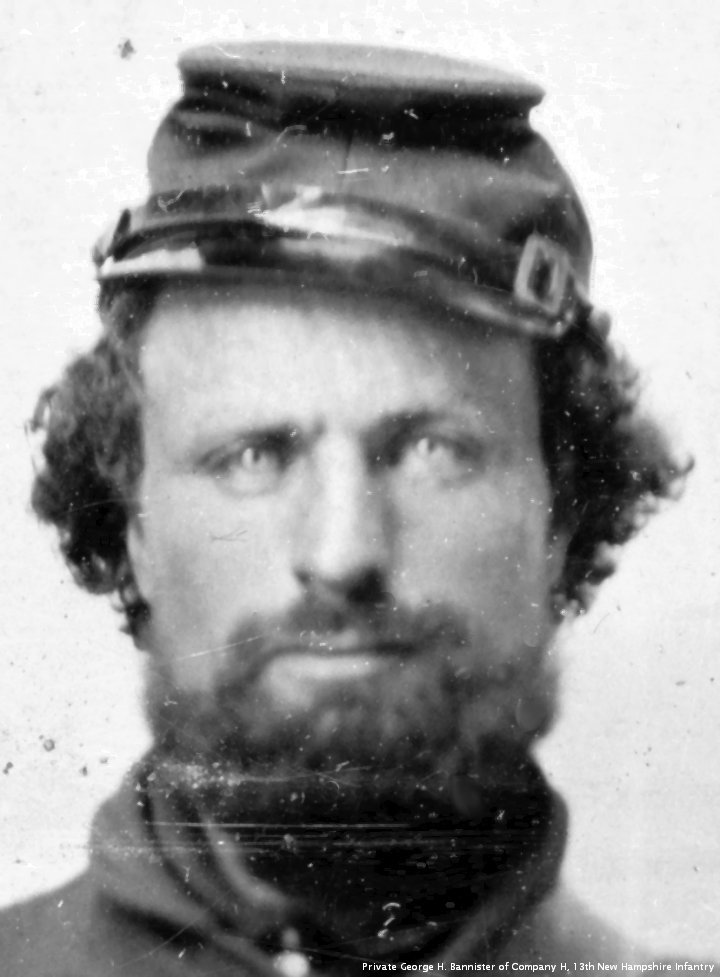
If these principles were to be used, then there would be a lot less hotheaded talking on the intercom. Those who are trying to influence you to the justice of their cause will not want you to read this. Pictures for this feature are from The Library of Congress. These pictures are Union soldiers, from the War Between the States. When war is discussed, all inspiring quotes are in doubt.
This is a repost. It is written like James Joyce. In the past year, doing due diligence on alleged quotes has become a hobby. Many people don’t care who said it, if they agree with the thoughts expressed. The prevailing thought is that an idea becomes more true with a famous name at the end. If the famous person is deceased, and cannot defend his/her reputation, that is not a problem. People do not like being told that Santa Claus does not exist.



 Chamblee54
There was a facebook discussion of this post.
Gil Robison There is a man who runs a website called Fake Buddha Quotes. Ppl send suspicious sayings to him, and he tracks down the provenance, if any, finds the original non-Buddha source if that’s the case, or speculates on which maxims traditionally attributed to the Buddha have been mangled to form the questionable quotation, or verifies if it is indeed the authentic word of the Buddha (buddhavacana) though of course it’s not at all impossible that many or even most originated long after his time and became part of the accepted canon.
Fetishizing or sacrilizing words seems more of a Western, Judeo-Christian-Islamic thing. The sacred books are quoted chapter and verse to support various positions in controversies, or to give comfort with familiar wordings.
In Sanatanadharma—-the ways of doing things that originated in India—the precision of mantras and sometimes liturgies is important, (sacred sounds that have powers of their own)but the wording of teachings not so much. It’s said that when the Buddha taught his voice was like thunder, carried great distances, and every person heard it in his own language. His disciples were told to teach in the local languages rather than their own or the language in which they had been given teachings. In fact Pali was an amalgam of several related languages or dialects made for the purpose of being intelligible to many different speakers.
This seems to imply the primacy of the thought of concept over the word or sign or label. In fact wordless mind to mind transmission is a tradition that still lives. It has the effect of working against conflating the substantive with the symbol, sign or word that merely represents it. All phenomena are said to be empty if inherent existence, temporary, always subject to change, without essence, so there is ultimately nothing to cling to, to become attached to or obsessed with, to defend from perceived threats. Ultimately there is no self or other.
In the Abrahamic religions the word is important. In fact it IS God.and shouldn’t be messed with. Rather it is reified, made solid, given presence, and we take comfort in its telling us exactly what we should do and how to do it.
Luther Mckinnon 1 – Sacriziling is a new word to me. It sounds vaguely erotic. The spell check suggestion for sacrilizing is criminalizing.
2 – I have seen fake buddha quotes. Another helpful source is Quote Investigator. A third is Wish I’d Said That, or WIST. It is a quote source that is careful to always give a source, or say that it is attributed.
3 – One of the ten commandments is to have no other g-d before you. When you take a text, and call it the word of g-d, you are, in effect, making a g-d out of that book. We can see the problems this leads to. When it comes to xtianity, one of the few beliefs I have is that g-d does not write books.
4 – The text or belief debate has probably gone on for as long as man has known how to write. There is a quote attributed to Homer, that when man learns how to write, he will forget how to remember.
5 – Confucius is another ancient asian who westerners like to quote. There is a tradition of taking a corny saying, and prefacing it with Confucius says…
Gil Robison 4 is certainly true. The monks’ ability to memorize long texts amazed me. It reminded me of how we remember years later the words to songs we heard when we were young, the ages of the student monks. The role of the text in Tibetan Buddhism is rather different than in the West. There are root texts, usually quatrains, that are memorized by rote, then written commentaries usually studied, and finally oral commentaries given. Some say this last is the.most important, since it is the teacher who is the door way to everything else.
Finally the subjects are debated, but in a stylized way, with one person propounding a thesis and another questioning it. The propounder can give only 1 of 4 answers, and the questioner’s task is to lead him to a place where he contradicts his original thesis. It’s largely used to assimilate the meaning of the text and for memory.
[…] subsequent interpretation of the quote when it is restored to its original context.” Another chamblee54 post, about a dubious quote, refers to the Four Principles of Quotation. Principle 1 Whenever you see a […]
[…] subsequent interpretation of the quote when it is restored to its original context.” Another chamblee54 post, about a dubious quote, refers to the Four Principles of Quotation. Principle 1 Whenever you see a […]
[…] look foolish by saying it? With Oscar Wilde, it could be both of these things at the same time. Principle Four, of the four principles of quotations, reads “Only quote from works that you have read.” […]