











The Lady, Or The Tiger?




In the very olden time there lived a semi-barbaric king, whose ideas, though somewhat polished and sharpened by the progressiveness of distant Latin neighbors, were still large, florid, and untrammeled, as became the half of him which was barbaric. He was a man of exuberant fancy, and, withal, of an authority so irresistible that, at his will, he turned his varied fancies into facts. He was greatly given to self-communing, and, when he and himself agreed upon anything, the thing was done. When every member of his domestic and political systems moved smoothly in its appointed course, his nature was bland and genial; but, whenever there was a little hitch, and some of his orbs got out of their orbits, he was blander and more genial still, for nothing pleased him so much as to make the crooked straight and crush down uneven places.
Among the borrowed notions by which his barbarism had become semified was that of the public arena, in which, by exhibitions of manly and beastly valor, the minds of his subjects were refined and cultured.
But even here the exuberant and barbaric fancy asserted itself. The arena of the king was built, not to give the people an opportunity of hearing the rhapsodies of dying gladiators, nor to enable them to view the inevitable conclusion of a conflict between religious opinions and hungry jaws, but for purposes far better adapted to widen and develop the mental energies of the people. This vast amphitheater, with its encircling galleries, its mysterious vaults, and its unseen passages, was an agent of poetic justice, in which crime was punished, or virtue rewarded, by the decrees of an impartial and incorruptible chance.
When a subject was accused of a crime of sufficient importance to interest the king, public notice was given that on an appointed day the fate of the accused person would be decided in the king’s arena, a structure which well deserved its name, for, although its form and plan were borrowed from afar, its purpose emanated solely from the brain of this man, who, every barleycorn a king, knew no tradition to which he owed more allegiance than pleased his fancy, and who ingrafted on every adopted form of human thought and action the rich growth of his barbaric idealism.
When all the people had assembled in the galleries, and the king, surrounded by his court, sat high up on his throne of royal state on one side of the arena, he gave a signal, a door beneath him opened, and the accused subject stepped out into the amphitheater. Directly opposite him, on the other side of the inclosed space, were two doors, exactly alike and side by side. It was the duty and the privilege of the person on trial to walk directly to these doors and open one of them. He could open either door he pleased; he was subject to no guidance or influence but that of the aforementioned impartial and incorruptible chance. If he opened the one, there came out of it a hungry tiger, the fiercest and most cruel that could be procured, which immediately sprang upon him and tore him to pieces as a punishment for his guilt. The moment that the case of the criminal was thus decided, doleful iron bells were clanged, great wails went up from the hired mourners posted on the outer rim of the arena, and the vast audience, with bowed heads and downcast hearts, wended slowly their homeward way, mourning greatly that one so young and fair, or so old and respected, should have merited so dire a fate.
But, if the accused person opened the other door, there came forth from it a lady, the most suitable to his years and station that his majesty could select among his fair subjects, and to this lady he was immediately married, as a reward of his innocence. It mattered not that he might already possess a wife and family, or that his affections might be engaged upon an object of his own selection; the king allowed no such subordinate arrangements to interfere with his great scheme of retribution and reward. The exercises, as in the other instance, took place immediately, and in the arena. Another door opened beneath the king, and a priest, followed by a band of choristers, and dancing maidens blowing joyous airs on golden horns and treading an epithalamic measure, advanced to where the pair stood, side by side, and the wedding was promptly and cheerily solemnized. Then the gay brass bells rang forth their merry peals, the people shouted glad hurrahs, and the innocent man, preceded by children strewing flowers on his path, led his bride to his home.
This was the king’s semi-barbaric method of administering justice. Its perfect fairness is obvious. The criminal could not know out of which door would come the lady; he opened either he pleased, without having the slightest idea whether, in the next instant, he was to be devoured or married. On some occasions the tiger came out of one door, and on some out of the other. The decisions of this tribunal were not only fair, they were positively determinate: the accused person was instantly punished if he found himself guilty, and, if innocent, he was rewarded on the spot, whether he liked it or not. There was no escape from the judgments of the king’s arena.
The institution was a very popular one. When the people gathered together on one of the great trial days, they never knew whether they were to witness a bloody slaughter or a hilarious wedding. This element of uncertainty lent an interest to the occasion which it could not otherwise have attained. Thus, the masses were entertained and pleased, and the thinking part of the community could bring no charge of unfairness against this plan, for did not the accused person have the whole matter in his own hands?
This semi-barbaric king had a daughter as blooming as his most florid fancies, and with a soul as fervent and imperious as his own. As is usual in such cases, she was the apple of his eye, and was loved by him above all humanity. Among his courtiers was a young man of that fineness of blood and lowness of station common to the conventional heroes of romance who love royal maidens. This royal maiden was well satisfied with her lover, for he was handsome and brave to a degree unsurpassed in all this kingdom, and she loved him with an ardor that had enough of barbarism in it to make it exceedingly warm and strong. This love affair moved on happily for many months, until one day the king happened to discover its existence. He did not hesitate nor waver in regard to his duty in the premises. The youth was immediately cast into prison, and a day was appointed for his trial in the king’s arena. This, of course, was an especially important occasion, and his majesty, as well as all the people, was greatly interested in the workings and development of this trial. Never before had such a case occurred; never before had a subject dared to love the daughter of the king. In after years such things became commonplace enough, but then they were in no slight degree novel and startling.
The tiger-cages of the kingdom were searched for the most savage and relentless beasts, from which the fiercest monster might be selected for the arena; and the ranks of maiden youth and beauty throughout the land were carefully surveyed by competent judges in order that the young man might have a fitting bride in case fate did not determine for him a different destiny. Of course, everybody knew that the deed with which the accused was charged had been done. He had loved the princess, and neither he, she, nor any one else, thought of denying the fact; but the king would not think of allowing any fact of this kind to interfere with the workings of the tribunal, in which he took such great delight and satisfaction. No matter how the affair turned out, the youth would be disposed of, and the king would take an aesthetic pleasure in watching the course of events, which would determine whether or not the young man had done wrong in allowing himself to love the princess.
The appointed day arrived. From far and near the people gathered, and thronged the great galleries of the arena, and crowds, unable to gain admittance, massed themselves against its outside walls. The king and his court were in their places, opposite the twin doors, those fateful portals, so terrible in their similarity.All was ready. The signal was given. A door beneath the royal party opened, and the lover of the princess walked into the arena. Tall, beautiful, fair, his appearance was greeted with a low hum of admiration and anxiety. Half the audience had not known so grand a youth had lived among them. No wonder the princess loved him! What a terrible thing for him to be there!
As the youth advanced into the arena he turned, as the custom was, to bow to the king, but he did not think at all of that royal personage. His eyes were fixed upon the princess, who sat to the right of her father. Had it not been for the moiety of barbarism in her nature it is probable that lady would not have been there, but her intense and fervid soul would not allow her to be absent on an occasion in which she was so terribly interested. From the moment that the decree had gone forth that her lover should decide his fate in the king’s arena, she had thought of nothing, night or day, but this great event and the various subjects connected with it. Possessed of more power, influence, and force of character than any one who had ever before been interested in such a case, she had done what no other person had done,—she had possessed herself of the secret of the doors. She knew in which of the two rooms, that lay behind those doors, stood the cage of the tiger, with its open front, and in which waited the lady. Through these thick doors, heavily curtained with skins on the inside, it was impossible that any noise or suggestion should come from within to the person who should approach to raise the latch of one of them. But gold, and the power of a woman’s will, had brought the secret to the princess.




And not only did she know in which room stood the lady ready to emerge, all blushing and radiant, should her door be opened, but she knew who the lady was. It was one of the fairest and loveliest of the damsels of the court who had been selected as the reward of the accused youth, should he be proved innocent of the crime of aspiring to one so far above him; and the princess hated her. Often had she seen, or imagined that she had seen, this fair creature throwing glances of admiration upon the person of her lover, and sometimes she thought these glances were perceived, and even returned. Now and then she had seen them talking together; it was but for a moment or two, but much can be said in a brief space; it may have been on most unimportant topics, but how could she know that? The girl was lovely, but she had dared to raise her eyes to the loved one of the princess; and, with all the intensity of the savage blood transmitted to her through long lines of wholly barbaric ancestors, she hated the woman who blushed and trembled behind that silent door.
When her lover turned and looked at her, and his eye met hers as she sat there, paler and whiter than any one in the vast ocean of anxious faces about her, he saw, by that power of quick perception which is given to those whose souls are one, that she knew behind which door crouched the tiger, and behind which stood the lady. He had expected her to know it. He understood her nature, and his soul was assured that she would never rest until she had made plain to herself this thing, hidden to all other lookers-on, even to the king. The only hope for the youth in which there was any element of certainty was based upon the success of the princess in discovering this mystery; and the moment he looked upon her, he saw she had succeeded, as in his soul he knew she would succeed.
Then it was that his quick and anxious glance asked the question: “Which?” It was as plain to her as if he shouted it from where he stood. There was not an instant to be lost. The question was asked in a flash; it must be answered in another.
Her right arm lay on the cushioned parapet before her. She raised her hand, and made a slight, quick movement toward the right. No one but her lover saw her. Every eye was fixed on the man in the arena.
He turned, and with a firm and rapid step he walked across the empty space. Every heart stopped beating, every breath was held, every eye was fixed immovably upon that man. Without the slightest hesitation, he went to the door on the right, and opened it.
Now, the point of the story is this: Did the tiger come out of that door, or did the lady? The more we reflect upon this question, the harder it is to answer. It involves a study of the human heart which leads us through devious mazes of passion, out of which it is difficult to find our way. Think of it, fair reader, not as if the decision of the question depended upon yourself, but upon that hot-blooded, semi-barbaric princess, her soul at a white heat beneath the combined fires of despair and jealousy. She had lost him, but who should have him?
How often, in her waking hours and in her dreams, had she started in wild horror, and covered her face with her hands as she thought of her lover opening the door on the other side of which waited the cruel fangs of the tiger!
But how much oftener had she seen him at the other door! How in her grievous reveries had she gnashed her teeth, and torn her hair, when she saw his start of rapturous delight as he opened the door of the lady! How her soul had burned in agony when she had seen him rush to meet that woman, with her flushing cheek and sparkling eye of triumph; when she had seen him lead her forth, his whole frame kindled with the joy of recovered life; when she had heard the glad shouts from the multitude, and the wild ringing of the happy bells; when she had seen the priest, with his joyous followers, advance to the couple, and make them man and wife before her very eyes; and when she had seen them walk away together upon their path of flowers, followed by the tremendous shouts of the hilarious multitude, in which her one despairing shriek was lost and drowned!
Would it not be better for him to die at once, and go to wait for her in the blessed regions of semi-barbaric futurity?And yet, that awful tiger, those shrieks, that blood!
Her decision had been indicated in an instant, but it had been made after days and nights of anguished deliberation. She had known she would be asked, she had decided what she would answer, and, without the slightest hesitation, she had moved her hand to the right.
The question of her decision is one not to be lightly considered, and it is not for me to presume to set myself up as the one person able to answer it. And so I leave it with all of you: Which came out of the opened door,—the lady, or the tiger?
The Lady, Or The Tiger? by Frank R. Stockton The text today is from Project Gutenberg. This is a repost. Pictures are by Chamblee54.




Optimism Abuse
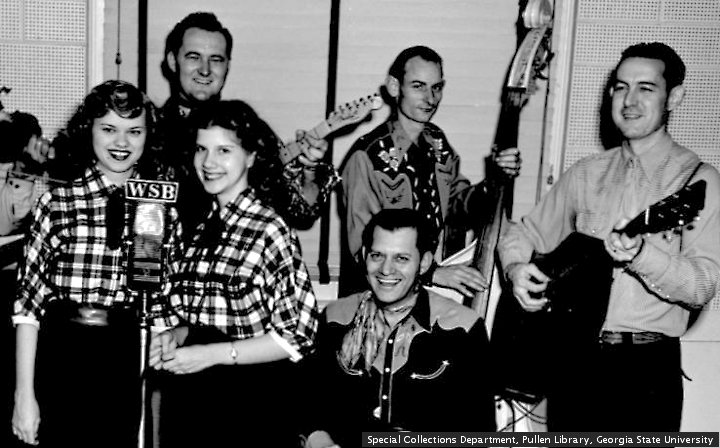
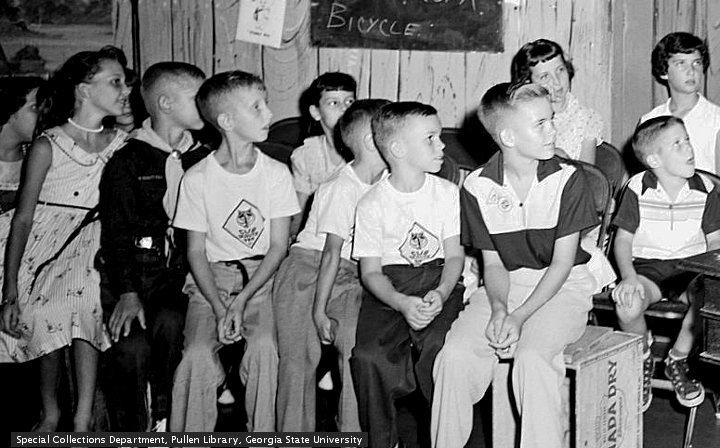
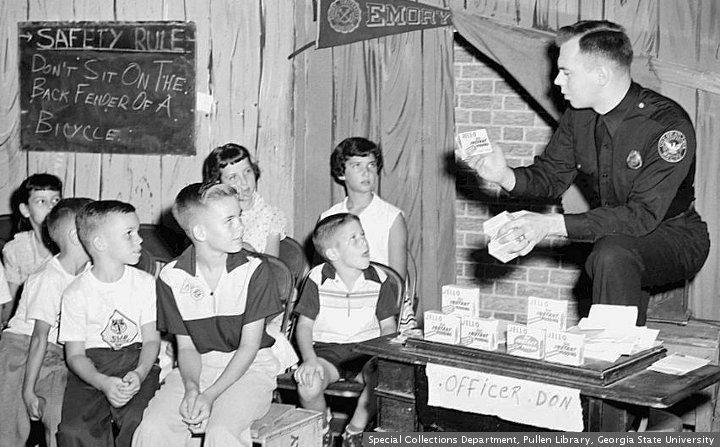




PG was spending a hot summer afternoon indoors. As background noise for multi tasking, he found a video discussion about optimism. The positivity police have harassed PG about negative attitude for years and years. Maybe listening to this discussion will help.
One of the talkers is a lady named Tali Sharot, promoting a book, The Optimism Bias: A Tour of the Irrationally Positive Brain. She is an academic, at University College London. She does studies about, er, ah, something. In one study, “we had people imagine medical conditions, headache, break your arm, and so on… signalling how bad you thought that was going to be.”
One way to get a headache is to listen to this BHTV discussion. Dr. Sharot is talking on the phone, and the sound is horrible. All the optimism in the world is not going to make her voice any more pleasant. Then she starts to talk about the choices people have to make in these studies. Should I take a job in London, or in Paris? Should I take a vacation in Greece, or in Thailand? PG began to suspect that the target audience did not include him.
Some of the amazon reviews are not kind. not for me June 11, 2011 Patricia R. Andersen “redheaded booklover” (MD USA) This review is based on what I have seen and experienced. It is entirely possible that I just know cranky and depressed people, but somehow I don’t think so. But I did have the “irrational optimism” that the longer I read this book, the better I would like it. Needless to say, I didn’t. … The book doesn’t work for me. Other people might enjoy it, but I did not. I’d like to get back the time I feel that I have wasting by reading this book. I would not recommend this book to anyone, but again, your mileage may varry.
Compltete jibberish July 31, 2011 larry white (Bryan, OH USA) C is completel jibberish and not backed by facts ir reason. The author has failed to deliver scientific backup for her claims. No wonder we sre a mess as a country. She claims obama is optimistic? We are all optimistic when we are getting our way but roadblocks hae shown obama to be a very ugly angry man. I have requested a refund
Out of a misguided sense of fairness, PG decided to listen to a TED talk, Tali Sharot: The optimism bias. The lady is good at sales. The sound of the TED talk is much better than the BHTV discussion.
The only trouble is the content of the talk. PG made it through 12 minutes of an 18 minute talk. Dr. Sharot throws questionable ideas out, then moves on to the next faulty assumption. Little evidence for her claims is offered. She uses misleading studies and statements. Evidently, Dr. Sharot is optimistic that people will believe what she says.
An example is cancer. PG lost both parents to this condition. This is an emotional subject. PG suspects that talk about an “average likelihood of suffering from cancer” is both meaningless and cruel. Anyone who knows how statistics can be manipulated, also knows that “average” is a weasel word. If you do contract cancer, your chances of suffering are close to 100%
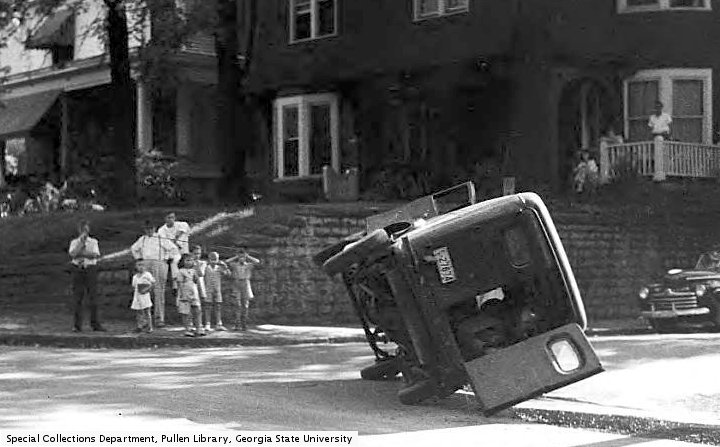
This is her closing paragraph. It is edited, out of mercy for those with better things to do than read blogs. It is helpful that penguins are an exotic species. Few listeners know much about penguins. “Because if you’re one of these pessimistic penguins up there who just does not believe they can fly, you certainly never will… But if you’re an optimistic penguin who believes they can fly, but then adjusts a parachute to your back just in case things don’t work out exactly as you had planned, you will soar like an eagle, even if you’re just a penguin.” Pictures today are from “The Special Collections and Archives,Georgia State University Library”.





Joni Part Two







Joni Mitchell gave am interview recently to a Canadian Broadcaster. She is famously Canadian. The chat was in her California living room, which is littered with her paintings. Many of the paintings are things like Saskatchewan at forty below. Mrs. Mitchell alternates between painting and music, which tend to balance her cigarette fueled mind.
The CBC interview is paired with a more formal chat in Toronto. She could not smoke during the Toronto interview. The Toronto interviewer is just a bit smarter than Jian Ghomeshi, who endured the second hand smoke in California. Mr. Ghomeshi said things like “The song “Woodstock” defined a generation.” Mrs. Mitchell was in a New York City hotel room that famous weekend.(Spell check suggestion for Jian Ghomeshi: Joan Shoeshine)
There are some juicy quotes. Art is short for artificial. When listening to Joni songs, you should look at yourself, and not at her. Free love was just a gimmick for the men to get laid. False modesty is pointless. Sylvia Plath was a liar, or maybe it was Anne Sexton. (James Dickey said that Sylvia Plath was the Judy Garland of American letters.)
A fearsome foursome gets in the game. Someone screamed, on a live album. “Joni, you have more flash than Mick Jagger, Richard Nixon, or Gomer Pyle combined!.” Years later, the fan introduced himself to Mrs. Mitchell.
The conversation mentioned Bob Dylan. He is from Northern Minnesota, and not quite Canadian. Apparently, Mrs. Mitchell kicked up a fuss with some comments in 2010. ” Bob is not authentic at all. He’s a plagiarist, and his name and voice are fake. Everything about Bob is a deception. We are like night and day, he and I. … Grace [Slick] and Janis Joplin were [sleeping with] their whole bands and falling down drunk, and nobody came after them!”
Did Bob Dylan and Joni Mitchell ever tune up together? Joan Baez, a similarly named contemporary, is well known for dating Mr. Zimmerman. Ms. Baez did sing at Woodstock.
Mrs. Mitchell doesn’t exactly take back her comments about Bob Dylan. ““I like a lot of Bob’s songs, though musically he’s not very gifted. He’s borrowed his voice from old hillbillies. He’s got a lot of borrowed things. He’s not a great guitar player. He’s invented a character to deliver his songs. Sometimes I wish that I could have that character — because you can do things with that character. It’s a mask of sorts.”
In a kill the messenger moment, Mrs. Mitchell lashed out at the interviewer from the 2010 piece. It is odd, since he didn’t ask any trick questions. Black and white transcripts are tough to deny. “The interviewer was an asshole.” (The body part is bleeped.) “I hate doing interviews with stupid people, and this guy’s a moron” “His IQ is somewhere between his shoe size and (unintelligible)”.
The troublesome 2010 interview was conducted with John Kelly, a Joni Mitchell tribute artist. “JK: Drag does have a power, though — that netherworld of a thing you can’t quite know, which makes people nervous. JM: Drag wasn’t always counterculture. In his memoirs, Nixon talked about the Harvard and Yale men in power who would put on these plays where they dress like women, and Milton Berle did a kind of “hairy drag.” Becoming a gay thing made drag go underground.” Did Mick Jagger and Gomer Pyle ever do drag with Richard Nixon?

























Be Kind To Your Enemy



Did Jesus say to “Love your enemy”? Some believe this, and do it. Some claim to believe this, and practice the opposite. There are others who claim to love their enemies, but you have to understand what they mean by it. It can be very confusing.
PG went to a source for documentation. Oh, the blessed conjunction of copy paste with public domain. When PG entered enemy (singular) in the search engine, 100 verses came up. When the request was made plural (enemies), 237 entries popped up. The last mention of enemies is Revelation 11:12 “And they heard a great voice from heaven saying unto them, Come up hither. And they ascended up to heaven in a cloud; and their enemies beheld them.” Loving your enemies does not include bringing them to heaven with you. There is also the star of the show.
Matthew 5:44 “But I say unto you, Love your enemies, bless them that curse you, do good to them that hate you, and pray for them which despitefully use you, and persecute you;.
There is scholarly debate about what Jesus did, or did not, say. The words available to modern man have been copied by hand, edited, translated, and interpreted. PG does not know Aramaic from Alabama. Like anyone else, PG can only read and listen, and think for himself.
In a sense it does not matter what Jesus “really” said. The cult of Jesus Worship is going to believe what it wants. More important, it is going to practice what it wants. As far as the difference between what Jesus “really” said and what his believers say and do…they can explain.
What follows is a humble suggestion. Maybe the translators and scribes got it wrong. Maybe Jesus did not say to love your enemy. Maybe what Jesus said was to show kindness to everyone. This is a practice thing, rather than a belief thing.
It is not as much fun to be nice to someone, as it is to scream about life after death. Kindness does not need to be justified by a quote from a magic book. You just need to do it.
Pictures are from Gwinnett County. This is a repost.




Significant Others






When PG took Spring Fever back to the Chamblee library, the facility was getting ready to close. Make your final selections, and bring them to the front desk.
PG took a stroll through the fiction section. He saw that no unread books by Mary Kay Andrews, or Raymond Chandler, were available. PG decided to check the Armistead Maupin section. (Spell check suggestion: Farmstead Maudlin) Significant Others did not ring any bells. PG decided to take it home.
It became obvious before long that PG had already read this book. The old copy on the book shelf was a clue. The Tales of the City series is great fun, and reading one a second time is worth the effort. Besides, you can compare the two editions. The already owned copy was printed in 1994. The list price is $12.00. It had a picture of a younger Armistead Maupin. “He lives in San Francisco with his lover and partner, Terry Anderson.” (PG heard once that Mr. Anderson is from Marietta GA. Mr. Maupin met Mr. Anderson in Atlanta, while on a book tour. There is no link for that story.)
The library copy has text identical to the shelf copy. It was printed in 2007, and has a list price of $13.95. The picture of the author is smaller, and has much more gray hair. “Maupin lives in San Francisco with his husband, Christopher Turner”.
There are a few quotes which were remembered from the first reading. These quotes each say something about the story. For those who are new, the Tales of the City books are collections of a newspaper column that Mr. Maupin wrote. It is the story of a collection of people who live by the bay. One of the prime players is Michael Tolliver, who lives in a house at 28 Barbary Lane. The house is owned by Anna Madrigal. She does not have a large role in S.O.
“Michael looked out to sea. “That was nineteen eighty one … the last time I went” “Four years,” said Thack. (A tourist that Michael befriends.) “It seems like forty,” said Michael. He turned and looked at Thack. “Does it bother you that I am positive?”
AIDS hit San Francisco earlier, and harder, than it hit Atlanta. In 1985 it was mostly a rumor in Georgia. This would change in 1986, as the bug made up for lost time. Meanwhile, in California, men were dying left and right. There were few treatments, and even less support from the general public.
“Michael regarded him for a moment, then said: “My mother gave me a new address book last Christmas. I haven’t written in it yet, because I can’t make myself leave out the people who are dead. I can’t even cross out their names”.
Some of the women in the story go to a music festival called Wimminwood.(Spell check suggestion: Satinwood) One of the ladies is just a bit rowdy. “She gets like this,” offered the woman with the ice chest. “She was with the post office for thirty seven years.”
This was a clue to the time PG read S.O. In the years at Redo Blue, the lady who ran specs was married to a retired mailman. PG repeated the quote for this lady, who appreciated the truth of it. This means that PG read S.O. roughly eleven years ago.
Maybe now would be a good time to mention the principal at Cross Keys the first year PG was there, His name was William Armistead. PG never had to talk to him. PG’s Aunt had a man who worked in her garden named Armistead. He would get locked up, and Uncle Ralph would bail him out.
Pictures today are from “The Special Collections and Archives,Georgia State University Library”.





101 Ways To Say Death Part Four







In 2008, a blogger started a series, 101 Ways to Say “Died”. It focused on epitaphs from New England cemeteries. Most of the headstones used were carved before 1825. The series has gone past 101, and is up to 118 now. If you look at the site, you see links to the individual parts. That is the number before the epitaph. Some have been skipped. The VPI site has photographs of many of the headstones used here. HT to Twenty Two Words. Pictures by Chamblee54. Parts one, two, and three have been published.
75 Sacred to the Memory of Amasa Brainard Ir Son of Lieut Amasa & Mrs Jedidah Brainard who receivd a Mortal wound on his head by the falling of a weight from the Bell on Sunday ye 22nd of Apl. 1798 as he was about to enter the Church to attend on divine worship who Departed this life April 27th in ye 20th Year of his Age In the midst of life we are in death.
76 IN MEMORY of Mr. PHENEHAS Son of Mr. THOMAS & Mrs. MARY BURNHAM, who died TRYUMPHINGLY, in hops of a goyful RESURRECTION,
Dec. ye. 22nd. AD: 1776 in ye. 23,d Year of his Age.
78 Desire Bull, d. 1791 Newport, Rhode Island Sacred to the Memory of Mrs. DESIRE relict of the late Capt NATHAN BULL Senr who after a faithful discharge of the duty asigned her in this state of labour & trial left it on the 9th of July 1791 aged 76 years.
79 SACRED to the memory of LEVI AE 26 & NATHANIEL AE 23, Sons of Mr. James & Mrs. Joanna Marshall, whose deaths, together with those of Sherburne Chase of Litchfield, N.H. and John Ives of Sudbury were occasioned by the explosion of the Powder Mill in Chelmsford, Dec. 5, 1820. They were pleasant in their lives, And in their deaths they were not divided. My age’s hope my youthful boast My soul’s chief blessing and my pride, In one sad moment all were lost When Levi and Nathaniel died. Levi Marshall and John Ives were instantly killed, Sherburne Chase & Nathaniel Marshall survived, the former 44, the latter 24 hours.
80 Here Lyes ye Remains of ye Revnd. Mr. SAMUEL ANGIER. Descended From ye Most Famous Dr. AMES & Allied to yt Larned President & Divine Mr. URIAN OAKES by Marring His Only Daughtr. He was Maney Years ye Deligent Pastor of ye Church of Christ in REHOBATH, Removed Thence to ye Pastoral Charge Of a Church in WATERTOW Whare He Faithfully Managed that Trust Till His Translation to ye Temple Above Which was Janry. 21st 1718/19 AEtats. 65
81 Here Lyes Inter’d ye Body of ye Much Respected Doctor Benjamin Wheate Son to Doctor, Samuel Wheate of Cambridge New England, Who after a Laborious Life Spent to Sarve Mankind Resigned his Mortal Life In ye full hope & Expectation of a better in ye Future World;
Dyed Janr, 27th 1758 in ye 49th year of his Age.
82 Here lyes Interr’d ye Body of Deacon NATHANIEL STOW Call’d to His Office Octo. 4th & to His Reward Decr. 15th 1737 AEtatis 40.
83 Erected in memory of Mr. CALEB CHURCH who in health was instantly arrsted by Death
Sept. 30th. 1825. Aged 67.
84 Erected in Memory of CAPT. ISAAC TOMPKINS, aged 27 years and DAVIS S. TOMPKINS aged 19 years, sons of Mr. Benjamin Tompkins and Deborah his wife. They sailed from Norfolk, Va. Aug. 24. 1826. in the brig MARY-ELIZA, bound to Antigua and have never since been heard of.
85 Betsey Simmons AE. 84 yrs. Gone Home. Little Compton, RI
86 Here Sleep The Remains of Mrs. Elizabeth Fernald Wife of Mr. Nathanl. W. Fernald, & daughter of Capt. Nathanl. Melcher, who resigned this life, in calm and humble hope of heaven October 5th. 1809, Aged 36 Years. Kind husband, children, parents, friends, When here you rest your eye; Or pensive tread this hallow’d ground, Remember, you must die.
87 Sacred to the memory of Mrs. Mary Jackson, Relict of the late Hall Jackson Esqr. M.D. who with a comfortable hope of entering into rest was released from a long series of uncommon pain and infirmity, which she bore with singular patience and fortitude, March 30thm 1805. AEtat 62. Mary Jackson, Portsmouth, NH, 1805 Posted by Caitlin GD Hopkins at 7:27 AM
88 In Memory of Miss RUTHE LYMAN who was possessed of many amiable qualities, the joy of her parents, the delight of her connexions and beloved of all : if youth, if virtue deserve a Tear, reader, drop it here when the engraving of this Stone inform you when she left her weeping friends in the 23d year of her age June 22d 1785.
89 Sacred to the Memory of MR. RICHARD TAPPAN, long a worthy ruling Elder of the presbyterian Church, in this Town: who finished a well tried Life, of godliness and honesty, sweetly took his flight to his Redeemer’s arms and gently laid his hoary Head to rest beneath this mournful Turf on the 27th of April in the Year of our Lord 1785 AEtat 77.
this monumental Stone was erected by his weeping Widow and Children
90 Nathan Holt, Peabody, MA, 1792 In memory of the Rev’d NATHAN HOLT AM pastor of the 2d. church in Danvers, who rested from his labors Augt. 2d. 1792 in the 68th year of his age & 34th of his ministry. Piety, benevolence, integrity, & prudence were prominent features in his character as a man, & a minister. He lived beloved, & died lamented. Mark the perfect man and behold the upright for the end of that man is peace.
91 In memory of CAESAR Here lies the best of slaves Now turning into dust; Caesar the Ehiopian craves A place among the just. His faithful soul has fled To realms of heavenly light, And by the blood that Jesus shed Is changed from Black to White Jany. 15 he quitted the stage in the 77th year of his age. 1780
92 In Memory of Mr. NATHL. PARKS, AEt. 19, who on 21st, March 1794. being out a hunting and conceal’d in a ditch was casually shot by Mr. LUTHER FRINK
93 Here lies the Body of MISS Electa Hunt Dautr of MR JOHN & MRS ESTHER HUNT Her amiable acomplishments endeared her to all her acquaintance After a short illness she was cut down in the bloom of life Janry 24th, 1776
94 On the 12th Day of May 1768, the House of Mr. William Arms was Consumed by Fire And his Wife Mrs. Rebecca Arms unhappily parish’d in the Flames in the 70th Year of her Age. She was one who Feared God & Lov’d the Redeemer, was a singular Example of Piety, who by a devout walk was a Bright Ornament to the Christian Religion, And her Death Great Gain.







Hiroshima 69 Years Later





At 8:15 am, August 6, 1945, Hiroshima got nuked. It was the start of a new era. Since Japan is 13 hours ahead of Georgia, and standard time was used, the literal anniversary is 8:15 pm, August 5.
Tsutomu Yamaguchi was working in Hiroshima when the bomb hit. He survived, and found a train to take hime to his home town, Nagasaki.
The device dropped on Hiroshima, the Little Boy, had an estimated force of 13 kilotons of Trinitrotoluene, or TNT. A kiloton of TNT is roughly a cube whose sides are ten meters. This device is fairly tiny compared to many of the warheads developed since. Many of the modern appliances are measured in megatons, or millions of tons of TNT. The Soviet Union had a bomb with a capacity of 50 megatons, or 4,000 times the size of the Little Boy.
The largest weapon tested by The United States is the Castle Bravo. This device destroyed Bikini Atoll in the Pacific. The two piece swimsuit was named for this island. The Castle Bravo device had a yield of 15 megatons of TNT. This is roughly 1,000 times the power of the Little Boy.
The decision to drop the bomb has long been controversial. There are a lot of factors and gray areas, and the issue does not lend itself to sound bite solutions. The conventional wisdom is that Japan surrendered because of the nuclear attack. This meant the war was shortened by at least a year, there was no invasion of Japan, and many lives were saved. PG is scared by the moral calculus involved in a decision like this….do 100,000 civilian deaths prevent the deaths of 500,000 soldiers? PG suspects that even G-d herself would lose sleep over that one.
There is also evidence that the bomb was not needed. Japan was whipped in August 1945. The air raids were conducted in daylight with little resistance. A debate was going on in the Japanese government on whether to continue the fight.
An event happened the day between Hiroshima, and Nagasaki, which influenced the Japanese decision to surrender. The Soviet Union had agreed to help the United States with the war against Japan. On August 8, The Soviet Union invaded Japanese occupied Manchuria. There are indications that Japan knew the fight was hopeless at this point, and would rather surrender to The United States than The Soviet Union. This is one of the gray areas that never seems to be mentioned.
The United States wanted the war to end quickly for obvious reasons, and a few subtle ones. America did not want to share the spoils of Japanese war with The Soviet Union. There were already tensions between the two allies, and the cold war was not far off. Many felt The United States used the Little Boy as a warning to The Soviet Union.
When you get your moral software out, you might want to figure in the effect of opening the nuclear Pandora’s box. Would the nuclear bomb have been developed by other countries if America had not led the way? The science is not that complicated…after all, America hit paydirt with the Manhattan Project fairly quickly. Nonetheless, there is karma involved in using a terrible new device on a civilian population. The United States started the wind of the arms race, and has yet to feel the whirlwind.
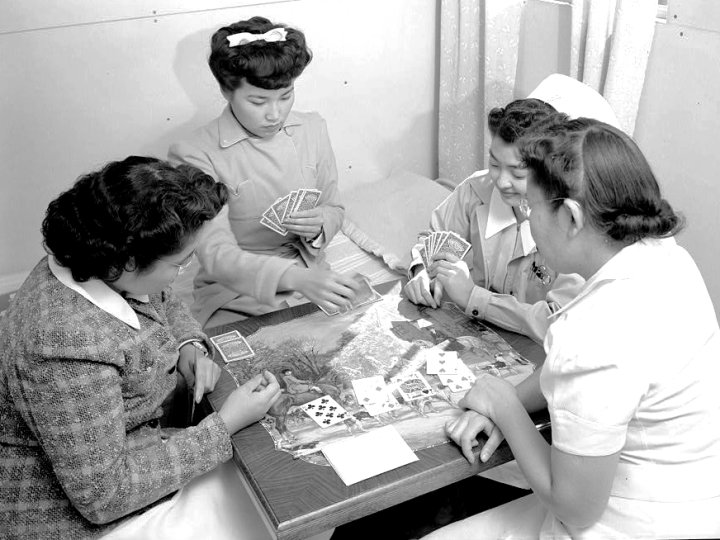
This is a repost. The pictures are from The Library of Congress. Ansel Adams took pictures of Japanese Americans, in a World War Two internment camp. The ladies in the bridge game are Aiko Hamaguchi, Chiye Yamanaki, Catherine Yamaguchi, and Kazoko Nagahama.


Weak Tweak








Kelly Clarkston likes to sing “Whatever doesn’t kills you makes you stronger.” This might be the only thing she agrees with Friedrich Nietzsche. This concept is good for books, and hit singles, but it doesn’t always work in the real world. What doesn’t kill a person might indeed make that human stronger. However, when you attack a weak idea, sometimes you make it less powerful.
Before the invasion of Babylon, Dick Cheney appeared on “Meet the Press.” “the people of Iraq … will welcome as liberators the United States”. A few hundred thousand dead Iraqis later, very few people believe this. The weak idea is dead, just like the American economy.
The quote appears to be genuine. Mr. Nietzsche wrote a book, Ecce homo, Wie man wird, was man ist, with the chapter, “Why I Am So Wise.” At some point he says “was ihn nicht umbringt, macht ihn stärker” “What does not kill him, makes him stronger. ” Mr. Nietzsche also wrote “Gott ist tot! Gott bleibt tot! Und wir haben ihn getötet.” “God is dead ! God remains dead! And we have killed him.”








Sub Human Numb Nuts






Think Progress should know better. They published a story about the remarks of a has been guitar player. This person recently referred to his critics as “sub human numb nuts”, which is the name we will use today. His name is mentioned too often already.
SH Nuts was discussing a subject which receives way too much attention. One would think that SH Nuts is a publicity whore, who enjoys saying outrageous things for the sake of being noticed. The pain that millions of Americans feel over this subject is of no concern to SH Nuts, or Think Progress.
In a perfect world, SH Nuts would be ignored. If Think Progress was not selling advertising for this Nunn Sense nonsense, they might not publish this hurtful garbage. But, look at who is sponsoring this disgusting piece. Michelle Nunn. She is running for the U.S. Senate in Georgia.
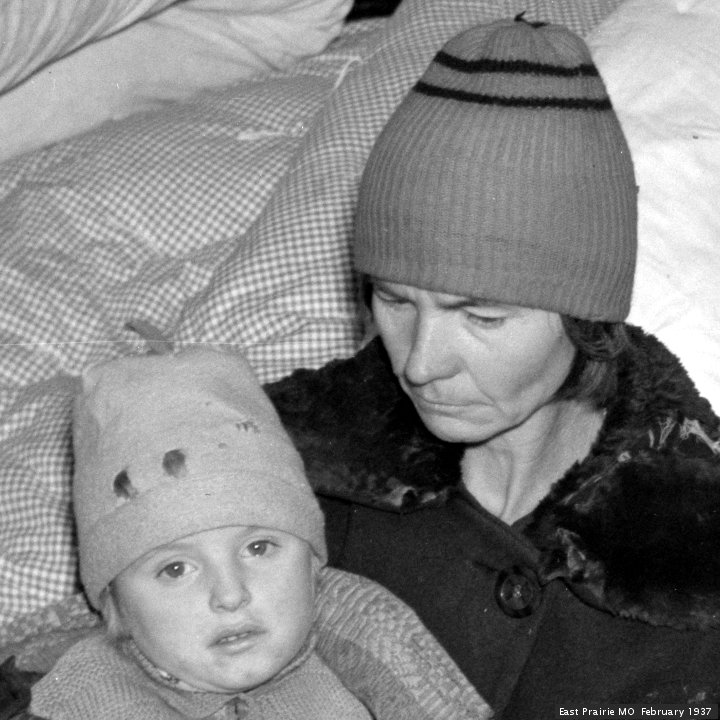
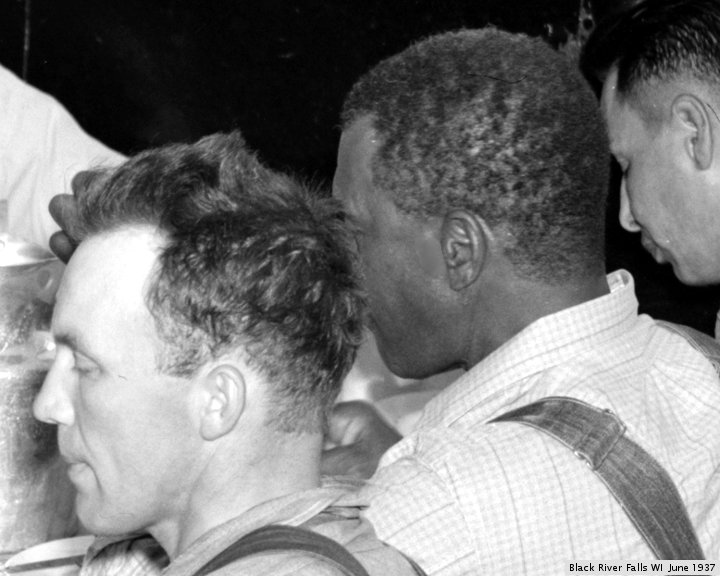
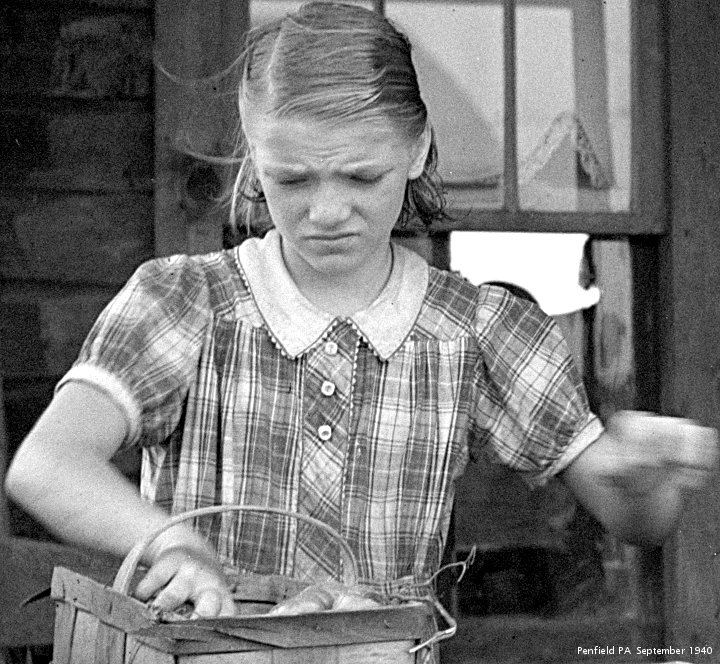
To be fair, Ms. Nunn might not have much control over where her ads are placed. Or maybe she does. The fact is, she is enabling a thoughtless attention grab by Think Progress and SH Nuts. This does not help to make America a better place. Pictures by The Library of Congress.






 Chamblee54
2 comments