Those Who Cannot Remember …


“Those who cannot remember the past are condemned to repeat it.” Unless you live under a rock, you have heard that quote. Credit/blame for this item goes to George Santayana. (b. Jorge Agustín Nicolás Ruiz de Santayana y Borrás, December 16, 1863 – September 26, 1952.) This quote is the only reason anyone has heard of GS. As it turns out, GS also can be credited with the phrase “Only the dead are safe; only the dead have seen the end of war.” Details on these two crowd pleasers to follow.
“Those who cannot remember …” (TWCR) appears in The Life Of Reason. “During the years of 1905 and 1906, he published a five-volume work titled The Life of Reason; or, The Phases of Human Progress … Santayana investigates the birth and development of human reason, which he views as an evolutionary system within the scope of physical reality. He traces the growth of the human mind towards a state of rationality, exploring the details of existence and evaluating human life in general.” TLOR was written while GS was teaching philosophy at Harvard.
TWCR is in CHAPTER XII—FLUX AND CONSTANCY IN HUMAN NATURE of volume one. Here is the abbreviated paragraph: “Progress, far from consisting in change, depends on retentiveness. When change is absolute there remains no being to improve and no direction is set for possible improvement: and when experience is not retained, as among savages, infancy is perpetual. Those who cannot remember the past are condemned to repeat it. In the first stage of life the mind is frivolous and easily distracted; it misses progress by failing in consecutiveness and persistence. This is the condition of children and barbarians … Thus old age is as forgetful as youth, and more incorrigible; it displays the same inattentiveness to conditions; its memory becomes self-repeating and degenerates into an instinctive reaction, like a bird’s chirp.”
TLOR is a heavy duty piece of work, not a glib collection of uplifting quotes. Chapter XII is about mankind’s progress in becoming a thinking being. TWCR appears to be an incidental line, not the main thrust of his thesis. The last sentence … “memory becomes self-repeating and degenerates into an instinctive reaction, like a bird’s chirp” … would seem to contradict the more famous TWCR.
How did TWCR go from being an incidental line, to being the coffee mug classic that we know today? We don’t know. Quote Investigator® traces known citations through the years. There does not seem to be any one moment when the quote became famous.
“Santayana sometimes repudiated his earlier work, in part for its having the taint of academic life. He especially spoke down at times about the Life of Reason series for its association with the progressivism of the day, and it was later edited by Santayana and his late-life personal assistant and secretary, Daniel Cory, with the intent of removing some of its more humanistic overtones.” I do not know whether TWCR is one of the “humanistic overtones.”
In contrast to TWCR, few people know about the GS connection to “Only the dead have seen the end of war.” OTDH appeared in Soliloquies in England (1922) “remarkably written amidst the uncertain, violent times of World War I.” OTDH appears in soliloquy 25, _TIPPERARY_ … “Only the dead are safe; only the dead have seen the end of war. Not that non-existence deserves to be called peace; it is only by an illusion of contrast and a pathetic fallacy that we are tempted to call it so. The church has a poetical and melancholy prayer, that the souls of the faithful departed may rest in peace.”
“Some scholars conclude that Santayana was an active homosexual based on allusions in Santayana’s early poetry (McCormick, 49–52) and Santayana’s association with known homosexual and bisexual friends. Santayana provides no clear indication of his sexual preferences, and he never married. Attraction to both women and men seems apparent in his undergraduate and graduate correspondence. The one documented comment about his homosexuality occurs when he was sixty-five. After a discussion of A. E. Housman’s poetry and homosexuality, Santayana remarked, “I think I must have been that way in my Harvard days — although I was unconscious of it at the time” (Cory, Santayana: The Later Years, 40). Because of Santayana’s well-known frankness, many scholars consider Santayana a latent homosexual based on this evidence.”
This text does not discuss the misuse of history, or of quotes. We seek to discuss the context of TWCR, and speculate about why this item is so popular. One of the lessons of history is that people will interpret history to suit their purposes, often to the detriment of mankind. It is ironic that TWCR (written in 1905) is often cited as a justification for war … and only the dead have seen the end of war. (OTDH was written in 1922, after another great war.)
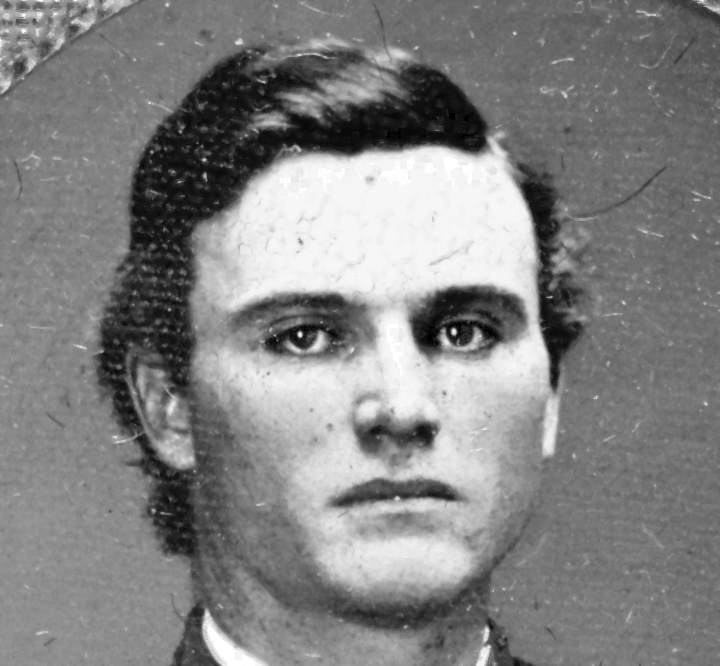
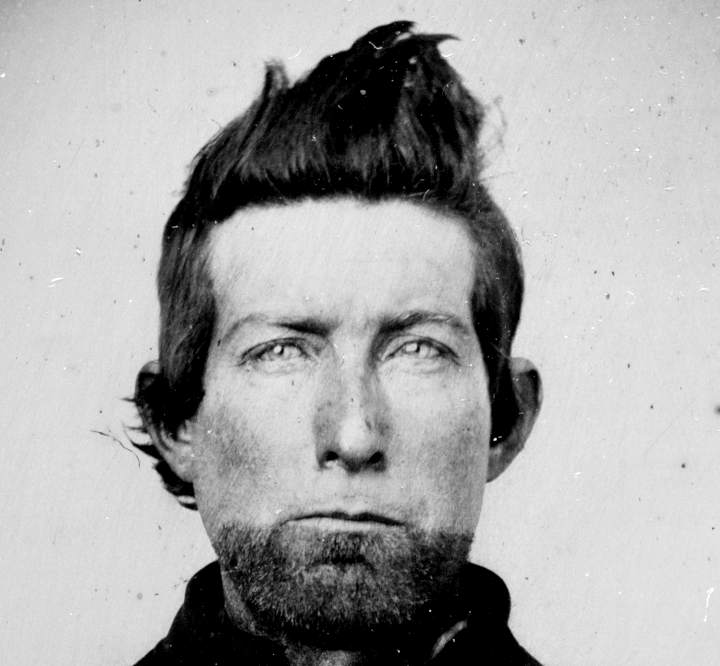
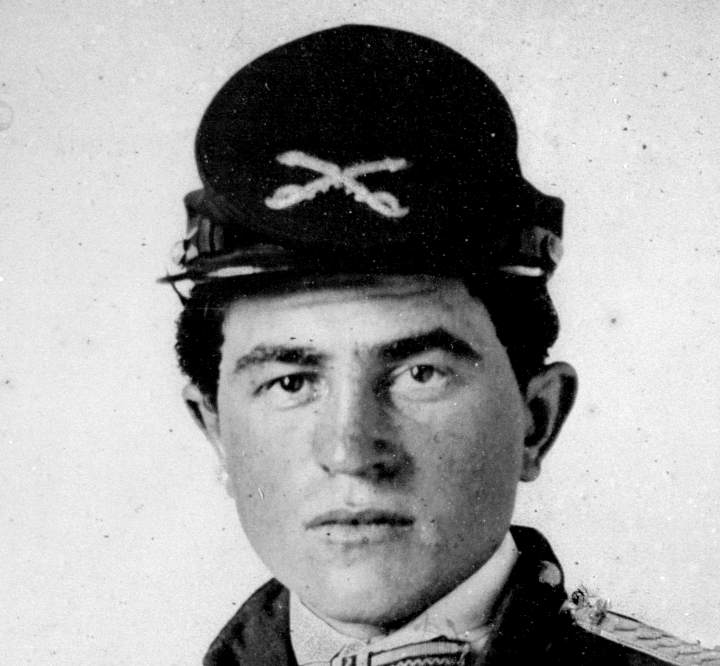
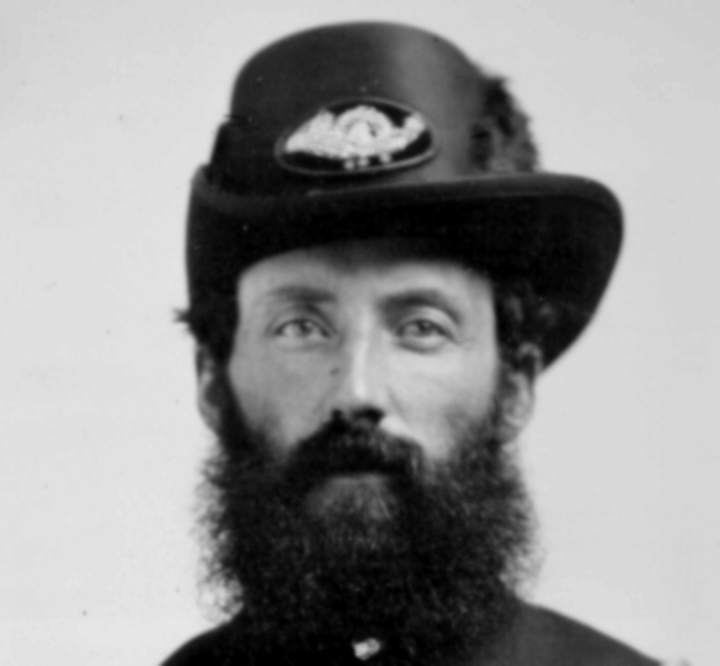
Photographs today are from The Library of Congress. The featured photograph: “Two unidentified soldiers in Confederate uniforms”

 Chamblee54
[…] content was published February 15, 2025. … “Those who cannot remember the past are condemned to repeat it.” Unless you live […]