I’ll Furnish The War


This is a repost. The telegram incident was included in Citizen Kane … “You furnish the pictures and I’ll furnish the war.” – WR Hearst, January 25, 1898 It is part of the Hearst legend. “Frederic Sackrider Remington, the famous artist who brought to life American images of the west, was hired by newspaper magnate William Randolph Hearst to illustrate the revolution erupting in Cuba. He wrote back to Hearst one day in January 1897: “Everything is quiet. There is no trouble. There will be no war. I wish to return.” Hearst sent back a note: “Please remain. You furnish the pictures and I’ll furnish the war.” Chamblee54 readers should know where this is going to go.
Mr. Remington was sent to Cuba, along with correspondent Richard Harding Davis, to cover the rebellion against the Spanish colonial government. At the time of this purported exchange, the conflict between Spain, and the Cuban rebels, was rather lively. This is at odds with the initial comment by Mr. Remington. One item which modern observers will find odd is the fact that Mr. Remington drew pictures. He was not a photographer. Apparently, in 1897 journalism, a hand drawing was acceptable evidence of a conflict.
Not likely sent: The Remington-Hearst “telegrams” is a thorough debunking of this legend. The source of the legend is “James Creelman, On the Great Highway: The Wanderings and Adventures of a Special Correspondent. (Boston: Lothrop Publishing, 1901), 177-178.” “Creelman does not … describe how or when he learned about the supposed Remington-Hearst exchange. In any case, it had to have been second-hand because Creelman was in Europe in early 1897, as the Journal’s “special commissioner” on the Continent.”
“It is improbable that such an exchange of telegrams would have been cleared by Spanish censors in Havana. So strict were the censors that dispatches from American correspondents reporting the war in Cuba often were taken by ship to Florida and transmitted from there.”
… correspondence of Richard Harding Davis — the war correspondent with whom Remington traveled on the assignment to Cuba — contains no reference to Remington’s wanting to leave because “there will be no war.” Rather, Davis in his letters gave several other reasons for Remington’s departure, including the artist’s reluctance to travel through Spanish lines to reach the Cuban insurgents. … Davis’ letters show that he had little regard for the rotund, slow-moving Remington, whom he called “a large blundering bear.”
The purported Remington-Hearst exchange, moreover, appears not to have been particularly important or newsworthy at the time … the anecdote seems to have provoked almost no discussion or controversy until a correspondent for the Times of London mentioned it in a dispatch from New York in 1907. He wrote: “Is the Press of the United States going insane? . . . A letter from William Randolph Hearst is in existence and was printed in a magazine not long ago. It was to an artist he had sent to Cuba, and who reported no likelihood of war. —You provide the pictures, I’ll provide the war.'”
“Hearst, indignant about the report, replied in a letter to the Times. He described as “frankly false” and “ingeniously idiotic” the claim “that there was a letter in existence from Mr. W. R. Hearst in which Mr. Hearst said to a correspondent in Cuba: —You provide the pictures and I will provide the war,’ and the intimation that Mr. Hearst was chiefly responsible for the Spanish war. … “This kind of clotted nonsense could only be generally circulated and generally believed in England, where newspapers claiming to be conservative and reliable are the most utterly untrustworthy of any on earth. In apology for these newspapers it may be said that their untrustworthiness is not always to intention but more frequently to ignorance and prejudice.”
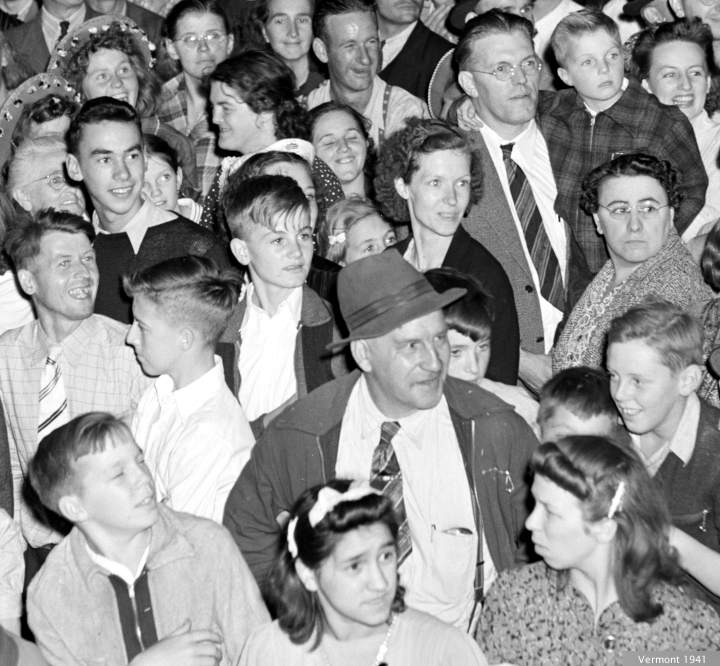
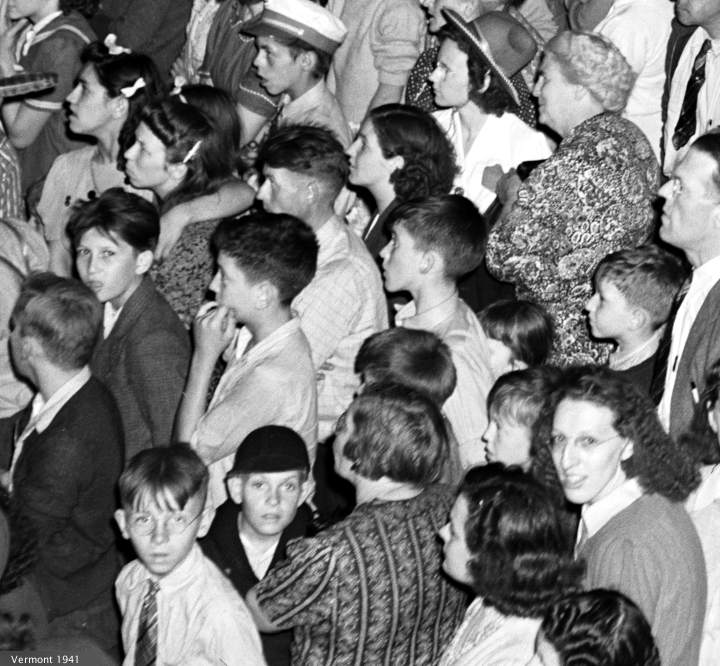
Pictures today are from The Library of Congress.


 Chamblee54
leave a comment