Inventing The Word Racism




Writers tackle was rampaging through Brookhaven. PG looked in a list of old product, and found a feature built on the output of Teju Cole. He has a dandy article, at the New Yorker, about what is antiseptically called drone warfare. It is the twitter feed that gets attention. This is a repost.
@tejucole “George Carlin’s original seven dirty words can all be said freely now. The one word you can’t say, and must never print, is “racist.”
The quote marks lend mystery to the tweet. Does he mean the dreaded “n word”? Or does he mean that other six letter slur? There is no shortage of people screaming racist in Georgia, often at the slightest provocation. There is an attitude that racism is the worst thing you can be accused of. Once accused, you are guilty until proven innocent. If you do a bit of research into racism, the word, you will see some interesting things.
The concept of populations not getting along is as old as mankind. The word racism apparently did not exist before 1933 (merriam webster), or 1936 (dictionary dot com). (In 2020, both of these sources have updated their notes, on the original use of the word “racism.”)
Something called the Vanguard News Network had a forum once, What is the true origin of the term racism? This forum is problematic, as VNN seems to be a white supremacist affair. One of the reputed coiners of the R word was Leon Trotsky, also referred to as Jew Communist. Another Non English speaker who is given “credit” for originating the phrase is Magnus Hirschfeld. As for English, the word here is: “American author Lawrence Dennis was the first to use the word, in English, in his 1936 book “The coming American fascism”.”
The terms racist and racism seem to be used interchangeably in these discussions. This is in keeping with the modern discussion. As Jesus worshipers like to say, hate the sin, love the sinner.
The Online Etymology Dictionary has this to add: “racist 1932 as a noun, 1938 as an adjective, from race (n.2); racism is first attested 1936 (from French racisme, 1935), originally in the context of Nazi theories. But they replaced earlier words, racialism (1871) and racialist (1917), both often used early 20c. in a British or South African context. In the U.S., race hatred, race prejudice had been used, and, especially in 19c. political contexts, negrophobia.”
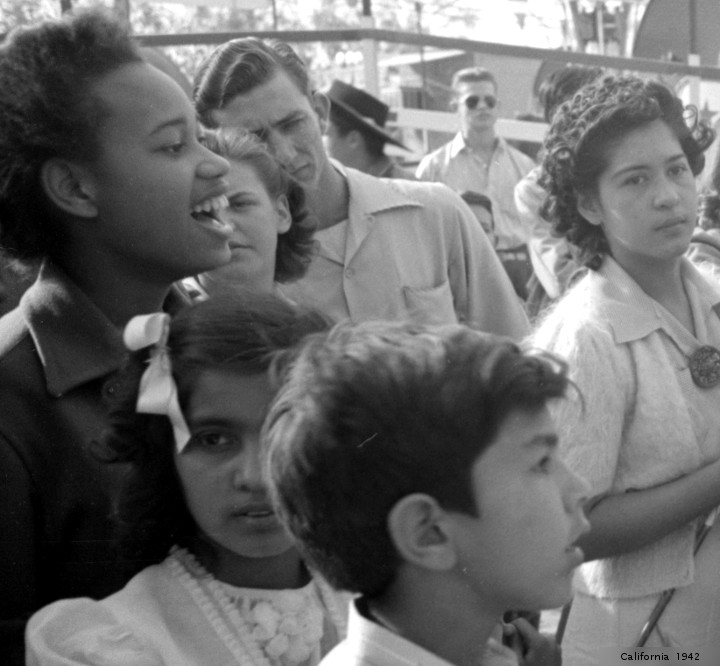
Pictures are from The Library of Congress. Part two is now available.

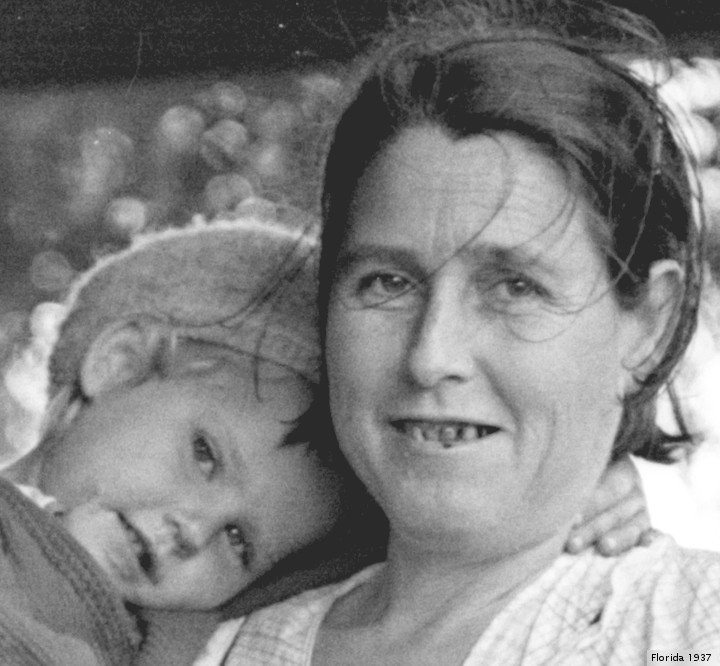

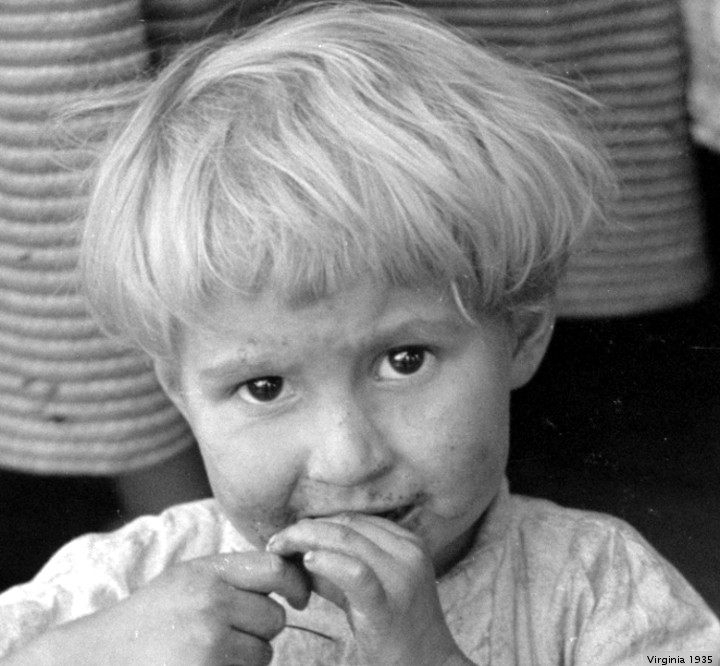

Last week this blog ran a story about the word racism. The story stated that the earliest use of the r-word was 1932. A comment led to The Ugly, Fascinating History Of The Word ‘Racism.’ Apparently, Col. Richard Henry Pratt used the word in 1902.
“The Oxford English Dictionary’s first recorded utterance of the word racism was by a man named Richard Henry Pratt in 1902. “Segregating any class or race of people apart from the rest of the people kills the progress of the segregated people or makes their growth very slow. Association of races and classes is necessary to destroy racism and classism.” Col. Pratt was speaking at the Lake Mohonk Conference of Friends of the American Indian.
It is always good to check out the context. Col. Pratt spoke at the Fourth session, Thursday Night, October 23, 1902. The event was well documented. There are some other noteworthy quotes.
“We have brought into our national life nearly forty times as many negroes as there are Indians in the United States. They are not all together citizen and equal yet, but they are with us and of us; distributed among us, coming in contact with us constantly, they have lost their many languages and their old life, and have accepted our language and our life and become a valuable part of our industrial forces.” The text capitalizes Indian, and presents Negro in lower case.
“It is the greatest possible wrong to prolong their Indianism, whether we do it for humanitarian or so-called scientific reasons. … The ethnologists prefer the Indian kept in his original paint and feathers, and as part and parcel of every exposition on that line. … It will be a happy day for the Indians when their ethnological value is of no greater importance than that of the negro and other races which go to make up our population.”
Col. Pratt “is best known as the founder and longtime superintendent of the Carlisle Indian Industrial School at Carlisle, PA.” While progressive for the times, many of the school’s policies were harsh.
“He pushed for the total erasure of Native cultures among his students. … The students’ native tongues were strictly forbidden — a rule that was enforced through beating. Since they were rounded up from different tribes, the only way they could communicate with each other at the schools was in English. … “In Indian civilization I am a Baptist,” Pratt once told a convention of Baptist ministers, “because I believe in immersing the Indians in our civilization and when we get them under, holding them there until they are thoroughly soaked.” … Pratt also saw to it that his charges were Christianized. Carlisle students had to attend church each Sunday, although he allowed each student to choose the denomination to which she would belong.” Carlisle closed in 1918.
“In 1875, Captain Richard Pratt escorted 72 Indian warriors suspected of murdering white settlers to Fort Marion in St. Augustine, FL. Once there, Pratt began an ambitious experiment which involved teaching the Indians to read and write English, putting them in uniforms and drilling them like soldiers. … News of Pratt’s experiment spread. With the blessing of Congress, Pratt expanded his program by establishing the Carlisle School for Indian Students to continue his “civilizing” mission. Although liberal policy for the times, Pratt’s school was a form of cultural genocide. The schools continued into the ’30s until administrators saw that the promised opportunities for Indian students would not materialize, theat they would not become “imitation white men.”
“Beginning in 1887, the federal government attempted to “Americanize” Native Americans, largely through the education of Native youth. By 1900 thousands of Native Americans were studying at almost 150 boarding schools around the United States. The U.S. Training and Industrial School, founded in 1879 at Carlisle Barracks, was the model for most of these schools. Boarding schools like Carlisle provided vocational and manual training and sought to systematically strip away tribal culture. They insisted that students drop their Indian names, forbade the speaking of native languages, and cut off their long hair.” As Col. Pratt said at the LMCFAI, “I also endorse the Commissioner’s short hair order. It is good because it disturbs old savage conditions.”
Col. Pratt was known for saying “Kill the Indian, and Save the Man” He probably meant that you should destroy the native culture, so the man inside could flourish. It is easy to misunderstand this type of rhetoric. The source of this phrase: “Official Report of the Nineteenth Annual Conference of Charities and Correction (1892), 46–59. Reprinted in Richard H. Pratt, “The Advantages of Mingling Indians with Whites,” Americanizing the American Indians: Writings by the “Friends of the Indian” 1880–1900 (Harvard University Press, 1973), 260–271.” There are some tasteful quotes.
“Inscrutable are the ways of Providence. Horrible as were the experiences of its introduction, and of slavery itself, there was concealed in them the greatest blessing that ever came to the Negro race—seven millions of blacks from cannibalism in darkest Africa to citizenship in free and enlightened America; not full, not complete citizenship, but possible—probable—citizenship.” Col. Pratt used African Americans as an example of how to assimilate Native Americans.
“The five civilized tribes of the Indian Territory—Cherokees, Choctaws, Chickasaws, Creeks, and Seminoles—have had tribal schools until it is asserted that they are civilized; yet they have no notion of joining us and becoming a part of the United States. Their whole disposition is to prey upon and hatch up claims against the government, and have the same lands purchased and repurchased and purchased again, to meet the recurring wants growing out of their neglect and inability to make use of their large and rich estate.”
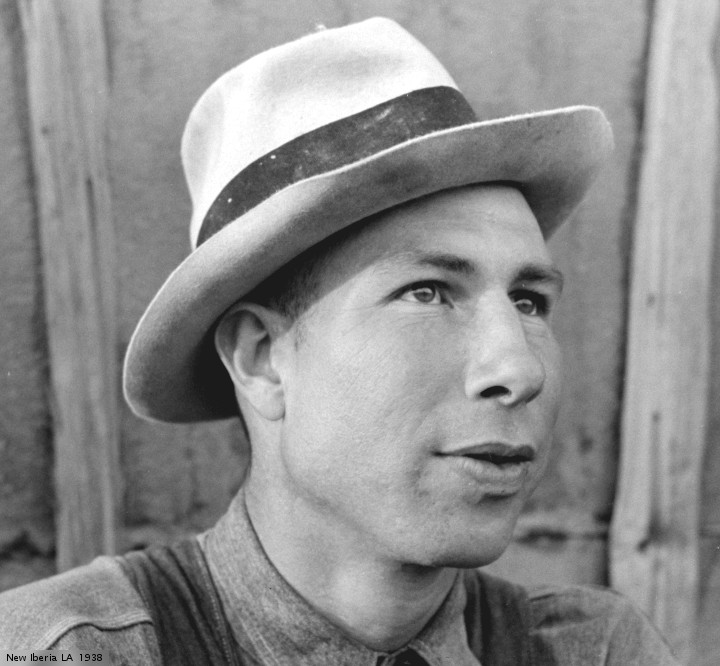
The best known student at the Carlisle School was Jim Thorpe, coached by Pop Warner. Wa-thohuck was born May 28, 1888, near Prague OK, into the Sauk and Fox Nation. He won gold medals in the pentathlon, and decathlon, at the 1912 Olympic Games in Stockholm, Sweden. It later came out that he had been paid to play semi-pro baseball, and was not an amateur. The gold medals had to be forfeited. Pictures today are from The Library of Congress.



 Chamblee54
leave a comment