Was Flannery O’Connor Racist?


How Racist Was Flannery O’Connor? appeared in The New Yorker on June 22, 2020. (Note the date) I had long been a fan of Mary Flannery O’Connor, and knew I could not un-read those stories. While researching a book report about a story collection, Everything That Rises Must Converge, I took another look at the cancellation.
The article begins by telling the Flannery story. Soon, a description of a movie, Flannery, yields a false note: “Erik Langkjær, a publishing sales rep O’Connor fell in love with, describes their drives in the country.” According to Flannery: A Life of Flannery O’Connor by Brad Gooch, Mr. Langkjær was far from a boyfriend. It is another piece of the puzzle.
“I was not really in love; I simply enjoyed the company of women during my lonely travels in the South. Although Flannery was both conventional and religious, we eventually became so close that she, while the car was parked, allowed me to kiss her. At that moment, her disease revealed itself in a new way: there was no strength in her lips. I hit her teeth with my kiss, and since then I’ve thought of it as a kiss of death. … When I later read one of Flannery’s short stories, ‘Good Country People,’ I noticed that the main character was a travelling Bible salesman. I didn’t sell bibles, but I used to call my binder with the records of the publishing firm ‘my bible.’ Also, the salesman in the story is named Manley Pointer, which has an obvious erotic connotation.”
Right after this paragraph, there is a break. “FEATURED VIDEO Protests of George Floyd’s Killing Transform Into a Global Movement” The article soon gets down with cancellation.
“Everything That Rises Must Converge was published in “Best American Short Stories” … O’Connor declared that it was all she had to say on “That Issue.” It wasn’t. In May, 1964, she wrote to her friend Maryat Lee, a playwright who … was ardent for civil rights.”
“About the Negroes, the kind I don’t like is the philosophizing prophesying pontificating kind, the James Baldwin kind. Very ignorant but never silent. Baldwin can tell us what it feels like to be a Negro in Harlem but he tries to tell us everything else too. M. L. King I dont think is the ages great saint but he’s at least doing what he can do & has to do. Don’t know anything about Ossie Davis except that you like him but you probably like them all. My question is usually would this person be endurable if white. If Baldwin were white nobody would stand him a minute. I prefer Cassius Clay. “If a tiger move into the room with you,” says Cassius, “and you leave, that dont mean you hate the tiger. Just means you know you and him can’t make out. Too much talk about hate.” Cassius is too good for the Moslems.” (James Baldwin probably agreed with MFO about “the Moslems.”)
“That passage, published in “The Habit of Being,” echoed a remark in a 1959 letter, also to Maryat Lee, who had suggested that Baldwin … could pay O’Connor a visit while on a subsequent reporting trip. O’Connor demurred: “No I can’t see James Baldwin in Georgia. It would cause the greatest trouble and disturbance and disunion. In New York it would be nice to meet him; here it would not. I observe the traditions of the society I feed on—it’s only fair. Might as well expect a mule to fly as me to see James Baldwin in Georgia. I have read one of his stories and it was a good one.” …
“After revising “Revelation” in early 1964, O’Connor wrote several letters to Maryat Lee. Many scholars maintain that their letters (often signed with nicknames) are a comic performance, with Lee playing the over-the-top liberal and O’Connor the dug-in gradualist, but O’Connor’s most significant remarks on race in her letters to Lee are plainly sincere. … May 3, 1964: “You know, I’m an integrationist by principle & a segregationist by taste anyway. I don’t like negroes. They all give me a pain and the more of them I see, the less and less I like them. Particularly the new kind.” Two weeks after that, she told Lee of her aversion to the “philosophizing prophesying pontificating kind.” Ravaged by lupus, she wrote Lee a note to say that she was checking in to the hospital, signing it “Mrs. Turpin.” She died at home ten weeks later.”
“Fordham University hosted a symposium on O’Connor and race, supported with a grant from the author’s estate.” (The panel discussion included Karin Coonrod.) “The organizer, Angela Alaimo O’Donnell” … (who wrote) “Radical Ambivalence: Race in Flannery O’Connor.” … takes up Flannery and That Issue. Proposing that O’Connor’s work is “race-haunted,” she applies techniques from whiteness studies and critical race theory …” In other words, The Flannery O’Connor Trust is financing a university to examine MFO, using “techniques from whiteness studies and critical race theory.” There is something deeply rotten about this.
Perhaps this cancellation business is what MFO foresaw in a 1963 letter to Betty Hester. MFO mentions her disdain for Eudora Welty’s “Where is the Voice Coming From?” … “What I hate most is its being in the New Yorker and all of the stupid Yankee liberals smacking their lips over typical life in the dear old dirty Southland.”
Eudora Welty is not the only author MFO did not like. MFO wrote to Maryat Lee on 31 May 60. “I hope you don’t have friends who recommend Ayn Rand to you. The fiction of Ayn Rand is as low as you can get re fiction. I hope you picked it up off the floor of the subway and threw it in the nearest garbage pail. She makes Mickey Spillane look like Dostoyevsky.”
“On July 28, 1964, Flannery wrote her last letter. This note to Maryat Lee, written in a “shaky, nearly illegible hand” … is in response to an anonymous crank call Lee received and reveals O’Connor’s deep concern for her friend’s well being: “Cowards can be just as vicious as those who declare themselves – more so. Dont take any romantic attitude toward that call. Be properly scared and go on doing what you have to do, but take the necessary precautions. And call the police. That might be a lead for them. Dont know when I’ll send those stories. I’ve felt too bad to type them. Cheers, Tarfunk” MFO died August 3, 1964 at Baldwin County Hospital.
We don’t know what MFO read by James Baldwin. It might include a 1962 piece in The New Yorker, Letter from a Region in My Mind. Included in those 22,147 words is this gem: “But white Americans do not believe in death, and this is why the darkness of my skin so intimidates them.” This might be a good time to remember the words of Alice Walker: “Take what you can use and let the rest rot.”
Ms. Walker is included in Flannery. “Alice Walker tells of living “across the way” from the farmhouse during her teens, not knowing that a writer lived there: “It was one of my brothers who took milk from her place to the creamery in town. When we drove into Milledgeville, the cows that we saw on the hillside going into town would have been the cows of the O’Connors.” Ms. Walker who was well aware of MFO’s racial attitudes, adds “She also cast spells and worked magic with the written word. The magic, the wit, and the mystery of Flannery O’Connor I know I will always love.”
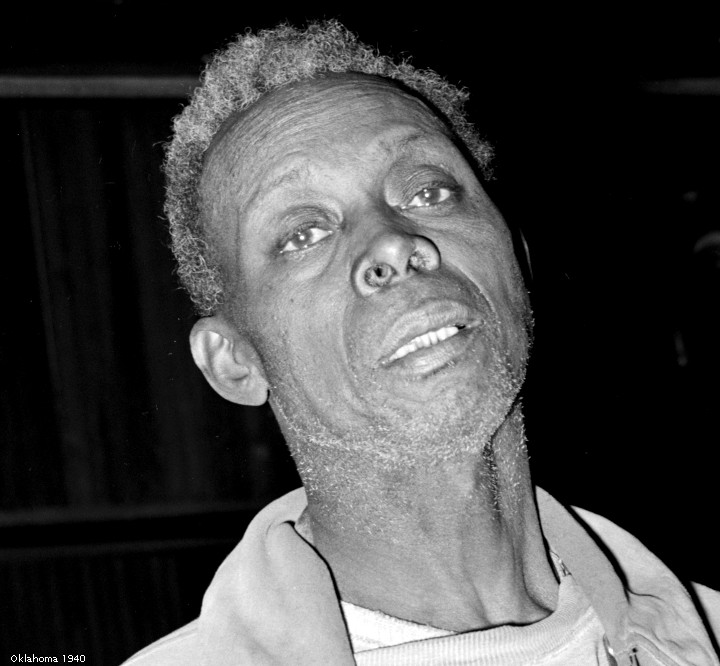
A lot of what is said here is taking MFO seriously, in spite of her racial attitudes. This is where I differ with The New Yorker. I am a cracker who likes to enjoy stories, not take them seriously. As a Georgia native, I am well aware of the many “shades of gray” produced by a black and white society. Racism is not a yes/no binary. MFO wrote great stories, in spite of, or maybe because of, her racial attitudes. To paraphrase Alice Walker, take what you need, and let whiteness studies and critical race theory rot. Pictures today are from The Library of Congress.


 Chamblee54
leave a comment