The Portrait Of Mr. W. H.


“A thing is not necessarily true because a man dies for it.” The gem, blamed on Oscar Wide, turned up on a data mining site. A quick search indicates that the quote in genuine, and is found in The Portrait of Mr. W. H. (1889.) Searching for context in a Wilde story can yield more than you bargained for.
PMWH is a tacky short story, with an eyeroll-inducing ending. SPOILER ALERT: This ending will be discussed today. PMWH is the story of an unnamed correspondent (UC), who is having a conversation with Erkskine. The players are Englishmen of a certain class, who all seem to have servants. The conversation gets onto forgery in the arts. UC felt that “to censure an artist for a forgery was to confuse an ethical with an aesthetical problem.” To which Erkskine replied, ‘What would you say about a young man who had a strange theory about a certain work of art, believed in his theory, and committed a forgery in order to prove it?’
Erkskine’s friend was Cyril Graham. “He was very fascinating, and very foolish, and very heartless.” Cyril developed some theories about the identity of Mr. W.H. … “A person known only by his initials, to whom the first edition of William Shakespeare’s sonnets (1609) was dedicated”… “To the onlie begetter of, These insuing sonnets, Mr. W.H. all happinesse … ” Cyril thought that W.H. was Willie Hughes, an androgynous young man of great beauty. “He felt, as indeed I think we all must feel, that the Sonnets are addressed to an individual, – to a particular young man whose personality for some reason seems to have filled the soul of Shakespeare with terrible joy and no less terrible despair.”
Erkskine thought that these ideas were foolish, and said so to Cyril. Soon after, Cyril produced a painting, that he found under strange circumstances. Allegedly, it was a portrait of Willie Hughes. Erkskine thought this a bit odd, but played along … until he stumbled onto evidence that the painting was a forgery. “I went off at once to Cyril’s chambers, waited there for three hours before he came in, with that horrid lie staring me in the face, and told him I had discovered his forgery. He grew very pale and said – “I did it purely for your sake. You would not be convinced in any other way. It does not affect the truth of the theory.
“The truth of the theory!” I exclaimed; “the less we talk about that the better. You never even believed in it yourself. If you had, you would not have committed a forgery to prove it.” High words passed between us; we had a fearful quarrel. I daresay I was unjust. The next morning he was dead.'”
“… he shot himself with a revolver. … By the time I arrived – his servant lad sent for me at once – the police were already there. He had left a letter for me, evidently written in the greatest agitation and distress of mind. … he believed absolutely in Willie Hughes; that the forgery of the picture had been done simply as a concession to me, and did not in the slightest degree invalidate the truth of the theory; and that in order to show me how firm and flawless his faith in the whole thing was, he was going to offer his life as a sacrifice to the secret of the Sonnets. It was a foolish, mad letter. I remember he ended by saying that he entrusted to me the Willie Hughes theory, and that it was for me to present it to the world, and to unlock the secret of Shakespeare’s heart.’ “
UC is convinced that the Willie Hughes story is real. “Erskine looked at me in amazement. ‘You are carried away by the sentiment of the whole story,’ he said. ‘You forget that a thing is not necessarily true because a man dies for it. ” UC leaves, and tries to prove the Willie Hughes hypothesis to be true. This goes on for a while, until UC talks himself out of it. By this time, however, Erkskine has changed his mind, and is a Willie Hughes true believer. If this is getting complicated and confusing, you can read the story. Oscar’s prose is entertaining, if a bit archaic to the modern reader.
Erkskine is dismayed by UC’s lack of belief. He sent UC a letter. “The concluding words of the letter were these: ‘I still believe in Willie Hughes; and by the time you receive this, I shall have died by my own hand for Willie Hughes’s sake: for his sake, and for the sake of Cyril Graham, whom I drove to his death by my shallow skepticism and ignorant lack of faith. The truth was once revealed to you, and you rejected it. It comes to you now stained with the blood of two lives, – do not turn away from it.'”
“It was a horrible moment. I felt sick with misery. … To die for one’s theological beliefs is the worst use a man can make of his life, but to die for a literary theory! It seemed impossible.”
SPOILER ALERT: Fret not, gentle reader. When UC caught up with the Erkskine’s family, he heard a different story. “I turned to the doctor and said, ‘What a dreadful shock it must have been to Lady Erskine! I wonder that she bears it as well as she does.’ ‘Oh, she knew for months past that it was coming,’ … if a mother knows that her son is going to commit suicide’ … ‘Suicide! Poor Erskine did not commit suicide. He died of consumption. He came here to die. The moment I saw him I knew that there was no hope. … At that moment Lady Erskine entered the room with the fatal picture of Willie Hughes in her hand. ‘When George was dying he begged me to give you this,’ she said. As I took it from her, her tears fell on my hand.”


“It is always a silly thing to give advice, but to give good advice is absolutely fatal.” The Portrait of Mr. W. H., by Oscar Wilde, has many zesty quotes not included above. The one about advice stands out. It is similar to well known Oscarism. “A little sincerity is a dangerous thing, and a great deal of it is absolutely fatal. ” The line about sincerity is found in The Critic as Artist. In this episode, Gilbert and Ernest are exchanging clever thoughts.
Gilbert: Ernest, you are quite delightful, but your views are terribly unsound. I am afraid that you have been listening to the conversation of some one older than yourself. That is always a dangerous thing to do, and if you allow it to degenerate into a habit you will find it absolutely fatal to any intellectual development. As for modern journalism, it is not my business to defend it. It justifies its own existence by the great Darwinian principle of the survival of the vulgarest. …
Ernest: But what is the difference between literature and journalism?
Gilbert: Oh! journalism is unreadable, and literature is not read. … How appalling is that ignorance which is the inevitable result of the fatal habit of imparting opinions! …
Ernest: The true critic will be rational, at any rate, will he not?
Gilbert: There are two ways of disliking art. One is to dislike it. The other, to like it rationally. …
Ernest: Well, at least, the critic will be sincere.
Gilbert: A little sincerity is a dangerous thing, and a great deal of it is absolutely fatal.
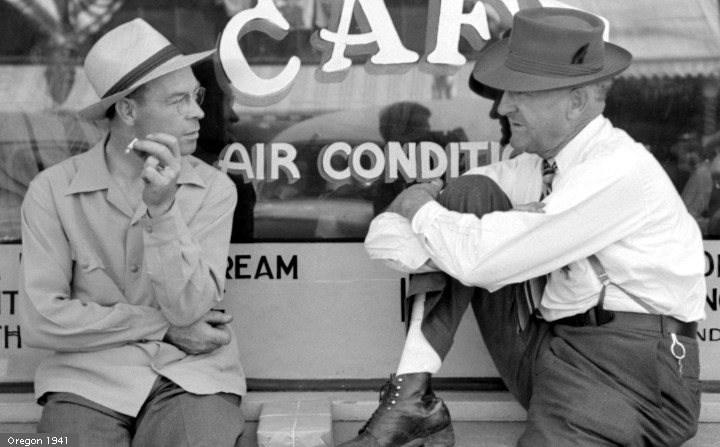
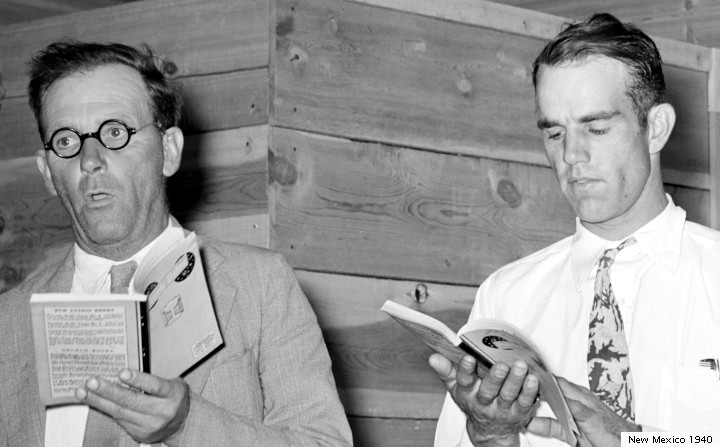
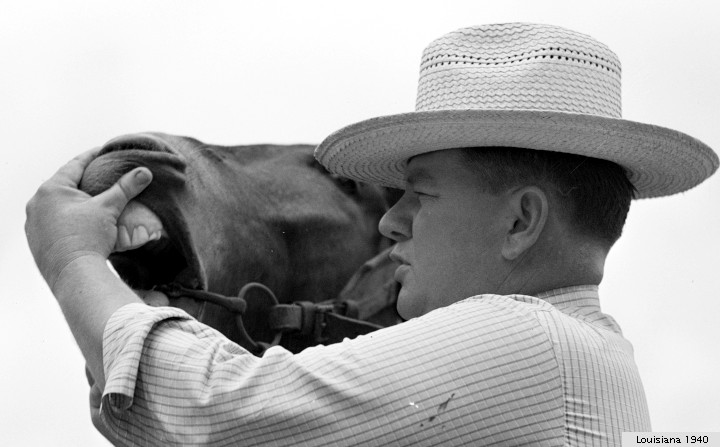
Gilbert also says “Anybody can make history. Only a great man can write it.” This is a rather sexist counterpoint to that bumper sticker classic, “Well behaved women rarely make history.” The latter was penned by Laurel Thatcher Ulrich, in a scholarly article. “1976 Spring, American Quarterly, Volume 28, Number 1, “Vertuous Women Found: New England Ministerial Literature, 1668-1735” by Laurel Thatcher Ulrich, The Johns Hopkins University Press” The seminal quote said seldom, rather than rarely. Pictures today are from The Library of Congress.
 Chamblee54
leave a comment