Daniel Greene And Bernard Walker
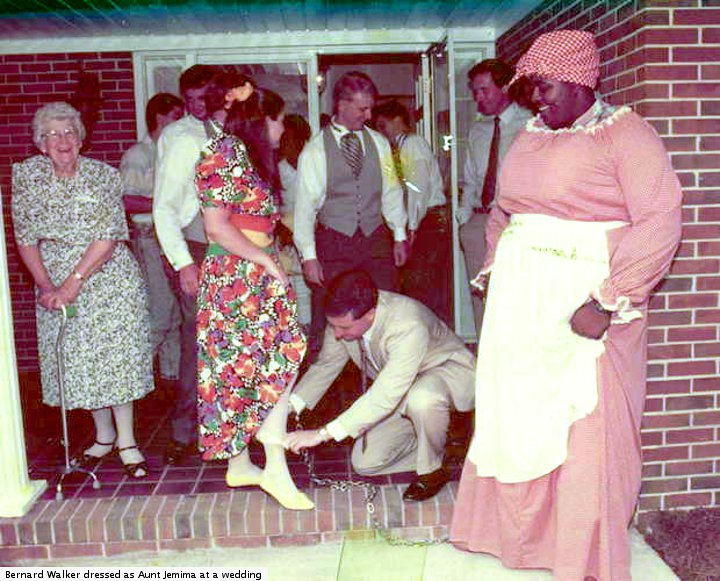



The state of Georgia is planning to poison Daniel Greene at 7 p.m. on April 19. The procedure will be performed at Georgia Diagnostic and Classification Prison in Jackson, GA. Mr. Greene was convicted of the 1991 murder of Bernard Walker, during the robbery of a Suwanee Thrifty store in Reynolds, GA. Daniel Greene, GDC ID:0000717996, is 6’5″ tall, weighs 300 pounds, and is a former high school athlete.
The 11th U.S. Circuit Court of Appeals upheld the death sentence on June 28, 2011. On March 19, 2012, The US Supreme Court denied a certiorari petition. The following account of Mr. Greene’s bad day comes from the 11th Circuit Court opinion .
On September 27, 1991, Daniel Greene committed a spree of murder and mayhem that covered three counties of rural Georgia. Greene first made several visits to the Suwanee Swifty, a convenience store located in Taylor County, Georgia. On his last visit, Greene pulled a knife on the store clerk, Virginia Wise, grabbed her, and forced her to give him $142.55 from the cash register. Greene took Wise to a back room in the convenience store where he stabbed her through her lung and liver and cut across three of her fingers.
A customer, Bernard Walker, then entered the store and caused the automatic doorbell to ring. Greene left Wise in the back of the store, approached Walker near the front counter, and stabbed Walker in the heart. Greene dropped the knife, left the store, and drove away. Wise survived, but Walker died in the parking lot.
Greene drove to the home of an elderly couple, Willie and Donice Montgomery, in rural Macon County, Georgia. Greene knew the couple and had previously worked for them as a farm laborer. Greene burst into their home with another knife in hand and demanded their car keys. Willie gave car keys to Greene, and Greene stabbed both Willie and Donice multiple times each in the head. Willie and Donice survived. Greene then drove to another convenience store, located in Houston County, Georgia. Greene pulled a knife on the store attendant and forced her to hand him money from the cash register. Greene also attempted to stab the attendant in the chest, but she bent down, and Greene stabbed her in the back of her shoulder. Greene drove away in the Montgomerys’ car.
Authorities later arrested Greene at the home of an acquaintance. Greene confessed to the crimes in a videotaped interview and stated that he had committed the crimes to obtain money for crack cocaine, but Greene later testified that he had no recollection of committing the crimes or of giving a confession. Greene testified that an acquaintance gave him a cigarette earlier that day that may have been laced with a mind-altering drug. Greene testified that he could remember only that he experienced a severe headache in the convenience store where Wise worked.
Lawyers for Mr. Greene have raised two issues. Black people were excluded from the jury at his initial trial. The prosecutor made some inappropriate comments during this trial. The court of appeals was not impressed with either argument.
The prosecutors exercised peremptory challenges against ten members of the jury venire, six of whom were black. In response to Greene’s objections about the peremptory challenges against the six black members of the jury venire, the prosecutors offered race-neutral reasons for each contested challenge. According to the prosecutors, Reginald Lemmons “was very hesitate [sic] on his answers to the death penalty questions,” expressed a view that “cocaine makes you do stuff you wouldn’t otherwise do,” had sympathy for a cousin with a cocaine problem, and “there was significant body language, contact, smiling, and nodding and so forth, and how you doing between [Greene] and [Lemmons].”Darius Duffie failed to disclose on his juror questionnaire that he had been convicted of a criminal offense. Irene Walton failed to follow the instructions of the trial court to return to court and thought she had to come to court only if she felt up to it, and the prosecutors suggested that Walton’s failure to follow instructions might relate to kidney problems that she had discussed. Angela Pope was a single mother, was hesitant about the death penalty, and stated that she had a family member accused of a crime. Stanley Milligan expressed conscientious opposition to the death penalty and stated that he was from a tough neighborhood. Kimberly Sullivan, a single mother of two children, was concerned about child care and expressed opposition to capital punishment, and the prosecutors had already attempted to challenge her for cause based on her opposition to capital punishment.
The trial court considered Greene’s objections and the prosecutors’ proffered reasons for challenging each of these members of the jury venire and determined that the prosecutors had provided reasons for each challenge that were racially neutral. …
The prosecutor made other comments during the sentencing phase of the trial that are also pertinent to Greene’s argument about prosecutorial misconduct. The prosecutor asked Greene’s sister, a witness for the defense, “[i]f [Greene] for some way got out and did the same thing . . . you’d still be arguing for his life, wouldn’t you?” Greene objected and moved for a mistrial. The trial court denied the motion for a mistrial and instructed the jury to disregard the question. The prosecutor also made Biblical references during the sentencing phase of Greene’s trial and commented that Greene might be able to obtain a weapon while in prison, stating, “[t]here’s dope in those penitentiaries no matter how hard we try to keep it out and there’s knives. They call them shanks. Now, do you want to put him in a penal environment where he can get a hold of those items?” Greene did not object to the Biblical references or the comment about “shanks.” (The comments by the prosecutor are discussed in the opinion of the circuit court, pp. 6-9)
The Ledger Enquirer, in Columbus GA, has a moving story, Execution date for Daniel Greene opens old wounds in Taylor County. HT to Crime and Capital Punishment Forum. Here are some highlights.
“People feel bad for both families,” said Freddie Harmon, Greene’s defensive line coach at Taylor County High School. “Nobody wants to see anybody executed.” The loss of Walker, a popular 20-year-old remembered as a “big teddy bear,” sparked unanimous outrage among friends, family members and law enforcement officials, who admired the young man and sought to recruit him to their ranks. Bob Bacle, the former Reynolds police chief, said the stabbings “devastated the community,” and that the impact was compounded by Walker’s character. “It’s bad that it happened to anybody, but with the caliber person that Bernard was, it shocked a lot of folks,” he said. “He had a big turnout at his funeral, black and white.”…
Taylor County Sheriff Jeff Watson, who played football with Greene, said talk of the case has reopened old wounds. The “million-dollar question,” he said, is what triggered Greene, who before the stabbings showed such little aggression that his coaches had to prod him to be tougher on the gridiron. “Before this incident happened, we had no problems whatsoever with Daniel,” said Giles (Nick Giles, the retired Taylor County sheriff). “All I knew was he was just a good kid in the community.” …
Convicted of murder, armed robbery and aggravated assault, Greene had confessed to the crimes to law enforcement, but he said at trial that he had no recollection of the stabbings or confessing. He claimed an acquaintance gave him a cigarette before the stabbings that was laced with some type of drug — not crack cocaine, he noted, admitting he would have recognized that. The cigarette “started tasting funny” and gave him a bad headache, he said. “It was like my body was on fire and everything,” he said. “And then I just blanked out.”
On Sept. 27, 1991, Greene made three trips to the Suwanee Swifty on Ga. 96. During his last stop, store clerk Virginia Wise was eating a sandwich and chips and drinking a V8 juice when she began to watch Greene in a mirror, pacing in front of a cooler. Before she knew it, Greene came behind the counter, grabbed her and ordered her to open the registers. Wise felt the sharp edge of a knife against her throat, but said she initially thought it was a mean joke. “My first instinct was, you’re kidding me … I can’t believe you’d want to do this,” she testified. “I always thought you were so nice and polite.” Greene grabbed about $145 in cash and took Wise to the back room — the bag of chips still in her hand — where he groped her, sliced her fingers and stabbed her in the side. Walker, who wanted to buy some bread and lunch meat, entered the store at some point, jingling the cowbell attached to the door. … Conflicting accounts of the confrontation were presented at trial, but authorities have long said that Walker likely tried to stop Greene and was stabbed in the process. As Greene fled the scene, Walker staggered from the store to get help but collapsed. His heart had been punctured. …
Greene wasn’t done. He went to a nearby home in Macon County and stabbed Willie and Donice Montgomery, an elderly couple he’d worked for as a laborer, and cut their phone line. Their injuries were extensive, and authorities described their survival as miraculous. Greene then drove the couple’s vehicle to a convenience store in Warner Robins, Ga., robbed the cashier and stabbed her in the back with a butcher knife. She, too, managed to survive. Authorities conducting a house-to-house search found Greene hiding in a woman’s residence in Warner Robins. Greene had told the woman to lie to inquiring officers, but they sensed something amiss and came “charging in like gang busters” to arrest him, Pullen said at trial. …
During the penalty phase, Greene told jurors he and Walker were “like brothers,” and that he never would have killed him had he been in his right mind. “I love to live, I don’t want to die.”
Daniel Greene has requested “fried chicken, french fries, a strawberry sundae and soda” for his last meal. Pictures today are from Ledger-Enquirer , Georgia Department of Corrections, and “The Special Collections and Archives,Georgia State University Library”.
UPDATE On April 17, 2012, the Georgia State Board of Pardons and Paroles granted a stay of execution to Daniel Greene.




 Chamblee54
leave a comment