Upgrade My Brand Of Toilet Paper
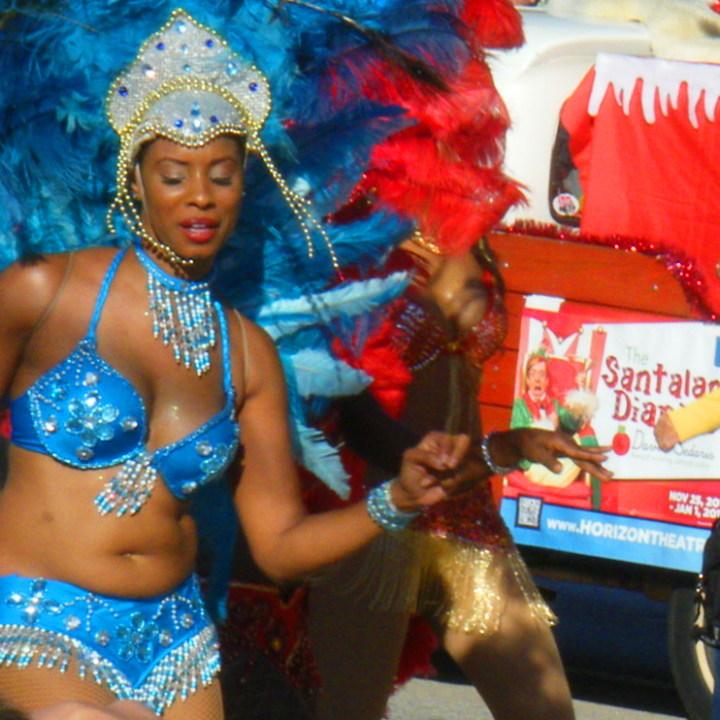
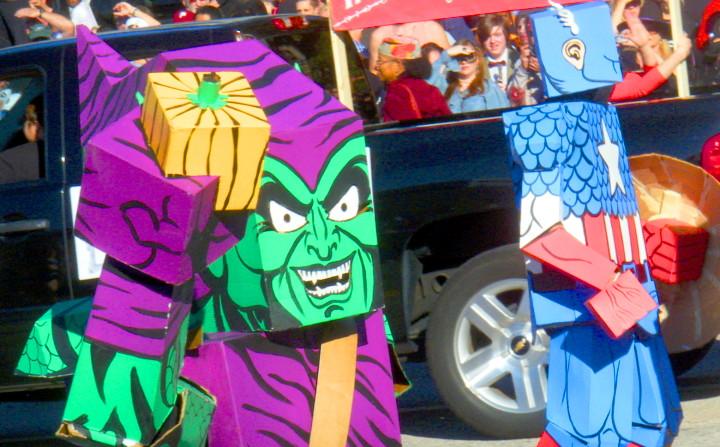


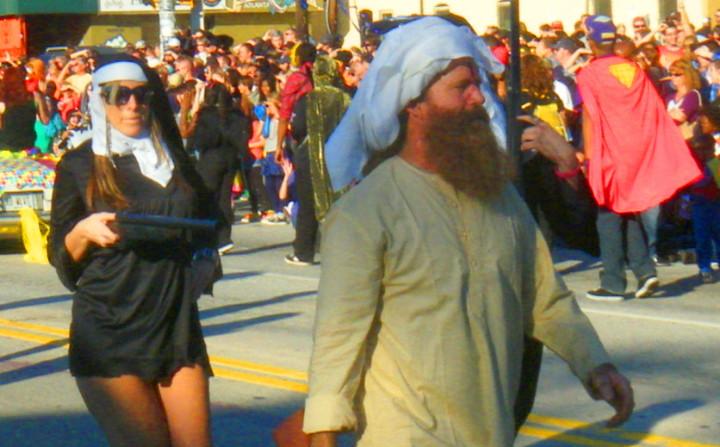

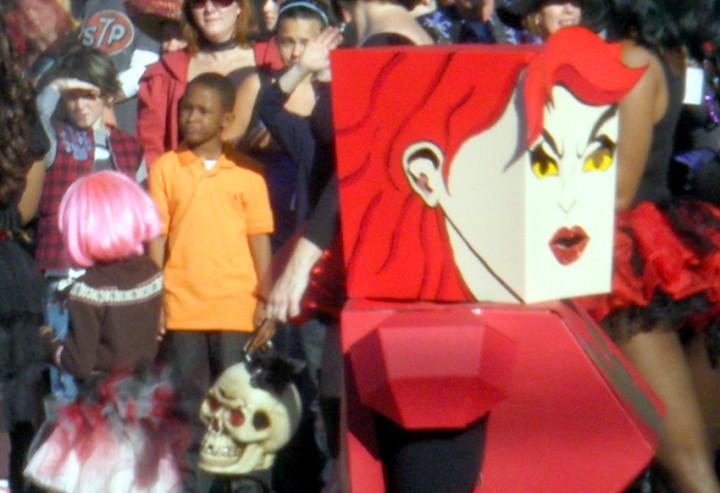
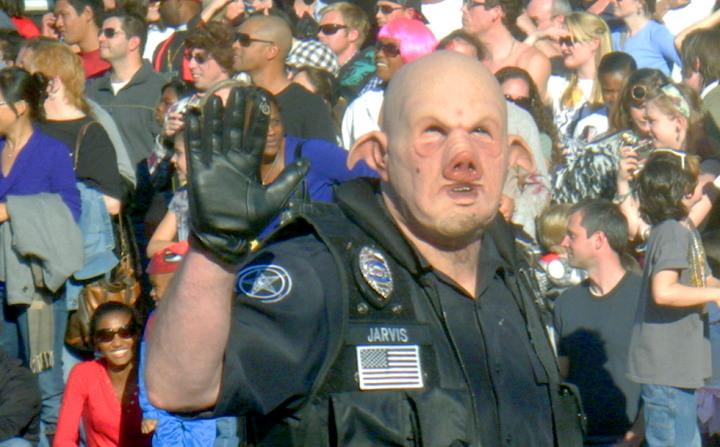
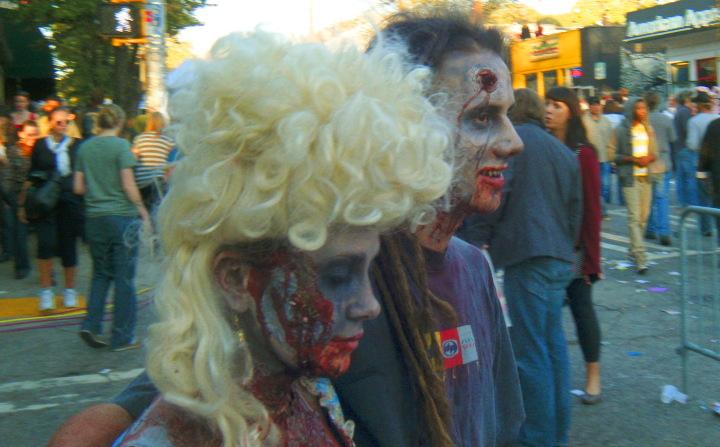
It has been said that PG has too much time on his hands. This is not always meant as a compliment. Yesterday was the last day of a campaign to clean out the camera shots folder. 566 pictures from the Little Five Points Halloween Parade stood in the way. After a while, the last picture was processed. In the background was a series of podcasts. In the spirit of the holiday, PG was dressed as a human.
The ear tickling was found at Booknotes. Authors promoting new product came to a show, on C-Span, between April 1989 and December 2004. The show was hosted by Brian Lamb. When you click on the links, they will start to play automatically. The sound usually needs to be turned up. A transcript is supplied, which makes a blogger’s life much easier. The authors are twenty years younger than today, which is usually a good thing.
Michael Howard had a book, “The First World War”. This conflict has always fascinated PG. It is little thought of today, in the United States, even though it created the conditions for many of today’s problems. It was incredibly bloody. Germany lost 1.8 million men, France lost 1.4 million men (out of a population of 30 million), England lost .74 million men, and the USA lost .11 million men. (“Then in the summer of 1918, in late sort of May and June, the Germans were attacking so strongly, so successfully, that it looked as if the whole line was going to break. And the Americans then did start putting in their troops. (UNINTELLIGIBLE) was the great — the — the great battle of the Big One, your 1st Division. And then increasing number of troops until when the war ended in November, 1918, there were then two full American divisions, with a lot coming up behind. And that was when they had their casualties. It doesn`t look as if they had very many, but if you consider that those casualties they suffered were all suffered within about six weeks, you realize how much they were actually not only involved in the fighting but … getting mown down by German machine guns.”)
Almost no one today knows why this gruesome war was fought. Mr. Howard has a short version. “LAMB: Well, go back to the very beginning. And you point out Archduke Franz Ferdinand. HOWARD: Yes. LAMB: Who was he, and why is he always the object of where the war started? HOWARD: Well, he was the heir to the throne of the Habsburg empire — Austria-Hungary — which was one of the great powers. And he was assassinated by a terrorist. It was a nationalist terrorist from — basically, from Serbia. And he was backed by — covertly by the Serbian army and possibly by the Serbian government. LAMB: You say he was 19 years old, the assassin? HOWARD: About that. I think he was 17, actually. I don`t quite know. But he was a typical young, idealistic terrorist who wanted to see Serbia free from the dominance of the Austrian empire. The Austrian empire was multi-national. It prided itself on having about 12 different nationalities under the imperial rule. Just — some of them were Serbs. Just outside the Austrian empire, there was an aggressive, ambitious Serbia that wanted to sort of have all the Serbs under its command in Belgrade. And it`s — including a number of them who were in Austria. Now, when this terrorist assassinated the heir to the throne, this created a shock comparable, in its way, to 9/11 here. It was regarded as something so outrageous, so abominable, that some kind of revenge had got to be taken. And for the Austrians, this seemed the moment to crush the Serbs for good. There was a general feeling throughout the Austrian empire that We`ve got to finish with these people. They`re bad guys. And they knew, however, that if they did declare war on — on Serbia, Serbia had a patron, who was Russia, and Russia would try to deter the Austrians from attacking Serbia. And if they went through with it, then the Russians were likely to declare war on Austria. The Austrians would have been deterred from attacking Serbia because of this if they did not have the Germans behind them. And they therefore turned to the Germans and said, If we get involved with a war in Russia, will you back us? And the Germans said, Yes, we will. And then one thing led to another. The Austrians did declare war on Serbia. The Russians then did declare war on Austria. The Germans then did declare war on Russia. And Russia`s ally, France, declared war on Germany. It was one of these awful (UNINTELLIGIBLE) escalation. Something which looked sort of fairly small and fairly local escalated into a — not simply a European war but because the British came in, it then became a world war fought all over the globe.”
After the millions of men died, what had been accomplished? LAMB: Who got what they wanted out of all of this? HOWARD: That`s a jolly good question, nobody really.
Charles Fecher edited “The Diary of H.L. Mencken”. Henry Louis Mencken was a writer and editor, who was much beloved by the smart people of his day. He is little known today.
The diary is rather controversial. Mr. Mencken is shown to be an anti semite and a racist. “It is impossible to talk about anything resembling discretion or judgment in a colored woman. They are all essentially childlike, and even hard experience does not teach them anything.” Mr. Mencken was a bitter opponent of Franklin D. Roosevelt, maintaining that the New Deal violated every aspect of the Constitution exept for the prohibition of quartering troops in private residences.





At the bottom of the page, the viewer is directed to other shows “YOU MIGHT BE INTERESTED IN:” This led PG to a chat with Murry Kempton. Mr. Kempton was, before his death in 1997, a New York journalist. He was much loved by the people who write New Yorker magazine, and inform people west of the Hudson River about such things. Mr. Kempton tells about Paul Robeson, Malcolm X (Mr. Malcolm), Richard Nixon, and a few others.
Eric Rauchway wrote “Murdering McKinley: The Making of Theodore Roosevelt’s America.” This incident has been discussed at Chamblee54. The shooting of William McKinley has been largely forgotten, but propelled Theodore Roosevelt into the White House. Mr. Roosevelt ran as a third party candidate in 1912. (This made certain the victory of Woodrow Wilson. Within a year, the Federal Reserve Bank was established. A few years later, America entered World War One.)
Before a speech, Mr. Roosevelt was shot in the chest. The text of his speech deflected the bullet, and he made the speech anyway. “Well, the bullet went through his speech, as I say, which is in his breast pocket and hit him in the fleshy part of the chest, it appears, and he kind of looked down at himself, and he didn’t think that there was any arterial blood coming out, and he coughed, which he said, you know, he remembered from being a soldier that was one way to tell if there was internal bleeding. He didn’t cough up any blood, and so he said to himself, well, I can go on and do this. Now, this was a considerable risk. I mean, whatever precautions he took, to go walking around with a bullet in your chest is never a good idea. But he thought it was worth the risk to achieve this political end of giving this important speech.”
After McKinley died, there was a controversy about the competence of the Doctor’s who treated him. There was one more matter. “LAMB: Didn`t you say there was a dispute over what happened to his stomach? RAUCHWAY: Yes. When I was looking into the book, I talked to a Buffalo doctor, a pathologist, who said, Well, you know, when I was doing my residency here, there was a story going around that his stomach was on display and that you could see the bullet hole in the back of the stomach, but I never saw it, he said. And apparently, nobody has, either. But it`s part of Buffalo lore.
Martin Marty wrote a book about Martin Luther. This is the one interview that PG found boring, and did not finish. There is one good quote about Mr. Luther in his older years. “But the Reformation didn`t go the way he wanted it to. He really was sour on Wittenberg. He didn`t even like to go back to it. He thought that Germany would have moral reform that it didn`t have. He thought that everybody would come flocking to his catechism, and he had to have the police, I guess you`d say, enforce that. So he was a very disappointed person, frustrated that the Jews didn`t convert. He thought they`re all going to convert when you get — he read the Hebrew scriptures as the Christian Bible. And so when Jesus comes along, that`s just fulfilling that. So why wouldn`t the Jews all come running? And well, it must be the rabbis who are holding (ph) them. So he spewed out terribly anti-Semitic things … The empire is breaking up. You`re facing the issue of the Turk, the Muslim. He calls them Mohammaten (ph). Somebody said they — the Turk is Luther`s luck. He wouldn`t have been alive if it weren`t for the threat of the Turk along the way. He read the Quran — bad paraphrase, but he at least knew what was there. And sometimes he sounded friendlier to the Turk than he did to the pope. In his last years, too, the pope had become for him the anti-Christ. And the language that people then used — there`s a whole volume of exchange between Luther and Thomas More, whom we think of as a cool humanist, “The Man for All Seasons. The language they use is — we couldn`t use it on this program or anywhere else. That`s just how it was. And that shows up mainly in his late years.”
Winston Groom became famous as the author of Forrest Gump. He is also a military historian, and wrote a book about the Battle of Ypres (pronounced EEP), A Storm In Flanders. The book is about one of the battles in World War One. There is a military cemetery at Ypres, and a monument to 80,000 British soldiers who died, but did not have enough matter left to bury. Of course, the conversation gets back to Forrest Gump before long. “LAMB: And what did it do to change your life? GROOM: Well, I — I’ve been able to upgrade my brand of toilet paper”.
James Tobin wrote Ernie Pyle’s War: America’s Eyewitness to World War II. (Ernie Pyle and Gomer Pyle are not related.) Ernie Pyle was a war correspondent in World War II. Mr. Pyle wrote about what the war was like for the men in the trenches. As the European war wound down, Mr. Pyle was burned out, and returned to the United States. He was persuaded to go cover the war in the Pacific. On April 18, 1945, on Okinawa, this proved fatal.
The last chat that PG listened to was with David Crosby , who usually has something to say.( Chamblee54 has discussed Mr. Crosby.) This interview was produced May 28,2000. Mr. Crosby talks about the need for campaign financing reform, and how tough it is to make people think that their vote counts. In a few months, PG would have a similar conversation with a friend, who thought it was important to vote for Al Gore. PG was unimpressed with Mr. Gore, and not scared by Mr. Bush. I doubt that PG, or Mr. Crosby, could have foreseen the way that election was going to turn out, or the disastrous consequences for humanity.


 Chamblee54
[…] AThis is a repost. […]