The Funeral Of Franklin D. Roosevelt
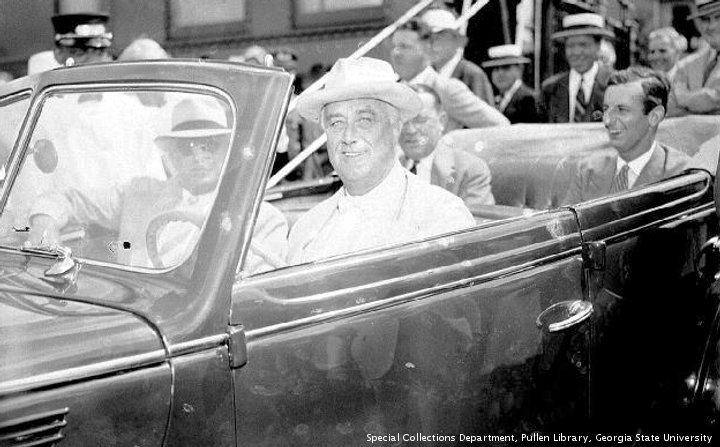
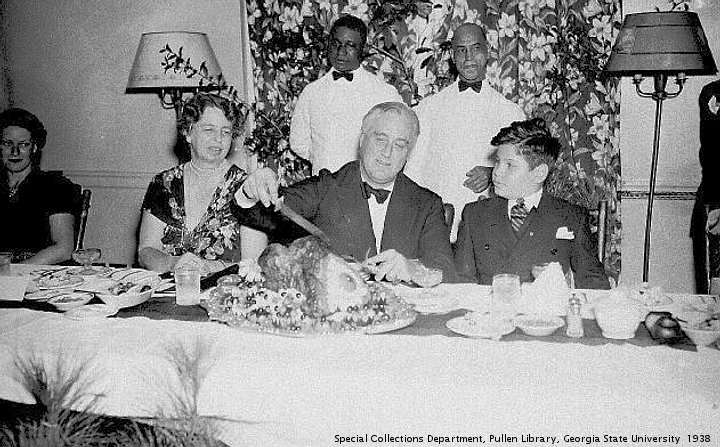
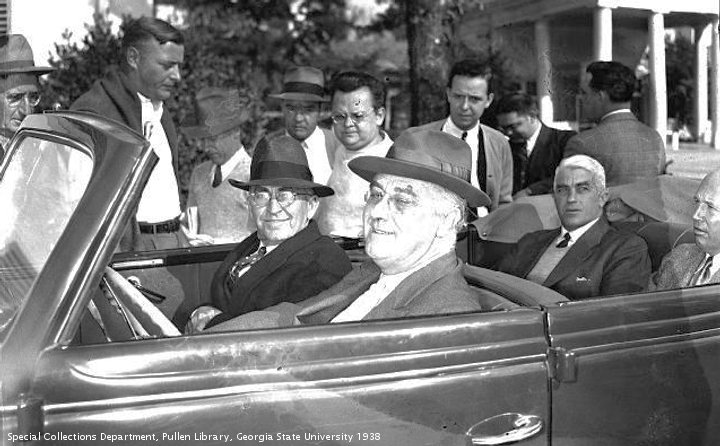
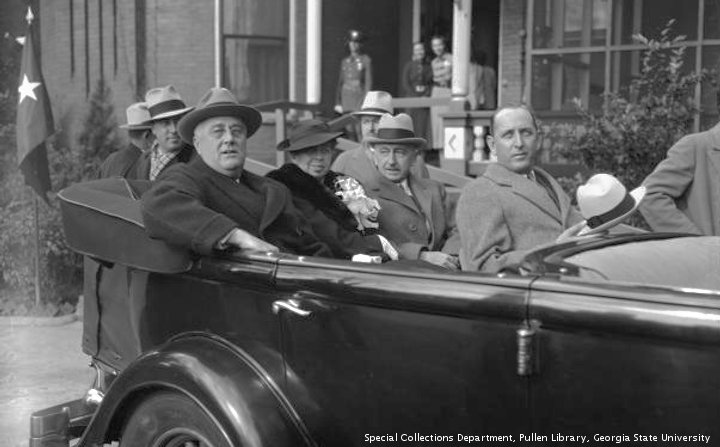
On February 29,1945, a train left a secret platform beneath the Bureau of Engraving and Printing in Washington, DC. The most important car in the train was the Ferdinand Magellan, the private ride of President Franklin Delano Roosevelt. The train took “the Boss” to Warm Springs, GA.
On April 12, 1945 (the day before Friday 13), the President was posing for a painting. The artist, Elizabeth Shoumatoff, was a friend of Lucy Mercer Rutherford, who was also in “The Little White House” that afternoon. Mrs. Rutherford was the long time mistress of the President. At roughly 1:00 pm, The President rubbed his brow, and said ” I have a terrific pain in the back of my head”. His head slumped onto his chest, and he died.
What happened in the next few days is the subject of FDR’s Funeral Train. PG found this book at the Chamblee library, and found it enjoyable, and thought provoking. For a story with a well known outcome, there were a lot of subplots, and food for speculation. Pictures for this book report are from ” The Special Collections and Archives,Georgia State University Library”
When it became obvious what was happening, the first chore was to get Lucy Rutherford off the premises. She left quickly, along with Ms. Shoumatoff, and an assistant. Somehow, Eleanor Roosevelt learned the Mrs. Rutherford had been with her husband, and was not pleased.
Fred Patterson was called at this Atlanta funeral home, and told to come to Warm Springs to prepare the body for burial. Unfortunately, the cerebral hemorrage had clouded the President’s face beyond repair. This, and the President’s expressed dislike of open coffin funerals, led to a closed coffin at the ceremonies. The closed coffin led to speculation that the President had been dead for some time, and that an impostor had been playing the role of President.
Mr. Patterson brought a copper lined coffin with him, weighing over 600 pounds. The setup of the Ferdinand Magellan made it impossible to bring the coffin onto that car. Another car, the Conneaut, was found to carry the remains to the funeral. A passenger window was removed, and the coffin was passed in through the window. A wooden bier was built for the coffin, and covered with a Marine Corps blanket. The bier was built high enough to enable the coffin to be visable through the window.
When the coffin was about to be placed on the train, it was learned that no one had brought a flag. A flag was borrowed from a flagpole in Warm Springs to put over the coffin.
The Ferdinand Magellan was armor plated, and had bulletproof glass. It weighed 142 tons. An engine powerful enough to carry this car had to be found. When the train was leaving Washington, en route to burial in Hyde Park, NY, three couplings broke, from the strain of this car. Finally, a coupling was made to work, and the train proceeded to Hyde Park.
The part of the journey from Washington to Hyde Park had two trains, with every important official in Washington on board. Among them was the new President, Harry Truman. Truman had been a compromise choice as Vice President, and was not told very much. He was quickly educated, and produced a speech to give to Congress the following Monday.
On this Friday the thirteenth, no one foresaw an early end to the War. While Germany was in bad shape, no one knew how much longer they would hold out. As for Japan, it was assumed that a gruesome land invasion would be needed to end the conflict. Only a select few knew about the atomic bomb, which had still not been tested. Some felt it would not work.
One of the lesser known passengers on the Washington-Hyde Park train was an economics advisor to the President named Laughlin Currie. In addition to his duties for the American government. Mr. Currie was widely believed to be on the payroll of the Soviet Union. He gave regular reports to the KGB. Which leads to one of the questions …did the Soviet Union know about the atom bomb?
The answer may not be knowable. What is known is this. On August 6, the US dropped the atom bomb on Hiroshima. On August 8, the Soviet Union entered the war against Japan, invading Manchuria. On August 9, the US dropped the atom bomb on Nagasaki. This may be a coincidence.
Another point to ponder involves Dr. Howard G. Bruenn, a cardiologist at Bethesda Naval Hospital. Dr. Bruenn had been treating the President, and is given credit for adding a year to the President’s life. The question today is, what if the President had died in 1944? Henry Wallace would have become President, and probably would have been elected to a term of office in the fall elections. (Or maybe not. Mr. Wallace had offended enough people to cause him to be kicked off the ticket.) How this would have played out, especially with regard to the war effort and the Yalta conference, is anybody’s guess. That extra year of life for Mr. Roosevelt may have been a very good thing for the United States.
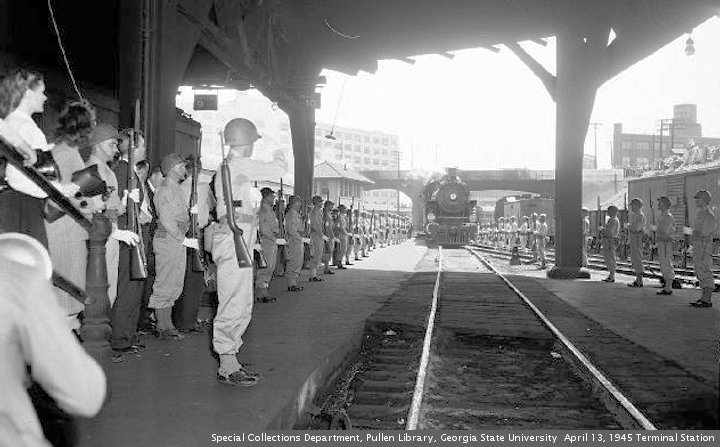

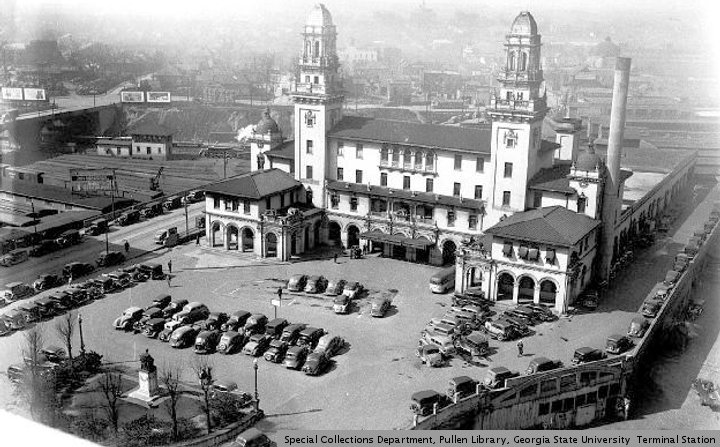
 Chamblee54
[…] After a highly publicized deployment, the first significant U.S. combat troops of On this subject see: http://donmooreswartales.com/2010/12/24/he-served-aboard-destroyer-uss-hudson-off-iwo-jima-and-okinawa-in-ww-ii/ On this subject see: http://breaklines.wordpress.com/2010/12/27/wikileaks-exposes-post-colonial-sensitivities-in-kenya-2/ Related to this you can read: http://thinkingpacifism.net/2010/12/30/the-long-shadow-world-war-iis-moral-legacy-03-jus-in-bello/ You may also find this relevant: http://dharmen1.wordpress.com/2010/12/31/118/ Make sure to also read: https://chamblee54.wordpress.com/2011/01/08/the-funeral-of-franklin-d-roosevelt/ […]
Franklin Delano Roosevelt and Lucy Page Mercer Rutherford is the Sir Lancelot and Lady Guinevere of the White House. His presidency is like Camelot in a way.
[…] outcome, there were a lot of subplots, and food for speculation. Pictures for this book report repost are from “The Special Collections and Archives, Georgia State University Library”. […]